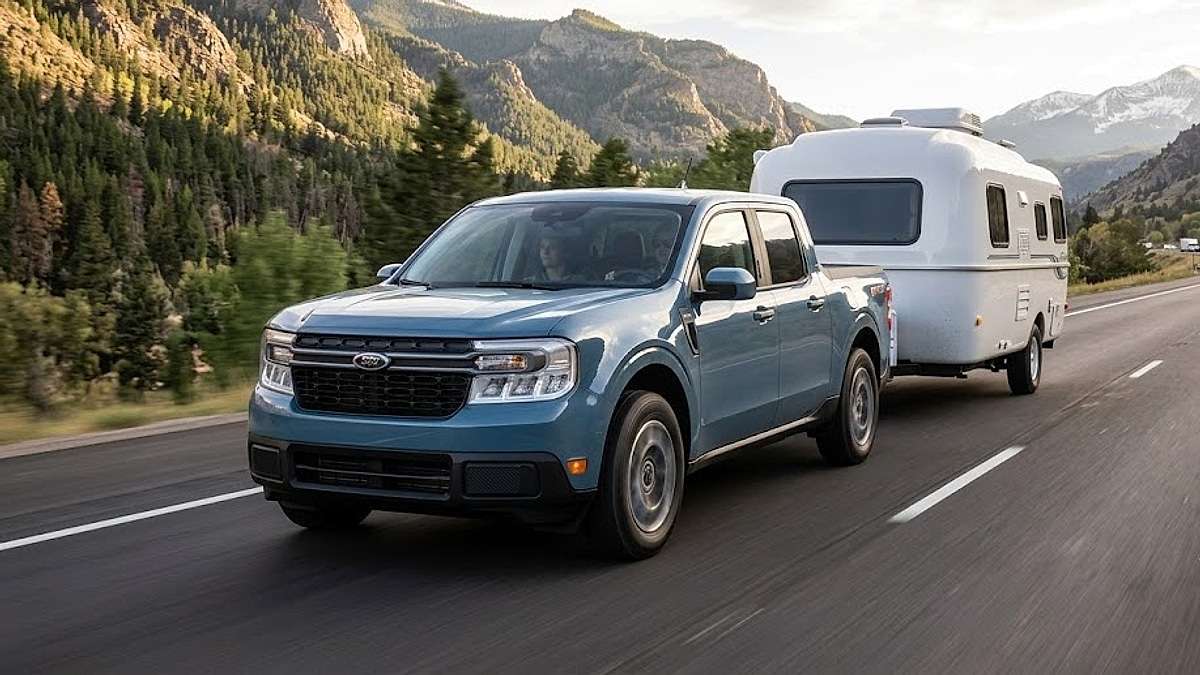

Your brand-new hybrid truck shouldn't make your palm sweat when pulling a simple weekend toy.
But when an 884-mile Midwestern haul pushes a digital dashboard needle upward, those clean factory tow ratings start feeling like a dangerous illusion.
That single rising bar on your gauge is an early warning sign that your powertrain is fighting an uphill thermal battle.
As a 30-year automotive industry veteran and former test driver, I’ve spent decades evaluating how light-duty trucks handle heat stress under heavy load cycles. When owner Austin Jobes shared his recent towing experience in a Ford Maverick Hybrid Facebook group, the community celebrated his impressive 21 mpg trip average.
But as an investigative reporter who dives into root mechanical failures, my eyes immediately locked onto a far more concerning detail in his report.
An 884-Mile Reality Check
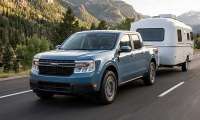
Jobes loaded up his 2026 Ford Maverick Hybrid XLT AWD equipped with the factory 4K Tow Package and towed an 1,800-pound utility trailer carrying a 700-pound ATV across Michigan and Wisconsin.
"On the way home, I saw that the temps were up one bar," Jobes posted after completing his 884-mile trek. He added that he felt an extra wave of warmth radiating through the driver footwell.
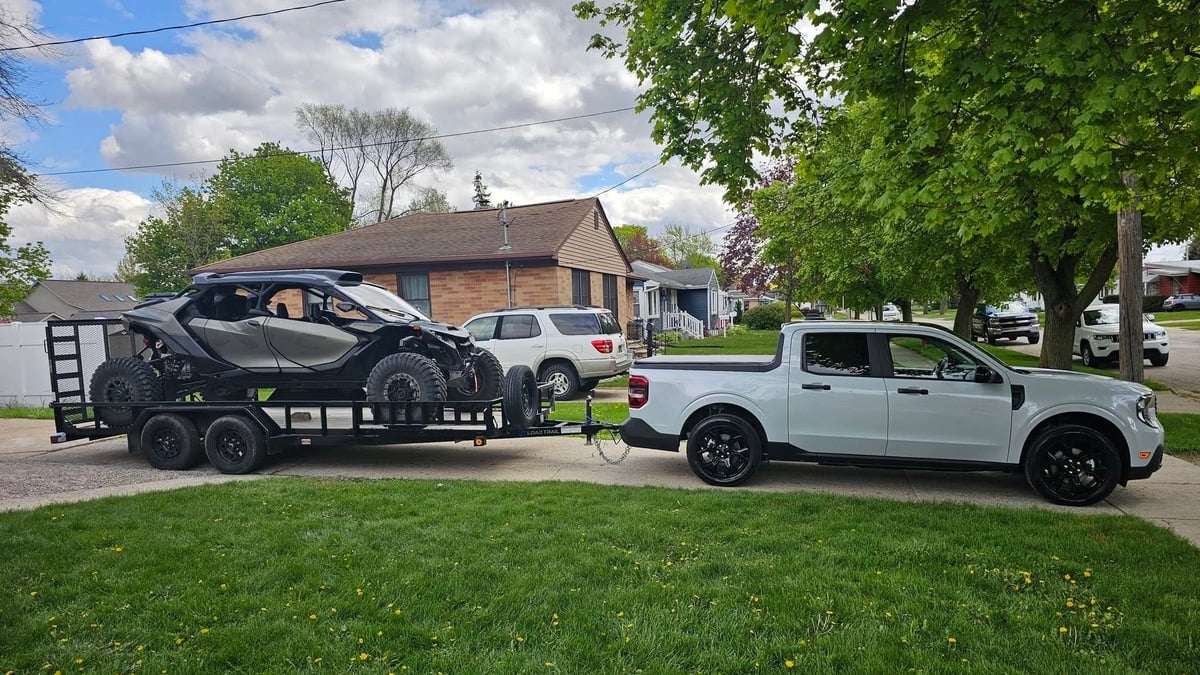
While a single bar on a digital gauge might seem trivial to a novice driver, it represents a critical inflection point in modern hybrid thermal dynamics. A 2,500-pound combination weight sits well within the Maverick's 4,000-pound rated towing maximum, yet the truck's cooling system was clearly working at its absolute limit.
In my deep-dive investigation into Ford 10-speed transmission thermal limits during long hauls, I highlighted how modern factory cooling loops run intentionally hot to satisfy aggressive EPA fuel-economy targets.
The Hidden Danger Of High-Load Thermal Cycles
When you hook an aerodynamic drag-anchor like a utility trailer behind a compact hybrid, the engine control module (ECM) forces the Atkinson-cycle 2.5-liter engine to operate at wide-open throttle for extended intervals.
In another recent report on high-mileage Ford EcoBoost trucks entering sudden limp mode under towing stress, I documented how sustained thermal stress causes hidden air-fuel imbalances and extreme heat buildup that standard dealership bay tests completely fail to replicate.
The heat radiating into the cabin footwell isn't a fluke. It's thermal soak transferring directly through the firewall as the exhaust manifold and electric motor-generator units (MGUs) dump excess heat into a tightly packed engine bay.
Truck Owners Clash Over The Digital Temperature Spike
The comments section on Jobes' original report quickly turned into a battleground between seasoned truck owners and hybrid skeptics, exposing the exact three perspectives that define this entire debate.
Commenter Larry Rathbun was the first to call out the geographical weakness of this initial highway test.
"Midwest driving is not the same as mountain driving, which would be a real concern." — Larry Rathbun
Larry hits the nail right on the head.
A flat Midwestern cruise at 65 mph provides a steady stream of ambient airflow across the radiator and auxiliary coolers. Take that exact same 2,500-pound load up a 7% grade in the Rocky Mountains under a 95-degree sun, and that single extra temperature bar will rapidly morph into a flashing red warning light and full mechanical power reduction.
Real-World Work Versus Platform Limitations
Then, handyman Scott Clark chimed in to defend the compact pickup platform with his own real-world work experience.
"I haul around 1000 lbs daily here in Austin, TX, performing handyman tasks. I also tow with it, along with the payload included. I have a 2025 non-hybrid AWD unit. No issues, and I have 23k on the clock. I added airbags to the rear to aid in keeping things steady." — Scott Clark
Scott's daily work use proves that the unibody chassis can physically support heavy cargo when equipped properly.
However, his non-hybrid EcoBoost features a completely different mechanical cooling architecture than the complex dual-loop system found in the Maverick Hybrid. Furthermore, adding aftermarket rear air springs helps level a sagging tailgate, but it does absolutely nothing to upgrade the fluid volume or heat dissipation capacity of the transaxle.
The Unibody Engineering Compromise
Finally, commenter Mike cut straight to the core mechanical criticism that traditional truck buyers continue to voice.
"That's still below what this guy was testing. Ford can't build small engines very well. The Japanese do a way better job at that. Since this isn't really a real truck. A truck body in a car chassis." — Mike
Mike's comment highlights the fundamental engineering compromise of modern light-duty pickups. The Maverick Hybrid is built on Ford's C2 unibody passenger-car platform, the same architecture that underpins the Ford Escape and Bronco Sport.
When you ask a unibody passenger chassis to act like a heavy-duty workhorse, the physical packaging limits become glaringly obvious. The radiator, inverter cooling loop, air-conditioning condenser, and transmission heat exchanger are all crammed into a front end designed primarily for commuter efficiency.
How Thermal Dissipation Hits A Physical Wall
During an 884-mile tow, the eCVT (electronic continuously variable transmission) uses twin electric motors to manage power delivery from the 2.5-liter gas engine. Under heavy towing loads, those electric motors generate massive electrical resistance heat, while the gas engine revs at sustained high RPMs to maintain highway momentum.
Because the hybrid system relies on ultra-low-viscosity fluids to reduce internal friction, intense thermal cycles thin the lubrication rapidly. That extra bar on the coolant display is the ECM telling you that the primary radiator fan has ramped up to 100% capacity and is struggle-bus driving ambient air through a crowded cooling stack.
The footwell heat Jobes experienced is the physical manifestation of thermal dissipation hitting a wall inside the unibody structure. When heat cannot escape out of the bottom of the engine compartment fast enough, it migrates directly into the floor pan and firewall insulation.
Essential Survival Rules For Hybrid Towing
If you plan to pull a trailer with a 2025 or 2026 Ford Maverick Hybrid, you cannot rely on factory marketing brochures or quiet cabin dynamics alone. You must actively manage your vehicle's thermal budget before a minor gauge movement turns into an expensive out-of-warranty repair.
- First, always lock out top overdrive ratios by engaging Tow/Haul mode to keep engine RPMs in their optimal cooling sweep. Higher pump speeds increase coolant flow velocity, sweeping heat away from the cylinder head before localized boiling occurs.
- Second, verify your door-jamb payload rating before hitching up. Remember that tongue weight, passenger load, tools, and bed cargo all stack against your payload capacity long before you reach your 4,000-pound towing maximum.
- Third, treat factory "lifetime" fluid claims as a myth if you tow regularly. High thermal loads shear ultra-thin hybrid transmission fluids prematurely, making 30,000-mile fluid service intervals essential for long-term transaxle survival.
The Ford Maverick Hybrid is a remarkably capable compact truck that redefines fuel efficiency for modern buyers. But physics remains undefeated, and pulling heavy loads requires vigilant instrument monitoring and proper mechanical maintenance.
What About You? Have you noticed your Ford Maverick's temperature gauge climbing while towing a trailer or climbing steep highway grades? Share your real-world weights, ambient temperatures, and towing experiences in the comments below!
Wait, There’s More… Also check out my Torque News Home Page for more of my informative Ford Maverick news articles.
About The Author
Denis Flierl is a 14-year Senior Reporter at Torque News and a member of the Rocky Mountain Automotive Press (RMAP) with 30+ years of industry experience. Explore his full investigative reporting archives and technical guides at DenisFlierl.com.
Based in Parker, Colorado, Denis leverages the Rockies' high-altitude terrain as a rigorous testing ground to provide "boots-on-the-ground" analysis for readers across the Rocky Mountain region, California EV corridors, the Northeast, Texas truck markets, and Midwest agricultural zones.
A former professional test driver and consultant for Ford, GM, Ram, Toyota, and Tesla, he delivers data-backed insights on reliability and market shifts. Denis cuts through the noise to provide national audiences with the real-world reporting today’s landscape demands.
Connect with Denis: Find him on LinkedIn, X @DenisFlierl, @WorldsCoolestRides, Facebook, and Instagram.
Photo credit: Denis Flierl
Set Torque News as Preferred Source on Google
Follow us today...