
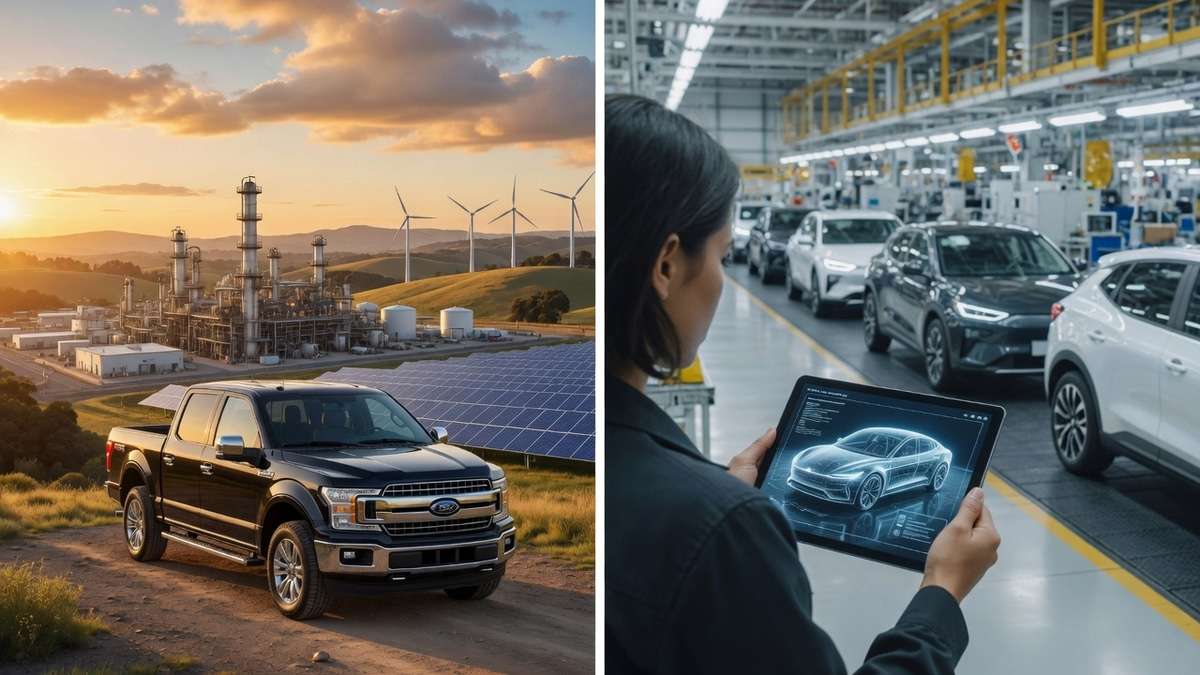

Gas prices are biting hard right now, and somebody just decided that Ford, GM, and Toyota should take the blame for it. A new ad campaign from an environmental group is pointing fingers at Detroit and Toyota City, claiming that if these automakers had just kept pushing electric vehicles the way they promised, you would not be watching the numbers spin at the pump today. It is a tidy story. It is also, in my view, a story that skips over some very inconvenient facts, the same way Ford's own hybrid pivot got criticized in our earlier look at Ford's shift toward hybrids and trucks when the company decided the market, not the mission statement, would set the pace.
So here is the question I want you to carry with you all the way to the end of this article, like a little stone in your pocket. Ask yourself: if EV demand were really as strong as these ads claim, why did the automakers pull back in the first place? Hold that thought. We are going to come back to it, and I think the answer might surprise you.
Why Environmental Groups Are Blaming Ford And GM For High Gas Prices
Let's set the scene. According to the Detroit News, an environmental group launched a new ad campaign this month bashing Ford and GM for scaling back EV production right as gasoline prices have spiked. The timing sounds damning on the surface, doesn't it?
Gas hurts your wallet, and here are two automakers who could have sold you a car that runs on electricity instead. But automakers do not build cars based on moral pressure. They build what people actually walk into showrooms and buy, which is exactly the tension we unpacked when covering how GM quietly delayed its next-generation electric trucks in favor of hybrids rather than force-feeding the market a product line it was not ready to absorb.
Now here is something the ads conveniently leave out. GM is currently the second best selling EV brand in the country behind Tesla. Toyota has expanded its all-electric lineup significantly over the past year. These are not companies that woke up one morning and decided to hate clean air. They are companies reading sales charts, the same charts that show hybrids are now outselling EVs by roughly three to one nationwide, a trend we broke down in our report on hybrids surging ahead of EVs as the market's real destination.
You cannot blame a company for building what customers are buying. That is not corporate villainy. That is just business 101.
The Real Data Behind The EV Demand Versus Hybrid Sales Debate
You might be asking yourself right about now, wait a minute, if hybrids are winning, doesn't that still mean less gas is being burned? Fair question, and it deserves a fair answer. Hybrids absolutely sip less fuel than a pure gas engine, but they still burn gasoline, which is exactly why groups pushing pure electrification see hybrid growth as a consolation prize rather than a victory.
But car buyers aren't choosing hybrids out of spite. They are choosing them because the math works, something Toyota figured out a long time before this ad campaign existed, as we detailed when covering Toyota's non-Prius hybrid sales continuing to surge while affordable EVs kept losing ground.
Here's where the plot thickens, and I promise this is the part that makes the whole ad campaign look shakier than a bald tire on ice. Federal EV tax credits expired last year. When that support disappeared, EV sales did not hold steady, they dropped, hard, across nearly every brand except one. We chronicled this in detail in our piece on how EV deliveries fell dramatically in the months after federal subsidies ended while hybrids kept climbing.
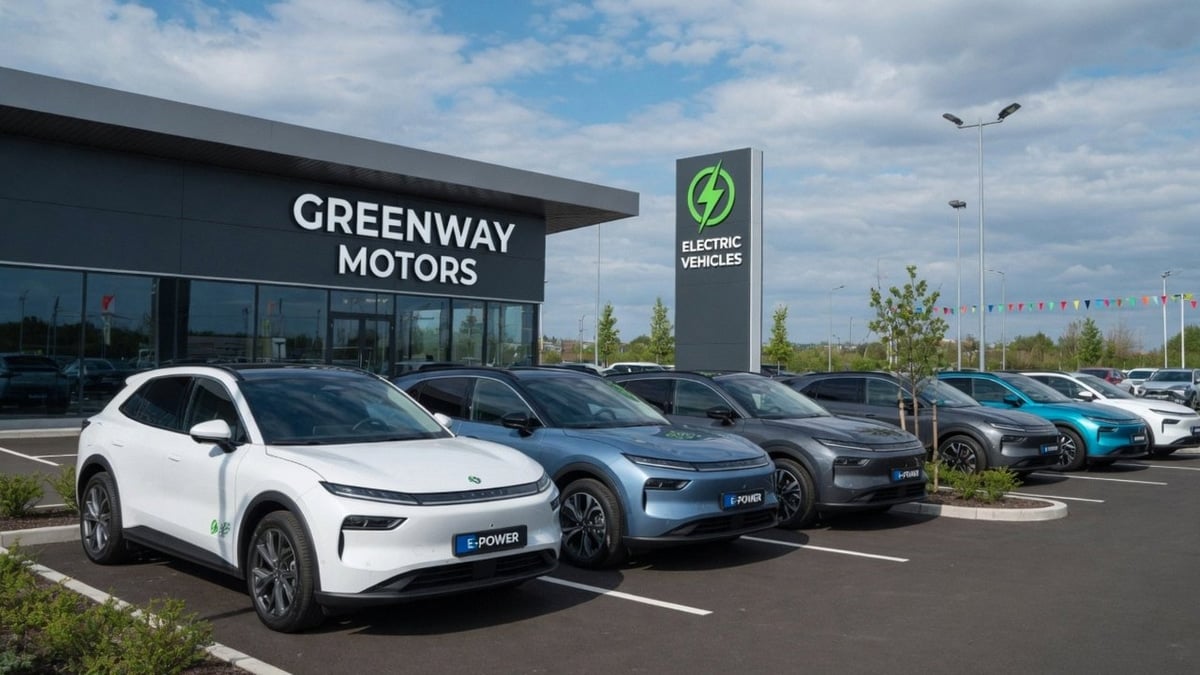
If EV demand were truly as bulletproof as these ads suggest, the market would not have flinched the moment the government stopped writing checks. That is not automakers failing consumers. That is consumers telling automakers exactly what they are willing to pay for without a subsidy propping up the sticker price.
What Ford And Toyota Are Actually Doing About Affordable Electric Vehicles
Now, does that mean every automaker has given up on electric entirely? Not even close, and this is the part I find genuinely exciting to write about. Ford is not walking away from EVs, it is retooling its approach with a leaner, more affordable Universal EV Platform aimed at a $30,000 price point, a strategy we explored in our coverage of Ford's $30,000 moonshot to build an affordable electric truck. Toyota, meanwhile, has quietly turned its once-mocked bZ electric SUV into a genuine sales success, as we reported when the Toyota bZ staged an unexpected comeback in January 2026 sales data. These are not the moves of companies abandoning electrification. These are the moves of companies who got burned chasing a timeline that outran real-world demand, and who are now building products people can actually afford.
Let's talk about why this matters to your wallet directly, because that is ultimately what this whole ad fight is about. An EV that nobody buys does nothing to lower gas prices. A hybrid that sells by the hundreds of thousands does. Real-world battery data backs this up too. We recently covered an F-150 Lightning that showed just 1.5 percent battery degradation after 38,000 miles, proving the technology itself is sound even as Ford pulled back on pure EV production in favor of what customers were actually ordering. The engineering was not the problem. The price tag and the charging hassle were.
Here is a moral worth sitting with for a second. Blame feels good in a thirty second commercial, but it rarely tells the whole truth, and rushing to point fingers at three companies without looking at consumer behavior, tax policy, and battery economics is a little like blaming the weatherman for the rain. Ford, GM, and Toyota did not create high gas prices, and they did not kill EV demand either. The market did that, one sticker price and one canceled tax credit at a time, a reality that even shows up in the way GM has been forced to defend its truck strategy while GM ramps up Silverado and Sierra production and scales back future EV plans to match what buyers are actually choosing off the lot.
So Who Is Really To Blame For High Gas Prices, Automakers Or The Market
Let's go back to that stone I asked you to carry in your pocket. If EV demand were really as strong as the ads claim, why did the automakers pull back? Now you have the answer. They pulled back because the subsidies dried up, because hybrids proved cheaper and just as satisfying to drive, and because building cars nobody buys helps no one, not the planet, not the shareholders, and certainly not you standing at the pump. As Grant Schwab reported for the Detroit News, one advocacy group even admitted publicly that political ad campaigns like this one have mostly gone quiet because federal support for EVs has shifted the fight down to the state level, which tells you the momentum these ads are chasing may already be behind them.
What do you think, is it fair to blame automakers for chasing consumer demand instead of a political timeline? And if gas prices keep climbing, do you think hybrids or EVs will win the next round of your car buying decision? Drop your answer in the comments below, I read every one of them.
Return tomorrow, or check our Torque News Home Page for more interesting automotive news articles.
About The Author
Armen Hareyan is the founder and Editor-in-Chief of Torque News and an automotive journalist with over 15 years of experience writing car reviews and industry news. Now based in the Charlotte region (Indian Land, SC, he founded Torque News in 2010, which since then has been publishing expert news and analysis about the automotive industry. He can be reached at Torque News on X, Linkedin, Facebook, and Youtube. Armen holds three Masters Degrees, including an MBA, and has become one of the known voices in the industry, specializing in the landscape of electric vehicles and real-world stories of actual car owners. Armen focuses on providing readers with transparent, data-backed analysis bridging the gap of complex engineering and car buyer practicality. Armen frequently participates in automotive events throughout the United States, national and local car reveals and personally test-drives new vehicles every week. Armen has also been published as an automotive expert in publications like the Transit Tomorrow, discussing how will autonomous vehicles reshape the supply chain, and emerging technologies in vehicle maintenance.
Set Torque News as Preferred Source on Google
Follow us today...


Comments
I don’t see the blaming…
Permalink
I don’t see the blaming Toyota side. They are trying to do nice EVs but the technology isn’t there to what they want yet in charging and cost.