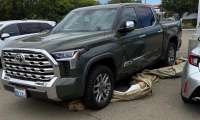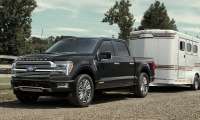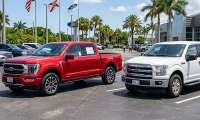

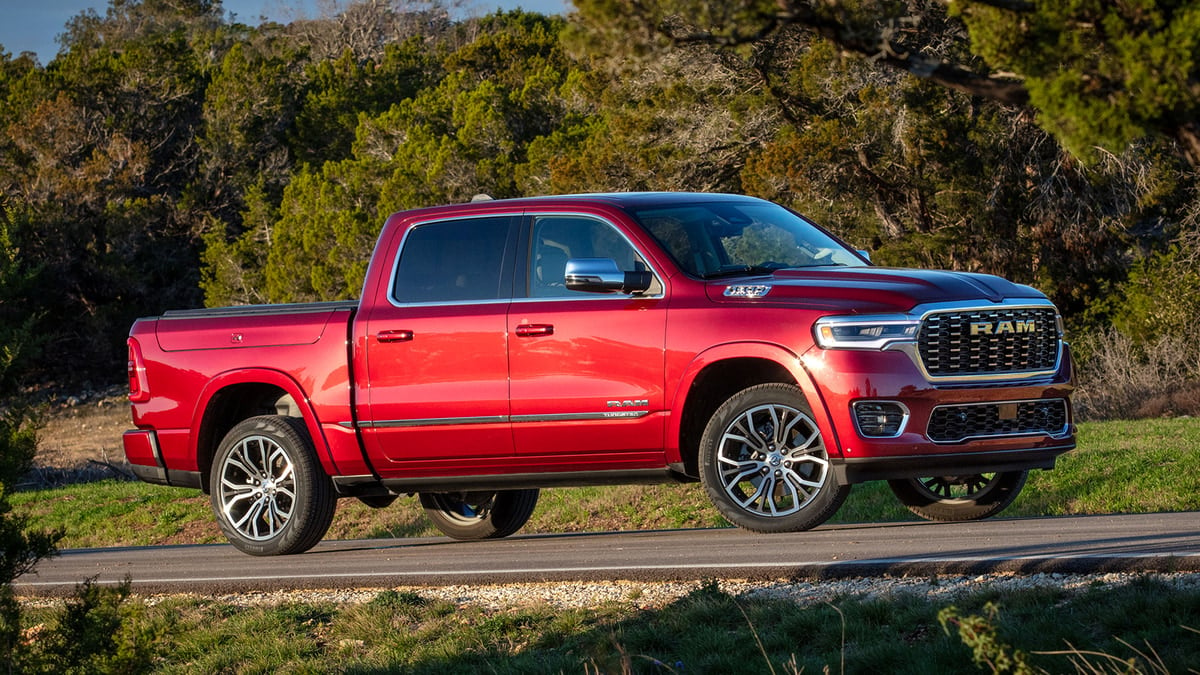
One Ram 1500 owner says his Hurricane’s first camper tow returned 10.8 mpg at 60 mph and felt effortless. That is a fine result, but an easy pull does not answer the PowerBoost owner’s payload question.
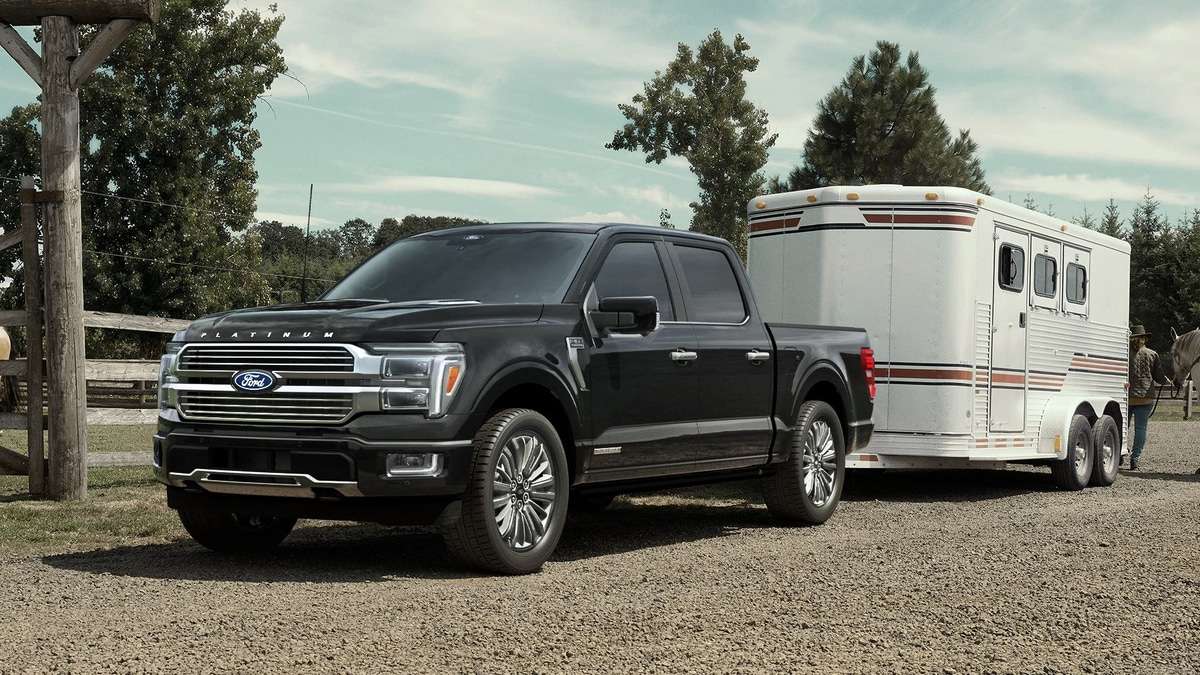
Demetrios C. Syrpes likes his Ford F-150 PowerBoost. His problem begins after the trailer is coupled, the passengers climb aboard, and the bed fills with the gear that turns an empty camper into a vacation.
“Don’t get me wrong, I like my Ford,” he wrote in the Ford F-150 Powerboost Owners 21+ group. “I just would like a little more payload with a 2500 or 3500 when towing.”
What Syrpes sees as aggressive Ram pricing has his attention. It also leaves him with a choice that looks simpler in a dealer advertisement than it does on a scale ticket. He can move sideways into a Ram 1500 with the twin-turbo 3.0-liter Hurricane, or move up into the heavier axles, brakes, tires, frame, and gross vehicle weight rating of a Ram 2500 or 3500.
A second owner post makes the half-ton tempting. Ron Koller shared a photo of his Ram 1500 hitched to a full-height, tandem-axle Fun Finder travel trailer after its first tow. He said the Hurricane impressed him and reported 10.8 mpg with cruise control set at 60 mph. His post says the engine “didn’t work at all,” a line the surrounding praise suggests meant that it hardly had to work.
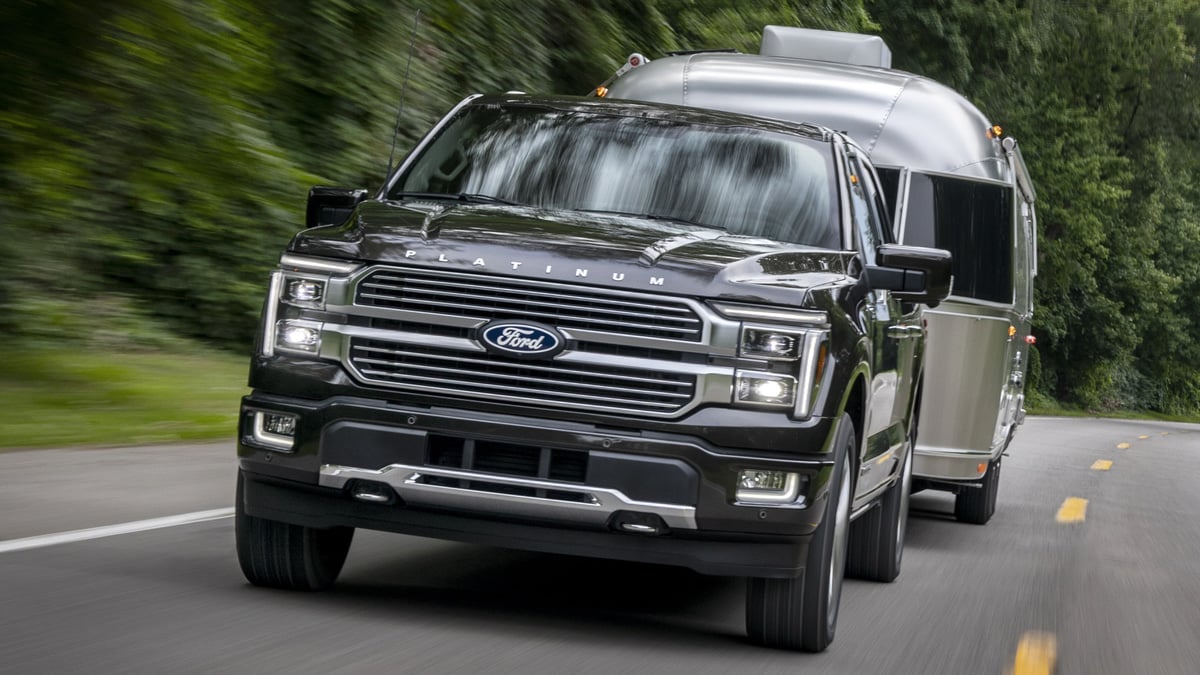
That tells Syrpes something useful about the Hurricane’s pulling power. It does not tell him whether the Ram in the photograph could carry his family, a hitch load, cargo, and options without exceeding its own ratings.
The Hurricane Has Muscle, The Yellow Label Settles the Argument
Using the manufacturer’s best current 2026 ratings, a 4x4 Ram 1500 with the standard-output Hurricane can carry up to 1,910 pounds. Ford rates the F-150 PowerBoost for up to 1,740 pounds. The difference is 170 pounds.
Those figures are ceilings achieved by particular configurations. They are not the payload ratings of Syrpes’ Ford, Koller’s Ram, or the well-equipped truck sitting under bright lights at a local dealer. This comparison already gives each powertrain its best published number rather than matching two trucks for cab, bed, trim, and equipment.
Cab, bed, trim, four-wheel-drive hardware, wheels, running boards, panoramic roofs, luxury equipment, and factory options all consume payload before an owner adds people or camping supplies.
The engine badge can mislead here. Ram’s 2026 4x4 capability figures give the 420-horsepower standard-output Hurricane a maximum 1,910-pound payload rating. The 540-horsepower high-output version tops out at 1,490 pounds because it is offered in heavier, more lavish configurations. More horsepower does not create more carrying capacity.
Ford’s current PowerBoost specifications list 430 horsepower, 578 pound-feet of torque, up to 11,600 pounds of trailer capacity, and the 1,740-pound maximum payload figure. A PowerBoost can therefore have abundant power and a generous tow rating while payload remains the first number its owner exhausts.
The problem is easiest to see at the coupler. Ram’s own towing guidance recommends roughly 10 to 15 percent tongue weight for a conventional trailer. An 8,000-pound trailer could therefore put about 800 to 1,200 pounds on the truck before counting the driver, passengers, bed cargo, hitch hardware, or dealer-installed accessories.
The exact target depends on the trailer and hitch, and the truck must remain within its GVWR, rear-axle rating, receiver rating, and tire limits.
Ford’s payload guidance says the applicable number is on the Tire and Loading Information label at the driver’s door. Ford also explicitly counts trailer tongue weight as payload. That yellow label, followed by loaded axle weights from a scale, is worth more than either brand’s maximum-number advertisement.
Airbags Can Level a Truck, but They Cannot Edit Its Certification Label
The PowerBoost discussion produced a familiar recommendation: add airbags. That advice needs a clean boundary.
Air helper springs can reduce rear sag, restore a more level stance, and improve how a properly loaded combination feels. They may be worthwhile when the truck is already operating within every rating. They do not increase the payload printed on the door label, raise GVWR or GAWR, strengthen the receiver, add tire capacity, or make excess weight disappear.
NHTSA requires the vehicle placard to state that the combined weight of occupants and cargo should never exceed the listed figure. Ordinary aftermarket helper springs do not cause the manufacturer to recertify the truck. They change how the suspension supports the load, not how much certified load the entire vehicle may carry.
The same caution applies to the claim that Ram trucks inherently carry less because some use coil springs while Fords use leaf springs. Spring design alone does not determine payload. The complete truck does. A light configuration with coils may outrate a heavier truck with leaf springs, while a luxury half-ton can lose hundreds of pounds to equipment before anyone opens the tailgate.
The Ram 2500 Is Where the Numbers Finally Change Class
If Syrpes needs only another 100 pounds after weighing his loaded rig, the right Hurricane 1500 configuration might solve the problem. If he needs several hundred pounds of breathing room, moving from one half-ton to another risks spending a great deal of money to recreate the same constraint with a different grille.
The 2026 Ram 2500 makes a more decisive move. Ram lists a maximum payload of 3,930 pounds with the 6.4-liter gasoline V8. The high-output 6.7-liter Cummins can tow up to 20,000 pounds, but its extra engine weight lowers maximum payload to 3,600 pounds. That distinction matters to camper owners who assume the diesel is automatically the payload champion.
Again, those are maximums. A crew-cab, four-wheel-drive, high-trim 2500 will have a lower door-sticker number than a lightly equipped regular-cab truck. Even so, the 2500’s best payload figure is more than double the PowerBoost maximum. That is a category change rather than a modest reshuffling of half-ton capacity.
A 3500 creates more margin again, especially for large fifth-wheels and substantial pin weight. It also brings costs that do not vanish after the trailer is parked: a stiffer unloaded ride, greater size and weight, more expensive tires and maintenance, and less pleasant daily maneuvering. Buying the biggest truck available is easy advice when someone else has to drive and pay for it.
The PowerBoost brings its own reason to stay. If Syrpes’ truck has Ford’s available 7.2-kW Pro Power Onboard system, it can run serious camping equipment without a separate generator. One commenter who boondocks at racetracks called that capability irreplaceable for his toy hauler. Syrpes should place a real dollar and convenience value on that feature before treating a discounted Ram as a simple upgrade.
10.8 MPG Is Useful Evidence With Missing Controls
Koller’s first-tow report deserves credit for including speed. A full-height trailer at 60 mph gives the Hurricane a much kinder aerodynamic assignment than the same trailer at 70 mph. His 10.8-mpg display also sits in credible owner-reported territory for a gasoline half-ton pulling a travel trailer.
It does not establish that the Hurricane is more efficient than the PowerBoost. Koller did not provide the truck’s exact trim, axle ratio, payload label, trailer weight, tongue weight, route, elevation change, wind, trip distance, or hand-calculated fuel use. Any of those could move the result.
The trailer’s shape may matter as much as another thousand pounds on the scale. In a recent Torque News report, a PowerBoost owner said his truck fell from 22 mpg unhitched to 7 or 8 mpg behind an empty 16-foot enclosed trailer. Loading the trailer barely changed the number. The box was still pushing the same wall of air.
Another PowerBoost owner reported 13 mpg while towing a large boat at 45 to 50 mph. That boat-towing result cannot be placed directly against Koller’s camper either. The speeds, shapes, routes, weights, and weather differed.
Together, the cases show why a successful tow and a payload decision require separate ledgers.
Koller has supplied evidence that his Hurricane Ram pulled his camper comfortably and returned a respectable dashboard figure at a restrained speed. He has not supplied a reason for a PowerBoost owner to assume any Ram 1500 will carry more.
Shop the Sticker, Then Make the Truck Prove It on a Scale
Syrpes can turn the brand debate into a short measurement exercise.
First, photograph the payload label on his PowerBoost. Then load the truck and camper exactly as they travel, including people, water, propane, food, batteries, hitch hardware, tools, and bed cargo. A truck scale can show the loaded steer, drive, and trailer axle weights. A separate tongue-weight measurement can reveal how much of the trailer is actually landing on the Ford.
Those figures should be checked against the Ford’s payload label, GVWR, front and rear GAWR, GCWR, hitch rating, and tire capacities. The same load list can then be carried to the Ram dealer.
The useful question is not, “How much can this engine tow?”
It is, “What does this exact VIN allow me to put in the truck after my trailer puts its tongue weight on the hitch?”
A discount can make a truck cheaper. It cannot add pounds to the door sticker.
If the loaded PowerBoost is within every rating and Syrpes wants a little less sag, suspension assistance may improve the experience. If the scale shows that his camping load needs several hundred additional pounds, the Hurricane 1500’s best 170-pound brochure advantage is too small to bank on. That is when the Ram 2500 or 3500 begins to answer the question he actually asked.
If you switched from a PowerBoost to a Ram for towing, share both trucks’ payload stickers and your loaded trailer weight in the comments. Those numbers could help another camper avoid buying a new truck with the same limitation.
About The Author
Noah Washington is an automotive journalist based in Atlanta, Georgia, covering sports cars, luxury vehicles, and performance culture. His reporting focuses on explaining the engineering, design philosophy, and real-world ownership experience behind modern vehicles.
Noah has been immersed in the automotive world since his early teens, attending industry events and following the enthusiast communities that shape how cars are built and driven today. His work blends industry insight with enthusiastic storytelling, helping readers understand not just what a car is, but why it matters.
Noah is also a member of the Southeast Automotive Media Association (SAMA), a professional organization for automotive journalists and industry media in the Southeast.
His coverage regularly explores sports cars, luxury vehicles, and performance-driven segments of the automotive industry, including the evolving culture surrounding Formula Drift and enthusiast builds.
Read more of Noah's work on his author profile page.
You can also follow Noah here:
Set Torque News as Preferred Source on Google
Follow us today...