
The most expensive part of Jim Taylor’s 30-day trip may have lasted only a few feet in reverse.
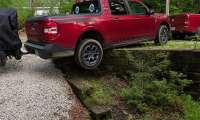
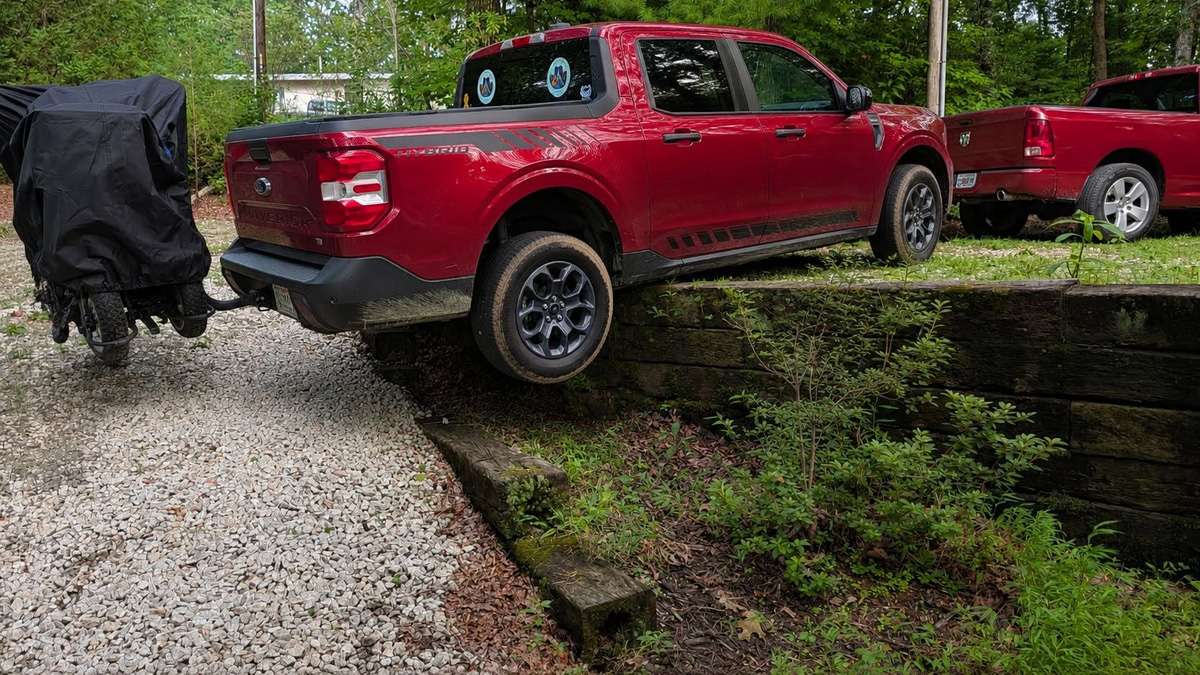
During a backing maneuver in South Carolina, Taylor’s three-month-old 2026 Ford Maverick Hybrid AWD dropped partly over a retaining wall. The photograph he shared is uncomfortable in a very specific way. The truck is still upright. Its rear quarter is perched at the edge, the ground falls away beneath it, and a covered cargo carrier hangs from the receiver behind the bumper.
Then the Maverick drove itself out.
“The Maverick was able to pull itself up back onto flat ground,”
Taylor wrote in an owner-group post. He thanked Ford’s Maverick engineering team and said a visual check found no damage beyond a mud flap that came off.
That is a fine result for a compact hybrid pickup on a bad piece of geometry. It also leaves two separate questions, and the photograph can answer only one of them.
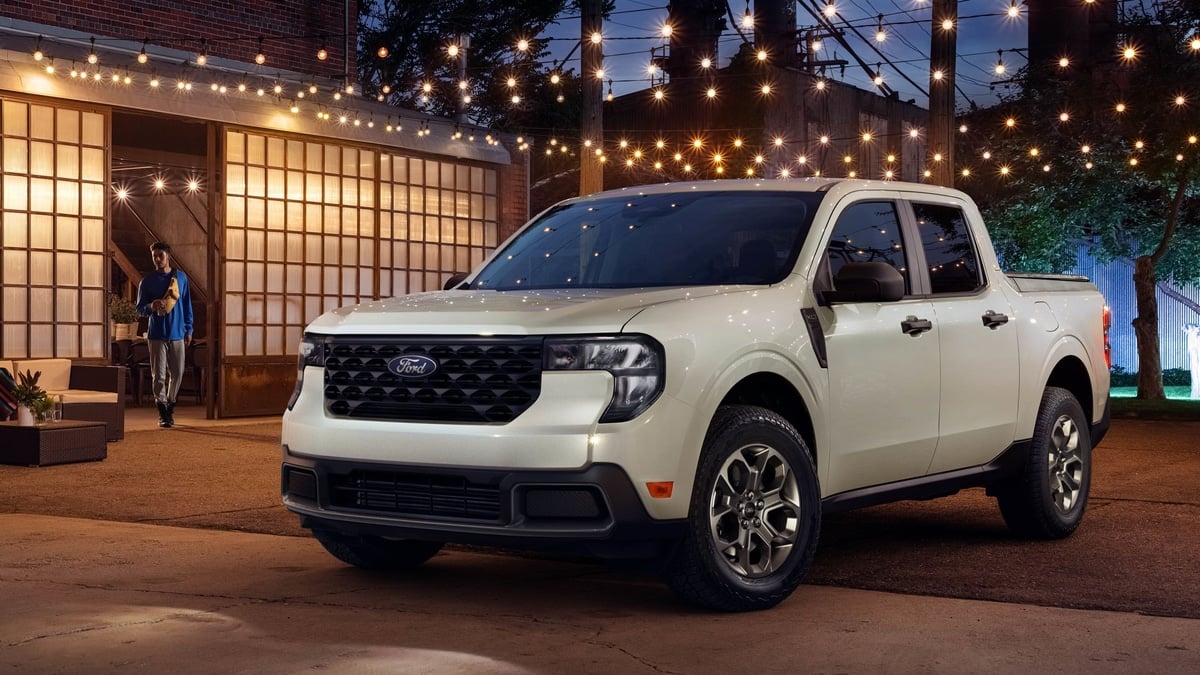
The truck had enough traction to escape. Whether its underside absorbed damage requires a closer look.
The AWD System Solved the Immediate Problem
The recovery deserves credit on its own terms.
A vehicle hung at an angle can unload a tire, reduce the grip available at one end, and force the driveline to work with an awkward distribution of weight. Taylor says the Maverick pulled itself back onto level ground rather than requiring a tow. That is the kind of low-speed event where all-wheel drive earns its keep without any desert-racing theater.
Ford made hybrid AWD available on the Maverick beginning with the 2025 model year, and the configuration continues for 2026. Ford lists the current hybrid AWD with 8.1 inches of minimum running ground clearance, a 21-degree departure angle, and a 15.9-degree breakover angle.
Those last two figures help explain the photograph. Departure angle describes how sharply the ground can rise behind the rear tires before the vehicle’s tail contacts it. Breakover angle describes the crest that the truck can straddle before the center of its underside touches. A retaining wall is harsher than either standardized measurement because it presents an abrupt edge instead of a smooth ramp.
The hitch-mounted carrier makes the geometry longer. Anything extending behind the rear axle sweeps through a wider arc and can meet the ground sooner. The supplied image does not establish that the carrier or receiver struck the wall, and its contents and weight are unknown. It does give an inspector another place to look. If the carrier took a hit, the load traveled into the receiver and its mounting points.
Taylor’s experience adds a new kind of evidence to the Maverick owner record. A 2025 Maverick Hybrid AWD previously carried a claimed 1,350-pound payload, while a 2026 Maverick Hybrid towed a 13-foot Casita from Texas to North Carolina. Taylor’s case asks a different question. It shows what happens when capability is needed for one ugly minute rather than a planned load over hundreds of miles.
“No Frame” Is Technically Correct and Practically Incomplete
One commenter warned Taylor that the Maverick has no frame and urged him to inspect the unibody, brake lines, and fuel lines. Taylor replied that everything looked good.
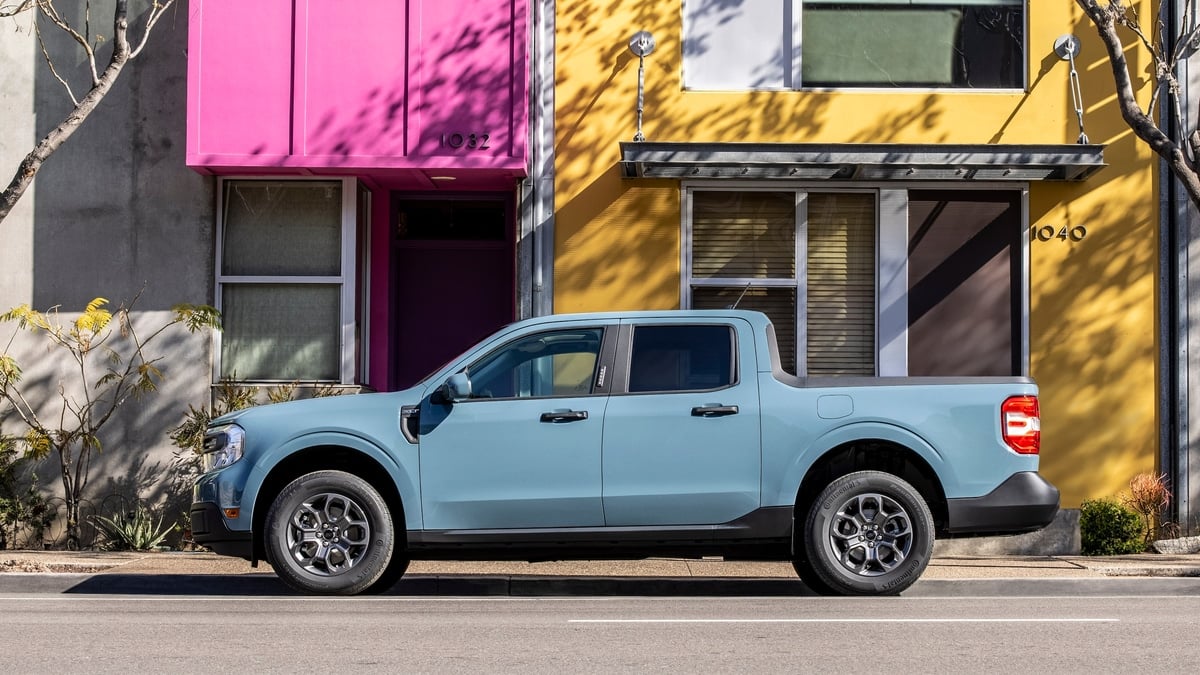
Ford officially classifies the Maverick as a unibody compact pickup. In a body-on-frame truck, a separate ladder frame carries the cab and bed. The Maverick’s body shell, floor structure, rails, reinforcements, and subframes work together as the load-bearing structure.
Owners will still point beneath a unibody vehicle and casually call a structural rail “the frame.” The vocabulary matters less than the inspection. A unibody can survive this event perfectly well, but a clean bumper and a truck that drives straight do not prove every seam, shield, mount, and line underneath escaped contact.
Ford’s specifications place the hybrid battery on the passenger side beneath the cabin. That does not mean Taylor’s battery struck anything. The photograph does not show such contact, and Taylor reported no warning messages. Its location simply belongs on the inspection map whenever a hybrid has rested on a hard edge.
A technician with the truck on a lift can check the following areas in minutes:
- Underbody shields and fasteners for scraping, tearing, or displacement.
- Unibody rails, seams, and jacking points for fresh witness marks or deformation.
- Front and rear subframes, suspension links, and mounting points.
- The hybrid battery enclosure and the structures surrounding it.
- Brake, fuel, vapor, and electrical lines are routed beneath the body.
- Exhaust components and heat shields.
- The receiver hitch, carrier, and hitch mounting points.
- Tire sidewalls, wheel lips, alignment, and any new steering-wheel offset.
That list is not a prediction of damage. It is how an owner converts “it looks fine” into “the areas that could have been touched were checked.”
The Missing Mud Flap Is Useful Evidence
Taylor said he found no damage and still had the detached mud flap, which he planned to reinstall. That small failure helps locate at least one contact or deflection point. It may have sacrificed itself exactly as a flexible, exposed trim part should.
It also argues against treating the incident as invisible.
Mud flaps sit close to the tire and ground. If one was pulled off, something reached an area that normally clears the road. The next inspection should follow the marks inward from that corner. Look for scuffed liner fasteners, a distorted bracket, a pinched harness, a bent heat shield, or a tire rub mark. Most findings would be modest. Finding them now is cheaper than discovering one through a rattle, uneven tire wear, or a warning light later in the trip.
Taylor was only halfway through his 30-day journey when he posted. If the truck remains free of leaks, warnings, unusual noises, vibrations, steering changes, and tire damage, his visual check is encouraging. A lift inspection and alignment check would provide the reassurance needed for the remaining miles. Keeping photographs and a repair order would also create a record if a delayed symptom appears.
Traction and Clearance Keep Different Scores
The owner-group response split in a revealing way. Some readers saw a purchasing argument for the Maverick’s AWD system. Others saw an underbody inspection waiting to happen. Both reactions fit the same photograph.
Taylor’s truck appears to have done the heroic part. It found enough grip to climb out and continued the trip. That result says something meaningful about the Maverick Hybrid AWD’s low-speed usefulness.
The inspection is what protects the owner from turning a good recovery into a bad assumption. All-wheel drive can get a truck off a wall. It cannot certify the metal and hardware that meet the wall on the way down.
I would want three things before closing Taylor’s file: clear underside photographs, a technician’s lift inspection, and an alignment reading. If all three come back clean, this becomes one of the better Maverick owner stories because the ending is supported as carefully as the escape.
Maverick owners, have you used the hybrid AWD system to recover from a similarly awkward situation? If the underside made contact, what did a lift inspection actually find?
One image by Jim Taylor.
About The Author
Noah Washington is an automotive journalist based in Atlanta, Georgia, covering sports cars, luxury vehicles, and performance culture. His reporting focuses on explaining the engineering, design philosophy, and real-world ownership experience behind modern vehicles.
Noah has been immersed in the automotive world since his early teens, attending industry events and following the enthusiast communities that shape how cars are built and driven today. His work blends industry insight with enthusiastic storytelling, helping readers understand not just what a car is, but why it matters.
Noah is also a member of the Southeast Automotive Media Association (SAMA), a professional organization for automotive journalists and industry media in the Southeast.
His coverage regularly explores sports cars, luxury vehicles, and performance-driven segments of the automotive industry, including the evolving culture surrounding Formula Drift and enthusiast builds.
Read more of Noah's work on his author profile page.
You can also follow Noah here:
Set Torque News as Preferred Source on Google
Follow us today...