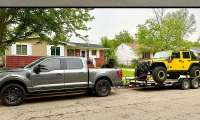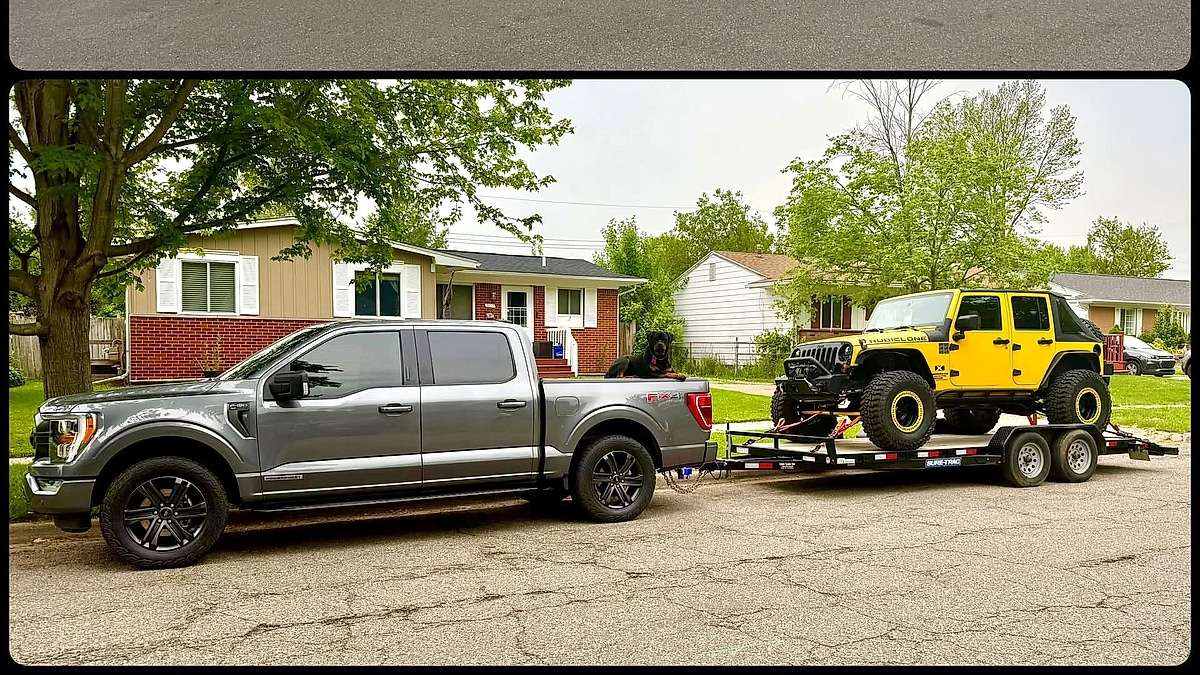

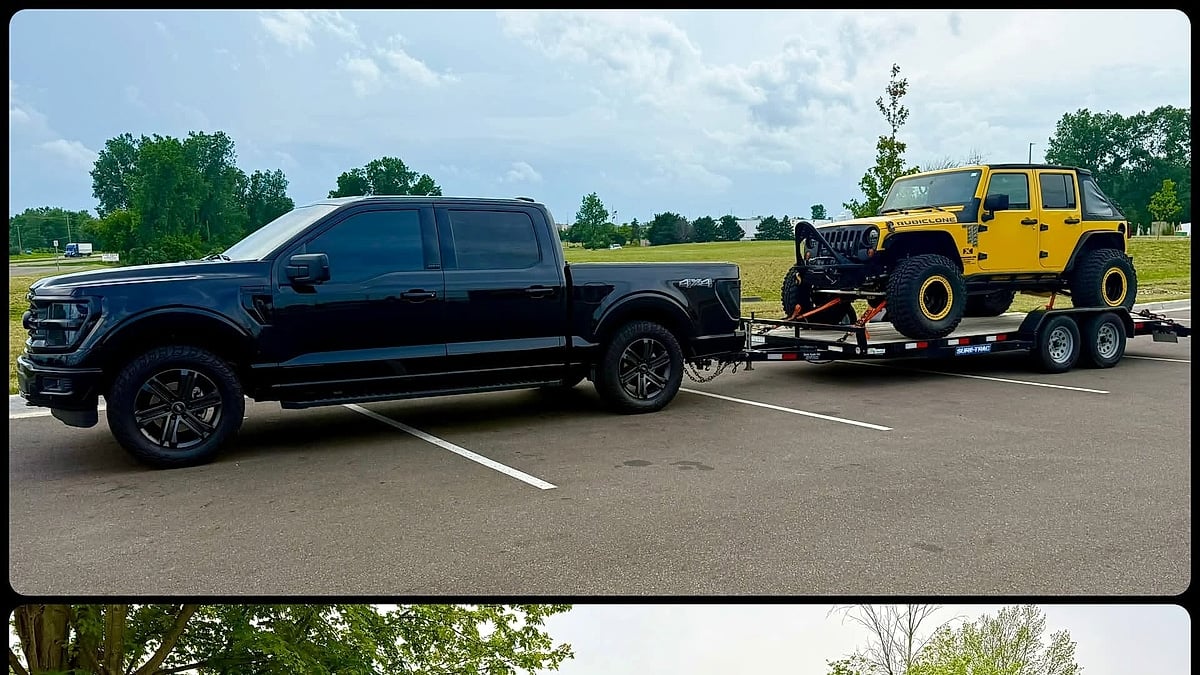
Brandon McGhan upgraded from a 2021 Ford F-150 PowerBoost to a 2025 model and lost one of his favorite towing conveniences.
His old truck would give him lane assistance with a trailer attached. His new one refuses almost every time. He measured the trailer, built the profile, checked for codes, looked through FORScan, and still came up empty.
The truck keeps saying no, according to the Facebook post.
That sounds like a software glitch until you separate three systems people keep mixing together: Lane Keeping, Lane Centering, and BlueCruise.
- Warns you when the truck drifts toward a lane marking and can provide steering-wheel vibration or an audible alert, depending on your settings.
- Works with Adaptive Cruise Control to make continuous steering corrections that help keep the truck centered in its lane, but Ford's 2025 owner manual specifies it requires a trailer to be detected.
- Ford's hands-free highway driving system is available on pre-mapped roads. It builds on adaptive cruise and lane-centering functions, but its availability while towing depends on model year, software version, and Ford's current operating restrictions.
Ford’s naming makes this harder than it needs to be. Lane Keeping is the basic system that can warn or nudge when the truck drifts toward a lane line. Lane Centering is the hands-on steering support tied to adaptive cruise. BlueCruise is Ford’s hands-free highway system on approved roads.
Those feel related from the driver’s seat. The truck treats them differently.
The Manual Gives Away The Answer
Ford’s 2025 F-150 manual lists one requirement for Lane Centering that explains McGhan’s frustration: a trailer must not be detected.
That means a 2025 F-150 can recognize the trailer, correctly set up the tow profile, show the trailer information, extend blind-spot coverage, monitor lighting, and then block Lane Centering because the trailer exists.
That is not a hidden fault code.
That is feature logic.
It also explains why owners are talking past each other in the comments. One owner says his 2021 still does it. Another says his 2025 Platinum will not. A 2022 owner remembers having hands-on BlueCruise while towing. A 2023 owner says it works, but the weight-distribution hitch fights it. A 2024 owner says unplugging the trailer makes the system work again.
They may all be telling the truth.
Different model years. Different software versions. Different BlueCruise releases. Different trailer profiles. Different over-the-air update histories. Different driver-assist definitions.
A 2021 truck that still behaves the old way may be behind on software. A 2025 truck that refuses Lane Centering with a connected trailer may be operating exactly as Ford intended.
That is annoying for owners who liked the old behavior.
It is still logical.
The Truck Has A Reason To Be Conservative
I would miss the feature too.
Long highway towing wears on a driver. A properly tuned lane-centering system can reduce tiny steering corrections over hundreds of miles. With a stable trailer, a calm road, and a hands-on driver, the feature feels useful.
Ford has to write software for worse cases.
Trailer sway control already has a job. If the trailer begins to sway, Ford says the system can brake individual wheels and reduce engine torque to help stabilize the combination. That is a serious intervention. It uses yaw, braking, and torque control to calm the rig.
Lane Centering also wants steering authority.
Now add a weight-distribution hitch, crosswind, ruts, lane markings, passing semis, off-camber pavement, and a trailer with its own yaw behavior. The truck may decide that steady steering support and trailer-stability intervention should not share control authority.
That is the piece many owners miss.
The system is not refusing because towing is too simple. It is refusing because towing adds another moving body to the steering problem.
A trailer can amplify a small correction. A truck that gently steers itself toward the lane center may feel natural, unhitched. With a trailer attached, the same steering correction can start a small disagreement between the truck, hitch, tires, trailer, and sway-control logic.
Ford appears to have chosen caution on newer software.
I can live with that decision.
I still think Ford should explain it better on the screen.
The Message Should Say More
“Not available” is lazy communication from a vehicle this sophisticated.
If the truck knows why Lane Centering is blocked, the message should say it plainly:
“Lane Centering unavailable while trailer is detected.”
Or:
“Trailer connected. Lane Keeping Alert remains available. Lane Centering disabled.”
That would save owners hours of forum hunting, FORScan digging, and dealer appointments. It would also keep people from trying to trick the truck with fake trailer weights or unplugging equipment just to restore a steering feature.
That last idea makes me nervous.
If the truck thinks no trailer is connected, it may also lose the trailer-aware behavior owners actually want. Blind-spot trailer coverage, trailer lighting diagnostics, brake-controller information, tow profiles, and stability logic all depend on correct trailer detection and setup.
Fooling the truck for lane centering is a bad trade.
A driver may gain a steering nudge and give up better trailer awareness.
How I’d Diagnose McGhan’s Truck
I would start by naming the failed feature correctly.
- Does basic Lane Keeping Alert still vibrate or warn with the trailer connected?
- Does Lane Keeping Aid nudge the truck away from lane lines?
- Does Adaptive Cruise work without Lane Centering?
- Does Lane Centering fail only when the trailer is plugged in?
- Does BlueCruise fail only when the trailer is plugged in?
Those answers separate a design limitation from a broken system.
Next, I would test the truck unhitched on a marked road. If Lane Centering works normally without the trailer, the camera, radar, steering sensor, and settings are likely fine. Then connect the trailer and select the measured trailer profile. If Lane Centering disappears, the manual’s trailer requirement is probably the reason.
After that, I would check the software status. Ford has moved BlueCruise and driver-assist behavior through updates. Owners comparing a 2021 to a 2025 may be comparing two different rulebooks wearing the same badge.
Then I would ask the dealer one direct question:
Is Lane Centering disabled by design when the 2025 F-150 detects a trailer?
A good service advisor should answer from Ford service information rather than guessing from memory.
FORScan will not help much if the feature is blocked by operating logic. A disabled-by-design system will not necessarily leave a diagnostic code.
What Ford Should Do Next
Ford should publish a clean towing driver-assist chart.
Rows for Lane Keeping Alert, Lane Keeping Aid, Lane Centering, BlueCruise, adaptive cruise, trailer sway control, trailer BLIS, Pro Trailer Backup Assist, and Pro Trailer Hitch Assist.
Columns for no trailer, trailer connected, trailer profile selected, trailer brake connected, BlueCruise road, and unsupported road.
Owners should know which tools remain active before the trip begins.
McGhan’s problem is not obscure. Ford sells F-150s to people who tow. PowerBoost owners often tow long distances. These customers care about small fatigue-reducing features, especially when they remember having them on an older truck.
A modern truck should not make owners guess which safety systems are present after the trailer plug clicks into place.
F-150 Owners, What Still Works When You Tow?
If you tow with a 2021-to-2025 F-150, share your year, trim, BlueCruise version, trailer profile setup, and whether Lane Keeping, Lane Centering, or BlueCruise works with the trailer connected.
Comment down below with your thoughts.
One image by Brandon McGhan
About The Author
Noah Washington is an automotive journalist based in Atlanta, Georgia, covering sports cars, luxury vehicles, and performance culture. His reporting focuses on explaining the engineering, design philosophy, and real-world ownership experience behind modern vehicles.
Noah has been immersed in the automotive world since his early teens, attending industry events and following the enthusiast communities that shape how cars are built and driven today. His work blends industry insight with enthusiastic storytelling, helping readers understand not just what a car is, but why it matters.
Noah is also a member of the Southeast Automotive Media Association (SAMA), a professional organization for automotive journalists and industry media in the Southeast.
His coverage regularly explores sports cars, luxury vehicles, and performance-driven segments of the automotive industry, including the evolving culture surrounding Formula Drift and enthusiast builds.
Read more of Noah's work on his author profile page.
You can also follow Noah here:
Set Torque News as Preferred Source on Google
Follow us today...