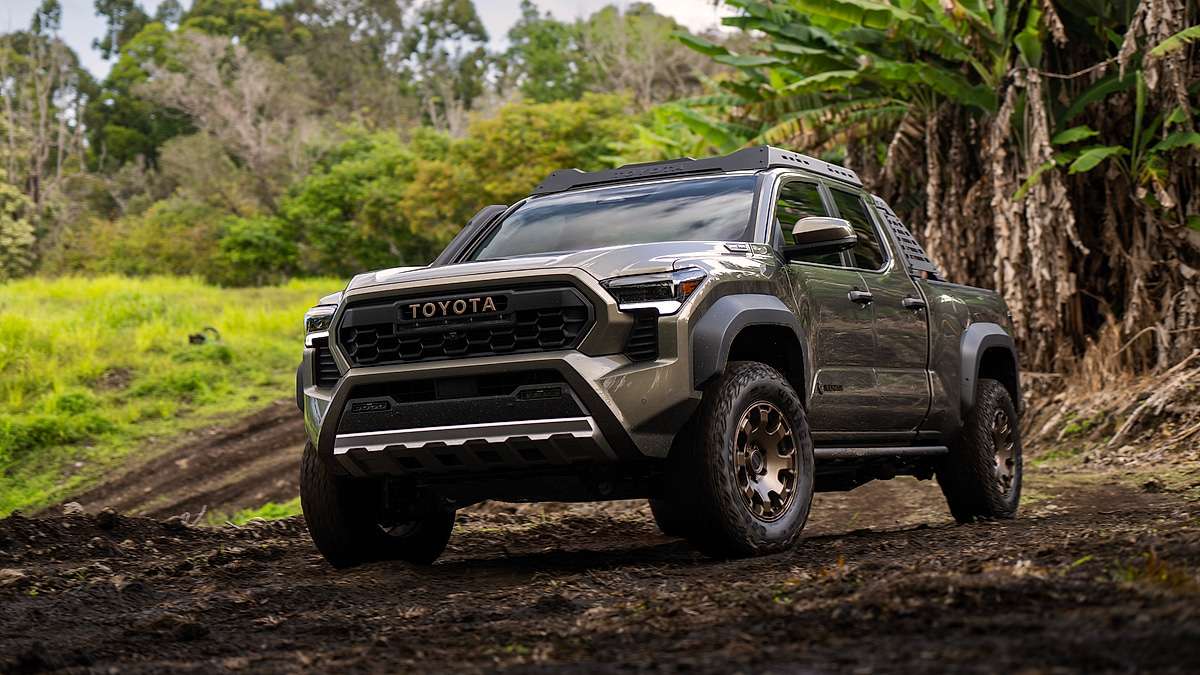

Bradley Emmons did something useful for every fourth-generation Tacoma owner arguing about bigger tires.
He put a price on the MPG hit. His truck runs 295/70R17 BFGoodrich KO3s on Method 318 +25 wheels. The common complaint is familiar: bigger, heavier all-terrain tires look right on the Tacoma, then fuel economy drops by two or three MPG, and the forum fills with regret.
Emmons used a simple example on his Facebook post.
At 12,000 miles per year and roughly $3.79 per gallon, a Tacoma getting 20 MPG burns 600 gallons and costs about $2,274 per year. Drop to 17 MPG, and the truck burns about 706 gallons for roughly $2,671. The difference sits around $400 per year, or about $33 per month.
- At 8,000 miles a year instead of 12,000, that same 3-MPG drop works out to roughly $22 per month, making the upgrade easier to justify for weekend adventurers than daily commuters.
- Larger, heavier tires can also increase replacement costs, slightly accelerate brake wear, and may require more frequent alignments if the truck sees regular off-road use.
- Keeping highway speeds around 65 mph instead of 75 mph can recover a surprising amount of lost efficiency, helping offset part of the MPG penalty without changing the truck's setup.
That math is close enough to be useful. With AAA’s current national average around $3.80, I get about $402 per year, $33.50 per month, or $1.10 per day.
That is the easy receipt.
The other receipts arrive more quietly.
The Fuel Math Holds Up
At 12,000 miles a year, a 3-MPG drop from 20 to 17 sounds worse than it feels at the pump.
The annual difference:
-
20 MPG: 600 gallons
-
17 MPG: 706 gallons
-
Extra fuel: 106 gallons
-
Extra cost at $3.80: about $402
That is a set of nice floor mats, one off-road recovery class, or roughly one KO3 tire, depending on size and seller.
Mileage changes the whole argument.
At 5,000 miles per year, the same MPG drop costs about $167 annually.
At 20,000 miles per year, it costs about $670 annually.
Gas prices swing the number, too. At $4.79 per gallon, which one Oregon commenter mentioned, the 12,000-mile penalty climbs to about $507 per year.
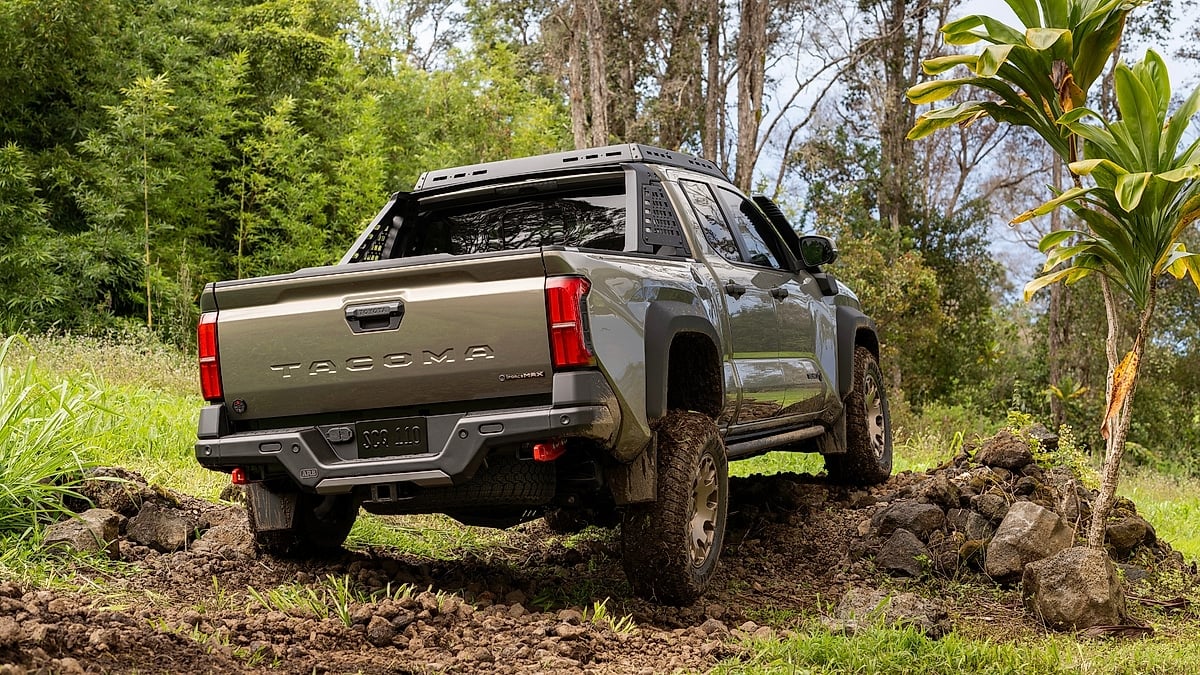
So Emmons is right for one large group of owners: moderate annual mileage, national-average fuel prices, and a truck bought partly for capability and appearance.
A daily commuter running 22,000 miles a year in expensive-fuel territory gets a different bill.
That is why the smart answer depends on the owner, not the comment section.
Your Displayed MPG May Be Wrong After 295s
The 295/70R17 part of the post deserves its own discussion.
A BFGoodrich KO3 in that size is listed at 33.3 inches in overall diameter and 624 revolutions per mile. If the truck started on a roughly 265/70R17 tire, the new setup is about 5.2 percent taller.
That can make the truck undercount miles if the speedometer and odometer have not been recalibrated.
A displayed 17 MPG could be closer to 17.9 MPG if the only error were tire circumference. A displayed 14 could become roughly 14.7. The correction will vary with factory tire size, actual measured diameter, tread wear, inflation, load, and whether the Tacoma’s systems adapt or have been recalibrated.
Do not rely on the dashboard alone.
Use GPS distance and fuel receipts.
Fill the tank. Record GPS miles on a fixed route. Refill at the same pump if possible. Divide real miles by gallons added. Then compare that result with the truck’s display.
That test costs one tank of fuel and ends half the argument.
Bigger Tires Buy Clearance, Then Charge Interest
A 295/70R17 tire can give a Tacoma a tougher stance and a little more axle clearance.
If the stock tire was near 31.6 inches tall, moving to 33.3 inches adds about 0.85 inches of ground clearance at the axle. That matters on rocks, ruts, snow, and trail edges.
The tire also weighs more. The KO3 in 295/70R17 is listed at around 63 pounds. That extra rotating mass affects acceleration, braking, steering response, and the way the suspension controls the wheel over bumps. Add wider tread and more aggressive blocks, and highway noise increases. Rolling resistance rises. Wet braking can change. The truck may hunt gears more often. Effective gearing gets taller.
The owner feels all of that through the seat and steering wheel.
The +25 offset on the Method wheel is not extreme, but wheel offset and tire width change scrub radius, fender clearance, mud-flap interference, and load paths through steering and suspension parts. The more aggressive the stance, the more carefully owners should watch ball joints, tie rods, wheel bearings, alignment, and tire wear.
Fuel is the visible cost.
Wear is the patient one.
The Upgrade Still Makes Sense For The Right Owner
I like the way Emmons framed the decision.
A Tacoma does not exist only to minimize fuel cost. A Tacoma with the right tires can become more useful, more confident, and more enjoyable. Better sidewall protection, stronger carcass construction, improved off-road grip, winter rating, and a stance the owner actually likes all have value.
Some owners will never use the extra traction. That is their money.
Others will air down, drive trails, run forest roads, cross snow, climb wet two-tracks, or travel remote places where a tougher tire is cheap insurance.
The key is honesty.
Buying 295s for looks is fine if the owner accepts the bill. Buying them for trails is even easier to defend. Complaining afterward because a heavier, taller, wider tire uses more fuel is like installing a roof rack and being shocked by wind noise.
The tire did exactly what physics said it would do.
The Better Way To Decide
I would run this decision through five questions before ordering:
How many miles do I drive each year?
What is my local fuel price?
Will I recalibrate or at least hand-calculate MPG?
Do I need the added clearance and sidewall strength?
Am I willing to accept more noise, weight, and wear?
For Emmons, the trade appears reasonable. His annual mileage is low enough that fuel cost does not dominate the decision, and the truck looks purposeful on the 295s.
For a long-distance commuter, stock or near-stock sizing may be the better call. Toyota’s factory wheel-and-tire package usually gives the best balance of noise, economy, braking, ride, and warranty peace. A milder all-terrain in stock size can improve grip without punishing the truck as hard.
That answer lacks drama.
It works.
Tacoma Owners, Post The Corrected MPG
If you moved to 285s, 295s, or 35s on a fourth-generation Tacoma, share tire size, wheel offset, displayed MPG, GPS-corrected MPG, annual mileage, and whether the extra traction and clearance were worth the fuel hit.
Comment down below.
About The Author
Noah Washington is an automotive journalist based in Atlanta, Georgia, covering sports cars, luxury vehicles, and performance culture. His reporting focuses on explaining the engineering, design philosophy, and real-world ownership experience behind modern vehicles.
Noah has been immersed in the automotive world since his early teens, attending industry events and following the enthusiast communities that shape how cars are built and driven today. His work blends industry insight with enthusiastic storytelling, helping readers understand not just what a car is, but why it matters.
Noah is also a member of the Southeast Automotive Media Association (SAMA), a professional organization for automotive journalists and industry media in the Southeast.
His coverage regularly explores sports cars, luxury vehicles, and performance-driven segments of the automotive industry, including the evolving culture surrounding Formula Drift and enthusiast builds.
Read more of Noah's work on his author profile page.
You can also follow Noah here:
Set Torque News as Preferred Source on Google
Follow us today...