
Your routine 45-minute oil change just turned into a multi-thousand-dollar mechanical nightmare.
The Highlander owner pulled into a dealership service lane for a simple, 45-minute oil swap. He grabbed a complimentary cup of lukewarm coffee, opened up his phone, and settled in.
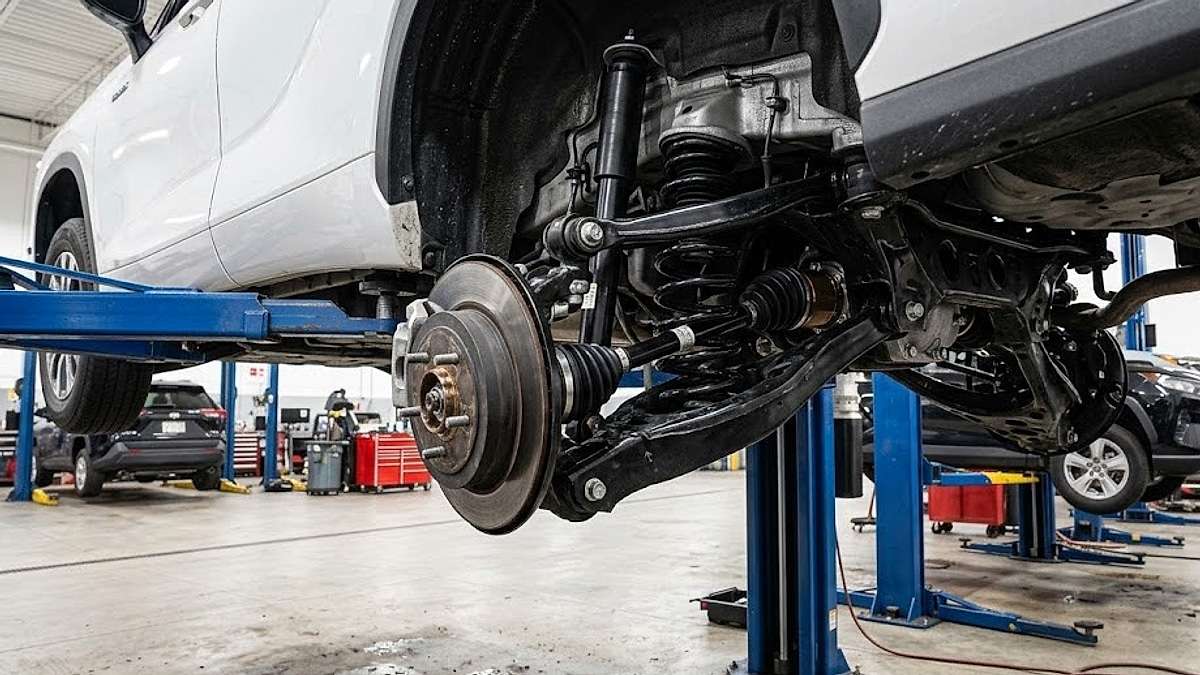
Then, the service advisor walked out with a pale face to tell him they just ripped the front axle out of your SUV.
This nightmare scenario became a reality for a Texas motorist recently. According to my ongoing investigative tracking, a routine maintenance visit can quickly spiral into a multi-thousand-dollar mechanical liability when under-trained lube technicians cross wires in the shop bay.
The Facebook Post That Shocked Highlander Owners
The bizarre service bay mix-up came to light when the owner sought urgent advice from fellow enthusiasts.
Cyril Simon from Houston, Texas, posted to the Toyota Highlander Owners Club Facebook page saying,
“I took my Highlander to Toyota for an oil change, and they removed the axle from my car due to a mix-up. They said they are putting it back. They had just started working on the axle and provided me with the documentation for it. Is there anything in particular that I have to worry about?”
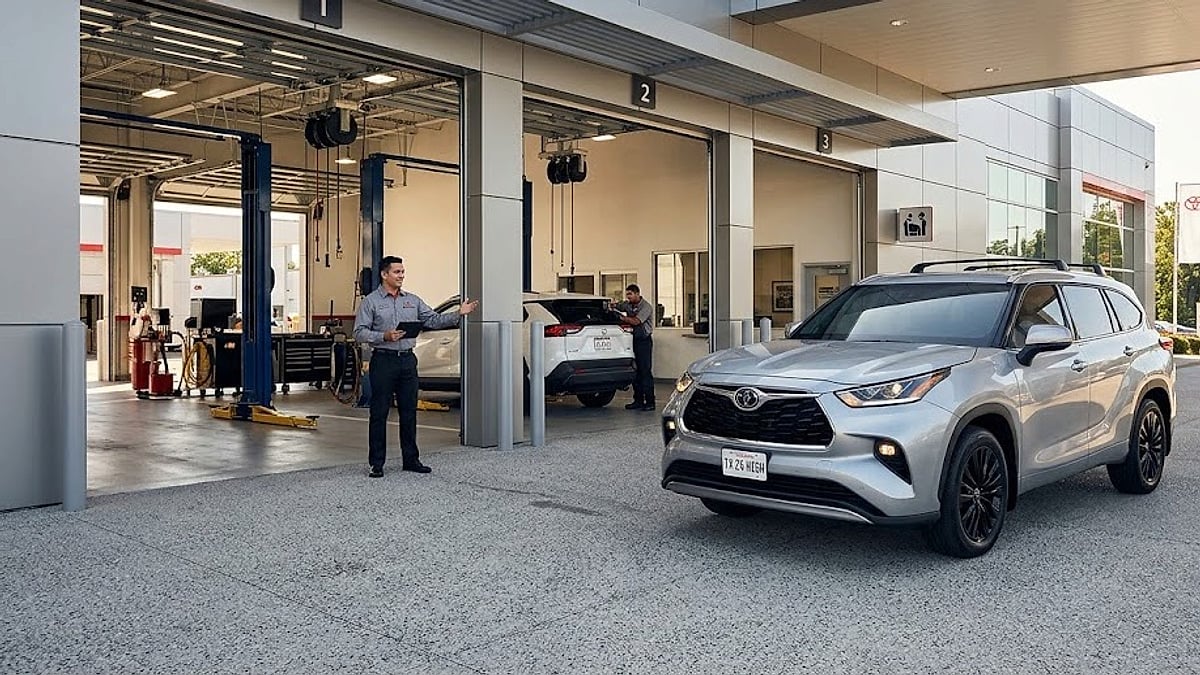
The short answer is yes. There is plenty to worry about. While dealerships are experiencing a massive surge in service business, managing over 270 million repair orders annually according to a Cox Automotive Service Industry Study, nearly 45% of vehicle owners report deep dissatisfaction with dealership communication and unexpected service-drive headaches.
The Hidden Story Behind the Service Bay Chaos
How does a mechanic confuse an oil pan plug with a constant velocity (CV) axle assembly?
The hidden reality of modern dealership operations comes down to brutal flat-rate time pressures and extreme tech turnover.
Lube racks are almost exclusively staffed by entry-level apprentices earning low hourly wages. If an inexperienced technician misreads a digital repair order or simply walks to the wrong car in a crowded row of identical silver family haulers, heavy tools start flying.
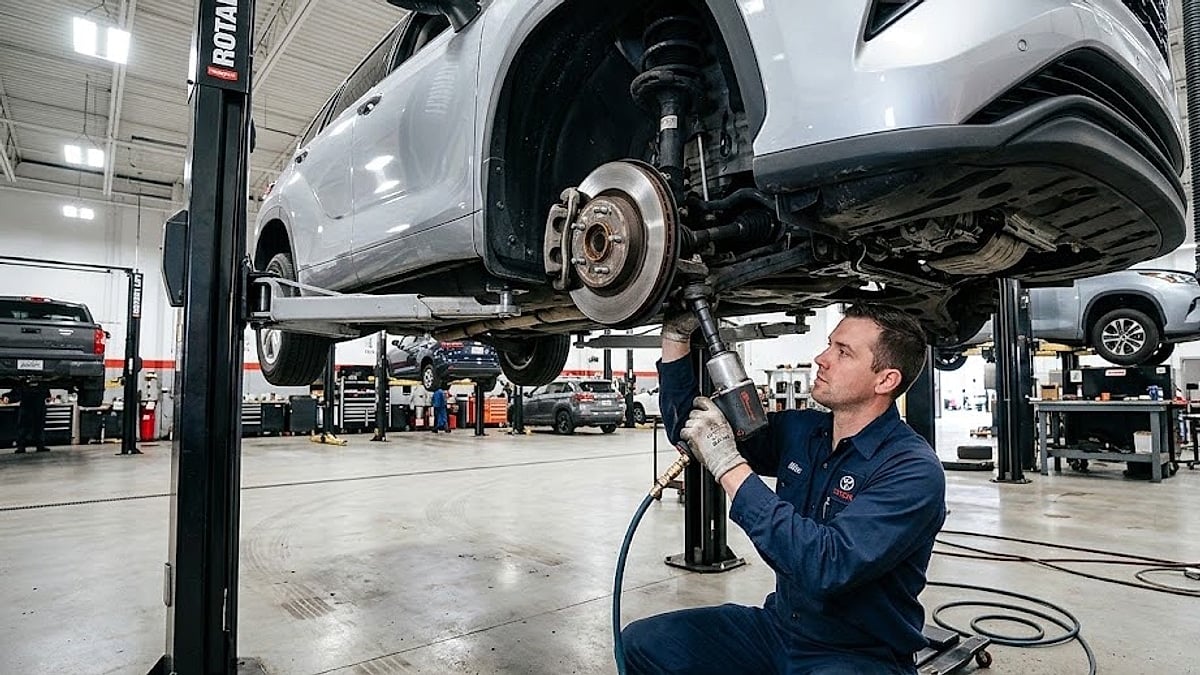
In the rush to beat the clock, a tech assigned to do an axle replacement on a neighboring Highlander can easily pull the wrong vehicle into their bay. Once a vehicle is up on the lift, an air impact wrench can zip off an axle nut and pop a lower ball joint in under three minutes flat.
The Real Mechanical Danger: Transaxle Fluid Loss
The immediate concern for this Houston owner isn't just the physical hardware being jammed back into place.
When a front-wheel-drive or all-wheel-drive Highlander axle stub is pulled out of the transaxle housing, it breaks a highly engineered hydraulic barrier.
A significant amount of world-class Toyota automatic transmission fluid will instantly pour out onto the shop floor. If the dealership simply slides the old axle back in without meticulously topping off that specialized fluid, the owner faces catastrophic transmission failure within months.
As documented in my previous vehicle preservation report, skipping proper factory fluid protocols can result in a catastrophic loss of operational longevity.
The Secondary Threat: Torn Seals and Deformed Splines
The transmission housing relies on a delicate, spring-loaded rubber lip seal to keep fluid locked inside the transaxle. These seals are single-use components that are easily sliced by the razor-sharp metal splines of an axle shaft during removal or reinsertion.
If the technician tries to "save time" by forcing the old axle back through the original seal, a slow, hidden fluid leak will develop.
Over time, that slow leak will dry out the planetary gears, leaving the owner stranded with a ruined drivetrain long after the dealership paperwork has cleared.
Furthermore, consumer automotive diagnostic data published via RepairPal's Consumer Reports Industry Review indicates that a staggering 28% of all consumer complaints involve shops failing to fix mechanical problems correctly the first time, forcing owners to return for repeat repairs.
What the Owner Must Demand Before Signing the Release
If you find yourself in Cyril’s shoes, do not simply accept a polite apology and a free car wash. Your financial protection depends entirely on the specific documentation you demand before the keys are handed back.
1. First, require the service manager to document the error in writing on an official corporate repair order. This paperwork must state that a brand-new, original equipment manufacturer (OEM) transmission oil seal was installed during reassembly.
2. Second, force the shop to perform a full transmission fluid level inspection using the official factory overflow plug procedure.
3. Finally, demand a signed corporate warranty extension covering that specific axle assembly, wheel bearing, and internal transmission components for at least the next 12 months or 12,000 miles.
Protecting Your Drivetrain Investment
Automakers continue to push the boundaries of mechanical tolerances, making precise maintenance absolutely vital.
As I noted in my separate technical warning guide, modern drivetrain components operate under incredibly tight parameters where even minor fluid variations can cause severe, long-term wear.
Never let a dealership minimize a major service mistake as a harmless "mix-up." A pulled axle is a complete suspension teardown that alters the steering geometry and compromises factory seals. Stay vigilant, check your garage floor for red fluid spots, and always verify the paperwork before driving away.
What Would You Do? Have you ever caught a dealership mechanic making a major mistake on your vehicle during a routine service visit?
Tell us what you think in the comments section below!
Come back tomorrow… or check my Torque News Home Page for more of my informative Toyota Highlander news articles.
About The Author
Denis Flierl is a 14-year Senior Reporter at Torque News and a member of the Rocky Mountain Automotive Press (RMAP) with 30+ years of industry experience. Explore his full investigative reporting archives and technical guides at DenisFlierl.com.
Based in Parker, Colorado, Denis leverages the Rockies' high-altitude terrain as a rigorous testing ground to provide "boots-on-the-ground" analysis for readers across the Rocky Mountain region, California EV corridors, the Northeast, Texas truck markets, and Midwest agricultural zones.
A former professional test driver and consultant for Ford, GM, Ram, Toyota, and Tesla, he delivers data-backed insights on reliability and market shifts. Denis cuts through the noise to provide national audiences with the real-world reporting today’s landscape demands.
Connect with Denis: Find him on LinkedIn, X @DenisFlierl, @WorldsCoolestRides, Facebook, and Instagram.
Photo credit: Denis Flierl
Set Torque News as Preferred Source on Google
Follow us today...