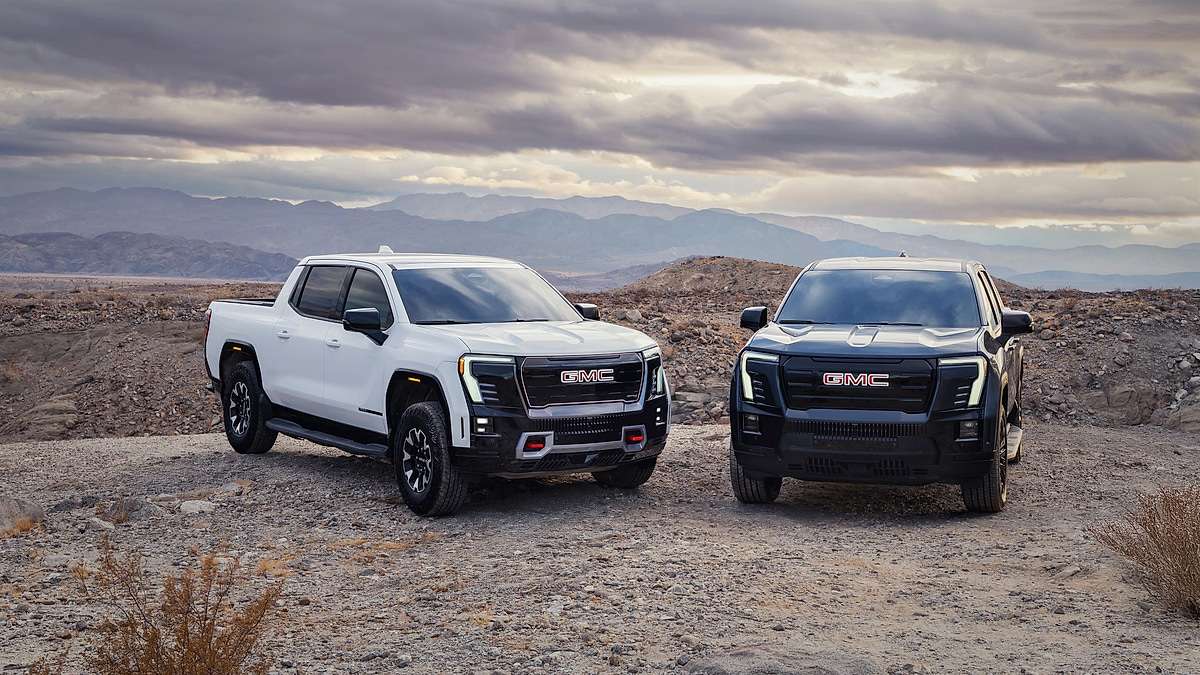

Moon Jeong did the thing EV owners are told will cost them range.
He put a more aggressive all-terrain tire on a full-size electric pickup, then took it on the highway at real American speeds.
The tire is the Pirelli Scorpion XTM AT in 285/65R20. That size works out to roughly 34.6 inches tall, close enough to the 35-inch tire conversation that truck owners start leaning forward. Jeong now has about 1,000 miles on the setup and posted his first useful road-trip numbers after driving his GMC Sierra EV from Atlanta to Charlotte and back.
Cruise set at 75 mph the whole way, according to their Facebook post.
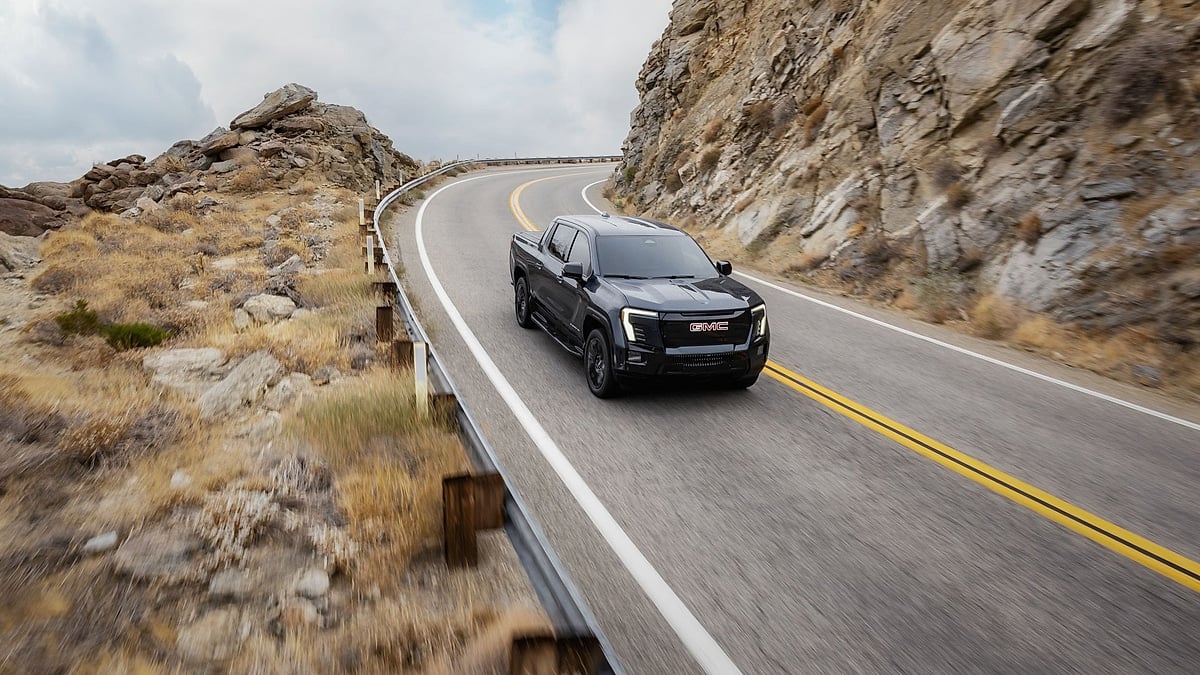
Going there, the truck returned 2.1 miles per kWh. Coming back, it returned 1.9 miles per kWh. The return trip was exactly 232 miles and used 55 percent of the battery. Simple state-of-charge math puts the full-pack highway projection around 421 miles for that return leg.
- At 75 mph, the difference between 2.1 and 1.9 mi/kWh may look small, but over a full battery it translates to roughly 40–50 miles of real-world range swing, enough to determine whether you stop to charge or keep rolling.
- The 285/65R20 size adds both rotational mass and aerodynamic drag compared to stock tires, meaning the efficiency hit is coming from more than just tread aggressiveness; it’s a compound effect owners should factor in before upgrading.
- Using state-of-charge math from a single leg can be misleading without accounting for elevation and wind, so the 421-mile projection is best viewed as a strong directional indicator rather than a repeatable guarantee.
That is a large number for any electric pickup.
It becomes more interesting with all-terrain tires and a 75-mph cruise setting.
The 421-Mile Figure Is Strong, Even If It Is Not The Whole Answer
Jeong first wondered whether the tire swap had cut his range by 16 percent, because he had previously done about 500 miles from Atlanta to Nashville on a single charge with cruise set at 75 mph.
He later corrected himself and said the decline was closer to 8 percent.
Both numbers come from understandable baselines.
Compare 421 miles against a prior 500-mile best-case trip, and the drop is roughly 16 percent. Compare 421 against the 2025 Sierra EV Denali Max Range’s 460-mile GM-estimated figure, and the drop is about 8.5 percent. Compare it with GMC’s 2026 Denali Max Range claim of up to 478 miles, and the gap is about 12 percent.
Different roads produce different stories.
Atlanta to Nashville and Atlanta to Charlotte are not the same test. Wind, traffic, elevation, temperature, tire pressure, pavement, battery temperature, and how the truck was driven before the trip all move the number. A one-way highway leg also carries the usual trap: the outbound and return legs rarely face the same wind.
The cleanest reading is this: Jeong’s Pirelli XTM setup still delivered a projected 421 miles at 75 mph on the return leg from Charlotte to Atlanta.
That should get anyone’s attention.
A truck this large on all-terrain tires running 75 mph and still projecting more than 400 miles is a reminder of what GM bought with that enormous battery. The pack gives owners room to make truck-owner choices, including better-looking, tougher tires, without turning every trip into a charger hunt.
The Tire Swap Changed More Than The Look
All-terrain tires do several things at once.
They usually add tread depth, blockiness, weight, sidewall toughness, and rolling resistance compared with a quieter highway tire. They can also change ride feel, steering response, noise, and efficiency. On an EV, every one of those changes becomes easier to see because the truck reports energy use directly.
Jeong’s pressure settings were high: 65 psi front and 70 psi rear, according to his comment. Higher pressure can reduce tire deflection and rolling resistance, though owners should stay within the tire, load, and vehicle guidance rather than chasing range with blind inflation.
He also reported a noise increase at first, estimating about 15 percent by his “earometer,” then said he stopped noticing after a week.
That sounds about right. All-terrain tires usually announce themselves most loudly during the first few days because the owner is listening for the change. After that, the new sound becomes part of the vehicle’s background.
The bigger surprise is that the Sierra EV did not seem to pay a massive range penalty. A 1.9-to-2.1 mi/kWh highway result at 75 mph leaves Jeong with a truck that still covers serious distance.
For an owner who wants a tougher stance, sidewall, and all-terrain capability, that is the number worth saving.
The Towing Claim Needs Careful Math
Jeong added another detail that started the real head-scratching.
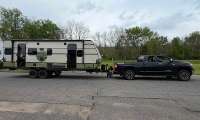
He said towing a 5,000-pound tandem trailer with a side-by-side caused no range loss at 70 mph over a 200-mile round trip.
Then, in a comment, he said he drove 200 miles and had 25 percent battery remaining. That points toward a rough full-charge towing projection of about 267 miles. He later suggested 250 to 300 miles may be realistic if he does not run 70 mph.
That is a towing penalty compared with the 421-mile highway projection.
The likely explanation is that he meant the tire swap did not appear to add much extra loss while towing, or that the towing result was better than expected. A 5,000-pound trailer with a side-by-side can still be far easier on range than a tall travel trailer, horse trailer, or enclosed cargo box. Weight hurts when accelerating and climbing. Shape hurts every mile at speed.
A low open trailer carrying a side-by-side may stay partly in the truck’s wake. A square camper turns into a rolling wall.
That is why towing-range claims without trailer shape are almost useless. A 5,000-pound open trailer and a 5,000-pound travel trailer can behave like different planets behind the same EV truck.
Jeong’s towing result is useful, but it should be read properly: his Sierra EV still appears capable of a roughly 250-to-300-mile towing window with that trailer under his conditions. That is good. It does not mean towing costs nothing.
The Sierra EV’s Battery Hides Some Tire Sins
A smaller EV would feel this tire change more sharply.
The Sierra EV has enough battery that a modest efficiency loss can be absorbed without changing the owner’s whole life. At 1.9 mi/kWh, the truck still covers hundreds of miles because the pack is enormous. A smaller EV pickup or crossover with a smaller battery might show the same percentage efficiency loss and suddenly become annoying on trips.
That is one reason the Sierra EV is interesting.
It lets the owner choose a more truck-like setup while keeping long-distance usability. Bigger tires, aggressive tread, highway speeds, mild towing, and bad weather all pull from the same bank. GM built a very large bank.
The bank is not infinite.
The same owner who sees 421 projected highway miles unloaded could see 250 to 300 while towing a moderate open trailer, and less with a taller camper or headwind. The truck’s advantage is not that physics disappears. The advantage is that the battery gives the owner more room before physics ruins the day.
That distinction matters for buyers planning tire swaps.
A 285/65R20 all-terrain may be completely livable for a Sierra EV owner who mostly drives on highways, occasionally tows, and wants a tougher look. The same owner should still expect less range than a stock highway tire in some conditions, more noise, and a higher cost when replacement time arrives.
The Test Jeong Should Run Next
Jeong already gave the community a good data point. One simple loop would turn it into a better one.
Pick a 100-mile out-and-back highway route. Start at the same state of charge. Set cruise at 75 mph. Record temperature, wind, tire pressure, payload, and kWh used. Run the same route again at 70 mph. If possible, repeat with the trailer attached.
The important figure is the energy used over the same road, not the dashboard’s estimated range. The estimated range changes with recent driving history. kWh used over a known distance tells the cleaner story.
The next test should also separate three questions:
- How much did the Pirelli XTM tires cost for the unloaded range?
- How much does speed change the tire penalty?
- How much does the trailer dominate the result?
- Those are different questions. Mixing them creates arguments that never end.
The 75-mph Atlanta-to-Charlotte data suggests the Pirelli setup is far from a disaster. The 200-mile towing note suggests the Sierra EV remains useful with a 5,000-pound open trailer. The owner’s range correction shows why baseline selection matters.
The truck did well.
The math needs honest framing.
What Sierra EV Owners Can Take From This
Jeong’s data says a Sierra EV Max Range on Pirelli Scorpion XTM AT 285/65R20 tires can still deliver a projected 421-mile highway leg at 75 mph under one owner’s conditions. That is the headline worth keeping.
The tire penalty appears manageable, not invisible. The towing result appears strong, not magic. The difference between an open trailer and a tall camper remains huge. Tire pressure, wind, and speed can move the result enough to make one trip look better or worse than the next.
For Sierra EV owners considering all-terrain tires, the lesson is encouraging.
You can probably get the look, sidewall, and trail confidence without destroying the truck’s long-distance personality. You still need to measure your own route, your own speed, your own trailer, and your own pressure settings.
The Sierra EV has enough battery to forgive some truck-owner decisions.
It will still send the bill through the kWh screen.
Sierra EV Owners, What Did Your Tire Swap Cost?
If you changed tires or wheels on a Sierra EV, Silverado EV, or Hummer EV, share the size, tire model, pressure, highway speed, mi/kWh before and after, and whether towing changed the result.
About The Author
Noah Washington is an automotive journalist based in Atlanta, Georgia, covering sports cars, luxury vehicles, and performance culture. His reporting focuses on explaining the engineering, design philosophy, and real-world ownership experience behind modern vehicles.
Noah has been immersed in the automotive world since his early teens, attending industry events and following the enthusiast communities that shape how cars are built and driven today. His work blends industry insight with enthusiastic storytelling, helping readers understand not just what a car is, but why it matters.
Noah is also a member of the Southeast Automotive Media Association (SAMA), a professional organization for automotive journalists and industry media in the Southeast.
His coverage regularly explores sports cars, luxury vehicles, and performance-driven segments of the automotive industry, including the evolving culture surrounding Formula Drift and enthusiast builds.
Read more of Noah's work on his author profile page.
You can also follow Noah here:
Set Torque News as Preferred Source on Google
Follow us today...