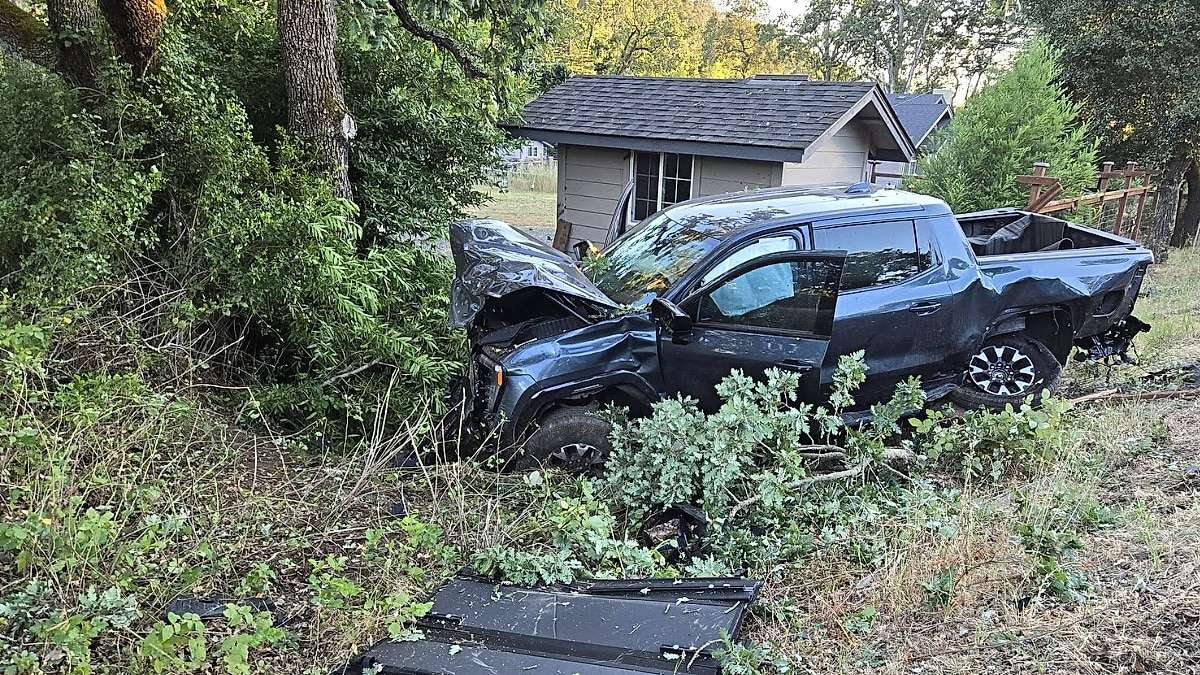

Nine months and 15,000 miles can tell you a lot about a vehicle. A single crash can tell you even more.
Here's a question worth thinking about: if your vehicle was involved in a serious accident tomorrow, would you buy the exact same model again? Keep that question in mind as you read, and share your answer in the comments below.
That's exactly the decision one 2026 GMC Sierra EV AT4 owner faced this week after driving the truck for nine months and more than 15,000 miles. Following a severe side-impact collision that left the truck heavily damaged, the owner said something that caught the attention of hundreds of fellow truck owners: "I think this truck saved our lives. No reason not to replace it with the same exact truck." (Note from the editor: trucks don't save lives, but God saved the owner's life in this truck... But let's move forward).
John Wedge of Santa Rosa, California shared his story in a public GMC Sierra EV Facebook group, and it stopped a lot of scrolling thumbs. He had been logging steady miles on his truck, the kind of ownership story we usually hear about in the context of a Sierra EV proving itself on a long road trip, before a routine drive turned into a fight to stay alive.
He wrote that he loved the truck for the nine months and fifteen thousand miles he had it, that he and his two passengers were banged up but still standing, and that he saw no reason not to replace it with the exact same truck. He referred to his vehicle as an AT4, though the lighting signature and aerodynamic front shield in his photos point more toward the Denali, the same flagship trim that owners have praised in our coverage of why some drivers say they will be GMC customers for life.
"Well, I loved this truck (2026 Sierra EV AT4) for the 9 months and 15,000 miles I had it for. We were involved in a bad accident (got broadsided) a couple days ago. Myself and my 2 passengers are banged up a bit, but we're still vertical. I think this truck saved our lives. No reason not to replace it with the same exact truck," John wrote in his group post sharing images with fellow Sierra EV owners.
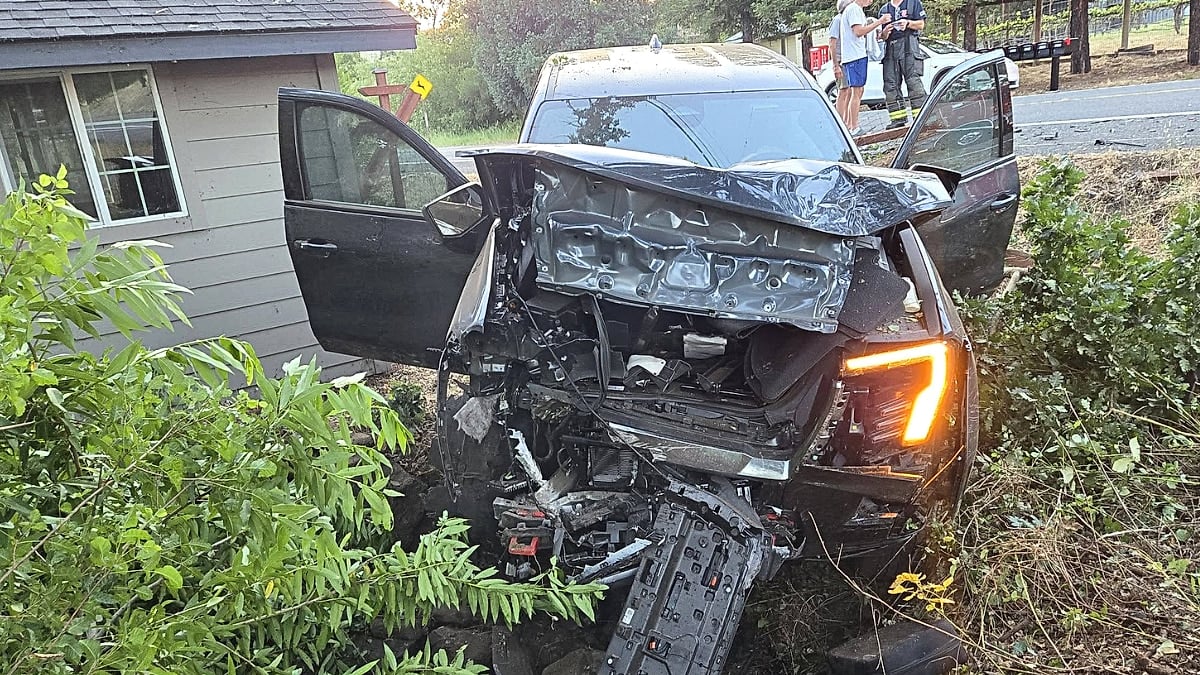
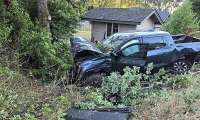
The photos tell their own story. The front clip is destroyed, the hood crumpled, mechanical components exposed. But the passenger cabin held its shape completely. Doors, roofline, glass, all intact, a contrast that reminded us of the lessons learned when GM put its own battery architecture through military grade evaluation to understand how far high voltage systems could be pushed before failing.
What The Truck Community Is Saying
The contrast between a wrecked front end and an untouched cab pulled in a wave of reactions from owners and safety minded readers alike. Ryan Gilbert wrote that the passenger shell held up incredibly well, with everything around it absorbing the blow, adding that he figured the other vehicle looked far worse. Steve Waddell said it was amazing how crumpled the front and back were while the cab stayed solid.
Frank Ingratta said the damage was extensive but the cab looked largely intact, and that seeing it made him feel better about his own truck. PChess Erson echoed the relief, grateful that the cabin held during such a violent event, a sentiment that lines up with the kind of confidence we found in an owner's report of pushing a Sierra EV through eight to ten inches of heavy snow without a single hint of trouble.
A Tool, Not A Guardian
It is tempting to credit the steel, the aluminum, and the battery architecture for what happened in that ditch. We would rather give thanks to God that John and his passengers walked away, with the truck serving as the instrument that made it possible rather than the reason itself. The vehicle absorbed a blow that could have ended very differently in a lesser machine, much like the flood recovery story out of Kerr County, Texas where a Sierra EV Denali became something closer to a lifeline than a vehicle.
Angela Gibson added her own parallel story in the thread, saying her Blazer EV absorbed a large side impact, and that in any other car she figures she would have become part of the front bumper of a heavy duty pickup. That kind of testimony keeps surfacing across GM's electric lineup, and it echoes what we found while reporting on how the Ultium platform's battery enclosure changes the way the chassis behaves under stress.
Why The 2026 GMC Sierra EV's Cab Did Not Crumple
Traditional trucks rely on body on frame construction with a heavy engine block sitting up front, and in a severe crash that block can shove backward toward the firewall. The Sierra EV runs on General Motors' dedicated Ultium platform, where the front of the truck is an empty structural cavity built specifically to act as one continuous crumple zone. With no engine mass to push back, the entire front structure collapses in stages, soaking up energy long before it ever reaches the people inside, a concept we explored when looking at GM's broader battery strategy and its push to escape dependence on foreign supply chains.
The battery pack itself sits low in a reinforced steel structure integrated into the floor, which keeps the center of gravity close to the ground and resists the kind of twisting that leads to rollovers. When John's truck got knocked off the road and into a ditch beside a building, that low center of gravity is likely what kept it on its wheels instead of flipping. It is the same low slung stability that owners describe when towing nine thousand pounds across Nova Scotia without the truck ever feeling unsettled.
By The Numbers: The Sierra EV's Crash Day Math
- 8,500 pounds. The approximate curb weight of the Sierra EV Denali, more than twice that of the sedan involved in most broadside collisions on a typical city street.
- 15,000 miles in 9 months. How much John Wedge had driven the truck before the crash, an average of more than 55 miles a day.
- 478 miles. The EPA estimated range of the Sierra EV Denali Max Range, the version of the platform built on the same Ultium architecture that protected the cabin in this wreck.
- 800 volts. The electrical architecture running through the battery enclosure that doubles as the truck's structural floor, the same low slung pack that keeps the center of gravity planted instead of letting the truck roll.
- 350 kW. Peak DC fast charging speed supported by that same 800 volt system, enough to add roughly 100 to 120 miles of range in about 10 minutes.
- 3 occupants walked away. John and two passengers were banged up but mobile after the impact, with no reported serious injuries.
- 0 engine block up front. Unlike a gas truck, there is no heavy iron mass that can get shoved backward into the firewall, which is part of why the front end could fully collapse without compromising the cab.
- 2 out of 3 Sierra sales. GMC has said Elevation, AT4, and Denali trims, the lineup John's truck falls into, now make up more than two thirds of all Sierra light duty sales.
Total Loss And Facing The Insurance Ahead
When damage reaches this level on an advanced electric pickup, a total loss declaration is almost a certainty. Replacing the structural front clips, the suspension components, and verifying the integrity of the battery enclosure adds up fast, often faster than any adjuster wants to admit, a frustration that shows up often in owner accounts of dealing with Sierra EV mechanical issues and warranty disputes.
Justin Boll, who identified himself as an independent appraiser for Collision Safety Consultants of Idaho, offered John some practical advice in the thread, warning that insurers will likely lowball the initial offer and urging him to push for full value given the truck's rarity and premium trim. That kind of advocacy matters even more for a truck whose pricing has shifted as much as the Sierra EV's has, something we covered when GMC dropped pricing and added the AT4 and Elevation trims to widen its appeal.
By The Numbers: What A Total Loss Actually Costs
- 70 to 75 percent of MSRP. The rough damage threshold many insurers use before declaring an EV pickup a total loss rather than authorizing repair, a calculation that gets complicated fast on a premium electric pickup with a six figure original sticker price.
- $64,495 to $97,500. The price range across Sierra EV trims, from the AT4 and Elevation models up to the original Denali Edition 1, a spread that makes accurate trim identification critical when an adjuster is putting a number on the claim.
- One sealed structural component. The battery enclosure that doubles as the floor of the chassis cannot simply be patched the way a damaged frame rail on a gas truck can, and any suspected intrusion typically forces a full inspection before the vehicle can be cleared, the same scrutiny applied when GM evaluated its high voltage battery systems for the Department of Defense.
- Independent appraisal. Owners navigating a total loss on a rare or recently updated trim often need a third party appraiser to push back on a lowball offer, exactly the advice shared in the Facebook thread by Justin Boll, an independent appraiser for Collision Safety Consultants of Idaho.
- Limited replacement inventory. Because GMC only recently widened the lineup with more affordable Elevation and AT4 trims, finding a like for like replacement at a fair price can take longer than owners expect.
- Resale confidence intact. Despite the wreck, John's plan to buy the same exact truck again reflects the kind of loyalty also seen in owners who say they will be GMC customers for life after living with the platform day to day.
The Bigger Debate On Weight
This crash lands right in the middle of a national argument over heavy electric trucks sharing the road with much lighter cars. According to InsideEVs, federal regulators have proposed new vehicle safety rules partly aimed at reducing the risks posed by oversized trucks and SUVs, and the outlet noted that electric vehicles already have a weight problem compared with their gas powered counterparts. It is a fair point, and one that deserves a place in this conversation even as John's own experience argues the opposite case from the driver's seat.
That tension between collective road safety and individual occupant protection is not going away soon, and it shows up in nearly every comment section tied to a heavy EV crash story, including the kind of reaction we saw after an owner's GMC Sierra EV towed a camper trailer for the third straight EV generation in his driveway without missing a beat.
The Lesson In The Wreckage
A truck is just metal and circuitry, and an insurance check can replace metal and circuitry. What it cannot replace is a life, and that is the real takeaway here. John Wedge walked away from a wreck that could have gone very differently, and his instinct afterward was not to question the platform but to trust it again.
So we want to hear from you. If you were broadsided that badly, would you reach for the same truck again the way John did, or would the experience push you toward a completely different powertrain? And do you think the extra weight behind modern electric pickups is a price worth paying for the people inside them, or a risk that the rest of us on the road should not have to carry? Let us know where you land in the comments below.
Return tomorrow, or check our Torque News Home Page for more interesting automotive news articles.
Images by John Wedge from his public Facebook post, used for this news-reporting purpose.
About The Author
Armen Hareyan is the founder and Editor-in-Chief of Torque News and an automotive journalist with over 15 years of experience writing car reviews and industry news. Now based in the Charlotte region (Indian Land, SC, he founded Torque News in 2010, which since then has been publishing expert news and analysis about the automotive industry. He can be reached at Torque News on X, Linkedin, Facebook, and Youtube. Armen holds three Masters Degrees, including an MBA, and has become one of the known voices in the industry, specializing in the landscape of electric vehicles and real-world stories of actual car owners. Armen focuses on providing readers with transparent, data-backed analysis bridging the gap of complex engineering and car buyer practicality. Armen frequently participates in automotive events throughout the United States, national and local car reveals and personally test-drives new vehicles every week. Armen has also been published as an automotive expert in publications like the Transit Tomorrow, discussing how will autonomous vehicles reshape the supply chain, and emerging technologies in vehicle maintenance.
Set Torque News as Preferred Source on Google
Follow us today...