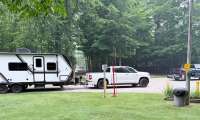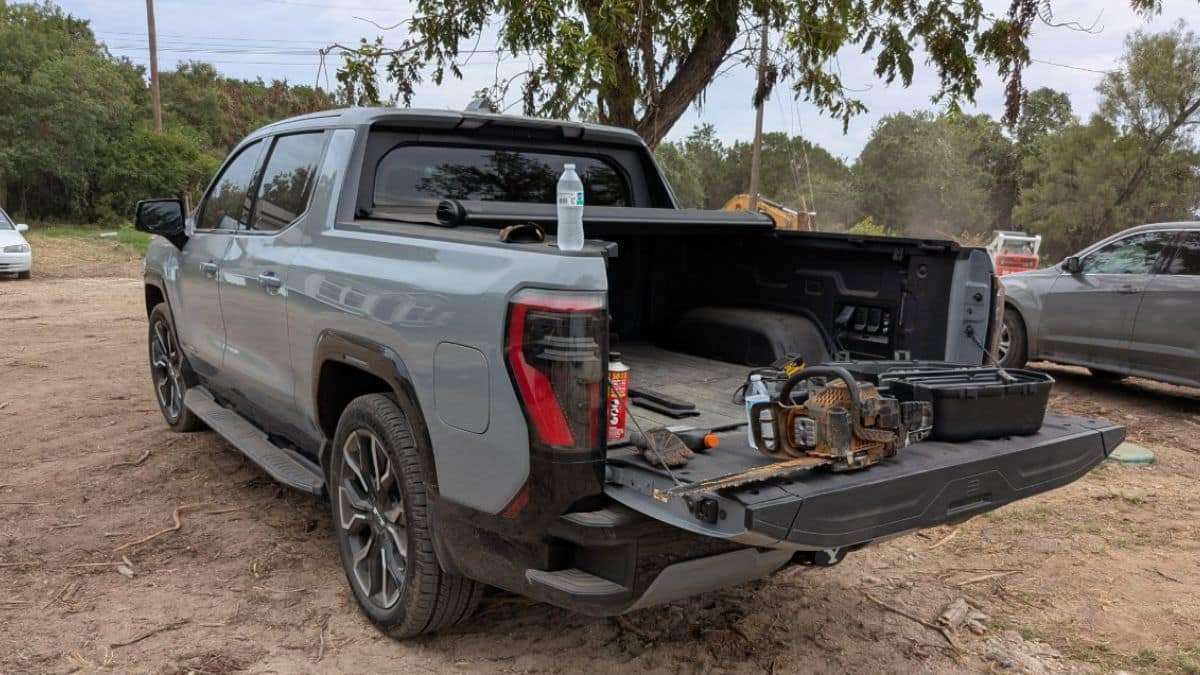

We often hear about torque and futuristic tech when it comes to electric trucks. But every now and then, a story emerges that reminds us of the real-world capability in the moments that count. That’s what I encountered happening in Kerr County, Texas, where one GMC Sierra EV Denali went from a cutting-edge pickup to a literal lifesaver.
Craig Boyle shared his experience in the GMC Sierra EV Group, which gained traction:
“Kerr County flood clean up today. This engineering marvel was a literal lifesaver, powering a mobile trailer, power tools, and a fridge. I still had juice to get home after 10 hours.”
Going Beyond Expectations
It’s easy to talk about kilowatt-hours and range estimations, but moments like Craig’s showcase dependability under pressure. His truck didn’t just survive the day; it became the backbone of a mobile response unit. The ability to power external devices, known as vehicle-to-load (V2L) or bidirectional charging, is still a fairly new feature in the EV world. But Craig’s post shows how it’s already making a real impact.
This kind of performance is exactly what makes the Sierra EV stand out in a growing field of electric trucks. And it aligns with stories like that of another owner who immediately put their GMC Sierra EV to work towing a Tesla Model Y straight from the dealership, showing that this truck isn’t just for daily commutes.
The Community Response
In the comments of Craig’s post, fellow owners and EV enthusiasts chimed in, offering praise and perspective.
Randall Pickett led with gratitude: “Thank you for your service!”
We all thank you Craig. Your selfless response to a real unfolding crisis is what makes humans so amazing. Having a proper supporting tool like the Sierra EV is also incredible to see in the middle of this crazy situation.
Mike Magnet pointed out what many in the EV world already believe but rarely get to showcase: “Such a hugely underrated feature of electric vehicles that have the feature.”
Bidirectional charging doesn’t get the same headline love as 0-60 times, but it’s stories like this that reveal its hidden potential.
James Shambo added: “People are missing out on the truck. They just don’t understand EVs and their abilities.”
This comment hits home. Much of the skepticism around electric trucks comes from misunderstanding their capabilities. Craig’s Sierra EV didn’t just meet expectations, but it exceeded them in the middle of a flood.
The Truck as a Power Station
Let’s break this down. Running a mobile trailer for 10 hours while powering heavy tools and appliances isn’t something most would expect from a pickup, electric or not. Yet Craig’s Sierra EV did it likely relying on its onboard 240V and 120V outlets, which GMC has designed specifically for worksite use and emergency utility.
While this may surprise some, it’s not an isolated case. In fact, another owner recently switched from a GMC 3500HD diesel to the Sierra EV Max Range, citing not only fuel savings but the practical utility of EV power features. Now I'm obviously not saying an EV can replace a 3500, but the EV's are still impressive for what they offer.
And while GMC still has some reliability concerns floating around, like some owners who find themselves stranded after a Costco trip, Craig’s experience shows the opposite: flawless function under high demand.
Engineering Beyond the Badge
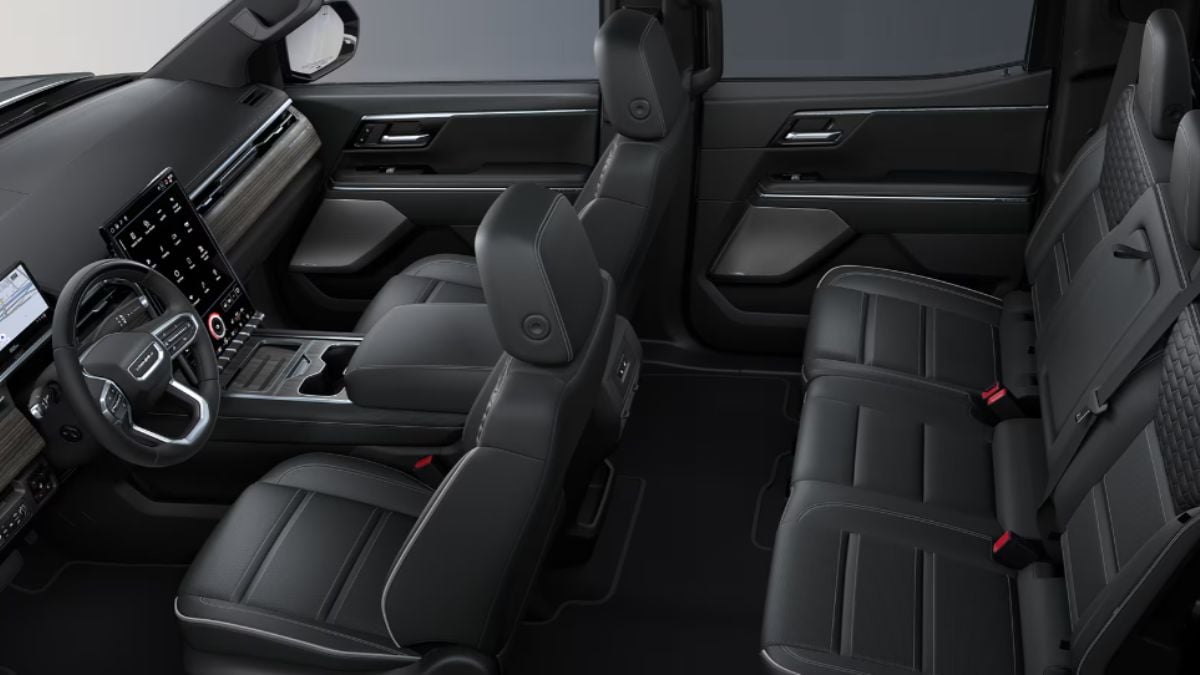
Craig called his truck an “engineering marvel,” and it’s hard to argue with that. The Sierra EV is not just about silent cruising or flashy screens. It’s a purpose-built machine that can step up when needed. And that kind of performance becomes a lot more valuable when you realize how vulnerable certain vehicles can be in emergency scenarios.
Some owners have had mixed experiences with early production Sierra EVs, with missing features and glitches, for example. But Craig’s story is a reminder that when these trucks are working as designed, they’re capable of so much more than we’re used to expecting from a vehicle.
That's why I think Craig’s post is one of the most powerful examples of why electric trucks aren’t just for early adopters or tech lovers. These are for real people in real situations. The Sierra EV didn’t just show off a feature. It provided stability in a moment of chaos, and that’s more than just a selling point.
There’s something exciting about seeing a truck rise to the occasion not just on paper, but in the field. It challenges the assumption that EVs are delicate or limited. And it reminds me that the future of driving isn’t just about how fast we get somewhere, it’s also about how much we can do along the way.
Key Takeaways for EV Owners and First Responders
- Vehicle-to-load functionality isn’t just a perk: Being able to run a mobile trailer and tools for 10 hours changes the game.
- Real-world durability matters: Craig’s truck didn’t glitch, stall, or fail—it kept working through an entire disaster response.
- EV skepticism still lingers: Comments like James' show there’s still education needed, even as owners like Craig prove the capability.
- Everyday heroes are using EVs in extraordinary ways: This isn’t about pushing limits but about having the right tools for the job.
- While some Sierra EVs have struggled, others are showing what happens when the truck performs exactly as intended.
- This platform is still evolving: And stories like Craig’s help shape the narrative of what EV trucks can truly become.
What Do You Think
Have you ever used your EV’s onboard power features for something beyond driving? Did it help you during an emergency?
And do you think bidirectional power will become a must-have in future trucks? Or is it still a niche feature more people need to discover?
Let us know what you think in the comments below.
Aram Krajekian is a young automotive journalist bringing a fresh perspective to his coverage of the evolving automotive landscape. Follow Aram on X and LinkedIn for daily news coverage about cars.
Image Sources: The “GMC Sierra EV Group” public Facebook group and GMC’s gallery, respectively.
Set Torque News as Preferred Source on Google
Follow us today...