
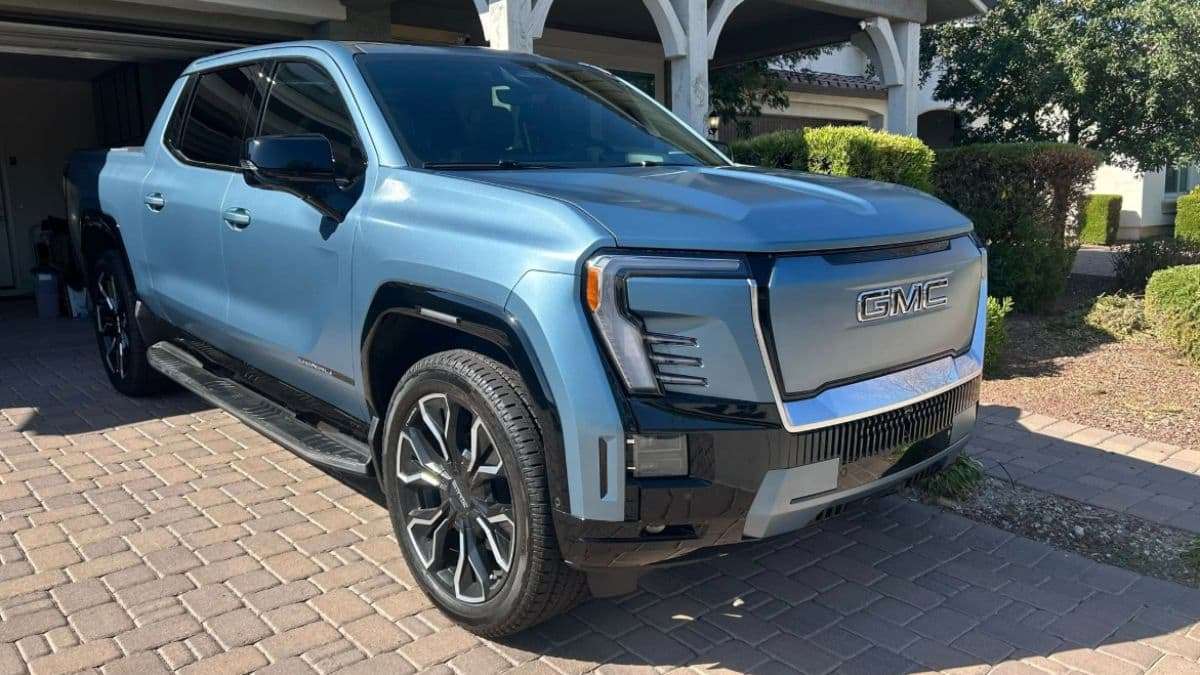

Sometimes all it takes is one well-timed post to make you rethink what’s possible with electric trucks. And that's what happened to me this morning as I found myself in the “GMC Sierra EV Group.” Amid the usual mix of delivery photos, spec questions, and charging tips, one post stood out. Edward Sherlin had just picked up his brand-new Sierra EV and was already projecting massive fuel savings thanks to a combination of rooftop solar and smart energy habits.
Here’s how Edward put it:
“Picked mine up this past Monday. Went from a 3500HD diesel to Sierra EV MAX. Going to cut my fuel bill 90%. 42 550 watt solar panels on the house and plenty of Sunshine in AZ. 13 cents a KW at night.”
Edward went from one of the most capable, fuel-hungry diesel trucks GM makes to one of the most cutting-edge electric pickups on the market. And he’s doing it in a way that could completely reframe the conversation around fuel costs. With 42 solar panels rated at 550 watts each (an impressive 23kW total) and dirt-cheap overnight rates at 13 cents per kilowatt-hour, Edward’s home is essentially a self-sustaining charging station.
When Solar Meets a Full-Size EV
While it’s not new for EV owners to tap into solar power to reduce costs, Edward’s setup pushes things further. Having over 20kW of solar means he can comfortably charge his GMC Sierra EV during the day without pulling much from the grid, if at all. At night, when solar production dips, he can still take advantage of low time-of-use rates in Arizona, optimizing every kilowatt.
It’s worth noting that the Sierra EV Max Range variant does come with a massive battery. Its estimated 200 kWh usable capacity can be intimidating for those worried about home charging. But with a properly equipped solar setup like Edward’s, that fear becomes minimal. He’s not only avoiding the $400–$500 monthly fuel bills common with heavy-duty diesels like the 3500HD, but he’s also leveraging energy in one of the most affordable ways possible. It’s the kind of transition that makes you think of other owners who weren’t afraid to immediately test the limits of their Sierra EV, like this owner who used it to tow a Tesla Model Y straight from the dealership lot, putting its performance claims to the test from day one.
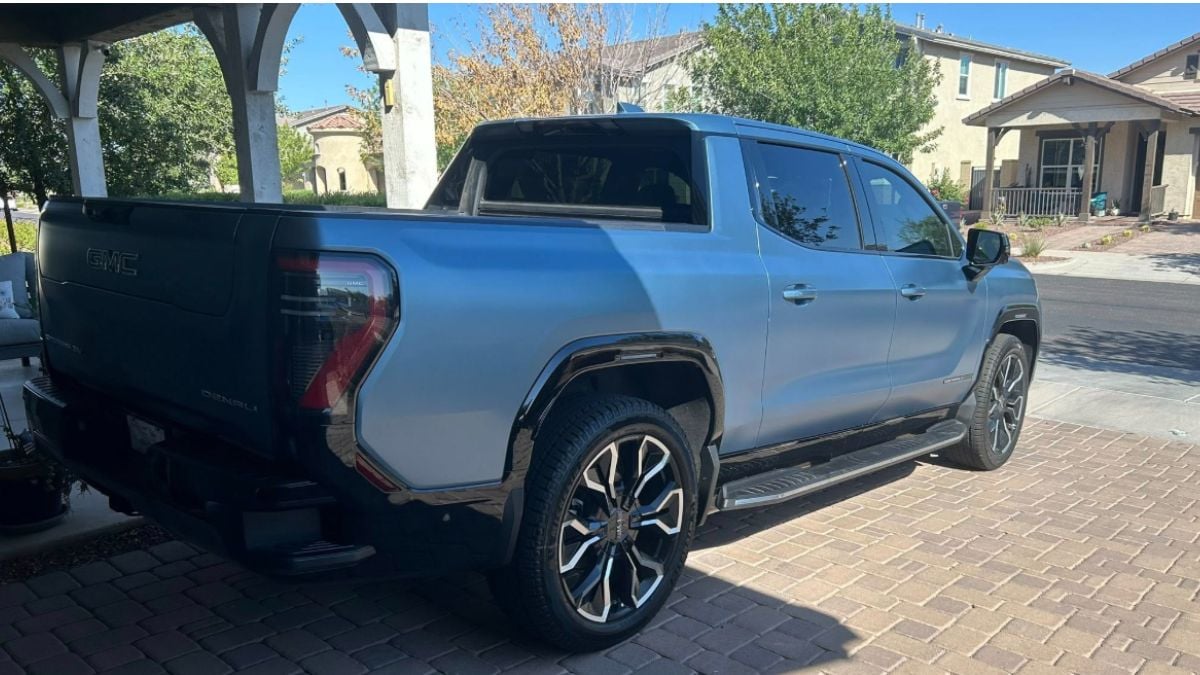
A Growing Trend Among Other Owners
Edward isn’t the only one charting a new course with his truck. In the comments of his post, other drivers chimed in with their own experiences, many of which offer a layered view of where truck owners stand on this shift.
John JT Taylor shared a strikingly similar story: "Similar to us but we went from a GMC AT4 to the Chevrolet Silverado EV RST. Gas costs went from $400 a month to $0 as we use our solar panel to charge it during the day."
That comment alone highlights this growing use case. When you combine a long-range EV truck with daytime solar, the cost of ownership plummets. What used to be one of the biggest complaints about EVs has become an afterthought for solar-equipped homes.
Mike Mulder echoed that sentiment, saying, “This is exactly my plan. I've had a 8KW solar set up for 6 years that has been great. Now to add the vehicle!”
That's why for many owners like Mike, the decision to go EV isn’t just environmental, but also economical. Solar is becoming a strategic partner to heavy-duty EV ownership.
It wouldn't be fair to not mention the skeptics though. Ali Dery offered a practical view: “I wanted to switch from my 2500 Duramax but I can’t. It’s not capable of towing 20lbs. I don’t do it all the time. However, when I need to, I need it.”
Of course, Ali likely meant 20,000 lbs, not 20, but that’s a fair concern. While electric trucks are rapidly improving, not all models match the diesel hauling capacity just yet. That said, real-world tests show that the Sierra EV can hold its own in towing scenarios most drivers encounter.
Matt McCall had a more optimistic outlook: “I have a 2020 2500 Duramax and am highly considering trading it in for one of these. As long as it can tow my camper which is in the weight range.”
Matt reflects a big part of the market though. These are the kind of buyers who aren’t towing bulldozers every week but still need solid capability for recreational gear or medium-duty work. For that crowd, the Sierra EV Max Range could be the sweet spot.
From Heavy-Duty to High-Tech
It’s hard to ignore the contrast between a diesel-powered 3500HD and the all-electric Denali Max. On one hand you have brute strength, towing prowess, and long-haul muscle. On the other you have a tech-driven and quiet machine that promises a completely different ownership experience.
But for those who don't need 20,000 pounds of towing every weekend, the shift makes a lot of sense. GM took a classic machine and turned the 2025 Sierra EV Denali Max Range into a super nice, state-of-the-art truck, bringing luxury, utility, and cutting-edge tech into one package.
And for those wondering about long-term reliability, there are cautionary tales and success stories both. One owner recently reported how their Sierra EV Denali died during a quick Costco trip leaving them stranded. EVs aren’t immune to hiccups, but the wider pattern still seems to show more wins than failures.
Where I Stand
I think stories like Edward’s are incredibly important because although they show what’s possible with solar and EV integration, they also reflect a broader mindset shift among truck owners in general. When people who once fully relied on diesels are now proudly talking about their solar setups and electricity rates, you know something deeper is changing.
It’s about redefining what power looks like. Electric torque, instant acceleration, silent hauling, and near-zero fuel costs are forming a new version of truck ownership. And honestly, it’s exciting to see. As the EV space evolves, I’m looking forward to seeing how more truck owners begin to weigh total ownership cost against capability, and how smart energy setups like Edward’s might become the new normal.
Key Takeaways for EV Truck Shoppers and Owners
- Solar changes everything: Pairing a powerful rooftop solar array with a long-range electric truck drastically reduces your fuel costs and reliance on grid power.
- Towing isn’t off the table: While diesel still rules in ultra-heavy-duty segments, trucks like the Sierra EV are proving capable in most real-world scenarios.
- Fuel savings are real and significant: Going from $400–$500/month in diesel to nearly $0 in charging is more than possible, as it’s already happening.
- Reliability is evolving: As more owners share their long-term experiences across EV trucks, patterns of both success and lessons are emerging.
- Tech-forward trucks are winning hearts: GM’s Sierra EV is far more than an emissions-free pickup. It’s redefining what a truck can be, inside and out.
What Do You Think?
Would you ever consider switching from a heavy-duty diesel to an electric truck like the Sierra EV Max Range, assuming if your fuel bill could be slashed like Edward’s?
And for those already driving electric, are you pairing it with solar? What kind of savings or surprises have you seen?
Let’s hear your story in the comments below.
Aram Krajekian is a young automotive journalist bringing a fresh perspective to his coverage of the evolving automotive landscape. Follow Aram on X and LinkedIn for daily news coverage about cars.
Image Sources: The “GMC Sierra EV Group” public Facebook group.
Set Torque News as Preferred Source on Google
Follow us today...






Comments
A properly tuned diesel is…
Permalink
A properly tuned diesel is not fuel hungry. In fact, it can be quite efficient and diesels can last over 500,000 miles. My 2002 Duramax got over 21 mpg (not pulling). I dont foresee an EV doing that without replacing the batteries every 100k miles in which it would likely be cheaper to get a new truck.
You push the fact of cost…
Permalink
You push the fact of cost saving. I believe that is false or as you would say it has a small spin. The cost of the solar panels and charging equipment i believe offset that fuel bill. Electric is great for those in cities and don't really haul much or on a schedule. They are not any more environmentally clean either. How about you journalist stop pushing a narrative and go back to real journalism
The game changer seems to be…
Permalink
The game changer seems to be Solar panels on the roof top of the house! If any one like me who doesn't have solar panels or driving long distance where you need to recharge, costs more than fuel. And it's from my experience with Blazer EV when I did a trip to Virginia from Georgia! But in town it's a real fuel saver!
I use my duramax powered…
Permalink
I use my duramax powered truck to tow my fifth wheel. With a 98 litre tank, I tow 13000 lbs 400 kms. I refuel in less than 10 minutes and have full power immediately.
Can this battery powered toy do that? NO !