


While GM remains tight-lipped about official changes, a discovery within the 2026 VIN data is providing the first real proof that the V8 'lifter curse' has finally been cured at the factory.
Imagine finally driving your brand-new Chevy Silverado off the lot, only to find yourself constantly listening for that dreaded "ticking" sound from the engine. For years, owners of the 5.3L and 6.2L V8 engines have lived in fear that Dynamic Fuel Management (DFM) would cause catastrophic lifter failure, but a new discovery from a 2026 Silverado owner suggests that General Motors has finally performed the "surgery" we have all been begging for by removing the system entirely.
In a recent post shared in a popular Facebook community for Chevrolet Silverado and GMC Sierra owners, Richard Trundy highlighted a massive shift in GM’s engine strategy that could change the reliability landscape for truck owners forever. He says,
“People have been debating whether the 2026 5.3L still has the DFM, so I looked up my truck's VIN# and here is what it said. The 2026 Chevrolet Silverado 1500 with VIN# 1GCUKGED7TZ191335 is equipped with a V8 engine indicated by the 8th digit "E", which corresponds to GM's EcoTec3 V8 family (likely 5.3L L84 or similar).DFM Status. General Motors redesigned the V8 engines for the 2026 Silverado 1500 to eliminate Dynamic Fuel Management (DFM) and related cylinder deactivation systems, addressing prior lifter and reliability issues. This change applies across V8 models, meaning DFM was removed from production.”
The End of the Lifter Curse:
I have spent over 30 years in the automotive industry, and I can tell you that few things have damaged a brand’s reputation as quickly as the lifter issues in GM’s small-block V8s. As of early 2026, the situation with GM's Dynamic Fuel Management (DFM) is a mix of high-profile owner discoveries and cautious official documentation. Based on the latest reports and VIN data, we are seeing the first signs of a major shift. Experts note that "this new Silverado engine—a GM small-block V8 built on the Gen VI V8 platform—delivers better Silverado performance" by finally removing the complexity that led to premature wear. Source: GM Engineers Finally CRACKED the Silverado Lifter Mystery.
I have covered this saga extensively, and as I noted in a previous report, the sophisticated yet flawed technology behind DFM/AFM relies on complex lifters that "often lead to premature failure, scarring the camshaft, and sometimes resulting in catastrophic engine failure" Source: As a GMC Sierra Guy, It Hurts to Say It, But I'm Done with GM - Torque News.
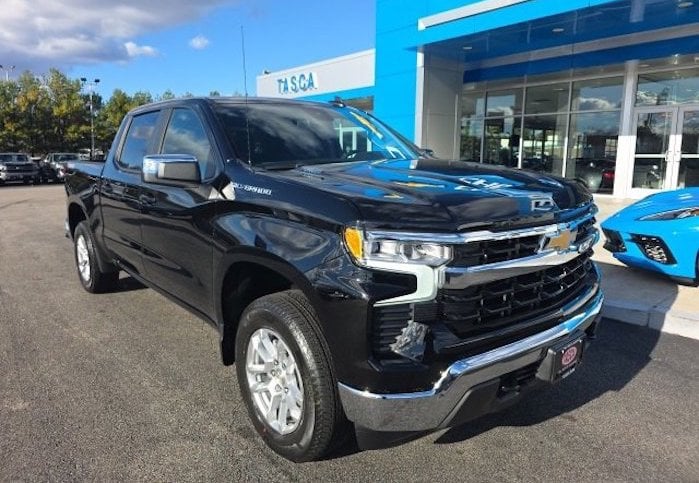
The 8th digit "E" in the VIN provided by Richard Trundy
(1GCUKGED7TZ191335) is the "Smoking Gun." In GM VIN decoding, this digit specifies the engine type, and historically, digits like "C" or "L" were used for engines equipped with Active Fuel Management (AFM) or DFM. According to recent build-sheet leaks and owner reports, the code "E" in the 2026 models is being linked to a "Redesigned EcoTec3 V8," where owner-facing documentation explicitly states: "DFM Status: Removed from production." Industry analysts are now highlighting that "sometimes the best way to save an engine is to stop overengineering it," which appears to be the philosophy gaining traction inside GM. Source: Breaking: 2026 Silverado Might Remove DFM — Here's What That Means!. I have warned my readers for years that for many owners, the issues boiled down to the "DFM system on the 5.3L, "where failure was so common it was almost "inevitable." Source: My 2024 Chevy Silverado 2500 Broke So Often, I Made GM Buy It Back.
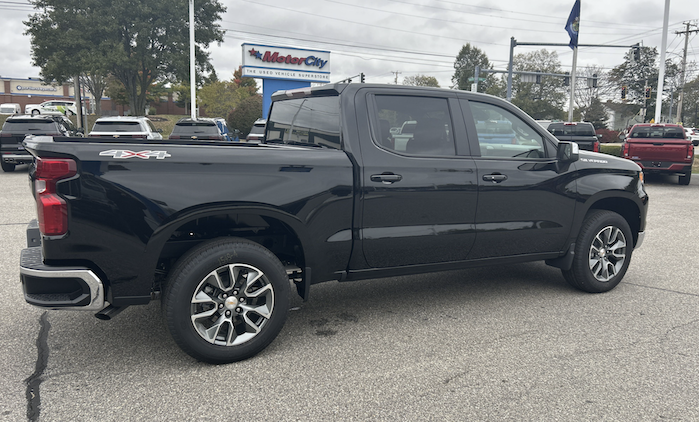
Is it GONE for Everyone?
While owner reports are surging, there is a "Catch-22" in the official materials. Many official Chevrolet and GMC websites still list the 5.3L and 6.2L V8s as "Equipped with Dynamic Fuel Management" in their general spec sheets, likely due to slow marketing updates or GM leaving the door open for "mixed production." This "Quiet Rollout" suggests GM is moving to a redesigned Gen VI V8 to address the "lifter failure" reputation that has haunted them since 2019 without issuing a major press release. However, we must look at the future.
Recent patent filings from January 2026 suggest that GM has patented a new cylinder deactivation system that "might replace the dynamic fuel management system and use rocker arms with hydraulic oil to turn off cylinders" rather than the problematic lifters. Source: New GM Cylinder Deactivation Patent Filing Fixes Reliability Woes? - Pickup Truck +SUV Talk. This suggests that while the current DFM may be dead for 2026, a "v2.0" system might be introduced in 2027 to satisfy fuel economy standards.
What Silverado Owners Are Saying
The community response to this 2026 redesign has been a mix of relief and skepticism. One user on Reddit noted the severity of the situation for those stuck with the old system, stating, "My truck is already at said shop because of a failed lifter bending a pushrod and ruining the camshaft, so I'm already paying just under $6k," which you can read in the full discussion here.
Another owner highlighted the frustration of trying to prevent these failures before they happen, mentioning, "The lifters are either going to last, or they aren't... Run it until it fails and have it mechanically disabled," found in this Reddit thread.
Key Takeaways for 2026 GM Buyers
- Check the VIN: Look for the 8th digit "E" to confirm the redesigned V8 without the current DFM setup.
- Mixed Production Alert: Be aware that some early 2026 models might still carry the old system as GM transitions.
- Reliability Shift: This redesign targets the root cause of "ticking" and lifter collapse, prioritizing engine life over MPG.
- Future Watch: A "v2.0" cylinder deactivation system using rocker shafts is already in the patent stage for 2027.
It Could Be a Massive Win
The removal of the current Dynamic Fuel Management system from the 2026 Chevy Silverado and GMC Sierra is a massive win for long-term reliability. While official documentation is currently in flux, the VIN data and new patent filings point to a future in which "lifter failure" is no longer the primary concern for GM truck owners. If you are shopping for a 2026 model, verifying that the 8th VIN digit is the best insurance policy you can have.
Tell Us What You Think: Does the news of a DFM-free V8 make you more likely to buy a 2026 Silverado, or are you waiting to see how the new 2027 patent-pending system performs? Click the red link below to write your comment and join the community in sharing experiences.
Next Up: I recently looked into how these engine changes are affecting the heavy-duty lineup. Read my report: The Truth About the 2026 Silverado 2500 Gas V8: Is It More Reliable Than the 1500?
Denis Flierl is a Senior Reporter at Torque News with over 30 years of hands-on experience in the automotive industry. Having served as a professional test driver and industry consultant for major automakers such as Chevrolet, Ford, Toyota, Honda, and Tesla, Denis provides a "boots-on-the-ground" perspective that goes beyond standard reporting. Since joining Torque News in 2012, he has specialized in cutting through market noise to deliver data-backed analysis and real-world owner stories. His work focuses on navigating the transition to EVs and the shifting automotive market.
Have a tip or question for Denis? > Engage with him directly on LinkedIn for industry analysis, or follow his latest updates on X @DenisFlierl and @WorldsCoolestRides. You can also find his latest car features on Facebook and Instagram.
Photo credit: Denis Flierl
Set Torque News as Preferred Source on Google
Follow us today...





Comments
I am so sorry to tell you…
Permalink
I am so sorry to tell you this, but the 7th digit is E - the 8th digit is D.
As it seems, there is no merit in this facebook post. I could be wrong, but I have over this a number of times and it does not make sense
Fake news….8th digit in the…
Permalink
Fake news….8th digit in the VIN in the story is a “D”, not an “E”. The “D” is for the L84 5.3 with direct injection and DFM.
Do you know if the L83, 5.3…
Permalink
In reply to Fake news….8th digit in the… by Anonymous (not verified)
Do you know if the L83, 5.3 is the engine they are referring to without DFM?
Probably should do some more…
Permalink
Probably should do some more investigating rather than let ai take over.
The engine in that particular pickup according to parts uses 16 12740071 dynamic fuel management lifters.
It furthermore uses 8 valve lifter control solenoids. 12736536.
It is an L84 however and delivered Nov 29.
It appears the vin digit E…
Permalink
It appears the vin digit E is in the 7th position on the sample given. Same as mine. Maybe I can't count though.
Got rid of cyl deactivation…
Permalink
Got rid of cyl deactivation and I’m in. New designed cyl deactivation. I’m out. Anyone knows shut off oil and major Heat and wear.
Now if they could build a tranny,
My 96 gmc 350 vortex ran 460k before I traded off the best truck I ever had.
Havnt been back to gm since.
I’m ready to buy but nothing out there to offer this 67 yr old guy that wants a reliable truck to work out of.
The article references a…
Permalink
The article references a specific VIN (1GCUKGED7TZ191335) as having an "E" as the 8th character. This is not correct as the "E" is actually the 7th character of this particular VIN which is the restraint system code. The 8th character is a "D" indicating a 5.3L V-8 with (unfortunately) DFM. The text from the article I'm referring to is below:
"The 2026 Chevrolet Silverado 1500 with VIN# 1GCUKGED7TZ191335 is equipped with a V8 engine indicated by the 8th digit "E", which corresponds to GM's EcoTec3 V8 family (likely 5.3L L84 or similar).DFM Status."
I've looked long and hard at listings for 2026 Silverado 1500's V-8's for sale and have yet to find one with an "E" as the 8th digit of the VIN. Every one I've looked at has either a "D" or an "L" which indicates a 5.3L or 6.2L engine respectively with DFM in both cases.
I'm interested in purchasing…
Permalink
I'm interested in purchasing a Chevrolet LT trail boss 2026 but only if I can get the 5.3L V8 without the DFM system. It's be said if an E is in the 8th spot of the vin. # it is deleted. But they show the E is in the 7th spot on the vin.# so my question is what is the truth. Thanks
I tried to order a 26…
Permalink
I tried to order a 26 Silverado without DFM today (May 5th) and they told me it was not possible, even though there are sites that say it is. They also did not know the 5.3 is being replaced with a 5.7 and the 6.2 is being replaced with the 6.6, and even that may be the new 6.7. Who knows anything for sure?
I was planning on buying…
Permalink
I was planning on buying 2027 Silverado with 5.7 Gas engine. If it has DFM, I will not. It's that simple.
Thank you,
Ron Crosby