
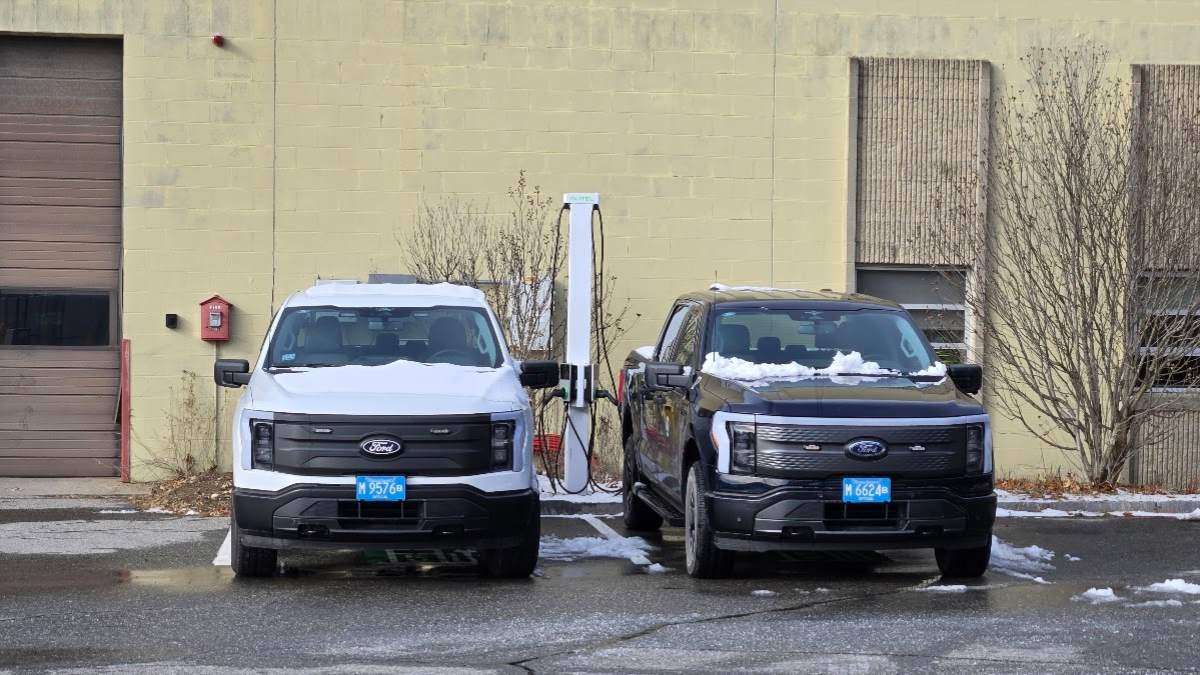

Winter Storm Hernando just dumped up to three feet of snow on parts of New England in a record-setting blizzard. It met all the fun definitions. Bomb cyclone. Bombogenesis. There were even Category 1 hurricane winds measured on Cape Cod. All that scary winter jazz. The storm comes on the heels of a storm that dumped a foot and a half less than two weeks ago. In times like this, the heroes are the hard-working highway department and DPW crews, along with the town-owned equipment they rely on to plow and spread salt and sand. It’s a shame that the pricey battery-electric pickup trucks so many municipalities own have to sit idle while the gas and diesel trucks do the needed work.
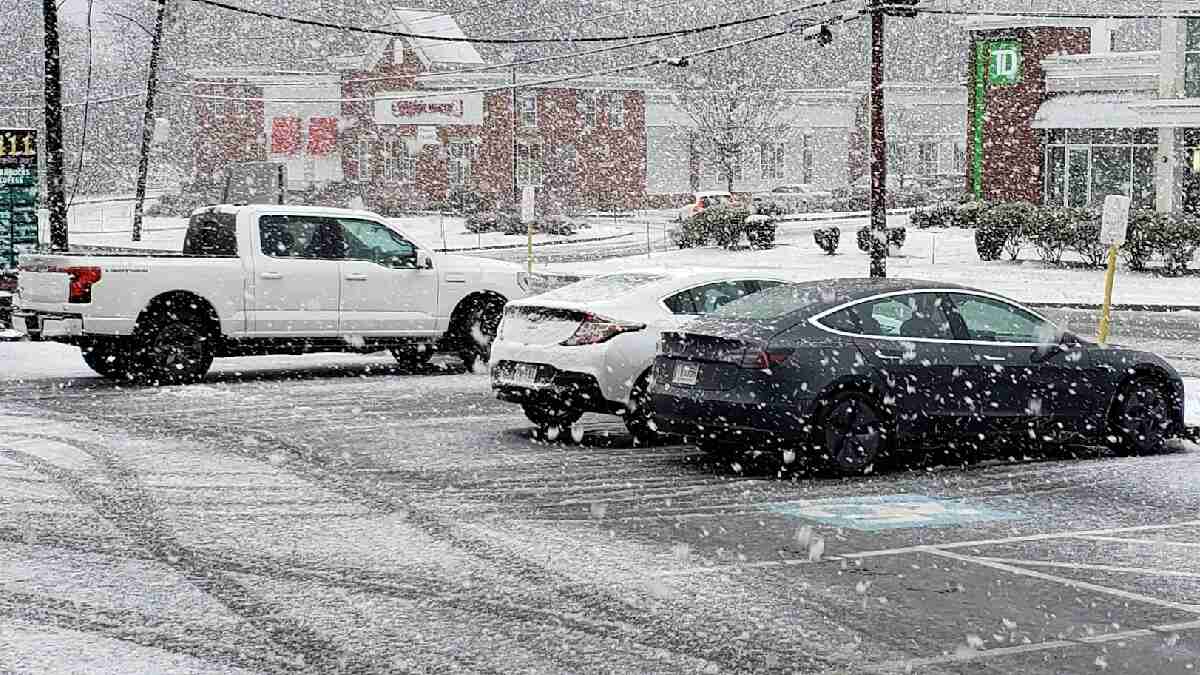
The Ford F-150 Lightning has now been canceled, but it was a very popular purchase for municipalities. Massive price supports from both federal and local governments enabled the counties, towns, and cities to grab high-priced EV trucks at a “discount.” The taxpayers ultimately funded the cost, directly or indirectly, but on paper, a massive rebate or discount on a truck looks great when you are the finance manager of a municipality.
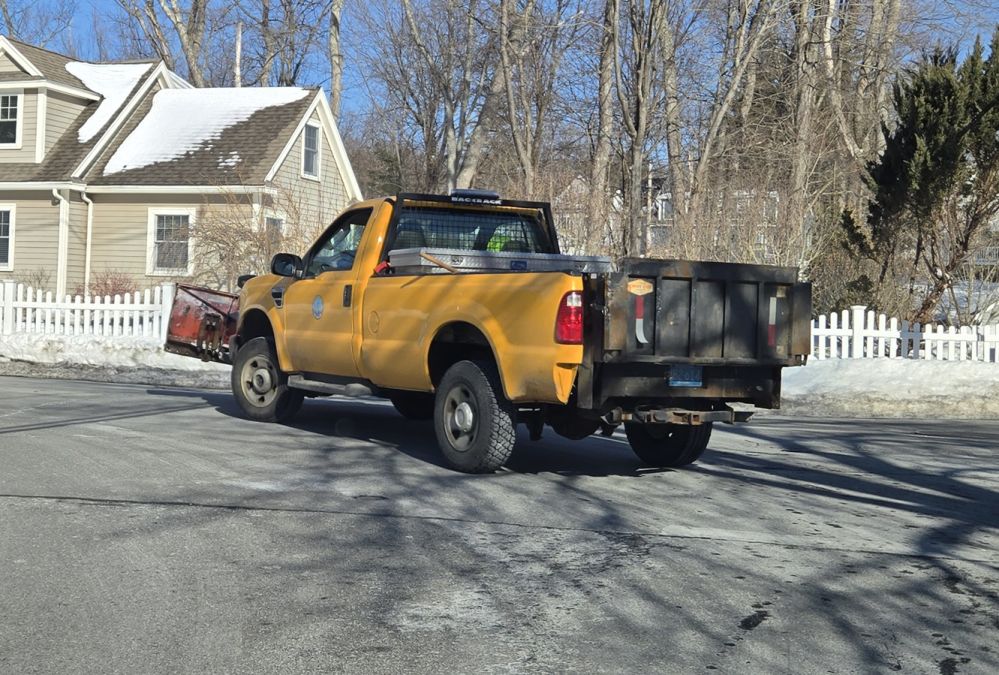
Town DPWs and highway departments, along with police forces, gobbled up the Lightning, and to a lesser degree, other EVs, putting them into service in a variety of important roles. In many roles, the EVs do the job as well or better than a gasser of a dirty diesel could. Running around town doing inspections. Carrying officers to places they need to be. The thing is, pickups that cost as much as the Lightning does, and have the weight and torque the Lightning does, are also asked to plow in many situations. School parking lots, libraries, town hall lots, and side streets. Like the yellow municipality-owned gas-powered Ford F-150 in the image above, taken in my own town. No, these light trucks are not tasked with major highway clearing. The largest tucks are best at that. But lighter-weight gas-powered F-Series pickups with a lot less torque than the Lightning serve as plows in my community.
Before we wrote this story, we confirmed that the Lightning is not set up by Ford to perform plowing duty. There was never a plowing setup offered as an option for the truck. The front fascia is not designed to accommodate a plow for municipal use. The low-voltage electrical system is not designed to handle the added load of a plow setup. We could find no plow packages for the Chevy Silverado EVs and GMS Sierra EVs. Nor for the Rivian R1T. If they do offer factory plow prep packages, please tell us in the comments section.
A few Ford F-150 Lightning owners opted to modify their trucks for personal plowing. A bold move with such an expensive vehicle. Any damage caused by plowing would, of course, not be covered by the Ford warranty, so the owner would be out of pocket if anything went sideways.
Torque and power are certainly not the limits for any EV truck being able to plow. The F-150 powered by liquid fuels can be set up by Ford to accept plows, and none of them has the torque of the Lightning. Not even the Raptor. You need to step up to a diesel Super Duty to beat the Lightning on torque. Ford calls the gas F-150 option “Snow Plow Prep Package.”
The Lightning is also a very heavy vehicle. Weighing between six and seven thousand pounds, the F-150 Lighting is about 2,000 pounds heavier than some pickups. Many pickup owners actually add weight to help with plowing. The Lightning would seem better equipped for plowing, not less.
In addition to the municipality-owned vehicles and employed workers, in Metro Boston and other parts of New England, municipalities contract with independent workers who own their own plows and sanders. Since the advent of EVs, I’ve never seen a single EV pickup out plowing roads.
We asked the Ford F-150 Lightning Owners Group on Facebook if they had ever seen one be operated as a plow in any situation. None had. Some of the comments they shared included:
JD - “You’re joking, right?”
CP - “The Lightning is great for many things, commercial plowing is not one of them.”
BK - “I would think no as I've heard others complain about ice sticking to the undersides.”
I also posted up the images of three of my own town's highway department’s Ford F-150 Lightnings sitting idle at chargers and asked the residents via our Facebook group if any of them had ever seen an EV plowing. None had. I asked the next town over’s group. They also have EV pickups in service. Same answer. Many respondents noted that the trucks do many other useful things, but couldn’t provide any specific examples.
Update - Following our publication, the Town Administrator for the Metro West Boston town that owns the vehicles in our story reached out to add clarity on the F-150 Lightnings we show in our top-of-page image. Here are the parts of his communication that help add to the discussion. Some of what he mentioned was already covered:
The two admin vehicles shown in the photo are not used for plowing. They are used by engineering staff and the DPW admin for site visits and transportation within the town and occasionally to regional meetings. It is more cost-effective to have lighter-duty vehicles for admins to reduce wear and tear and fuel usage on the heavy-duty vehicles. A maximum charge gets close to 190-200 miles in the winter months (240 miles in the summer). This would be challenging if the staff used it for long travel or highway traveling. In this case, because the vehicles are primarily used in town during business hours, the battery life works well.
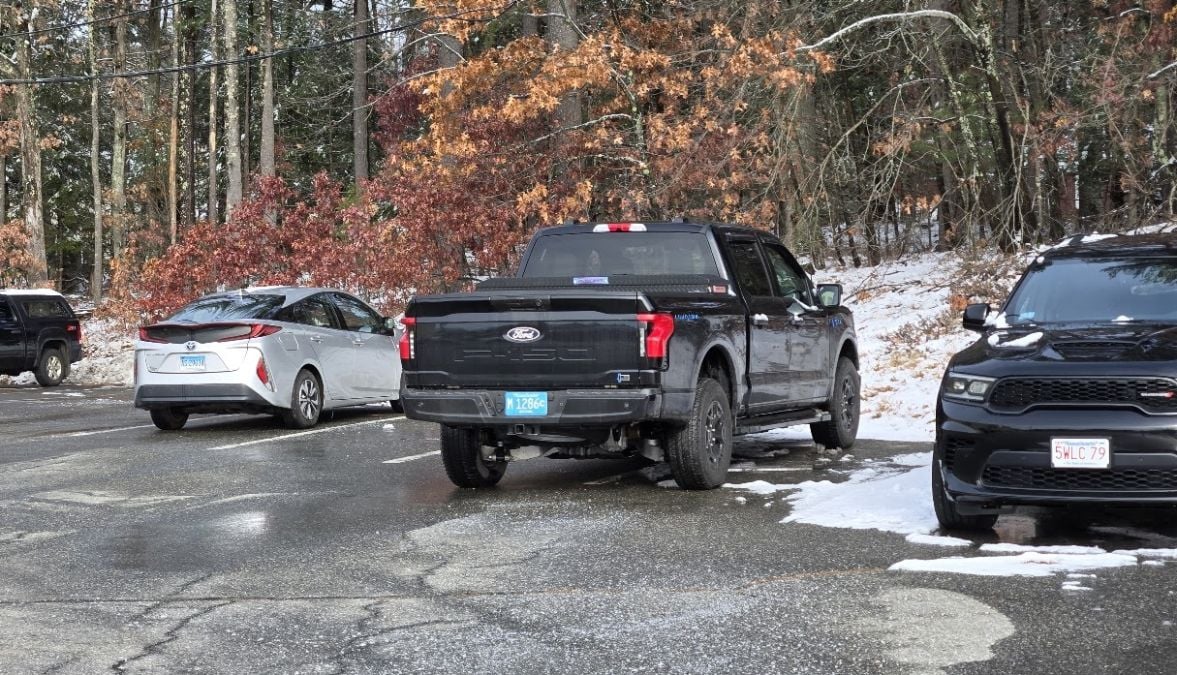
We’ve seen advertisements with EV trucks doing trucky things. We’ve even seen ads where EV pickups literally pull trains. For sure, EV trucks have some advantages. It’s just that right now, what we really need from our trucks is snow removal and street clearing. And EV trucks are no help with that very important and very trucky task.
Have you seen battery-electric pickup trucks used for municipal plowing? If so, please tell us about it in the comments below. Feel free to share your opinions on the usefulness of DPW trucks that cannot plow as well.
John Goreham is the Vice President of the New England Motor Press Association and an expert vehicle tester. John completed an engineering program with a focus on electric vehicles, followed by two decades of work in high-tech, biopharma, and the automotive supply chain before becoming a news contributor. He is a member of the Society of Automotive Engineers (SAE int). In addition to his fourteen years of work at Torque News, John has published thousands of articles and reviews at American news outlets. He is known for offering unfiltered opinions on vehicle topics. You can connect with John on LinkedIn and follow his work on his personal X channel or on our X channel. John employs grammar and punctuation software when proofreading, and he sometimes uses image generation tools.
Images by John Goreham
Set Torque News as Preferred Source on Google
Follow us today...






Comments
Modern diesels are not dirty…
Permalink
Modern diesels are not dirty. Please do not contribute to this old stereotype.
Excuse me? Because of DEF…
Permalink
In reply to Modern diesels are not dirty… by Bill (not verified)
Excuse me? Because of DEF they are but because of the dumb orange they'll get dirty quick
So the article is about…
Permalink
So the article is about vehicles not designed or bought for plowing we're not used for plowing. The power source is just the author trying to stir people up.
In other news Honda civics seen parked and not used for plowing.