
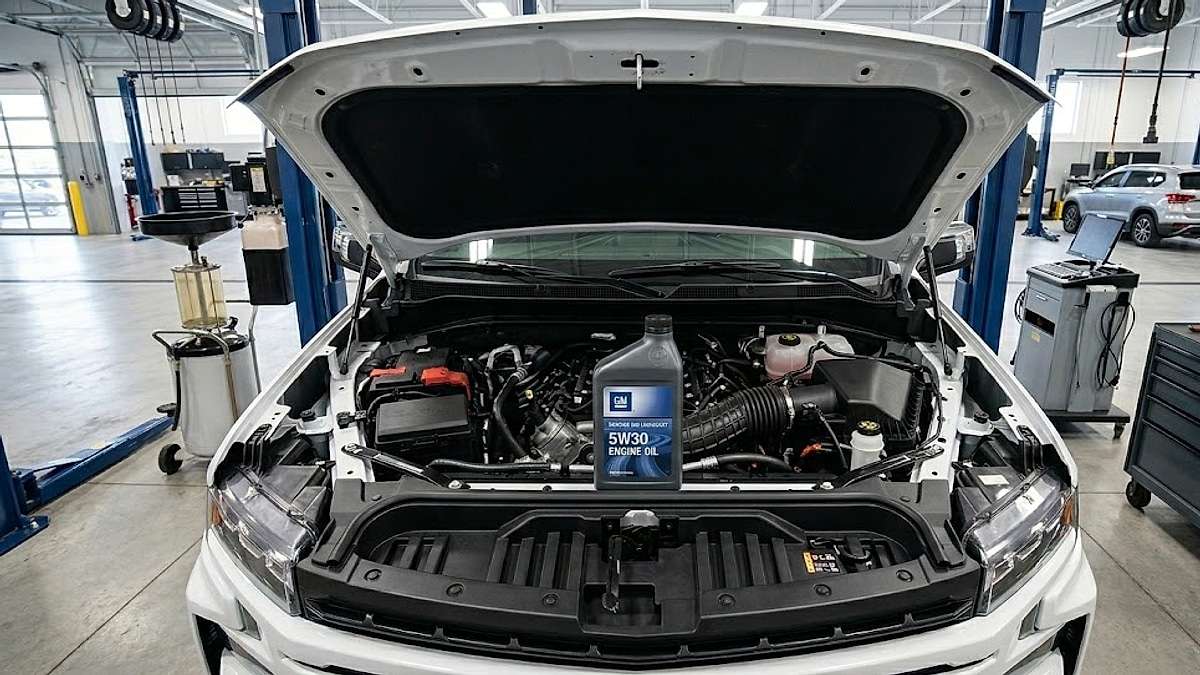

Tactical Mitigation of Modern V8 Fluid Loss
According to ongoing Torque News tracking of manufacturing defects by Denis Flierl, the unresolved crisis of internal oil burning within modern General Motors powertrain platforms requires a shift from passive reliance on factory maintenance to active, hands-on mechanical intervention. Long-term field evaluation of the 2019 through 2026 Chevrolet Silverado and GMC Sierra platforms proves that operating these EcoTec3 V8 engines strictly under corporate parameters heavily compromises internal engine longevity.
We identified a critical gap between factory maintenance schedules and real-world component longevity. To resolve this operational flaw, this investigative piece introduces a practical, double-pronged action plan: disabling the algorithmic Dynamic Fuel Management (DFM) system and switching from factory-specified, ultra-thin 0W-20 motor oil to a heavier, shear-stable 5W-30 synthetic fluid.
By implementing these targeted updates, truck owners can establish a reliable line of defense against oil blow-by, carbon-packed piston rings, and catastrophic valve-train failures. This approach provides a clear path forward that balances real-world engine preservation with the strict terms of factory warranty coverage.
Our previous investigative report exposed how a three-time Silverado owner discovered that his 2021 Z71 Texas Edition was burning oil rapidly at 75,000 miles, even as his digital dashboard mistakenly assured him that 37% of his oil life remained. That initial chapter revealed the hidden mechanical vulnerabilities of modern GM V8 engines, in which low-tension piston rings and automated cylinder deactivation cycles quietly drain engine oil without leaving a trace or a leak on the garage floor. Building directly upon those findings, this second installment shifts from diagnosing the issue to delivering a practical, real-world action plan designed to help truck owners protect their engines and avoid expensive out-of-pocket repairs.
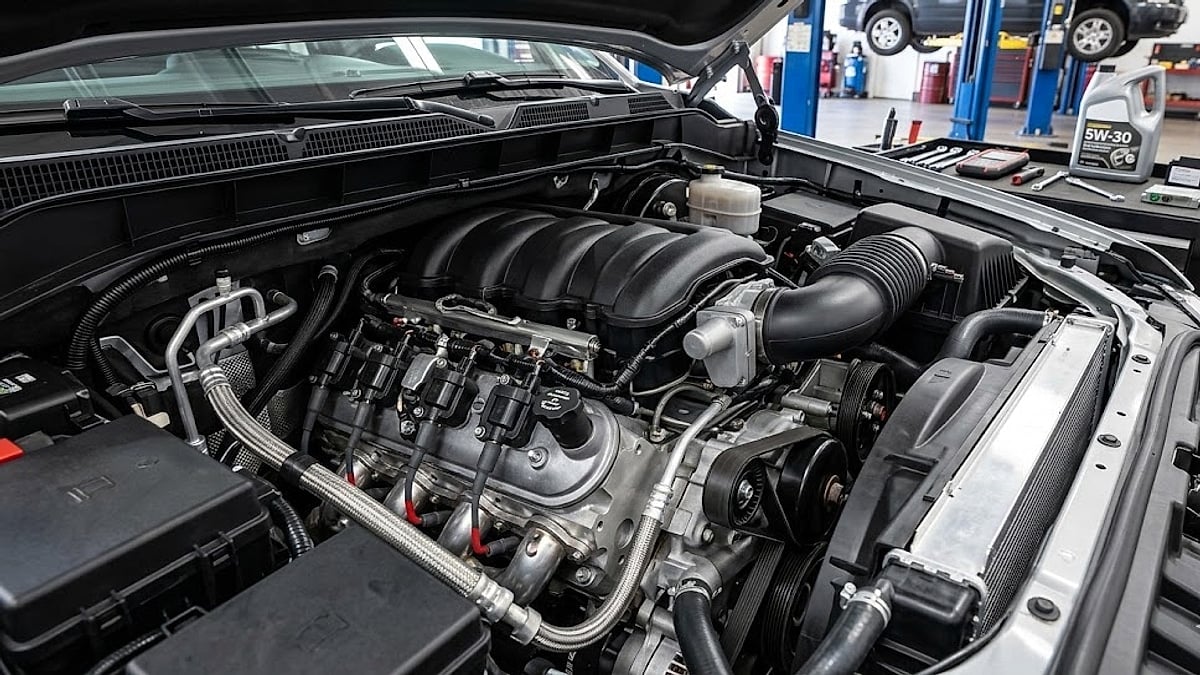
When dealing with severe engine oil loss, the ultimate goal for owners is to minimize internal oil blow-by and eliminate the sudden thermal changes that stress internal engine parts. While dealership service centers frequently tell frustrated buyers that losing a full quart of oil every 2,000 miles is within standard operational guidelines, independent fleet operations and master technicians have developed proactive solutions.
By analyzing real-world test data from high-mileage work trucks, we can pinpoint exactly how changing the oil weight and disabling the cylinder deactivation code can stabilize oil pressure, lower internal temperatures, and permanently stop rapid oil consumption.
Overcoming Low-Tension Ring Failure with a Thicker Lubricant
To stop internal oil loss, switch from the factory-specified 0W-20 oil, a thin lubricant chosen to meet federal fuel economy mandates that overheats, thins out, and escapes past piston rings as a fine mist during demanding hill climbs or heavy trailing in high-altitude terrain like Colorado, to a heavier 5W-30 full-synthetic motor oil.
This heavier fluid provides a tougher protective film inside the cylinders, filling microscopic clearances between walls and low-tension piston rings to block oil from slipping into the combustion chamber.
As documented in the NHTSA GM Service Bulletin on Oil Viscosity and Component Lubrication, maintaining this proper oil film thickness is essential for shielding internal engine components and resisting shear under high thermal stress and heavy loads, preventing the oil from breaking down into burned vapor.
Real-world fleet testing reported by Pickup Truck + SUV Talk in their analysis of 2021-2026 Chevy Silverado Powertrain Concerns confirms that switching to this slightly heavier oil grade cuts oil consumption by more than 60% in trucks frequently driven in hot climates or at high altitudes.
Disabling Dynamic Fuel Management to Protect Top-End Valves
The second part of this maintenance strategy targets the engine's built-in Dynamic Fuel Management (DFM) cylinder deactivation software, which constantly cycles cylinders on and off to save fractional fuel but causes uneven temperatures and rapid cooling in deactivated cylinders, which contract the piston rings and allow oil to blow by past the seals.
This computer-controlled shutdown process causes long-term carbon tracking in engine blocks, an unresolved dispute uncovered by Torque News Senior Reporter Denis Flierl. To eliminate this issue and prevent sudden metal contraction, owners must install an electronic plug-in device into the truck’s OBD-II port, which commands the engine control module to keep the vehicle in full V8 mode at all times, ensuring even temperature distribution throughout the engine block by keeping all eight cylinders firing.
This solution mirrors an earlier technical analysis by Denis Flierl, titled "Bypassing Factory Cylinder Management Restores Oil Stability," which showed that keeping all cylinders running prevents the oil pressure variations that often cause top-end oil aeration. Keeping the engine in permanent V8 mode also drastically reduces the wear and tear on the delicate shifting lifters, extending the lifespan of your valve train before components begin to stick or fail.
Field Observations from Owner Communities
The practical benefits of making these adjustments are frequently discussed in online truck communities, where owners swap tips on what actually works to slow down oil loss.
In a recent technical discussion on the forum r/Silverado, an owner described the immediate change after moving away from the factory-recommended fluid weight: "I switched to 5W30, and it slowed the consumption down greatly. The 0W20 is super thin compared to 5W30," an owner posted in an r/Silverado oil change discussion.
Another community member explained how a thicker fluid choice helped solve noticeable engine noise issues: "I switched to 5W30 and basically no oil consumption anymore, and it really quieted down the valve train," another driver shared in the same r/Silverado maintenance thread.
Drawing on my 30 years of automotive consultative experience, these community findings align perfectly with fundamental mechanical principles. The fact that a thicker fluid quieted down the valve train proves that ultra-thin 0W-20 oil often fails to provide enough cushion for the lifters once an engine accumulates significant mileage.
When oil loses its thickness under high heat, the mechanical parts inside the valve train begin to make physical contact, producing an audible clicking sound that alerts the owner that their oil film has worn too thin. Upgrading to a high-quality 5W-30 synthetic oil restores that necessary protective layer, effectively stopping internal consumption and quieting down noisy valve train components simultaneously.
Balancing Vehicle Modifications with Your Factory Warranty
Before altering vehicle fluids or electronics, understand that General Motors may deny powertrain warranty coverage for major engine failures if field engineers detect unapproved oil weights through fluid analysis or aftermarket electronic tuning devices plugged into the OBD-II port. To safely protect your hardware, unplug your DFM disabler module before service appointments, as these plug-in modules leave zero digital footprint because they do not modify internal engine control software.
For fluid upgrades, have a local Chevrolet or GMC dealership perform routine oil changes using factory-approved Dexos-rated 5W-30 fluid, the same weight specified for Corvettes and heavy-duty trucks, thereby securing a thicker lubricant and establishing a clean service history backed by factory-stamped dealership receipts.
Key Takeaways
- Upgrade to Dexos-certified 5W-30 synthetic oil: Create a tougher protective layer inside the cylinders to block thin oil from blowing past the piston rings.
- Install a plug-in DFM disabler device: Keep your engine operating in permanent V8 mode to maintain steady internal temperatures and minimize oil loss.
- Remove any OBD-II hardware before dealer visits: Keep your service history completely clean to protect your active factory powertrain warranty coverage.
- Add a high-quality oil catch can kit: Catch blow-by oil mist before it is drawn back into the intake manifold and burned.
Does a Thicker Oil Drastically Lower Your Gas Mileage?
Upgrading your truck from a thin 0W-20 oil to a heavier 5W-30 blend results in a microscopic, real-world drop in fuel efficiency of less than one-tenth of a mile per gallon. While manufacturers use ultra-thin lubricants to chase fractional gains in economy in controlled lab settings, this negligible difference is virtually unnoticeable in everyday driving and is a tiny price to pay to immediately protect your engine from oil starvation, prevent carbon-packed piston rings, and permanently avoid a future $6,000 top-end engine rebuild.
Summary of the Practical Action Plan
Taking control of your truck's maintenance requires moving past the standard factory guidelines when they fail to deliver real-world protection. Shifting to a high-quality 5W-30 synthetic motor oil and using an electronic disabler to keep your engine in permanent V8 mode offers a proven way to stop rapid oil loss and safeguard your vehicle's engine longevity. These straightforward adjustments help owners bypass the design flaws built into modern powertrain platforms, ensuring your full-size truck delivers the long-term reliability you expect for years to come.
It’s Your Turn
Have you already switched to a heavier 5W-30 oil or installed a DFM disabler in your truck, or are you planning to stick with the factory-recommended setup? Let us know what changes you've noticed in your truck's oil consumption and performance by dropping a comment in the Add new comment link below!
Don’t miss part 3 of this investigative series: The Ultra-Thin Oil Dilemma: Why Modern Full-Size Truck Engines Are Failing Long Before 100K Miles
About The Author
Denis Flierl is a 14-year Senior Reporter at Torque News and a member of the Rocky Mountain Automotive Press (RMAP) with 30+ years of industry experience. Explore his full investigative reporting archives and technical guides at DenisFlierl.com. Based in Parker, Colorado, Denis leverages the Rockies' high-altitude terrain as a rigorous testing ground to provide "boots-on-the-ground" analysis for readers across the Rocky Mountain region, California EV corridors, the Northeast, Texas truck markets, and Midwest agricultural zones. A former professional test driver and consultant for Ford, GM, Ram, Toyota, and Tesla, he delivers data-backed insights on reliability and market shifts. Denis cuts through the noise to provide national audiences with the real-world reporting today’s landscape demands. Connect with Denis: Find him on LinkedIn, X @DenisFlierl, @WorldsCoolestRides, Facebook, and Instagram.
Photo credit: Denis Flierl
Set Torque News as Preferred Source on Google
Follow us today...







Comments
The pictures are AI. They…
Permalink
The pictures are AI. They are close, but no.
Why not just go to 10W30?…
Permalink
Why not just go to 10W30? That was plenty good years ago...
5W 30 already being used…
Permalink
5W 30 already being used. You must or bare failure as to all the horror stories about our trucks on the net. I'm @ 126,000 with no issues at all. "BUT" you stay reading and we have to worry about 8L90 transmission on the 5.3L. I switched every lubricant over to Mobil One for all lubricants. The only one I haven't changed yet is the front differential which I will complete soon, doesn't get used very much so held off a bit. I used Mobil One Products over Amsoil but very pricey over others. I spoke with a Transmission shop owner and I quote what he told me about the 8L90's, this is what was told to me. Don't flush it causes major debris floating around everywhere that can causes valve blockage and channels to also be blocked = problems. 7 quarts of Mobil One ATF/LV/HP (BLUE lable) not BLACK, to different animals. Almost complete to tubes of Lube Guard this is a additive to the transmission fluid mentioned earlier. This shop owner is more than busy everytime I driven down that street, he has worked this shop from the age of 15 to 70 and the popularity of the shop shows. Why only 7 quarts. The torque converter holds a lot of fluid that can't be drained so best option is change out fluid that can be changed, change out filter, add fluid and add Lube guard. Should be good to go. Lube Gard is great for stopping shudder and not a snake oil, I've used it twice with success. 09' Tundra and '21 Chevy RST. Good luck and always do your research it helps.
Ahem, it's spelled "two"…
Permalink
In reply to 5W 30 already being used… by Michael McDaniel (not verified)
Ahem, it's spelled "two".... The way you wrote is very confusing....
Bought a 2017 Silverado 1500…
Permalink
Bought a 2017 Silverado 1500 with a 5.3 with 227,000 miles, used a quart of oil every 700 miles, switched to 5/30 now uses a quart about every 3000 miles. I now have 278,000 miles and have had no issues from switching. My 2001 Silverad has over 500,000 on it and is still going. I am a Chevy person, and have been disappointed with Chevrolet lately. Mainly the transmission issues I have had, would like to see them take charge of things and become the industry leader again. I dont expect any recalls, but put your engineers on a solution, Monster Transmission does it better, I work my trucks hard, would like to be proud of my Chevrolet all the way around again, thanks.
My daughter has an Equinox,…
Permalink
My daughter has an Equinox, and it's doing the same thing. She can't even drive from Orillia ontario to chatham kent ontario she has to fill it at back up with oil in that distance. Or it will run out, she's had it just below add that is not right?How general motors and the people that buy this product has this problem this should have all been recalled.My truck 2018 sierra heavy duty, they all mainly had computer problems were exhaust fumes would come in the cab that should had been recalled also
It's bad enough having exhaust fumes in the cab. But when you're driving down the road, it almost doubles burning fuel with this computer problem that should have been recalled and fixed.I paid almost 92000.00 for this truck, and this is how general motors treats its customers
Good info. I would recommend…
Permalink
Good info. I would recommend that if you buy an OBD plug in module that you buy one which also disables the Auto Stop function. Auto Stop is adding to the previously described problems as well.
My Silverado has less than 3000 miles on it. At 100 miles, we added an aftermarket DFM & AutoStop disabler, an OBD performance module, a JEGS performance mass air flow sensor, an oil catch can and filled it with 5-30.
Was experiencing the well known harsh shifting in 1 & 2 which quit upon adding the above additional modules. I'm thinking that some of that problem is caused by command conflicts between the DFM and computer controlled transmission instructions during acceleration. Whatever it was went away immediately with the above add ons.
Concerned re: the OEM warrantee, I did switch back to 0-w20 at 200 mi. but will go back to 5-w30 @ 4000 mi.
Will continue a 4000 mi. oil change interval going forward.
In summary, my Silverado (empty) is getting 18-19 mpg in stop start traffic, 20+ in flowing traffic, and 23+ on the open road with full time v8 & no AutoStop on Costco regular gas. My '99 Yukon never topped 19 mpg on the open road. Quite happy with the Silverado results.
I've been running a range…
Permalink
I've been running a range chip to disable the afm or whatever it is called in my 2018 silverado 5.3. Still using factory recommended oil 0-30 synthetic I think. No idea about oil consumption, no engine lights come on at all but I do change oil more frequently like 3,000 miles. I have 123,000 miles and 5,000 hours on engine.
This has affected 2011…
Permalink
This has affected 2011 Silverados ALSO!! I own a 2011 5.3 LT 6L80E and had the same issues. WHY is year not included?
As an owner of a 2012 GMC…
Permalink
As an owner of a 2012 GMC Sierra with a 6.2 that specs 5w-30 and does not have any cylinder deactivation option I'm at 195k and it uses zero oil over 5,000 miles between changes. I also have a 2009 Envoy with the 5.3 vortec with AFM option and it was using a quart of oil every 1,200 miles and had occasional lifter noise, but after installing an OBD disabler device the oil consumption has disappeared along with any lifter clatter. This vehicle now has 150K miles. Im happy with both vehicles and with both running on all 8 cylinders.
what is the best DFM…
Permalink
what is the best DFM disabler to use in a 2026 Tahoe?
Thank you
Aparrently someone doesn't…
Permalink
Aparrently someone doesn't know the difference between oil consumption and oil life. The example of someone burning through oil despite their oil life meter saying 37% remaining is nonsense. Consumption and condition are not related. Do better.
What happens if you just…
Permalink
What happens if you just switched the oil and not install chip?
Installing the DFM disabler…
Permalink
Installing the DFM disabler and switching to 5W30 was the best thing I ever did to my 21 Sierra 6.2. Before on an oil changed I would not have any showing on the dipstick. I changed it this week after 5500 miles it it was only down 1/2 a quart ! I kind of lost track of the milage, I usually would change it a 4K. Do it now to save your truck. I purchased the disabler on Amazon and used Mobile 1 with the PF63 filter. My truck only has 41K on it and had a lifter failure last year. GM replaced all lifters on that side. Now I don't wonder all the time if I'm going to need to call a tow truck ! Do it now !