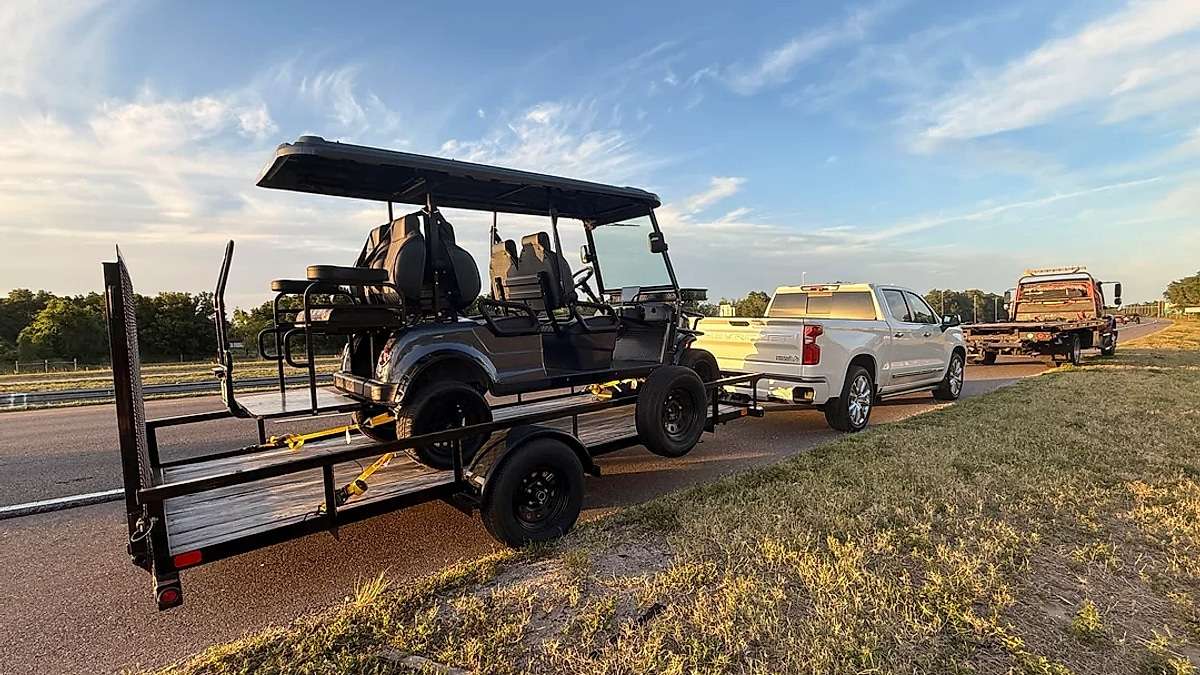

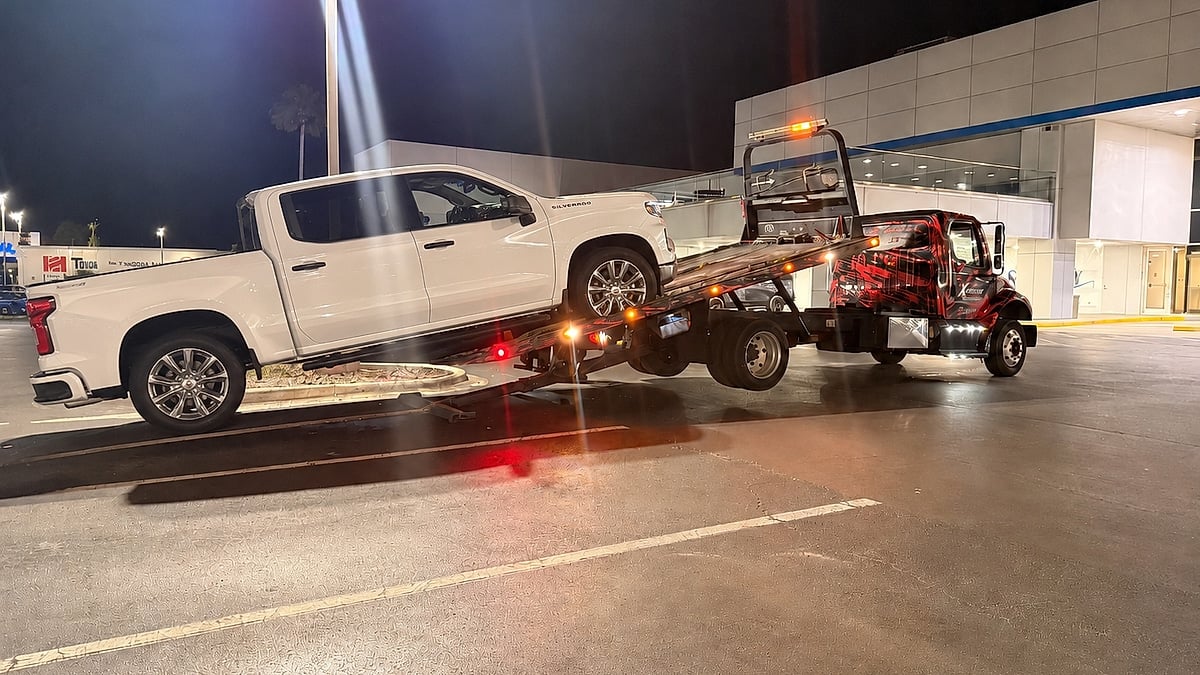
The white Silverado is still hitched to the golf-cart trailer in the roadside photograph. A flatbed waits a few yards ahead.
The repair order will eventually account for the engine. It will say less about the second tow, the hotel room, the lost day, and the owner’s new habit of listening for mechanical noises every time the truck settles into highway speed.
- Two engine failures in such a short span highlight the importance of documenting every service visit, repair order, and communication with the dealer or manufacturer to protect warranty and reimbursement claims.
- Owners facing repeat failures should consider requesting a buyback or lemon-law evaluation, depending on state regulations and the number of days the vehicle has been out of service.
- This case underscores why understanding recall remedies and verifying that updated or revised components are used in replacements can be critical before accepting another engine installation.
The owner, posting as bandjfl92 on r/Silverado, says his truck had approximately 20,000 miles when the 6.2-liter V8 seized while towing. The original engine had already been replaced about 3,000 miles earlier. He later explained that an inspection had identified what he described as a lifter tick, leading to a replacement and roughly two months in the shop.
Engine number two lasted around 3,000 miles.
The truck failed two hours from home with a golf cart behind it. The owner paid to recover the trailer and spent the night in a hotel because the Silverado could no longer finish the trip. Asked whether he would consider another Chevrolet, his answer was direct: “I would never.”
That reaction deserves more attention than the familiar brand-war jokes.
One failed engine creates a warranty claim. Two engines in 20,000 miles can end the relationship between an owner and a vehicle.
The story spread beyond Reddit after a Facebook post began circulating screenshots of the original thread, pulling in thousands of reactions from owners who had never visited r/Silverado. The tone shifted quickly. On Reddit, the discussion stayed mostly technical, with questions about lifters, oil pressure, recall coverage, and whether the replacement engine came from updated stock. On Facebook, the conversation widened into frustration, brand loyalty debates, and a steady stream of similar anecdotes from owners who said they had experienced ticking, knocking, or outright failures in GM’s 6.2-liter trucks.
Reddit tends to concentrate detailed owner reports, while Facebook amplifies them to a broader audience that includes prospective buyers, casual owners, and people who may never read a recall notice.
The result is a feedback loop. A single Reddit post becomes a Facebook discussion, which sends more owners back to Reddit to compare notes, which then generates additional posts and screenshots. For manufacturers, that loop can turn isolated complaints into a visible pattern long before an official investigation reaches a conclusion.
Towing The Golf Cart Was A Routine Assignment
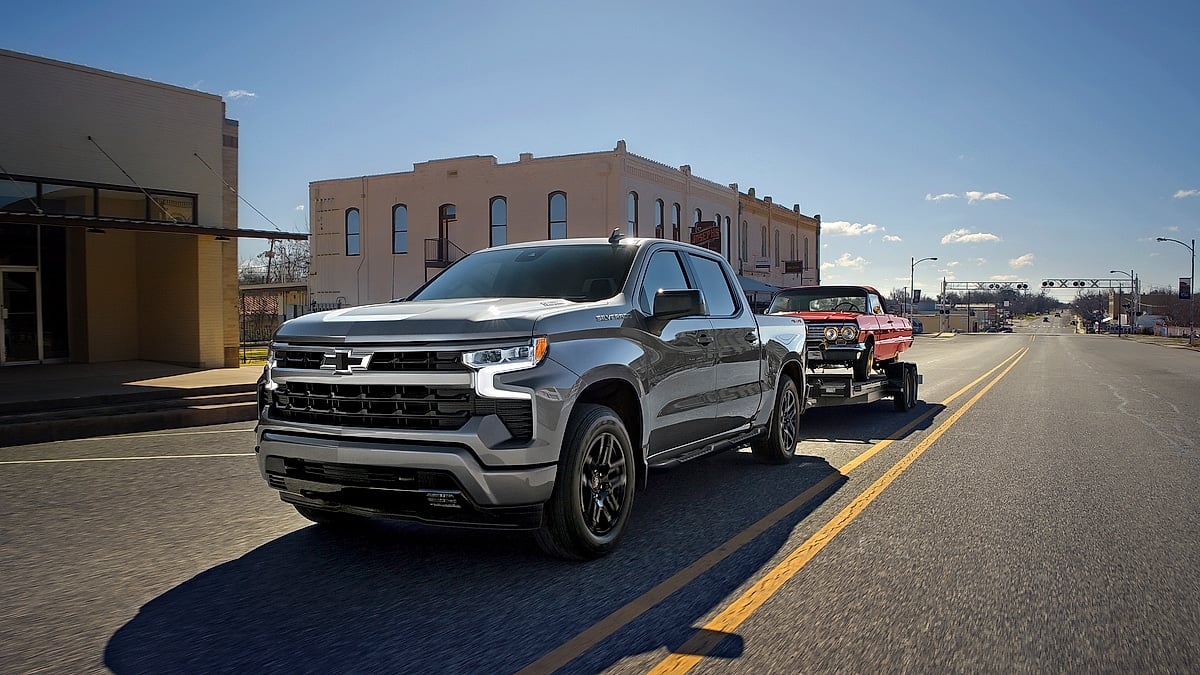
The photograph shows an open utility trailer carrying a golf cart. The owner did not provide the trailer’s loaded weight or his truck’s door-jamb trailering figures, so there is no responsible way to calculate the exact margin.
The visible load still appears modest by half-ton pickup standards.
Chevrolet has offered Silverado 1500 configurations with five-figure tow ratings throughout the years covered by GM’s 6.2-liter recall. The exact capability varies substantially with cab, bed, drivetrain, axle ratio, packages, passengers, and cargo. A golf cart on an open trailer represents the kind of ordinary recreational work buyers expect a full-size pickup to handle.
The failure occurred while towing. That timing does not prove the trailer caused it.
Towing increases load, cylinder pressure, oil temperature, cooling demand, and the amount of time an engine spends producing meaningful torque. It can expose a weakness sooner. It should not destroy a healthy replacement engine after 3,000 miles during a routine trip.
The truck was performing the job advertised on the window sticker.
The Federal Investigation Has Moved Beyond The Original Recall
General Motors recalled 597,630 vehicles under NHTSA campaign 25V-274, covering certain 2021 through 2024 Chevrolet Silverado 1500, Tahoe, and Suburban models, along with GMC Sierra 1500, Yukon, Cadillac Escalade, and related variants equipped with the 6.2-liter L87 V8.
GM traced the concern to manufacturing defects involving connecting rods, crankshafts, and engine bearings. Its filing identified sediment in connecting rods and crankshaft oil galleries, plus crankshafts with dimensions or surface finishes outside specification. Those conditions can damage bearings, seize the engine, or allow a connecting rod to breach the block. GM identified 28,102 potentially related field complaints or incidents, including 14,332 allegations involving loss of propulsion.
The remedy divides affected trucks into two groups.
Engines that fail inspection can receive repair or replacement. Engines that pass receive 0W-40 oil, a new filter, a different oil-fill cap, and updated owner information.
That should have closed the matter.
In January 2026, NHTSA opened Recall Query RQ26001 after receiving 36 owner complaints alleging engine failure after the recall remedy had been completed. The complaints included vehicles that received the oil-based remedy and vehicles that received replacement engines. NHTSA has made no final determination. The open query exists to evaluate whether GM’s remedy adequately addresses the defect.
The Reddit post does not provide the truck’s model year, VIN, recall number, replacement-engine part number, or dealer diagnosis. I cannot place this owner inside the federal query from a photograph and a social post.
His timeline resembles the exact circumstance NHTSA is examining: an L87-equipped truck receives an engine-related remedy, returns to service, and suffers another engine failure.
“Lifter Tick” And Engine Seizure Are Different Clues
The discussion around this truck quickly blended several GM engine complaints into one pile.
That is how bad diagnoses begin.
The owner described the first problem as a lifter tick. GM’s 25V-274 recall concerns crankshaft, connecting-rod, and bearing defects. Lifter trouble lives in the valvetrain. A seized engine usually points toward the rotating assembly or a serious lubrication failure, although the word “seized” alone cannot identify the failed component.
The first engine and replacement could have suffered unrelated failures.
They could have suffered related failures described imprecisely in the owner’s shorthand.
The dealer’s paperwork should settle the question.
The owner needs the diagnostic trouble codes, recall-campaign history, inspection results, replacement-engine part number, assembly information, oil-pressure findings, and the final teardown conclusion for engine number two. “Needs engine” is a repair decision. It is not a diagnosis.
The distinction carries practical value. A replacement performed for a valvetrain concern followed by a bottom-end seizure presents a different engineering question from two engines suffering the same bearing failure.
GM and NHTSA need exact failure modes. Owners need them too.
The Trailer Turns One Breakdown Into Three Bills
A pickup failing alone requires one recovery.
A pickup failing under tow creates a second stranded vehicle.
The trailer cannot remain on an interstate shoulder indefinitely. Standard roadside service may tow the disabled truck and leave the owner responsible for separate trailer recovery. Add distance from home, dealer hours, passengers, pets, and lodging, and a covered engine replacement can still generate a painful private bill.
Chevrolet’s current owner information says incidental expenses may qualify for reimbursement when a warranty event interrupts a trip, subject to the program’s conditions. Eligibility and limits depend on the truck’s coverage, distance from home, repair circumstances, and applicable warranty terms.
This owner should retain every receipt.
Tow truck. Trailer recovery. Hotel. Rideshare. Rental vehicle. Meals required by the delay. Storage charges. Any fee attached to retrieving the truck or trailer.
He should open a case with Chevrolet customer assistance rather than relying solely on a dealership conversation. The request should include both engine histories, the days out of service, and the consequential travel costs.
A warranty replaces hardware.
Good customer care recognizes the failure cost outside the service bay.
Changing Badges Requires More Than Comment-Section Advice
The replies offered the usual escape routes: Toyota Tundra, 3.0-liter Duramax, Silverado 2500HD with the 6.6-liter gas engine, Ram 2500, or a Ford Super Duty.
Each choice changes the engineering and ownership compromises.
A three-quarter-ton truck provides greater payload, axle capacity, cooling, braking reserve, and durability margins. It also brings a firmer unloaded ride, larger dimensions, higher purchase costs, and expenses that may be difficult to justify for someone whose routine trailer carries a golf cart.
The 3.0-liter Duramax offers strong towing torque and excellent highway economy for a full-size pickup. It adds diesel emissions equipment, different service requirements, and a more complicated long-term cost calculation.
The Tundra offers a different engine, chassis, dealer experience, and ownership history. It still requires a VIN check. Toyota has recalled certain 2022 through 2024 non-hybrid Tundras because machining debris left inside the engine can cause knocking, rough running, failure to start, or loss of propulsion.
That comparison does not excuse GM’s problem or erase Toyota’s strengths.
It shows why reliability shopping has to reach below the grille badge.
Engine code. Build date. Recall status. Remedy history. Warranty coverage. Dealer competence. Typical towing load. Payload needs. Fuel cost. Service access. Those details shape the decision.
The owner may choose a heavier truck simply because the Silverado experience exhausted his tolerance for uncertainty. After two engines, emotional margin becomes part of the purchase calculation.
Engine Number Three Needs A Paper Trail
Before accepting another replacement, I would ask the dealer and GM for written answers to seven questions:
- What physically failed inside the second engine?
- Was this truck included in recall 25V-274?
- Which recall or service remedy was performed before the failure?
- What is the part number and build information for the failed replacement engine?
- Will the next engine use a newer assembly or revised components?
- What warranty applies specifically to the new replacement?
- Which travel, towing, rental, and hotel costs will GM reimburse?
I would also file a vehicle-safety complaint with NHTSA if the truck received the recall remedy before failing. The agency uses owner reports to identify patterns and is actively reviewing post-remedy L87 failures.
The service documents should be saved outside the dealership app. PDFs, printed copies, dates, mileage, alert photographs, invoices, tow receipts, and every communication with GM belong in one folder.
Engine number three may run for the next 200,000 miles.
The owner still has to decide whether he wants to spend those miles waiting for the sound that ended the first two.
Silverado Owners, What Happened After The Recall?
Owners whose 6.2-liter L87 failed after inspection, an oil change, or engine replacement should share the model year, mileage, remedy performed, failure diagnosis, replacement-engine part number, and how GM handled the second repair.
Share your story in the comments; your details could help other owners spot patterns, understand their options, and push for better accountability.
Two images by bandjfl92 from Reddit
About The Author
Noah Washington is an automotive journalist based in Atlanta, Georgia, covering sports cars, luxury vehicles, and performance culture. His reporting focuses on explaining the engineering, design philosophy, and real-world ownership experience behind modern vehicles.
Noah has been immersed in the automotive world since his early teens, attending industry events and following the enthusiast communities that shape how cars are built and driven today. His work blends industry insight with enthusiastic storytelling, helping readers understand not just what a car is, but why it matters.
Noah is also a member of the Southeast Automotive Media Association (SAMA), a professional organization for automotive journalists and industry media in the Southeast.
His coverage regularly explores sports cars, luxury vehicles, and performance-driven segments of the automotive industry, including the evolving culture surrounding Formula Drift and enthusiast builds.
Read more of Noah's work on his author profile page.
You can also follow Noah here:
Set Torque News as Preferred Source on Google
Follow us today...