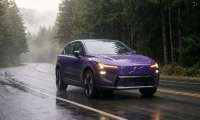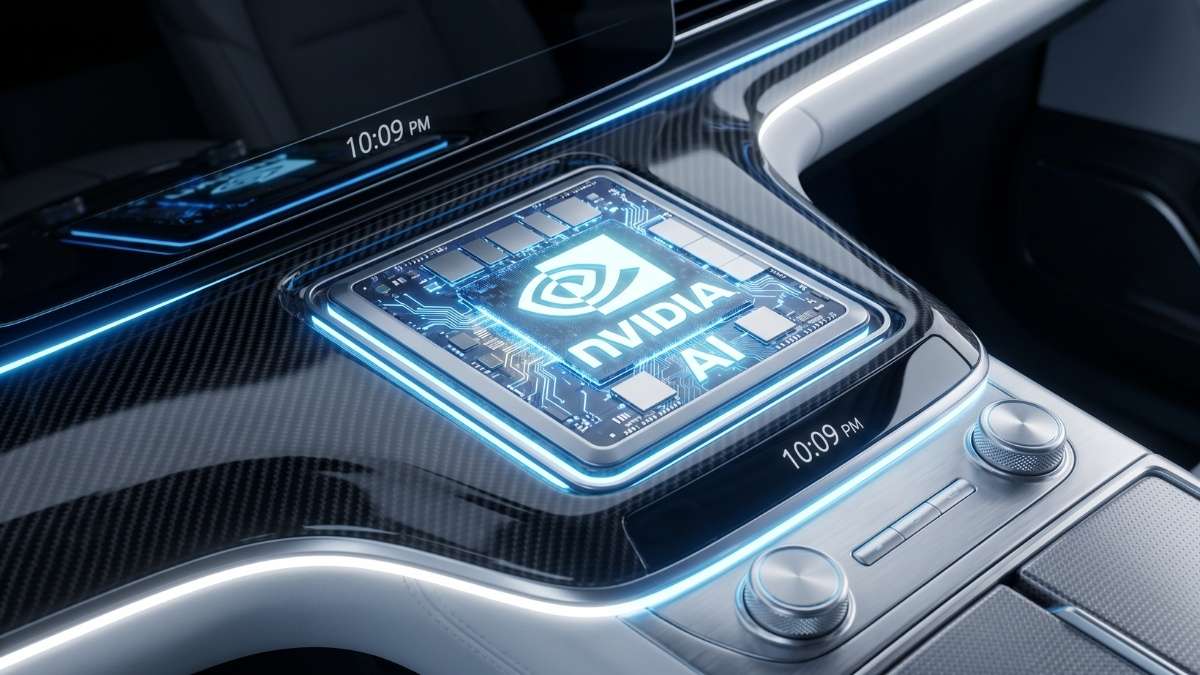

We are entering an era where vehicles are no longer simply modes of transportation; they have evolved into rolling, high-performance supercomputers. Over at the Enderle Group, we constantly benchmark elite hardware. Whether I’m testing a new AMD Threadripper in a custom PC rig using City of Heroes to analyze power sets and frame rates, or swapping out my old Quadcast for a new HyperX FlipCast USB/XLR microphone to ensure pristine audio for my latest podcast, the lesson is always the same: underlying hardware capability dictates the ceiling of your software experience. But right now, the most impressive compute hardware I’ve analyzed isn't sitting under a desk or in a server room—it's driving the 2026 Volvo EX90.
Volvo recently announced sweeping upgrades to their 2026 electric lineup. As an automotive analyst, I frequently write columns for TorqNews detailing the critical differences between older 400V systems and the new standard. Volvo’s leap to a true 800-volt electrical architecture is fantastic, drastically slashing charging times to add 155 miles of range in just 10 minutes at compatible stations. However, the real showstopper—and the core of the vehicle's intelligence—is the upgraded dual NVIDIA DRIVE AGX Orin-based core computer. Pumping out a staggering 500 TOPS (Trillions of Operations Per Second), this system fundamentally changes the vehicle's capabilities.
For context, I’ve been analyzing the EV market carefully for my own garage. I recently pivoted my planned purchase from a Volvo XC60 to pre-ordering the upcoming Volvo EX60 P12 once the window opens. Why the shift? Because the software-defined, compute-heavy architecture Volvo is deploying across their newer platforms is undeniably compelling. My wife Mary, drawing on her extensive background as a Creative Director at Intel, has an exceptionally high bar for how underlying technology and physical design integrate seamlessly. Volvo’s latest hardware-software fusion, backed by Nvidia’s silicon, hits all the right notes for both aesthetics and raw performance.
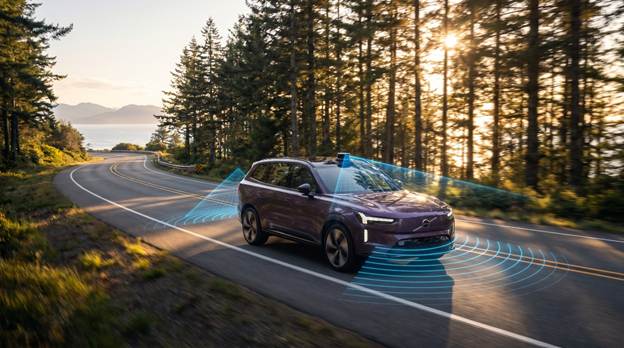
Defining NVIDIA DRIVE AGX Orin: The Heavyweight of In-Car Compute
When we talk about 500 TOPS, we need to put that number into strict perspective. Most high-end consumer PCs or mobile processors boast AI capabilities hovering in the 40 to 80 TOPS range. Dropping 500 TOPS into a passenger vehicle is the equivalent of strapping a liquid-cooled, enterprise-grade AI server rack directly into the chassis. But what exactly is the NVIDIA Drive AGX Orin?
It is an end-to-end, highly advanced system-on-a-chip (SoC) designed explicitly for autonomous vehicles and robotics. It acts as the central nervous system of the car. If you compare it to other in-car AI systems—such as Qualcomm's Snapdragon Ride platform or Intel’s Mobileye—Nvidia has deliberately positioned the Orin architecture as the brute-force, high-ceiling option. While Mobileye excels in highly optimized, camera-first advanced driver assistance systems (ADAS), Nvidia provides the raw compute headroom necessary for deep learning, massive sensor fusion, and genuine autonomous orchestration without system bottlenecks.
Debunking the AI Hype: Why Agentic AI Doesn’t Drive the Car
Before we go further, let’s clear up a massive misconception that is currently proliferating across automotive and tech journalism. We hear endless chatter about "Agentic AI" taking over our lives, managing our workflows, and driving our cars. Let me be perfectly clear: Agentic AI is an entirely incorrect descriptor for execution-layer automotive functions.
Agentic AI involves systems that autonomously break down ambiguous tasks, reason through multiple potential outcomes, and generate multistep plans. This is fantastic for enterprise software orchestrating complex office productivity tasks. But you absolutely do not want an AI "reasoning" about ambiguity or risking a generative hallucination when managing traction control on a wet Oregon road at 70 mph.
The NVIDIA Drive AGX Orin does not rely on Agentic AI for physical driving. Instead, it runs highly deterministic, ultra-low-latency execution-layer models. It ingests massive amounts of data from the sensor suite and executes precise, pre-trained responses in milliseconds. It relies on instantaneous pattern recognition and immediate hardware execution. This distinction is critical for understanding why hardware-enforced reliability and raw speed—which is exactly what 500 TOPS provides- are strictly non-negotiable for automotive safety.
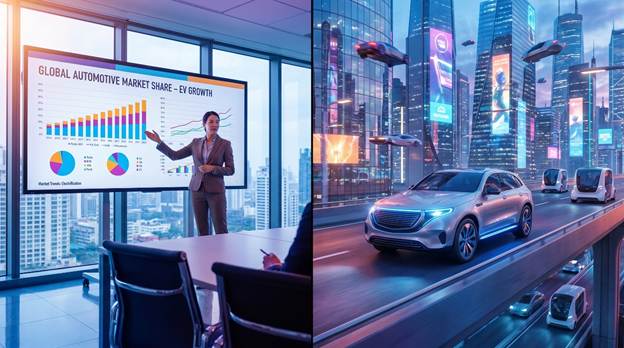
The Sensor Suite: Feeding the 500 TOPS Beast
You don’t need 500 TOPS to run a simple blind-spot monitor or standard adaptive cruise control. The sheer necessity for this level of compute power stems directly from the EX90’s incredibly advanced sensor suite. Volvo has integrated a state-of-the-art LiDAR system, multiple high-definition cameras, and overlapping ultrasonic radars.
LiDAR generates an astronomical amount of point-cloud data every single second, mapping the car’s surroundings in rich 3D regardless of ambient lighting conditions or weather. Fusing the disparate data streams from the LiDAR, radar arrays, and cameras to create a single, perfectly accurate real-time environmental model requires massive parallel processing. The dual Orin SoCs handle this sensor fusion flawlessly. They ensure that the car's internal representation of the physical world is perfectly aligned with reality, without dropping frames, buffering, or missing crucial details that could lead to a collision.
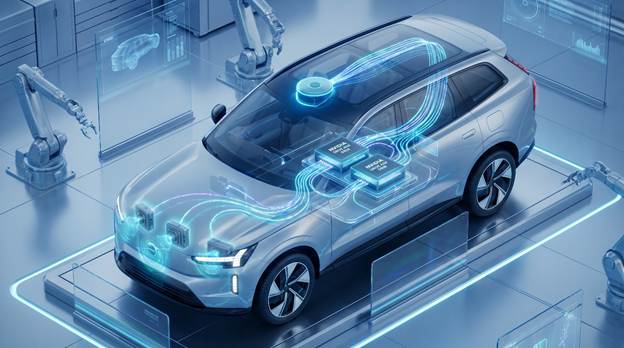
Transforming Driver Safety: The Real Brain of the Operation
How does this technology tangibly improve driver safety? By effectively acting as the brain of the self-driving car, the Drive AGX Orin system enables capabilities that were considered science fiction just a decade ago. Volvo has always built its brand on safety, but they are now merging that physical heritage with Nvidia's silicon.
With the 2026 model year upgrades, Volvo has announced features like expanded automatic emergency steering in complete darkness. Think about the computational load required for that: the car must identify an unlit obstacle—perhaps a pedestrian or an animal wandering onto the road—calculate a safe evasive maneuver faster than human reaction time, check blind spots for adjacent traffic, and execute the steering override seamlessly.
Additionally, the system introduces connected safety alerts for slippery roads and hazards, and a remarkable Emergency Stop Assist with an integrated automatic e-call. If the driver becomes completely unresponsive due to a medical emergency, the Orin computer takes over. It manages the vehicle's driving dynamics, brings the car to a controlled stop on the shoulder, and automatically contacts emergency services. This isn't just a convenience feature; it's a life-saving application of high-performance compute. By removing human error and reaction-time limitations from the most critical split-second driving scenarios, this technology inherently makes the Volvo cars that have it operate vastly more intelligently and safely. Furthermore, as an advocate for hardware-enforced security and isolation-based defense strategies, I appreciate that Nvidia's architecture is built with robust security layers to prevent malicious interference with these critical driving systems.
Industry Adoption: Who Else is Betting on Drive AGX?
Volvo isn't the only automaker betting heavily on Nvidia's vision. Drive AGX has rapidly become the gold standard for premium automakers who are heavily invested in autonomous futures, and adoption is spreading aggressively.
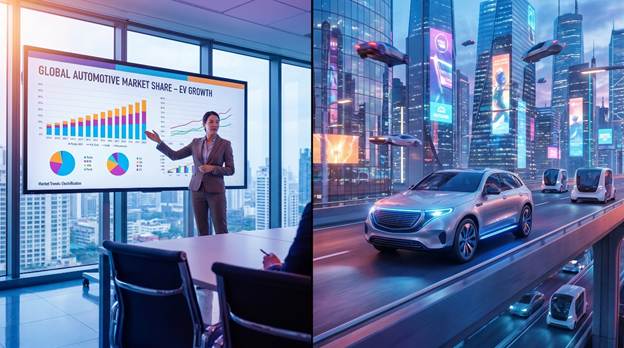
Mercedes-Benz has integrated Nvidia's architecture deeply into their next-generation fleets to power highly automated driving features and a Level 4-ready architecture. Chinese EV innovators like Nio and Xpeng have been aggressively adopting Orin to power their localized ADAS systems, utilizing the immense TOPS to navigate incredibly complex urban environments. And closer to my own heart—as someone who owns a classic 1970 Jaguar E-Type, tracks the Jaguar brand closely, and constantly researches high-performance restomod EV conversions—Jaguar Land Rover is also partnering with Nvidia to build their next-generation automated driving systems. When you see brands spanning from hyper-focused safety pioneers like Volvo to luxury performance icons like Jaguar adopting the exact same compute architecture, it validates Nvidia's dominant market position as the undeniable leader in automotive silicon.
Why the EX90 Architecture Wins the Buyer's Market
Ultimately, what makes the Volvo EX90 particularly attractive to discerning buyers? It comes down to future-proofing.
When you buy a traditional internal combustion vehicle, its technological capabilities degrade relative to the market the moment you drive it off the retailer's lot. However, with a software-defined electric vehicle powered by a 500 TOPS Nvidia core, you are purchasing hardware that possesses vastly more capability than the current launch software requires. This means the car will actually get better, safer, and more autonomous over time via seamless over-the-air (OTA) updates.
Volvo demonstrated a massive commitment to this consumer-first philosophy by announcing that owners of the 2025 EX90 will also receive this upgraded dual-core computer at no charge in the coming months. That level of retroactive hardware support is unprecedented in the automotive space and builds immense, enduring brand loyalty. Combine this compute supremacy with their shift to the 800V architecture for rapid charging, and you have an electric vehicle that finally eliminates the traditional compromises of EV ownership. It's the reason I'm so eagerly anticipating this technology scaling down to the EX60 line.
Wrapping Up
As automakers continue their relentless march toward fully autonomous vehicles, the primary battleground has irrevocably shifted from combustion horsepower to silicon compute power. The 2026 Volvo EX90, armed with the upgraded NVIDIA DRIVE AGX Orin system, represents a watershed moment in automotive engineering and safety.
By delivering 500 TOPS of processing power, Volvo ensures that their advanced, data-heavy sensor suite is never bottlenecked. This enables execution-layer safety features that are highly reliable, blisteringly fast, and immune to the latency issues that plague lesser systems. The automotive industry is finally realizing that you cannot build the future of mobility on underpowered, legacy hardware. With aggressive adoption by industry leaders and a clear, upgradeable roadmap for the future, the integration of high-performance Nvidia compute is turning our vehicles into the most sophisticated, intelligent technology we own. As I continue to finalize the plans for my EX60 P12, I'm more convinced than ever that this marriage of relentless automotive safety and Silicon Valley compute is the only viable way forward.
Disclosure: Images rendered by Artlist.io
Rob Enderle is a technology analyst at Torque News who covers automotive technology and battery developments. You can learn more about Rob on Wikipedia and follow his articles on TechNewsWord, TGDaily, and TechSpective
Set Torque News as Preferred Source on Google
Follow us today...