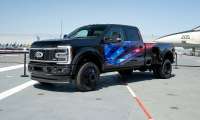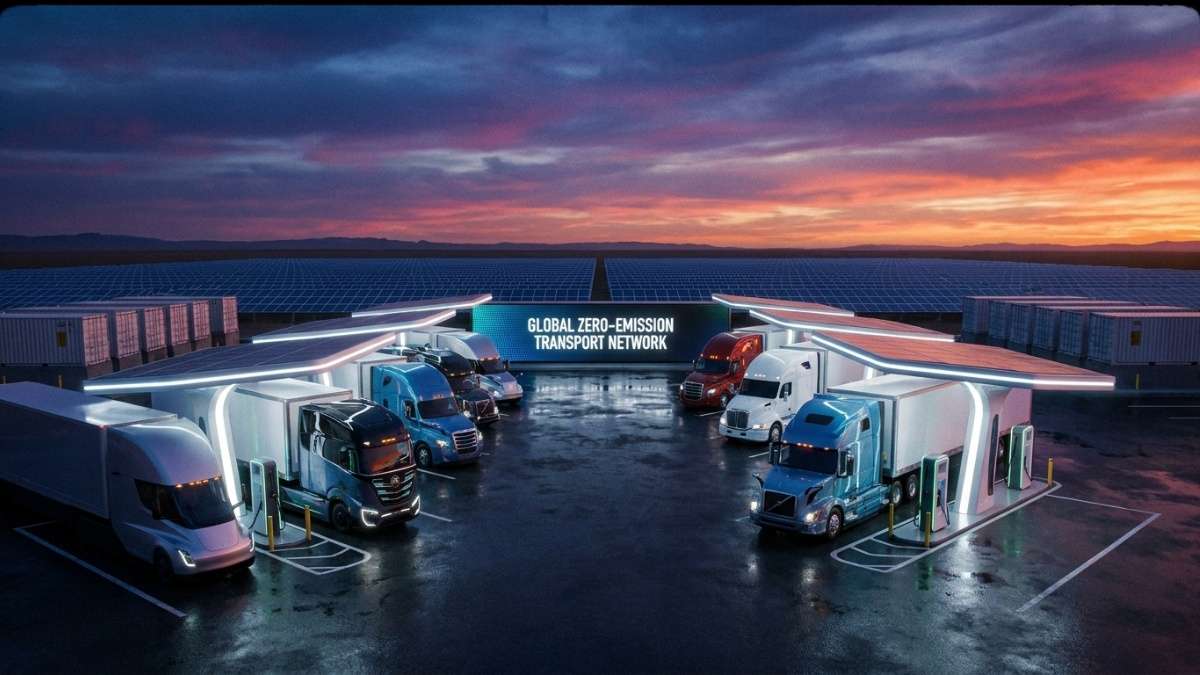

The commercial transportation sector is standing on the precipice of its most significant transformation since the invention of the diesel engine. Fleet operators, driven by tightening global emissions mandates and favorable total cost of ownership (TCO) metrics, are rapidly shifting toward zero-emission powertrains. According to data published by the International Energy Agency (IEA), we are seeing an unprecedented surge in consumer and corporate transition to electric transportation options. While the passenger vehicle segment has established a clear runway—with close to 30% of cars sold this year set to be electric as countries and consumers respond to the energy crisis—the dynamics of heavy-duty long-haul trucking present a far more volatile bottleneck.
The heavy-duty electric trucks themselves have matured remarkably fast. Vehicles boasting incredible range, exceptional aerodynamics, and massive battery capacities are rolling off assembly lines right now. However, a glaring vulnerability threatens to derail this momentum: the megawatt-level charging infrastructure required for long-haul freight routes is severely lagging behind the vehicles it is meant to serve. If we don’t bridge this gap immediately, the entire logistics network risks grinding to a static, uncharged halt.
The Mission Critical Nature of Commercial Heavy Truck Charging Infrastructure
In passenger vehicle electrification, a standard 150 kW or 350 kW DC fast charger is more than adequate to replenish a vehicle’s battery during a brief highway rest stop. For a Class 8 heavy-duty truck hauling 80,000 pounds across state lines, these consumer-grade chargers are practically useless. Long-haul electric trucks carry immense battery packs - often ranging from 500 kWh to nearly 900 kWh—to achieve practical highway ranges. Attempting to charge an 850 kWh battery pack using a standard passenger vehicle fast charger would take hours, completely shattering the tight operational schedules that keep global supply chains functioning.
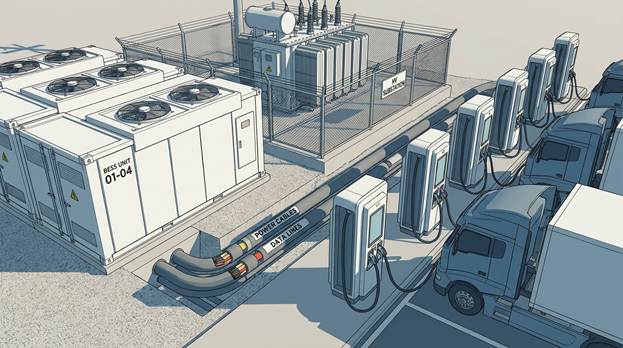
For commercial trucking, time is quite literally currency. Under strict transport regulations, truck drivers face mandatory rest breaks, typically 30 to 45 minutes after several hours of continuous driving. This brief window is the only time available to replenish hundreds of kilowatt-hours of energy. Therefore, the industry requires the Megawatt Charging System (MCS), a standardized charging architecture capable of delivering up to 3.75 megawatts (3,000 amps at 1,250 volts DC).
Without a reliable, ubiquitous corridor of these ultra-high-power stations, long-haul electric trucks are effectively tethered to regional, short-hop hub-and-spoke operations. The infrastructure is important because it represents the missing link between regional pilot programs and true, cross-country zero-emission freight logistics.
Identifying the Current Leaders in Heavy Duty Electrical Trucking
When evaluating who is winning the heavy-duty electric vehicle arms race, the market splits cleanly between production volume dominance and absolute technological performance. Globally, China is leading the charge in sheer numbers, leveraging aggressive government subsidies and domestic supply chain advantages. According to recent industrial market metrics, Chinese manufacturers like BYD and specialized heavy machinery newcomers account for a massive share of worldwide electric truck deployments, primarily dominating regional logistics and port operations.
However, when looking specifically at the highly demanding North American long-haul segment, the undisputed market and technological leader remains Tesla with its Tesla Semi. Accumulating millions of miles of real-world operational fleet data through high-profile partnerships like PepsiCo's Frito-Lay division, the Tesla Semi has set the operational benchmark. With a massive 850 kWh battery pack, the Tesla Semi delivers a true 800-kilometer (approx. 497 miles) range under full load while maintaining an impressive energy efficiency of under 1 kWh per kilometer.
The nearest European contender chasing Tesla’s crown is Volvo Trucks, which has made impressive commercial strides. Volvo has successfully deployed thousands of battery-electric trucks globally, including its flagship Volvo FH Aero Electric. The FH Aero utilizes highly sophisticated aerodynamics and an efficient e-axle design to squeeze out 600 kilometers of range from a smaller battery footprint. This delivers a highly competitive 1.11 km/kWh efficiency rating, though it falls short of Tesla's absolute range capability. Other key players pushing into this space include Daimler Truck with its Mercedes-Benz eActros 600 and Scania, though these models generally offer lower ranges (around 500 km) and carry significantly higher premium price tags compared to Tesla's disruptive commercial pricing structure.
Who is Leading the Infrastructure Effort to Power the Fleets
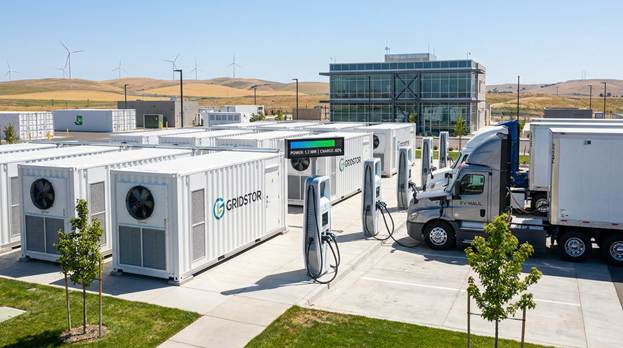
Building the physical chargers capable of dispensing megawatts of electricity is a monumental engineering feat, requiring liquid-cooled cables, advanced thermal management, and robust grid ties. The automotive companies themselves cannot handle this burden alone. Consequently, traditional heavy electrical engineering giants and specialized charging point operators (CPOs) have stepped up to lead the structural buildout.
Companies like ABB E-mobility, Siemens, and Kempower are the definitive leaders in engineering the physical MCS hardware. Kempower, for instance, has successfully commercialized its Megawatt Charging System, delivering dynamic power-sharing satellite stations that can pump out up to 1.2 MW of peak power. These systems allow operators to dynamically allocate electricity across a fleet of trucks, optimizing grid draw and reducing depot operational costs. Similarly, ABB has deployed its ultra-high-power charging stations across critical European freight corridors, validating the newly standardized IEC 63379 and SAE J3271 megawatt charging protocols.
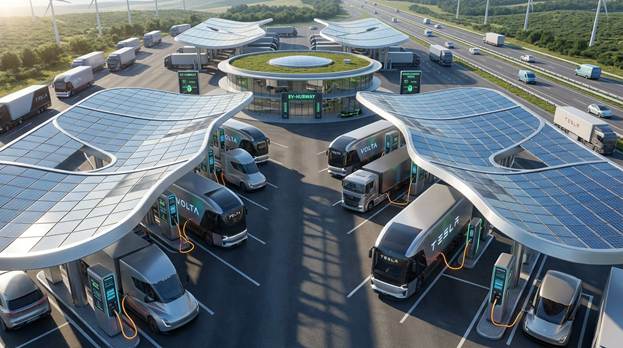
On the corporate side, joint ventures are proving to be the most viable pathway for public corridor development. In Europe, Milence—a joint venture founded by Volvo Group, Daimler Truck, and the Traton Group (Scania/MAN)—is leading the charge to install at least 1,700 high-power charging points across the continent. In North America, Greenlane, a multi-million-dollar joint venture between Daimler Truck North America, NextEra Energy Resources, and BlackRock, is spearheading the development of a public, heavy-duty charging network along major US logistics corridors, starting with the shipping lanes of the American Southwest.
The EV Sellers Stepping Up and Those Severely Lacking
When inspecting individual truck manufacturers on their infrastructure commitments, a stark divide emerges between those proactively building the ecosystem and those passively relying on utilities to solve the problem.
Impressive Commitments:
Tesla stands out as an aggressive pioneer. Rather than waiting for third-party networks, Tesla has deployed its proprietary "Megacharger" installations at customer depots, such as PepsiCo’s hubs in California. These installations deliver the targeted 1 MW charging speeds, pulling a 70% charge into the Semi within 30 minutes. Tesla is also actively planning a public Megacharger network along major freight routes connecting the US and Mexico, mirroring the strategy that made its passenger Supercharger network a dominant global standard.
Volvo Trucks and Daimler Truck also earn high marks for their ecosystem approach. Recognizing that a truck is unsellable without a place to plug it in, both OEMs have co-funded the aforementioned Milence and Greenlane networks. They are deeply involved in advising utility companies on grid modernization and providing fleet customers with comprehensive, end-to-end depot charging integration software.
Severely Lacking:
Conversely, several traditional and legacy truck builders are lagging behind dangerously. Many domestic and regional manufacturers are treating electrification purely as a vehicle design challenge, selling Class 8 trucks while offering nothing more than a referral to a third-party hardware vendor for charging solutions. These legacy players are severely lacking in dedicated capital investment for public charging networks. By failing to participate in infrastructure joint ventures or deploy proprietary fast-charging locations, they are leaving their fleet customers stranded, forcing logistics companies to navigate the bureaucratic nightmare of utility grid upgrades completely on their own.
The Automotive Company Furthest Along in the Infrastructure Race
When you strip away the press releases and look at operational hardware in the ground, Tesla is the automotive company that is furthest along in creating the necessary charging infrastructure for long-haul trucking.
Tesla’s vertical integration gives it an unfair advantage. While European consortiums are still navigating multi-country regulatory approvals and trying to harmonize grid connections across borders, Tesla has built, tested, and deployed operational Megachargers that routinely dump immense amounts of power into active commercial trucks. By developing the vehicle, the battery pack, the charging hardware, and the energy management software under one corporate roof, Tesla has bypassed the interoperability friction that plagues its competitors. While Volvo and Daimler are making admirable, collaborative progress via Greenlane and Milence, Tesla’s single-minded execution makes it the clear frontrunner in operational readiness.
Wrapping Up
The heavy-duty electric truck market is no longer a speculative science fiction project; it is a rapidly growing commercial reality. As the IEA notes, global energy shifts are accelerating EV adoption everywhere, and heavy trucks are the logical next frontier. Vehicles like the Tesla Semi and the Volvo FH Aero Electric have proven that battery-electric platforms possess the range, power, and economic viability to replace diesel.
Yet, the entire movement faces a catastrophic bottleneck. The commercial charging infrastructure needed to sustain these vehicles on long-haul routes is lagging far behind vehicle development. While engineering giants like ABB, Siemens, and Kempower have successfully designed the megawatt hardware, and forward-thinking OEMs like Tesla, Volvo, and Daimler are investing heavily in network deployment, the broader industry remains woefully unprepared for the massive grid demands ahead. To prevent the freight industry from stalling, automotive manufacturers, charging operators, and public utilities must immediately unite to build out synchronized, high-capacity megawatt corridors. The trucks are ready to roll; it is time for the grid to give them the power to do so.
Disclosure: Images rendered by Artlist.io
Rob Enderle is a technology analyst at Torque News who covers automotive technology and battery developments. You can learn more about Rob on Wikipedia and follow his articles on TechNewsWord, TGDaily, and TechSpective.
Set Torque News as Preferred Source on Google
Follow us today...