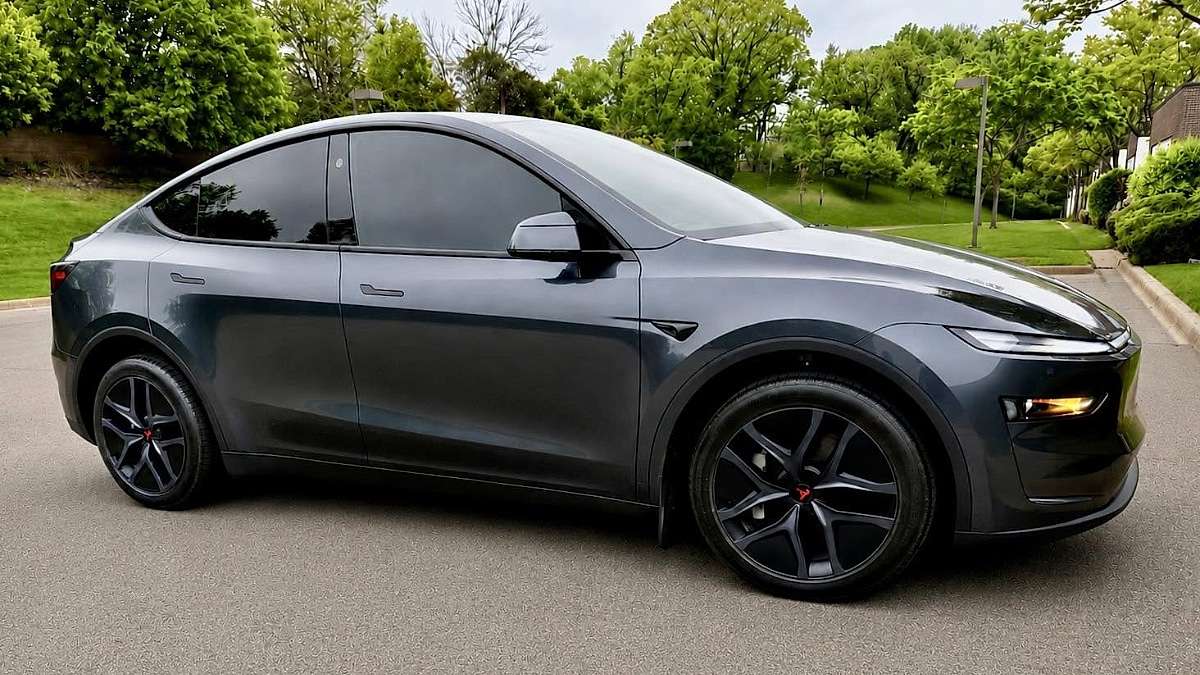
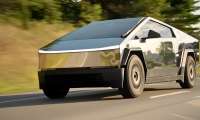
This as-told-to article is based on a public post of a Tom Forsythe, which he posted recently on the Tesla Model Y Juniper Owner Club on Facebook and is edited by Torque News Editor Armen Hareyan for clarity.
My Tesla story: (I’ll try to be brief) Teslamonial
I’m that guy that laughed at EV cars. I shook my head when I saw people sitting at chargers as if to say… “that makes no sense”.
I’ve been driving a Chevy 2500 series Silverado for 3 years. I put 100,000 miles on it. It’s a gas guzzling powerful vehicle, but a great truck. Problem is that when I analyzed the use, only a few thousand of those miles required a truck. I have another truck in my business in the location where I need it for the future.
With the price of the Model Y Premium AWD, .99% financing and the delta of savings between these 2 vehicles for the number of miles I log, buying the Model Y was elementary math.
I have hardwired chargers at home and at work. I’ll do 90% of my charging at .13 a kWh and am looking at saving $7 to $8k per year.
On top of that, the finance money on the Silverado pickup was 5%. The money on the Tesla is 1%. There’s another couple thousand annually. The Chevy Silverado was costing me $1,200 a year in insurance. The Tesla is $1,032. The gas savings alone is making the payment.
Strong Argument for The Model Y Against The Chevy Silverado
That’s a great argument all by itself and enough justification, but FSD is the super sauce.
I feel very blessed to have entered the “Tesla Club” at exactly the right moment in time. Most of my miles are highway driving and trips of 40-to 140 miles.
I’ve had my Model Y for 3 weeks, and have used FSD for 95% of my miles (1,500 plus already). It works great. Not perfect, but great.
At the time of this writing I downloaded the FSD 14.3.3 update, and put about 30 miles on the new software. Now, a few of my biggest gripes appear to have been advanced (speed control in the FSD driving modes and odd lane changes in a few situations). I’m glad I didn’t beta FSD the last few years. I think I would have turned it off but in its present state, it’s amazing. I’ll never go back to a car without it. Even with the monthly subscription, the car is essentially free in my situation.
Driving an EV is an entirely different mind set for getting from point A to B. You definitely stop more often and it adds some time, but at my age, I’m finding I don’t mind it.
The stops can be quicker too when you’re topping off vs trying to always go from 20% to 80%. That frankly is tough using Superchargers. You charge when you can vs looking for the stretch charge. The benefit? Getting in a quick stretch, bathroom break, snacks, catnap etc… It’s working for me so far. I haven’t done a long trip but multiple 120-150 round trips.
Hope some of you had a use case as clear as mine. Easiest new car decision I’ve ever had and the most satisfied I’ve ever been with a new car. Cheers!
Quick add: I’m praying now for the day that this thing can drive me home from Wild hockey games. Season ticket holder and those late night drives are getting tough. With the pace of FSD development, I’m actually believing this could happen sooner than we realize.
The Torque News Take
It is not every day you see a die-hard truck enthusiast make a complete U-turn on electric vehicles. But as our reader beautifully broke it down, sometimes the decision simply comes down to "elementary math."
Advertising
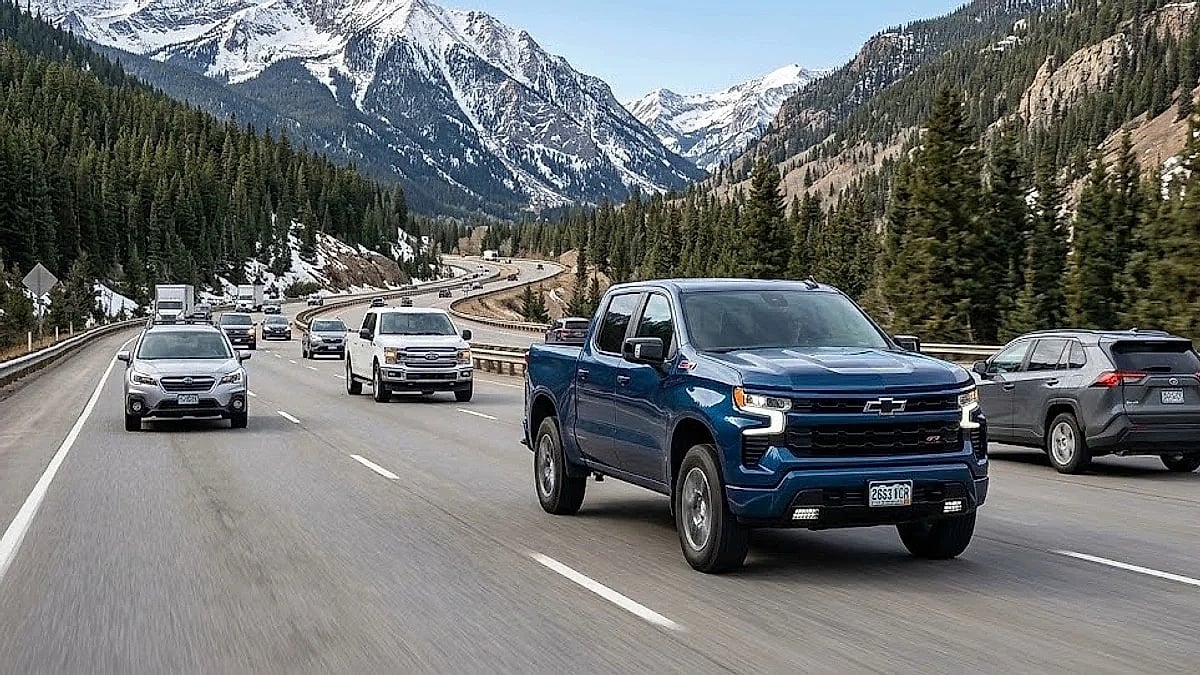
Trading a heavy-duty Chevy Silverado for a Tesla Model Y Premium AWD might seem like an apples-to-oranges comparison on the surface. However, when you look at the actual data - shifting from a 5% pickup financing rate down to a 0.99% promotional rate, and covering 90% of your charging at home for just $0.13 per kWh - the real-world savings are impossible to ignore. Saving $7,000 to $8,000 annually means the vehicle is practically paying for its own monthly note through fuel and insurance differences alone.
Beyond the balance sheet, the massive reliance on Tesla’s Full Self-Driving (FSD) for 95% of highway miles highlights a major shift in the ownership experience. With the recent rollout of the 14.3.3 software update addressing critical pain points like speed control and lane mapping, the technology is rapidly moving from an early-adopter novelty to a daily necessity for high-mileage commuters.
Advertising
By the way one electric truck owner successfully turned his Chevy Silverado EV into a mobile charging station, sending 6 kW of power directly to a Tesla Model Y.
What Do You Think?
We want to hear from the Torque News community on this one! Drop your thoughts in the comments section below:
- For the truck owners out there: What is the exact dollar amount in annual fuel savings that would realistically convince you to trade your pickup for an EV commuter?
- For the Tesla drivers running the 14.3.3 update: Have you noticed a significant improvement in how FSD handles speed control and awkward lane changes on your local highways?
Return tomorrow, or check our Torque News Home Page for more interesting automotive news articles.
Image by Tom Forsythe.
About The Author
Armen Hareyan is the founder and Editor-in-Chief of Torque News and an automotive journalist with over 15 years of experience writing car reviews and industry news. Now based in the Charlotte region (Indian Land, SC, he founded
Torque News in 2010, which since then has been publishing expert news and analysis about the automotive industry. He can be reached at
Torque News on X,
Linkedin,
Facebook, and
Youtube. Armen holds three Masters Degrees, including an MBA, and has become one of the known voices in the industry, specializing in the landscape of electric vehicles and real-world stories of actual car owners. Armen focuses on providing readers with transparent, data-backed analysis bridging the gap of complex engineering and car buyer practicality. Armen frequently participates in automotive events throughout the United States, national and local car reveals and personally test-drives new vehicles every week. Armen has also been published as an automotive expert in publications like the Transit Tomorrow, discussing how will autonomous vehicles reshape the supply chain, and emerging technologies in vehicle maintenance.