
The average price of a new electric vehicle slipped again in May, pushing the total to nearly a full year of steady annual EV price declines. Falling prices and some recovery in deliveries suggest the American EV market is finding its footing in a way few people predicted.
The numbers tell a story that would have sounded unlikely back when EV advocates were bemoaning the loss of taxpayer-subsidized EVs. According to Cox Automotive data, the average transaction price for a new electric vehicle slipped yet again in May, landing at $54,532. That figure came in lower month over month and is down 4.0% compared with the same month last year, which was before the EV tax incentives were yanked. In September 2025, the average price of an EV was $58,124. In less than a year, half of the federal EV tax incentive's value has been recouped by market price pressure.
More telling than any single data point is the pattern behind it. May marked the 11th straight month in which the average annual price of a new EV fell, which puts the trend one month away from a full year. By that measure, EV deflation is now entering its twelfth month, with signs that overall EV deflation may be about to accelerate.
The conventional wisdom held that once the $7,500 federal tax incentive vanished, demand for already slow-selling EVs would crater and prices would have to climb to make the math work for automakers. Instead, the opposite is happening. Prices keep easing, and two automakers, one a fresh face and the other a true-blue legacy, are planning new low-cost EVs that will drag the overall average price of EVs to new lows.
So what is actually pushing prices down? A few forces are working together:
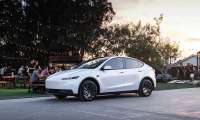
- Tesla and Hyundai slashed MSRPs on two of the top-selling EVs in America.
- Automakers are leaning harder on their own incentives. With the federal credit gone, brands have stepped in with discounts, cheap financing, and aggressive lease offers to keep showroom traffic moving.
- The model mix has shifted. More affordable EVs have reached dealers, which pulls the average price down even when individual models hold steady.
- Inventory has stabilized. Dealers are carrying more EVs, but not crazy amounts. Nicely full lot tends to soften pricing.
- Competition has intensified. Every additional electric model on the market gives shoppers another reason to negotiate.
There is a catch worth mentioning. A falling average transaction price is absolutely welcome news for new EV shoppers, but it is not good news for resale values or for owners worried about depreciation. If new EV prices keep sliding, used EV values can come under pressure too, which matters for anyone planning to trade in within a few years. The true cost of owning a vehicle is about far more than the sticker, and the same deflation that helps a buyer at signing can sting a seller down the road. EVs presently have the worst depreciation curves by a country mile, though there has been a slight uptick in used EV pricing. It’s hard to know if that is model mix or overall price strength. Since Tesla is half the market, when more pricey Teslas enter the used market, prices tick up.
Still, the broader signal here is encouraging for the technology. The market some people expected to collapse entirely after the incentives ended has instead leveled off at 2023 market-share levels while continuing to grow more affordable. That combination, lower prices and stable volume, is exactly what a maturing category can look like.
The question now is how long the streak runs. If June brings another annual decline, the deflation trend will officially span a full year, and the story shifts from a correction to something more like finality. For EV shoppers who missed the feeding frenzy last year ahead of the free money giveaway and have been waiting on the sidelines, the message is straightforward. The deals are real, the selection is wider than it has ever been, and the leverage in the showroom has quietly moved back to your side of the table.
The biggest wildcard in long-term EV deflation is the new Ford EV truck under development. Everyone in the automotive media but me has reported that this will be a “$30,000 EV truck.” I predict the actual consumer cost at launch will be higher than $31K and that the first year average transaction price will likely be closer to $45K. Either way, if the truck is a hit like the Maverick was, the new Ford truck will quickly be in the mix as the number three best-selling EV after the Model Y and Model 3. It will definitely be lower in cost than the current EV average price, so the overall EV average transaction price will go lower.
Then there is Slate. Like Ford, it is producing a low-cost truck that the media are reporting will cost less than $30K. I wish Slate much luck. Any American automaker has my honest support. How the upstart can make a truck that low-cost, regardless of how bare-bones it is, and still make a profit, is lost on me. Let’s say it succeeds and becomes one of our five best sellers at roughly $35K. More EV price deflation will happen. Could EVs and gasers even reach price parity if all this comes together?
Whether the nearly year-long trend in EV price deflation holds through the rest of 2026 before the Ford and Slate low-cost EV trucks arrive will depend primarily on how willing automakers are to sell EVs at a loss to defend their slice of the pie. For now, though, the trend line points in one direction, and it has been doing so for almost a year. Long live EV deflation. Did we really need those federal tax incentives?
John Goreham is a 14-year veteran of Torque News. An accomplished writer and a long-time expert in vehicle testing, Goreham also serves as the Vice President of the New England Motor Press Association and has a growing social media presence. He’s also a 10-year staff writer and community moderator for Car Talk. Goreham holds a B.S. in Mechanical Engineering and an undergraduate Certificate in Marketing. In addition to vehicle and tire content, he offers deep dives into market trends and opinion pieces. You can follow John Goreham on X and TikTok, and connect with him on LinkedIn.
Set Torque News as Preferred Source on Google
Follow us today...