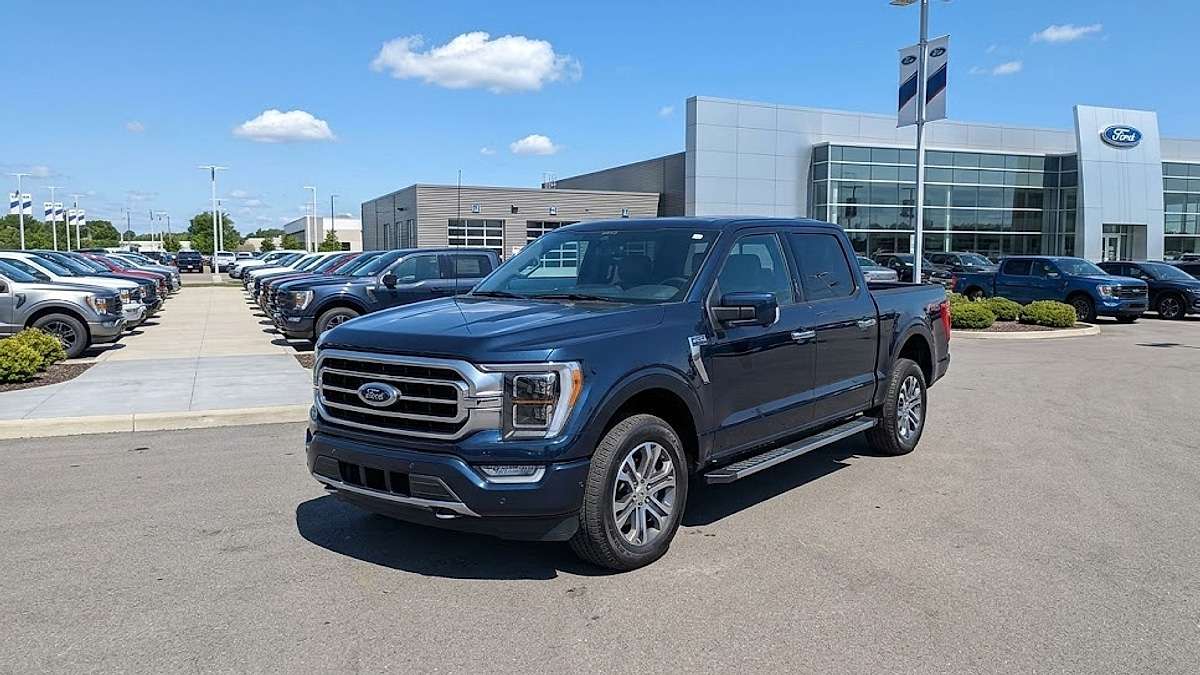

The Used Ford F-150 Inspection Blueprint: A Consumer Action Plan to Skip the Dealership Premium
While our companion deep-dive, “Why 38,000 Miles on a 2025 Ford F-150 5.0L V8 Is a Win for Used Truck Buyers Over Dealership Pricing,” establishes why late-model, low-mileage V8 trucks offer superior financial insulation against new-vehicle depreciation, the reality for budget-conscious buyers in June 2026 is often found further down the odometer. Hunting for a cheap, high-mileage Ford F-150 requires shifting your focus from macroeconomic market trends to localized, forensic mechanical realities.
According to ongoing Torque News by Denis Flierl tracking of manufacturing defects and fleet wear patterns, the secret to safely bypassing inflated dealer prices isn’t finding a truck with a flawless service record; it’s identifying a vehicle whose prior miles were logged on open highways rather than during punishing, high-idle municipal operations.
Torque News technical analysis by Senior Reporter Denis Flierl identifies a critical gap between factory maintenance schedules and real-world component longevity under severe duty cycles. In our ongoing coverage of Ford reliability, Denis Flierl, drawing on 30 years of experience in the mechanical and automotive industries, has uncovered an unresolved dispute over how modern truck engine control modules (ECMs) log operational wear.

Specifically, a truck showing 95,000 miles on the digital odometer can actually possess the internal component fatigue of a vehicle with 250,000 miles if it spent its formative years idling at a commercial construction site or navigating dense urban stop-and-go traffic.
Our core investigative findings reveal that total engine run-time hours, specifically the ratio of idle hours to drive hours buried deep within the instrument cluster’s sub-menus, is the single most accurate predictor of high-mileage 10R80 10-speed automatic transmission failure and variable camshaft timing (VCT) phaser degradation.
The 5-Dimension Forensic Inspection Rubric
To separate a pristine highway cruiser from an abused city work truck, buyers must abandon generic online checklists and employ a specialized, five-dimensional forensic inspection framework before signing a bill of sale.
1. Proprietary Engine-Hour Metrics (The Truth Ratio)
Before looking at the body panels, cycle the ignition key to access the Ford productivity screen's trip telemetry. Locate the "Engine Hours" and "Engine Idle Hours" meters.
The Golden Ratio Formula: Total Engine Hours minus Idle Hours equals true rolling hours. Divide the odometer reading by total engine hours to find your Average Operational Speed.
The Highway Cruiser (avg > 40 mph): Indicates high-gear, low-RPM highway cruising. The torque converter remained locked, fluid temperatures stabilized, and thermal cycles were minimized.
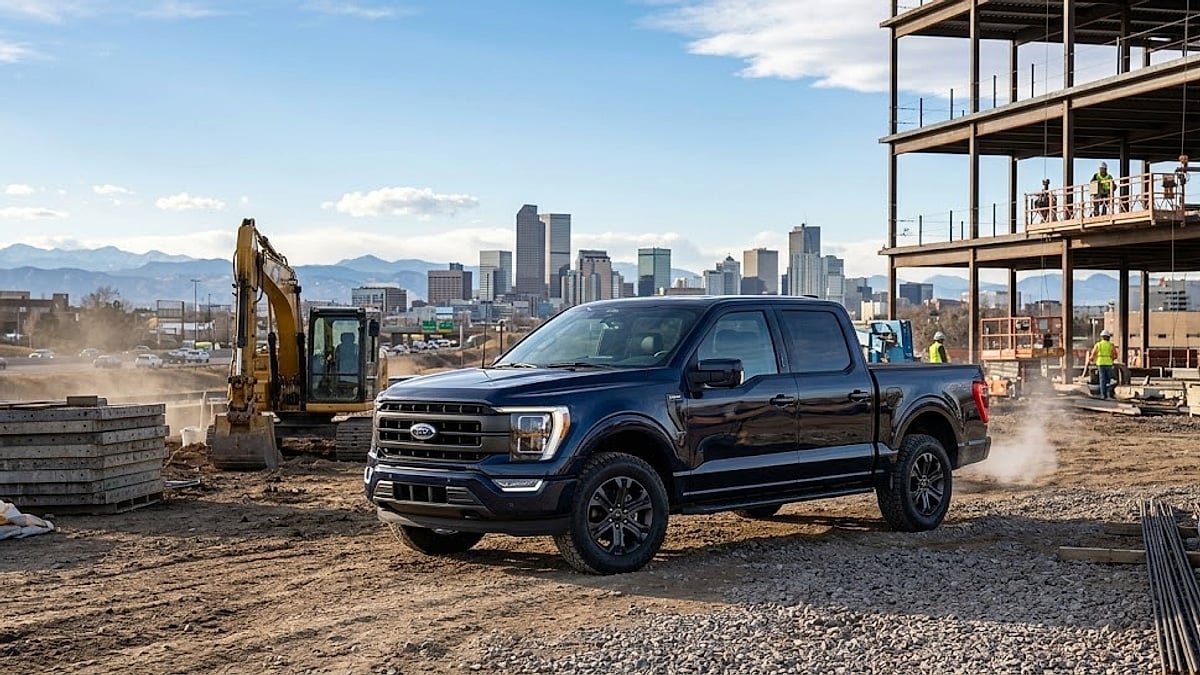
The Idling Work Truck (avg < 20 mph): Signal a severe duty life. Excessive idling starves the top end of the engine of optimal oil pressure, accelerates timing chain stretch, and degrades the catalytic converters via fuel dilution.
2. First-Hand Evidence: Underbody Visuals
High-mileage trucks built within the current decade frequently display telltale visual markers of their operational history underneath the chassis. Pay immediate attention to the rear axle assemblies. According to documented safety trends on Pickup Truck Talk, 2021–2025 F-150 models equipped with the Max Tow Package suffer from a distinct defect where the rear axle hub bolts shear off within the housing.
Look for fresh rust weeping from the center of the rear wheel hubs or missing bolt heads beneath the center cap. Furthermore, inspect the oil pan; versions using plastic composite oil pans with press-in rubber gaskets are notorious for chronic low-level seepage that goes undetected until structural starvation occurs.
3. The 10R80 Transmission Adaptive Learning Shift Test
The co-developed Ford-GM 10-speed automatic transmission is a highly sophisticated unit governed by adaptive shift logic software. Over time, the transmission control module (TCM) adjusts internal line pressures to compensate for clutch plate wear. When test-driving a high-mileage F-150, ensure the powertrain is completely cold.
Perform a series of low-throttle accelerations through gears 1 to 4. If the truck lurches, hesitates, or "slams" violently into gear during cold execution, the adaptive tables have reached their maximum threshold of mechanical correction, signaling a looming $7,000 overhaul.

4. Identifying the Valvetrain "Rattle"
Experienced fleet technicians recognize that Ford's modular engine families, both the 3.5L EcoBoost V6 and the 5.0L Coyote V8, possess distinct mechanical warning signs. A persistent metallic rattle lasting 2 to 5 seconds immediately following a cold start indicates a loss of hydraulic tension in the cam phaser locking pins. Bypassing this symptom means accepting an eventual, labor-intensive top-end valvetrain teardown.
5. Modern Electrical Parasitic Loads
As late-model pickups integrate advanced Level 2+ semi-autonomous driving suites like BlueCruise, their dependence on stable electrical architectures has intensified. High-mileage trucks that sit on secondary dealer lots often exhibit a cascade of erroneous dashboard warning lights, ranging from stability control faults to blank infotainment displays, due to a degraded primary AGM battery that fails to support complex network module wake-ups.
High-Altitude Performance and Regional Impacts
Operating a high-mileage pickup truck within the extreme environments of the Rocky Mountain region introduces distinct localized stressors that buyers must account for. In Colorado, evaluating a used truck's powertrain health requires simulating heavy-load conditions at reduced atmospheric pressure.
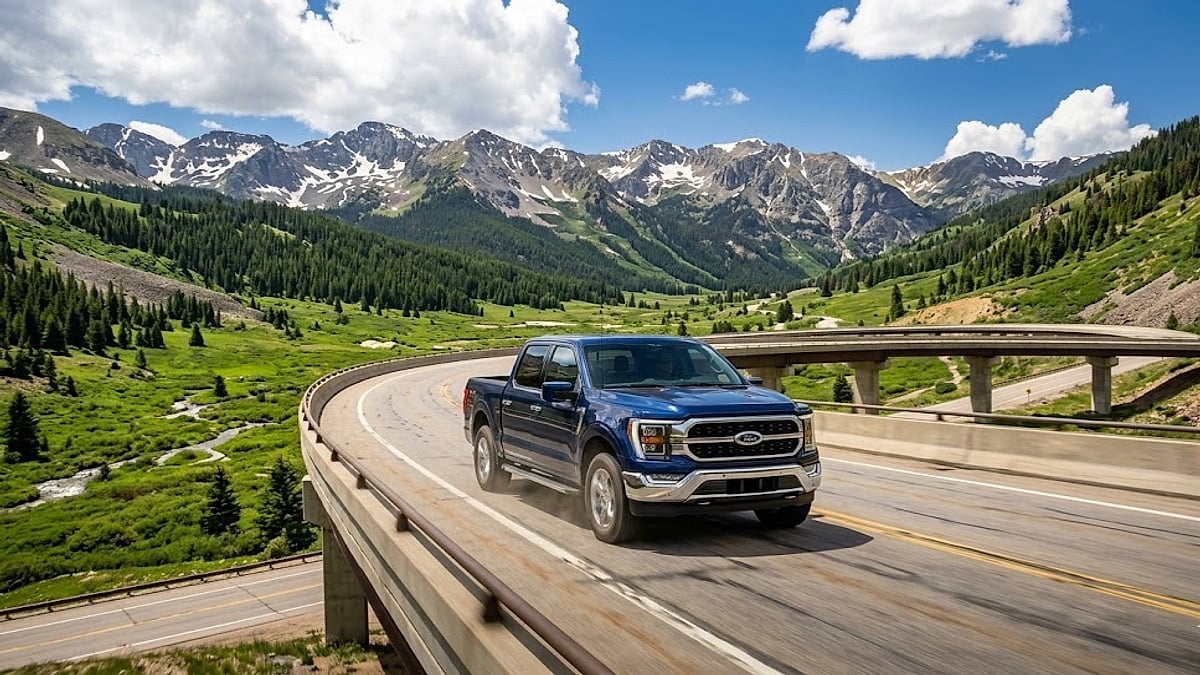
When analyzing used inventory from high-altitude corridors such as Interstate 70, Vail Pass, or the Eisenhower Tunnel approach, standard fluid change intervals are entirely insufficient. For example, local driving profiles tracked via our Torque News 2.7L Denver Commuter Study confirm that the combination of thin mountain air, severe road gradients, and extended winter warm-up idling drops real-world fuel efficiency down to 15 MPG while doubling the shear rate of the engine's oil molecules. If an F-150 spent its high-mileage life in the Mountain West, verify that the transmission, transfer case, and differential fluids were serviced at half the factory-recommended intervals.
The Next Question: Should You Budget for an Aftermarket Warranty?
Once you locate a high-mileage F-150 that passes the engine-hour ratio test and displays a clean underbody, the next logical question is: Should you protect your purchase with an aftermarket extended service contract, or clear a line of credit for out-of-pocket repairs?
The data indicates that independent third-party warranties are highly conditional. If the vehicle's maintenance history cannot be verified with sequential oil change receipts, claims regarding cam phasers or transmission valve bodies are frequently denied under "pre-existing condition" clauses.
Instead of spending $3,500 on a restrictive warranty policy, consumers are better served by allocating those exact funds into an emergency mechanical reserve fund. This strategy ensures you retain direct control over repair quality and technician selection while allowing you to proactively address known pain points, such as upgrading to revised OEM cam phasers or installing an aftermarket aluminum oil pan.
Executing a Risk-Mitigated Used Truck Purchase
Beating inflated dealership pricing requires transforming yourself from a passive consumer into an analytical investigator. By focusing on engine operational hours over simple odometer mileage, identifying structural underbody faults like sheared axle hardware, and calculating regional environmental wear, you can confidently acquire a high-capability pickup truck at a deep macroeconomic discount.
Treat the buying process as a business transaction governed by data: verify internal telemetry, thoroughly inspect the mechanical components, and always be prepared to walk away if the physical evidence contradicts the seller's claims.
How About You? Have you managed to find a reliable, high-mileage half-ton truck without paying inflated dealership prices, or did hidden mechanical issues catch you off guard after the purchase? Tell us what you think and leave a comment below in the red "Add new comment" link.
About The Author
Denis Flierl is a 14-year Senior Reporter at Torque News and a member of the Rocky Mountain Automotive Press (RMAP) with 30+ years of industry experience. Explore his full investigative reporting archives and technical guides at DenisFlierl.com. Based in Parker, Colorado, Denis leverages the Rockies' high-altitude terrain as a rigorous testing ground to provide "boots-on-the-ground" analysis for readers across the Rocky Mountain region, California EV corridors, the Northeast, Texas truck markets, and Midwest agricultural zones. A former professional test driver and consultant for Ford, GM, Ram, Toyota, and Tesla, he delivers data-backed insights on reliability and market shifts. Denis cuts through the noise to provide national audiences with the real-world reporting today’s landscape demands. Connect with Denis: Find him on LinkedIn, X @DenisFlierl, @WorldsCoolestRides, Facebook, and Instagram.
Photo credit: Denis Flierl
Set Torque News as Preferred Source on Google
Follow us today...