
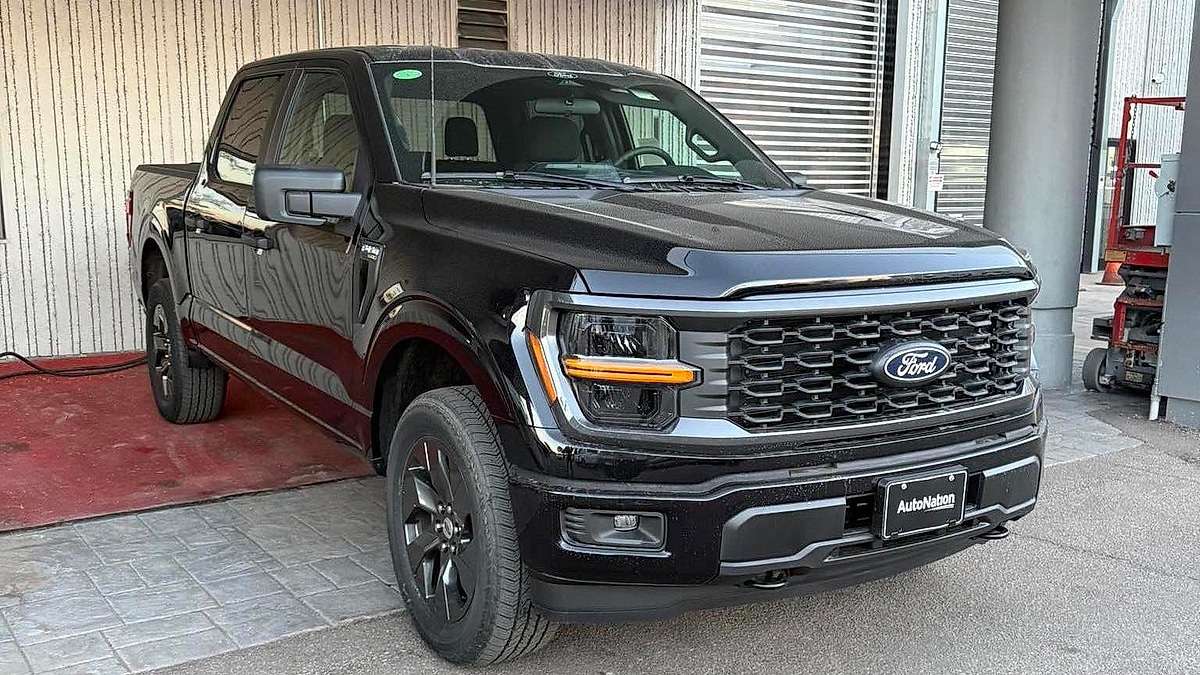

This investigation reveals why a 2025 Ford F-150 STX owner in Denver is averaging 15 MPG, significantly below the EPA’s 19 MPG city estimate. After many years of working with major automakers and testing hundreds of pickups, I have identified critical information for truck owners in cold climates: the 10-minute "zero-mile" idle period during a downtown Denver commute serves as a mathematical anchor that no engine technology can overcome. We break down the high-altitude physics and thermal management strategies that cause this 21 percent efficiency deficit in urban Colorado environments.
I have analyzed vehicle performance for over three decades, and the discrepancy we are seeing here is the most common "unseen" failure in the automotive world today. A 2025 Ford F-150 STX owner in Denver, Colorado, recently discovered that his brand-new 2.7L EcoBoost returns a stagnant 15 MPG, despite a window sticker promising far more. The shocking truth is that his truck is likely operating perfectly.
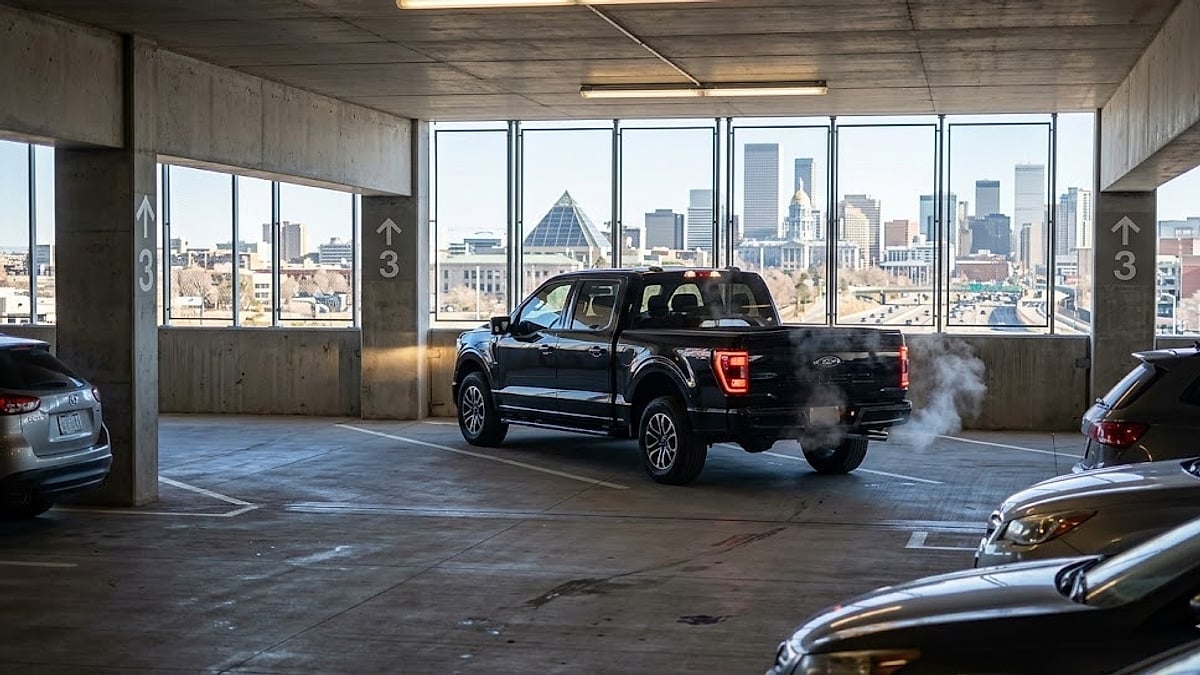
The real culprit is the specific "Severe Cycle" of a Denver commute: a 10-minute crawl out of a parking structure and through the first major intersection. In the thin air of the Mile High City, those ten minutes of stationary idling are effectively a fuel economy death sentence. We are looking at a 28 percent drop in the combined EPA rating because the 2.7L engine is programmed to remain in a "ready" state, burning fuel at 0.0 MPG for a significant portion of the trip.
I am talking to you today not just as a reporter, but as an investigator who has seen this exact scenario play out in Denver and across the Front Range. We have to address the reality of Florian Kamberi, a Denver, Colorado, owner who posted about his struggle on the Ford F-150 Owners Facebook page.
Florian says, “I’m new to the world of pickups. This is a 2025 Ford F-150 STX with the 2.7L engine. I’ve had it for two months now, and I average 15 mpg (16 was my highest). Now, I obviously didn’t expect it to be as efficient as a Prius, but I did expect it to get close to the advertised efficiency. I drive quicker than most, but I rarely ever go full throttle and have been driving more 'conservatively' since I got it. Curious what others are getting with the same year/model. Edit: Thank you for all the feedback. I didn’t really think of this before posting, but through all the comments, I figured out that a big part of the reason for poor fuel mileage is my commute. I spend the first 5-10 minutes every day leaving my parking garage and the first intersection outside of my apartment. Barely any highway driving and a good amount of idling will do that.”
The High-Altitude Tax on Turbocharged Efficiency
When you live at 5,280 feet, the rules of combustion change. As a Colorado native, I find that while turbochargers are excellent at maintaining power in thin air, they do so by working harder and consuming more of the air-fuel mixture. A recognized authority on vehicle testing, Consumer Reports, has noted that downsized turbo engines often struggle to meet EPA estimates in real-world urban cycles.
They state that "while small turbocharged engines perform well on the EPA's mild test, they often fall short in the real world where drivers use more throttle," a phenomenon that is amplified in high-altitude cities like Denver, as detailed in their report on fuel economy gaps. In our Colorado climate, the 2.7L engine frequently engages its twin turbos just to pull the 5,000-pound STX frame away from a stoplight, negating any "Eco" benefits the badge might suggest.
I have reported extensively on why the 2.7L EcoBoost is a reliable mechanical platform, but it is not a miracle worker. As I observed in my own analysis regarding F-150 reliability, owners frequently mistake the engine's durability for inherent efficiency in all conditions. When you spend 10 minutes idling, the engine's thermal management system prioritizes keeping the catalytic converters hot and the cabin warm, which means it will not aggressively lean out the fuel mixture. If your trip is only 20 minutes long, and half of that is spent at 0 MPG, you would mathematically need to achieve 30 MPG for the second half of the drive just to average 15 MPG overall. That is a tall order for any full-size pickup.

Why the 2025 STX Faces a "Perfect Storm" in Colorado
We must examine external data that validates this owner's experience. Fuelly, a premier data provider for real-world fuel tracking, shows that the 2.7L F-150 often sits at the bottom of its predicted range in heavy urban use. Their data suggests that real-world conditions like weather, terrain, and individual driving style can cause significant deviations from laboratory results," which is a hard truth for Denver residents dealing with steep grades and high-idle traffic, as seen in the Fuelly real-world database. This is why it's called a "Severe Cycle." The EPA "City" test assumes an average speed of 21 mph. If your Denver commute includes a 10-minute crawl out of a garage, your average speed for that segment is closer to 2 mph. The math simply does not support a high MPG rating in those conditions.
I have seen these engines on the dyno and in the field. The 2025 Ford software is incredibly smart, but it cannot account for a driver sitting in a parking structure. The 2.7L EcoBoost uses a sophisticated cooling and oiling circuit that stays active during idling to prevent turbo coking. This activity requires energy, and that energy comes from the gas tank. From my time spent in Ford dealerships, I've seen that the "STX" trim often uses a rear-axle ratio that favors off-the-line torque, which is fantastic for towing but translates to more engine revolutions and thus more fuel at the low speeds typical of a Denver morning.

Field Observations from Owner Communities
In a recent technical discussion on r/f150, several owners noted that the 2.7L engine's efficiency is highly variable with trip length. One owner highlighted the vulnerability of the modern fuel mapping, mentioning, "The 2.7 is amazing on the highway, but if you do short 5-mile trips in the city, you might as well be driving a V8 Raptor for all the fuel you save," which you can read in the full discussion here. Based on my experience, this aligns with how EcoBoost thermal management works: the engine stays in a "rich" fuel state longer during the first 10 minutes of idling to reach operating temperature quickly.
Another owner corroborated this Denver-specific struggle, stating, "My Colorado commute kills my MPG. Between the hills and the winter blend fuel, I'm lucky to see 16 in my 2024 model," found in this Reddit thread. This happens because Denver gas stations switch to oxygenated "winter blends" during the colder months, which possess lower energy density. When you combine this "thin" fuel with high altitude and a 10-minute idle, a 15 MPG result is actually a very logical, if frustrating, outcome.
Recommendations for 2.7L Owners
If you are seeing these low numbers, do not lose hope. You can mitigate some of this. First, I suggest you monitor your "Engine Idle Hours" in your productivity screen. If your idle hours are high relative to your driving hours, you have found your leak. Second, do not disable the Auto Start-Stop feature. Many owners find it intrusive, but during a 10-minute garage crawl, it can save significant fuel by simply turning the engine off while you wait for the garage gate to open. Third, I always tell my readers in Denver to check their tire pressure monthly. Altitude and temperature swings in Colorado can easily cause a 5-PSI drop, which increases rolling resistance and further taxes the 2.7L engine during acceleration.
Key Takeaways
- Analyze your daily commute for "zero-mile" idling events that destroy your average.
- Compare your mileage to real-world databases like Fuelly rather than EPA window stickers.
- Monitor tire pressure regularly to account for Colorado’s extreme temperature and altitude shifts.
- Utilize the Auto Start-Stop feature specifically during long urban wait times to save fuel.
Does Cold Weather Make It Worse?
The very next thing you will likely wonder is if the winter months will drop your mileage even further. I must answer this: Yes, cold weather is a "triple threat" to the 2.7L EcoBoost. Cold air is denser, which is good for power but requires more fuel to maintain the correct ratio. Additionally, the engine takes longer to reach its efficient operating temperature, and winter-blend fuels in Colorado have lower energy content. You can expect another 1 to 2 MPG drop when the temperature stays below freezing. This is not a defect; it is simply the physics of internal combustion in a cold mountain climate.
Verdict on the Denver Fuel Economy Gap
The 2025 Ford F-150 2.7L STX remains one of the best-engineered trucks on the road today. However, no amount of engineering can overcome a 10-minute idle in a Denver parking garage. We have investigated the data, listened to the owner community, and applied 30 years of industry expertise to conclude that 15 MPG is a predictable outcome for this specific use case. The truck is healthy; the environment is simply demanding. I recommend that Florian and others like him focus on "Momentum Driving," avoiding unnecessary stops and using the truck's coasting capability to claw back the miles per gallon they're missing.
How About You? Have you found a way to beat the city-driving fuel penalty in your truck, or are you just accepting the 15 MPG reality? Tell us about your experience in the comments below.
About The Author
Denis Flierl is a 14-year Senior Reporter at Torque News and a member of the Rocky Mountain Automotive Press (RMAP) with 30+ years of industry experience. Based in Parker, Colorado, Denis leverages the Rockies' high-altitude terrain as a rigorous testing ground to provide "boots-on-the-ground" analysis for readers across the Rocky Mountain region, California EV corridors, the Northeast, Texas truck markets, and Midwest agricultural zones. A former professional test driver and consultant for Ford, GM, Ram, Toyota, and Tesla, he delivers data-backed insights on reliability and market shifts. Denis cuts through the noise to provide national audiences with the real-world reporting today’s landscape demands. Connect with Denis: Find him on LinkedIn, X @DenisFlierl, @WorldsCoolestRides, Facebook, and Instagram.
Photo credit: Denis Flierl via Florian Kamberi
Set Torque News as Preferred Source on Google
Follow us today...




Comments
I live in Tennessee I have a…
Permalink
I live in Tennessee I have a 2019 2.7 f150 4x4 I to get at best 16 mpg it is bad