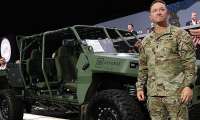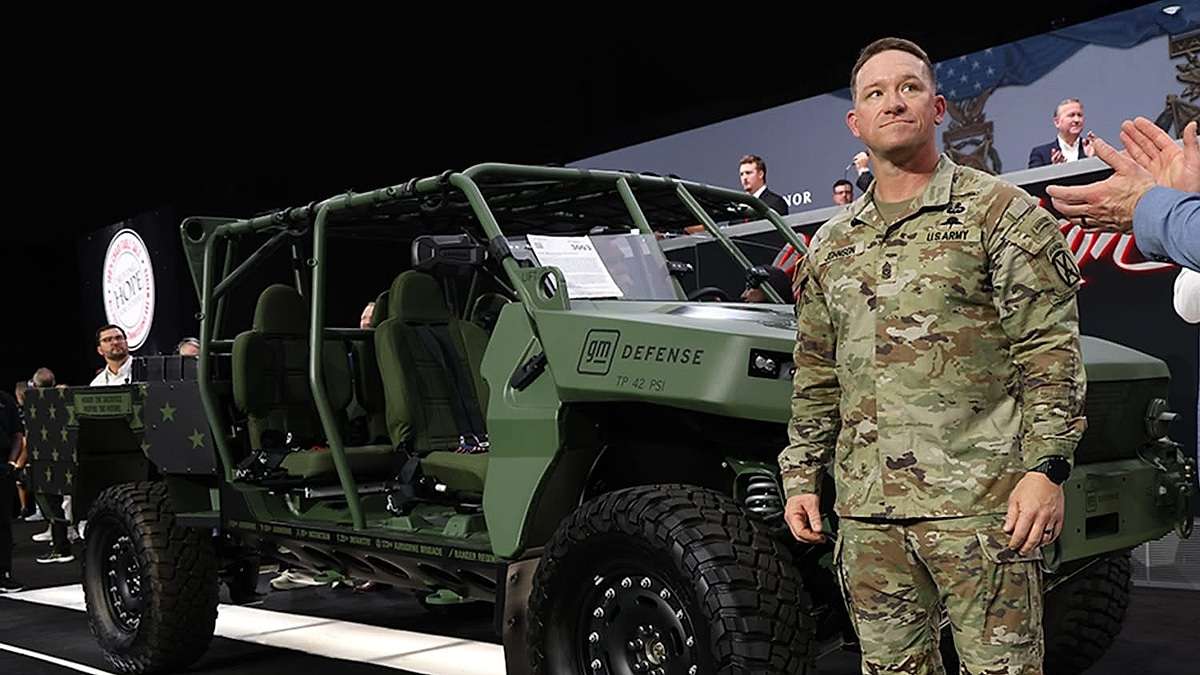

Recently, the Trump administration held high-level discussions with major automotive leaders, including Ford CEO Jim Farley and General Motors CEO Mary Barra. The administration asked the auto industry leaders if the manufacturers could produce more military vehicles, hardware, and perhaps even munitions. As I’ve reported previously, GM Defense already builds a family of vehicles for the military based on the Chevrolet Colorado ZR2 midsize truck called Infantry Squad Vehicles. GM Defense also builds armored vehicles that look like Chevrolet Suburbans but are built on a heavy-duty truck chassis.
The Pentagon asked automakers about using their factory capacity and personnel to help manufacture critical components. The recent actions in Iran have illustrated where the military may need more supplies. President Donald Trump told CBS News that “Both Ford and General Motors are in discussions with defense contractors that could result in the repurposing of certain plants for weapons production. The President suggested that those weapons include things like the Patriot and the Tomahawk missile.
Last month, I reported that Ford planned to start marketing its popular F-Series to the military to help them update the aging military fleets. Ford says, “Beginning last year, several governments in North America and Europe engaged with Ford to discuss how our highly capable commercial vehicles and cutting-edge technologies could support their modern defense needs.”
Ford already has the technology that helps companies monitor and manage their fleets. Some governments already rely on Ford vehicles for security, from military transport in Ford Ranger vehicles to our Police Interceptor solutions. The trucks and SUVs can be easily upfitted with communications systems and special endurance packages that allow them to be run for long periods of time without overheating. Ford also has a special generator system that can turn trucks and vans into power sources. Trying to build vehicles with all of these amenities from the ground up would take years. It would also be incredibly expensive. Automotive manufacturers have the ability to respond much more quickly because much of the technology is already available.
Automakers Have a History of Helping During Periods of Crisis
The automakers provided great help during WWII, building armaments, vehicles and even aircraft. The stories about 'Rosie the Riveter' refer to legions of women who went to work in the plants to build military supplies while their husbands and other men were serving in the armed services.
During the COVID pandemic, the automakers helped build medical equipment and assembled masks to meet the incredible demand.
GM is Now Partnering with Lockheed To Speed Military Production
Lockheed Martin and GM Defense are now collaborating to help strengthen Defense Department manufacturing. They were invited to assist the U.S. Department of War.
GM Defense and Lockheed Martin will work to accelerate manufacturing and innovation by combining Lockheed Martin's defense production expertise with General Motors' advanced manufacturing capabilities. In other words, GM knows how to build vehicles quickly and efficiently and Lockheed Martin knows how to navigate the Defense Department and determine exactly what it needs and how quickly it needs it.
The New Collaboration Will Focus on Three Key Areas:
Strengthening and streamlining supply chains. Automakers have switched to “Just in time” manufacturing. That means the parts arrive from suppliers right around the time the automakers need them. They have reduced waste by not having extra or outdated parts laying around. They also save millions on not having to store huge quantities of materials.
The two companies will help the Department of War improve their manufacturing and also speed up their design capabilities. The automakers have taken months out of design timelines, speeding up the time it takes to get a vehicle to market. Similarly, the Defense Department needs to speed up its timelines to build vehicles and munitions that will address different aspects of modern-day warfare.
Lastly, GM Defense and Lockheed Martin will help the Department of War speed up manufacturing by helping them expand production capacity. Most modern auto plants run at peak capacity running two to three shifts a day. Plus, many increase capacity by running swing shifts on weekends. Those are the types of manufacturing improvements that can speed things along.
"America's security depends not only on developing advanced technologies, but on our ability to produce them quickly, reliably and at scale," said Frank St. John, chief operating officer, Lockheed Martin. "This collaboration brings together two leaders in American manufacturing and innovation to explore new ways to strengthen the defense industrial base, expand production capacity and accelerate delivery of critical capabilities for the United States and its allies."
“Working together, GM Defense and Lockheed will further strengthen American manufacturing and national defense by driving greater speed, efficiency, and innovation in the aerospace and defense sectors,” said Steve duMont, president of GM Defense. “Over the coming weeks, we will be working to identify initial projects to pursue together.”
How the Automakers Benefit From Helping the Government
First and foremost, automakers are focused on creating profits. Both the tariffs and the shift away from EVs have caused huge disruptions for both Ford and General Motors as they are trying to bring most production back to American plants. It is a difficult balance because the pay scales are so much higher in the United States compared to most other countries like Mexico. Also, high interest rates and inflation have frightened many customers away from buying new vehicles. If the automakers can keep their plants running while they try to figure out future models and where to build them, it keeps profits coming in and keeps the workforce busy. Automakers try never to lay off union employees if they can avoid it. Helping the Department of War may be the production boost the automakers need while they try to plan for their future products.
GM Defense Photo
About the Author
Mary Conway is a professional automotive journalist and has decades of experience specializing in automotive news analysis. She covered the Detroit Three for more than twenty years for the ABC affiliate, in Detroit. Her affection for the Motor City comes naturally. Her father ran a gas station while Mary was growing up, in Wisconsin. Follow Mary at @MaryConwayMedia on X and on Facebook, and send her car news tips for future stories. Mary Conway is an esteemed automotive and business reporter who was inducted into the Michigan Journalism Hall of Fame in 2019. Mary is a member of the Automotive Press Association, Rocky Mountain Automotive Press, Society of Professional Journalists, and NATAS.
Set Torque News as Preferred Source on Google
Follow us today...