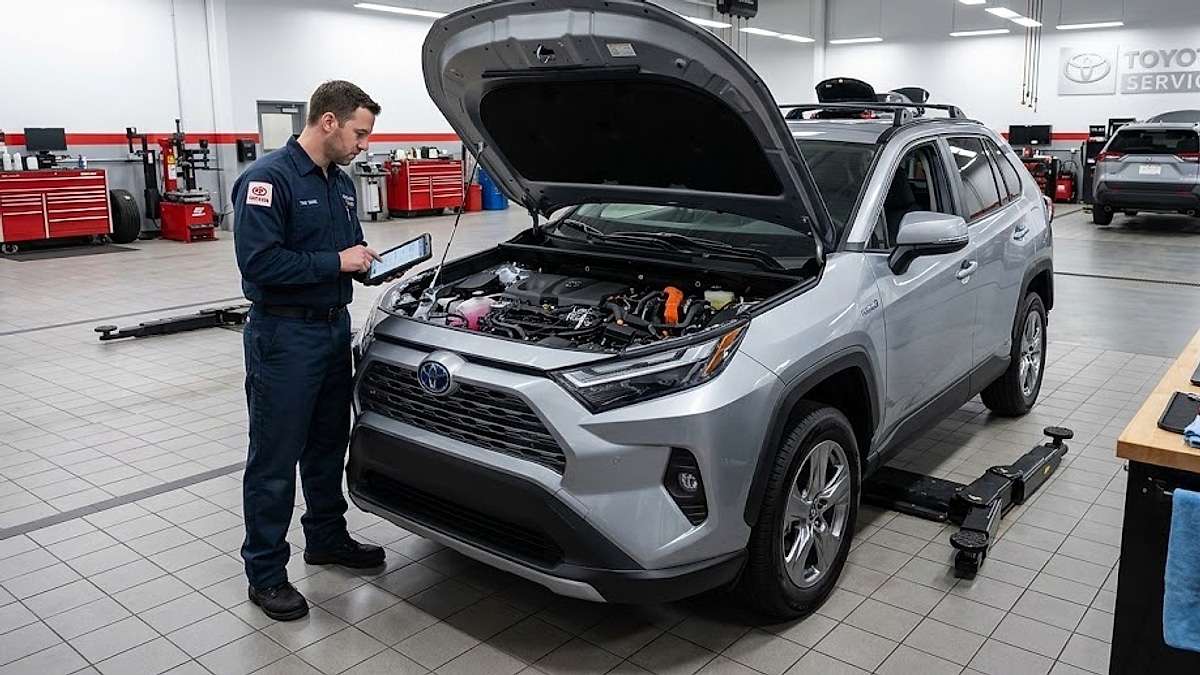

The modern hybrid is no longer an experimental science project.
Buyers routinely expect these ultra-efficient crossovers to track well past a quarter-million miles without breaking a sweat.
When a future owner posted her plans to drop a 2026 Toyota RAV4 LE Hybrid straight into a grueling 50,000-mile-per-year commercial-grade commute, the community's feedback was predictable.
"It’s a Toyota, it will run forever," or "Just change the oil and drive it."
Campground logic and internet forum echo chambers, however, do not issue certified engineering updates.
While the powertrain is exceptionally durable, running a brand-new hybrid at this extreme cadence uncovers a hidden reality that standard automotive media outlets completely ignore.
The Owner's Dilemma: "I have a 2026 Toyota RAV4 LE Hybrid arriving next month and will be driving 45,000 to 50,000 miles a year. Do these hybrids genuinely last until 200,000 or 250,000 miles, and how soon should I expect to replace the hybrid battery pack?" - Sara Nadeau Kurtz, Toyota RAV4 Facebook Discussion Group.
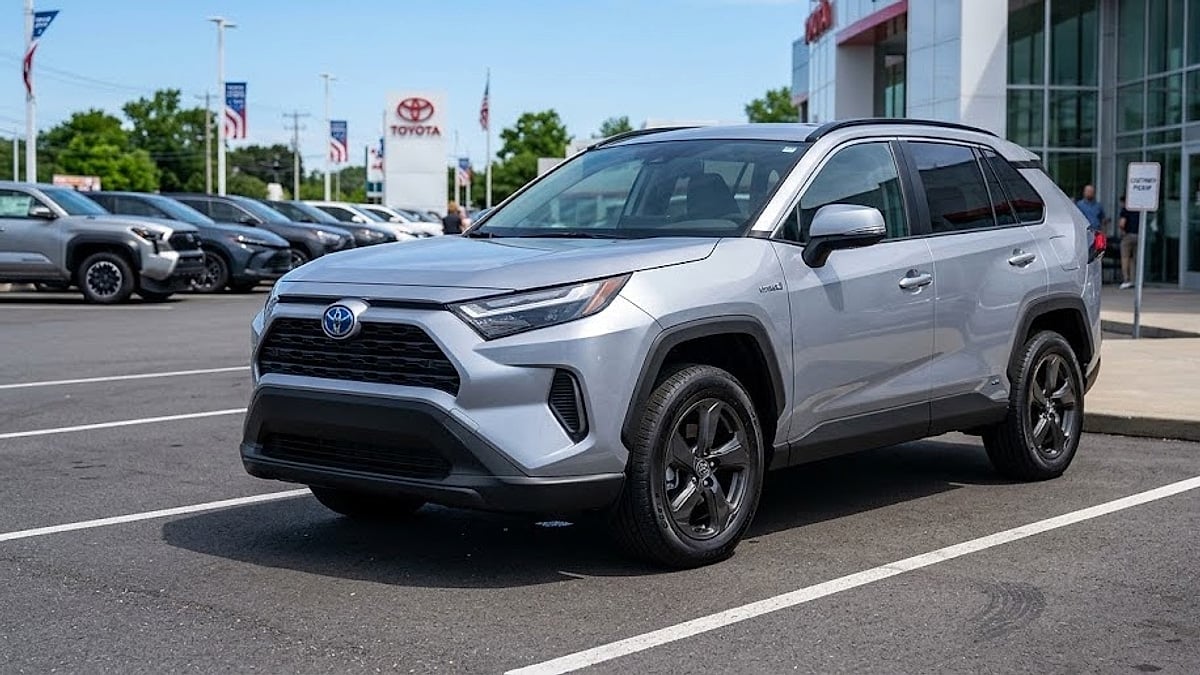
The vehicle can absolutely cross the 250,000-mile finish line.
According to professional consumer advocacy reporting, a majority of Toyota RAV4 Hybrid owners have experienced anxiety due to corrosion-related issues that have resulted in $5,000 repair bills.
But the path to getting there will require navigating an expensive, out-of-warranty mechanical bottleneck that most buyers never see coming until the dashboard lights up.
As documented in a detailed vehicle teardown and component evaluation by The Autopian, if you have more than 100,000 miles on your affected Toyota hybrid, you'll be paying for repairs out of pocket, and they can get seriously expensive.
The Three-Year Factory Warranty Disappearing Act
Toyota proudly places a robust 10-year or 150,000-mile warranty on its hybrid battery packs.
For the average American motorist logging 12,000 miles annually, that translates to a decade of absolute financial peace of mind. But when your daily commute looks more like a commercial flight pattern, standard consumer protections evaporate.
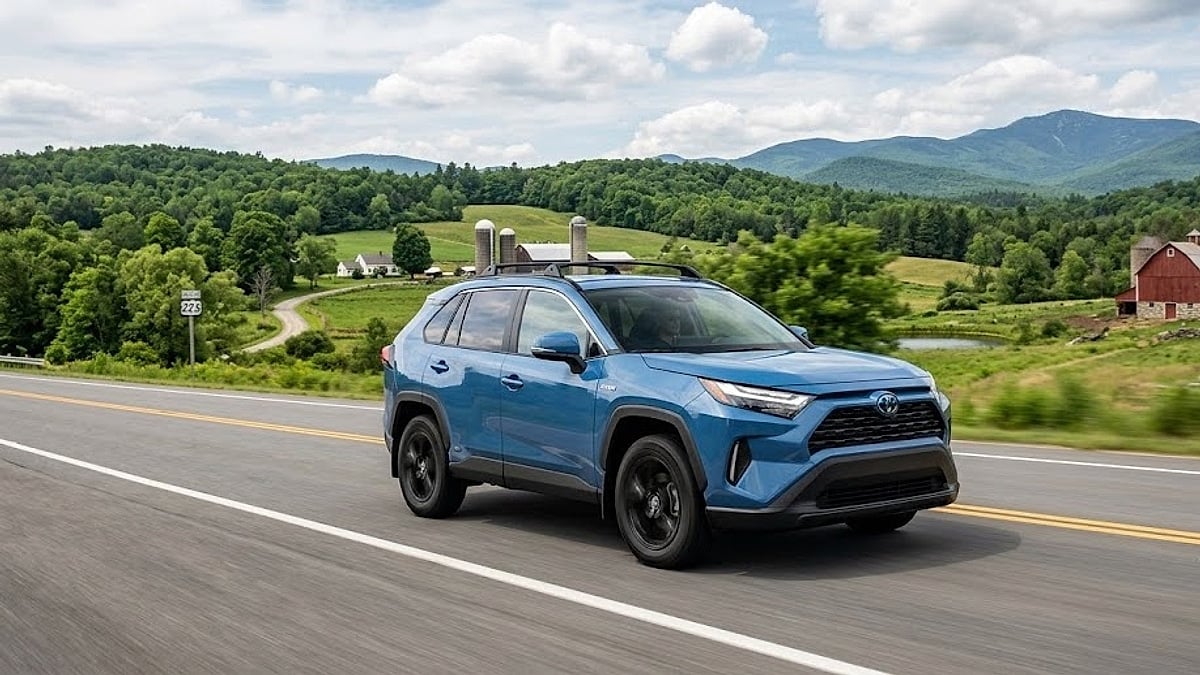
An owner logging 50,000 miles a year will completely exhaust that benchmark 150,000-mile factory battery warranty in precisely 36 months.
By year four, the vehicle enters a high-exposure zone where every complex component operates entirely on the owner's dime.
In an investigative report on generational vehicle updates, I noted that trading a paid-off Toyota RAV4 for a first-model-year platform is rarely supported by real-world financial metrics, especially when pushing extreme mileage limits.
This hyper-compressed timeline changes how components age.
Standard vehicle components degrade over time due to thermal cycles and environmental exposure.
When you compress a decade's worth of standard driving into a mere 36 to 48 months, the mechanical components are subjected to near-constant thermal stress.
The battery cells rarely have time to stabilize at ambient temperature.
This completely changes the internal wear profile.
The Real $6,000 Bottleneck In The High-Mileage Equation
Most shoppers assume the primary risk of a high-mileage hybrid is the ultimate demise of the traction battery pack itself.
That assumption overlooks the actual engineering vulnerability hidden beneath the floorboards. The most expensive component failure on a hard-driven, modern all-wheel-drive Toyota hybrid is often not the battery.
It is a Toyota RAV4 Hybrid failure known to master technicians as "Cablegate."
Writing in The High-Mileage Toyota RAV4 Survival Guide, I highlighted that the primary high-mileage risk for the 2.5L gas and hybrid engine architectures is internal mechanical failure, often tracking an insulation resistance fault code as moisture breaches the wire shielding.
The RAV4 Hybrid uses a high-voltage orange electrical cable that runs from the front inverter to the Rear Motor Generator (MGR).
This cable delivers power directly to the rear wheels, providing the crossover with all-wheel-drive capability. Because it is located beneath the chassis, the wiring connector is directly exposed to water, dirt, road debris, and winter road-salt brine.
Over hundreds of thousands of miles, moisture gets trapped inside the shielding.
This results in severe galvanic corrosion.
Once the corrosion eats through the shielding, it triggers an immediate high-voltage isolation fault.
The vehicle will instantly shut down or enter a protective "limp mode."
Even though Toyota has implemented physical updates to the cable shielding over successive model years, extreme mileage completely tests those updates.
Replacing this entire high-voltage wiring harness is an incredibly labor-intensive job.
At a certified dealership service bay, the repair bill for a corroded rear motor cable routinely ranges from $5,000 to $7,000.
Because the high-voltage cable is technically classified as an electrical component rather than an internal hybrid battery element, its warranty coverage is significantly shorter.
It often expires at just 36,000 or 60,000 miles, depending on local state regulations.
For a 50,000-mile-per-year commuter, this massive financial exposure arrives before the second anniversary of ownership.
How The Hybrid Battery Degrades Under Continuous Duty
Modern lithium-ion chemistry is highly resistant to the traditional "memory effect" that plagued older battery technologies.
A 2026 RAV4 Hybrid pack will comfortably last 200,000 miles while retaining roughly 70% to 80% of its original energy capacity.
The hybrid system gracefully manages this slow loss of capacity behind the scenes.
As the battery loses its ultimate storage efficiency, the vehicle’s electronic control unit simply runs the internal combustion engine a little bit longer. You will notice a subtle, gradual drop in your overall fuel economy over the years.
Instead of averaging 40 miles per gallon, a high-mileage hybrid might slip down to 34 or 35 miles per gallon.
The car will still start every morning and get you to work safely.
The true battery danger for a high-mileage driver isn't standard chemical degradation. The enemy is a failure within the individual battery cells or the internal monitoring sensors.
If a single module in the entire pack experiences a voltage deviation, the vehicle will trigger a master diagnostic code.
Once that code is set, the vehicle will fail local emissions inspections and disable its hybrid efficiency modes. An out-of-warranty battery replacement from a factory dealership will require a financial investment of roughly $4,500 to $6,000.
The Invisible Total Cost Of Ownership Flips The Script
When shopping by the numbers, a hybrid seems like an absolute financial home run for a long-distance driver.
Saving hundreds of dollars at the gas pump every month is incredibly enticing.
However, the financial math changes dramatically when you look at the back half of the vehicle's lifecycle. A standard gasoline-powered vehicle depreciates heavily based on mileage, but its mechanical repairs are relatively linear and predictable.
A water pump, an alternator, or a traditional starter motor are all reasonably inexpensive to fix at an independent repair shop.
A Toyota RAV4 hybrid introduces fewer traditional wear items; there are no drive belts or conventional starters to snap.
But the components it does possess are highly specialized and consolidated.
When an inverter, an electronic braking actuator, or a high-voltage cable fails out of warranty, the cost of that single repair can instantly wipe out two full years of fuel savings.
Shop For The Second 100,000 Miles
If you are planning to drop a brand-new hybrid into a commercial-grade driving schedule, you cannot look at the vehicle through the lens of a casual commuter.
The vehicle will survive the distance.
The chassis, the internal combustion engine, and the planetary-gear transmission are virtually bulletproof. But surviving the distance and doing so without major financial outlays are two completely different things.
Before signing the paperwork on a high-mileage hybrid, ask yourself if you are prepared to self-insure against a major high-voltage component failure the moment the calendar hits year four.
Look past the beautiful window sticker and the incredible fuel economy ratings.
The door-jamb stickers and the warranty booklets tell the real story of ownership. The scale of your commute demands that you plan for the out-of-warranty reality long before the new-car smell fades away.
Hybrid Commuters, Share Your Scale
If you use a hybrid for extreme high-mileage driving, let's look at the real data.
Comment down below with your vehicle year, your current odometer reading, your lifetime fuel economy average, and any out-of-pocket hybrid component repairs you have faced after crossing the 100,000-mile mark.
Come back tomorrow… or check my Torque News Home Page for more of my informative Toyota RAV4 news articles.
About The Author
Denis Flierl is a 14-year Senior Reporter at Torque News and a member of the Rocky Mountain Automotive Press (RMAP) with 30+ years of industry experience. Explore his full investigative reporting archives and technical guides at DenisFlierl.com.
Based in Parker, Colorado, Denis leverages the Rockies' high-altitude terrain as a rigorous testing ground to provide "boots-on-the-ground" analysis for readers across the Rocky Mountain region, California EV corridors, the Northeast, Texas truck markets, and Midwest agricultural zones.
A former professional test driver and consultant for Ford, GM, Ram, Toyota, and Tesla, he delivers data-backed insights on reliability and market shifts. Denis cuts through the noise to provide national audiences with the real-world reporting today’s landscape demands.
Connect with Denis: Find him on LinkedIn, X @DenisFlierl, @WorldsCoolestRides, Facebook, and Instagram.
Photo credit: Denis Flierl
Set Torque News as Preferred Source on Google
Follow us today...