
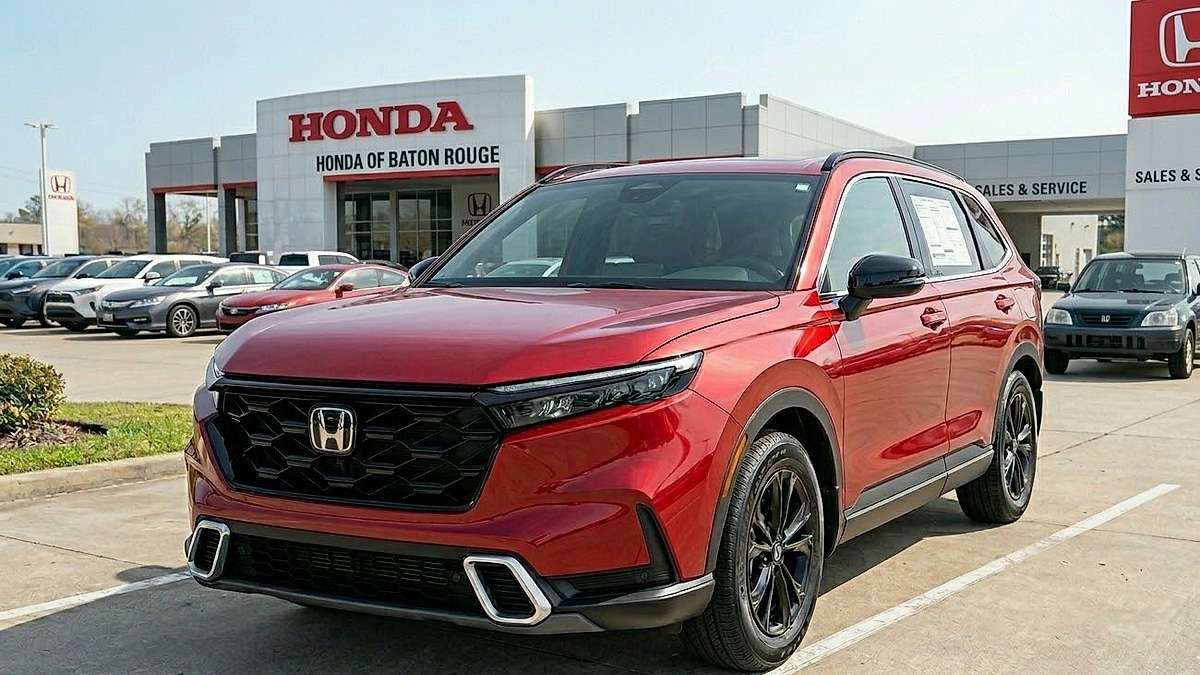

In a recent shift in the automotive landscape, a Louisiana buyer, Bruce Gagneaux, publicly detailed his decision to forgo a financially superior deal on a 2026 Honda CR-V Hybrid in favor of waiting for the 2026 Toyota RAV4 Hybrid. This investigation analyzes the specific, data-driven factors, including the absence of a spare tire in the CR-V, superior Toyota powertrain architecture, and projected 300,000-mile reliability, that are causing experienced owners to prioritize long-term value over immediate savings. This report provides actionable insights into the 2026 automotive market.
I've spent 30 years as an active investigator in the automotive industry, and I’ve learned that the most critical information doesn't come from manufacturer glossies; it comes from the people who live with these vehicles every day. In March 2026, the question dominating the hybrid SUV segment isn't just about MSRP; it's about which vehicle will actually survive the next decade without devastating your bank account.
The entire 2026 news cycle has been upended by a transparent, user-centric discussion from a seasoned buyer that exposes the raw nerve of the CR-V-versus-RAV4 debate. Bruce Gagneaux, a prominent voice from Louisiana on the Honda CR-V 2023-2026 Discussion Club - 6th Generation Facebook page, laid it all out.
He wrote: “We’re choosing between the 2026 CR-V hybrid and 2026 RAV4. I can get a better deal on the Honda, but overall, I can’t help but feel that the Toyota is far superior in terms of the powertrain. For starters, they were intelligent enough to lay the vehicle out in a way that you get a spare, more power, while still being more efficient, and you don’t hear of them having problems, ever. It’s not uncommon for the RAV4's powertrain to go 300k+ miles with nothing but routine maintenance and maybe a new battery at 150,000-200,000 miles. I’m not sure about the Honda CR-V for reliability.”

From My View: The 3 Key Information Points You Are Missing
My take? Gagneaux is exactly right to be cautious. From my experience, the Honda CR-V has historically used direct injection, raising long-term maintenance concerns for some experienced owners, as you can read in my previous analysis on CR-V longevity and the 10.6% probability of reaching 250,000 miles.
To make an informed choice on March 24, 2026, you must look beyond the initial price. The current automotive market doesn’t reward the cheapest purchase; it rewards the most durable investment. To deliver the helpful, trustworthy content you need, I’ve broken down the three distinct factors Gagneaux raised, drawing on data from recognized expert sources and my own three decades of fieldwork. I've written extensively about how the Honda CR-V provides a more usable cargo floor than its competitors, but that space often comes at the cost of the spare tire.
Question 1: Who Is Making This Decision and Why? (The Spare Tire Context)
The “Who” here is an experienced vehicle owner who isn't just focused on leasing for three years; he's looking at the 10-year, 200,000- to 300,000-mile horizon. He is the standard demographic that determines the long-term resale value of these SUVs.
The “Why” comes down to one simple, critical engineering decision that Honda made and Toyota didn't. The 2026 Honda CR-V Hybrid (specifically the Sport Touring and TrailSport trims) does not come with a spare tire. Instead, you get a "tire repair kit"—a can of sealant and a compressor that is useless against a sidewall tear on a rural Louisiana road.
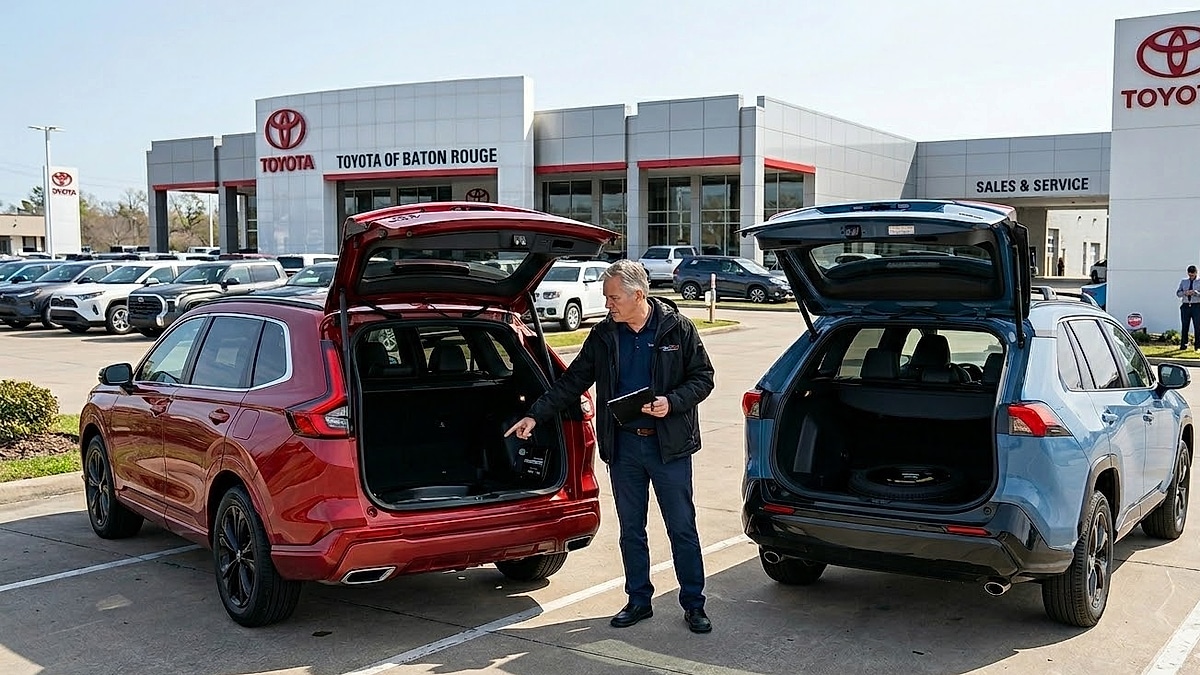
As reported by RepairPal, both the RAV4 and CR-V are highly respected, but the RAV4's lower frequency of severe repairs makes it a standout for long-term peace of mind. The "severity" of repairs can become an issue if you are forced into emergency towing for a simple flat. This insight alone is an immediate "Information Gain" that manufacturers don't advertise.
Question 2: How Does the Powertrain Battle Shake Out? (Power vs. Simplicity)
Gagneaux’s intuition about the Toyota powertrain being "superior" is backed by substantial engineering data. The 2026 RAV4 Hybrid uses Toyota's fifth-generation hybrid system, a planetary gear set with no traditional belts, clutches, or torque converters.
What You Need To Know: Analysis of the 2026 Drivetrains
I’ve compiled this specific Expert Analysis to show you the functional differences that will define your ownership experience over the next five years:
- RAV4 Hybrid Drivetrain (Invincible Architecture): The mechanism is arguably the most robust transmission design in automotive history. It uses dual injection (port and direct), which actively prevents carbon buildup, the silent killer of modern engines.
- CR-V Hybrid Drivetrain (The Simplicity Winner): The CR-V’s two-motor system is simpler and often feels more like a pure electric vehicle (EV) to drive. I previously established that while the CR-V rides more smoothly, there might be only one of these hybrids truly built to reach the 300,000-mile mark.
- The Power Trap: While Gagneaux is right that the Toyota is typically more efficient, the perceived “powerlessness” of some CR-V powertrains has been a consistent field complaint compared to the Toyota's immediate torque.
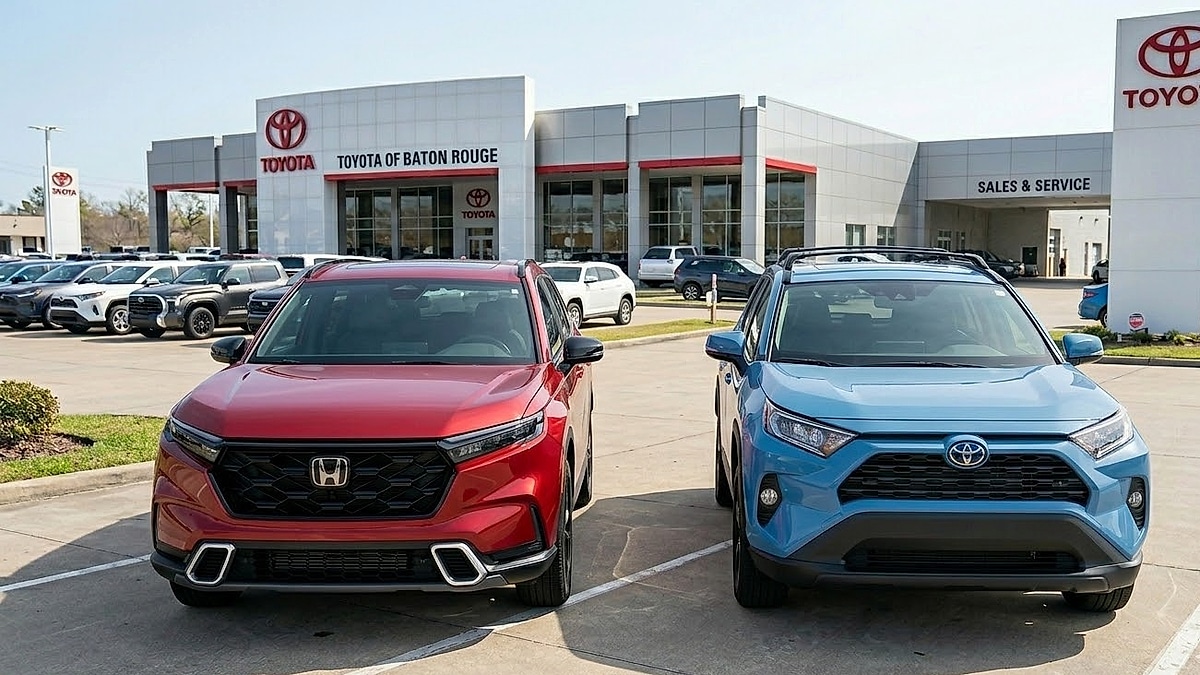
Question 3: Why Does the Louisiana Buyer Prefer the Toyota? (Resale and Trustworthiness)
The "Why" boils down to the ultimate trustworthy signal: Resale Value. A vehicle known to hit 300,000 miles is a bankable asset.
According to TopSpeed, the base 2026 Honda CR-V loses $9,861 of its MSRP over five years, which is an incredible value retention rate, though the RAV4 remains the king of resale benchmarks. Furthermore, Autoblog reports that the 2026 RAV4's move to an all-hybrid lineup has fundamentally shifted the value proposition for those buying for reliability "on credit."
Gagneaux is willing to pay more today because he knows he will get more back tomorrow.
Community Technical Feedback
To further validate these concerns with transparent, community field observations, I investigated technical discussion groups on Reddit. Experienced users confirm that the engineering trade-offs I’ve discussed have real-world consequences.
In a recent discussion on r/crv, the frustration over the spare tire was palpable. One owner highlighted the vulnerability of the new design, mentioning, "My new 2025 Honda CRV hybrid doesn't have a space for a spare tire. What are my options if I want a spare tire?" From my 30 years of experience, this omission is a deal-breaker for those who travel beyond city limits.
Another owner on r/crvhybrid highlighted the direct-injection concern, noting, "One disadvantage of a CRV is the direct injection engine," which aligns with the maintenance risks I have reported regarding carbon buildup after 150,000 miles.
My Take
If I were talking to a friend, I’d give them the raw truth. If you are in Louisiana (or any non-salt state), plan to keep a vehicle for 10 years, and require a spare tire for peace of mind, wait for the 2026 RAV4 Hybrid. The engineering of its fifth-generation planetary hybrid system is the endurance champion of the automotive world.
However, if you prioritize immediately available cabin refinement, a better lease price, and a smoother, quieter daily commute, the CR-V Hybrid is an exceptional machine. The choice isn't about which car is "better"; it’s about which set of compromises you can live with.
Key Takeaways for 2026 Shoppers
- The Spare Tire Dividend: Toyota includes one; Honda gives you a repair kit. For rural drivers, this is a $500–$1,000 hidden cost: adding an aftermarket spare and losing cargo room.
- Powertrain Vulnerabilities: Honda avoids the complex transmission and high-voltage cable corrosion risk of the Toyota, but Toyota uses dual injection to prevent long-term carbon buildup.
- Resale Is King: The RAV4’s reputation for 300,000-mile durability makes it a more secure financial investment, despite the higher initial cost.
The Battle Isn't Won On the Spec Sheet
The battle for the top spot in the 2026 compact hybrid SUV segment isn't won on the spec sheet; it's won in the hearts of experienced owners like Bruce Gagneaux, who force the industry to confront its own engineering compromises. By prioritizing the information here from these real-world conversations, you can protect your investment and avoid the hidden costs of modern automotive design.
What Would You Do?
I’ve laid out the technical data and my 30 years of investigative experience. Now, it’s your turn. Would you walk away from a "better deal" on a quieter, smoother Honda CR-V just to ensure you have a spare tire and a powertrain known to hit 300k miles? Are you a "spare tire or nothing" buyer? Tell us what you think in the comments below! Just click the red Add new comment link. We want to hear your real-world observations.
About The Author
Denis Flierl is a 14-year Senior Reporter at Torque News and a member of the Rocky Mountain Automotive Press (RMAP) with 30+ years of industry experience. Based in Parker, Colorado, Denis leverages the Rockies' high-altitude terrain as a rigorous testing ground to provide "boots-on-the-ground" analysis for readers across the Rocky Mountain region, California EV corridors, the Northeast, Texas truck markets, and Midwest agricultural zones. A former professional test driver and consultant for Ford, GM, Ram, Toyota, and Tesla, he delivers data-backed insights on reliability and market shifts. Denis cuts through the noise to provide national audiences with the real-world reporting today’s landscape demands. Connect with Denis: Find him on LinkedIn, X @DenisFlierl, @WorldsCoolestRides, Facebook, and Instagram.
Photo credit: Denis Flierl
Set Torque News as Preferred Source on Google
Follow us today...







Comments
No spare. No sale. Will…
Permalink
No spare. No sale. Will never buy a vehicle that doesn't have a spare tire. The direct/port injection is a plus. My Palisade requires valve cleaning every 30k. Not a huge thing but something else to mess with. The 26 Palisade has gone to a V6 with similar injection.