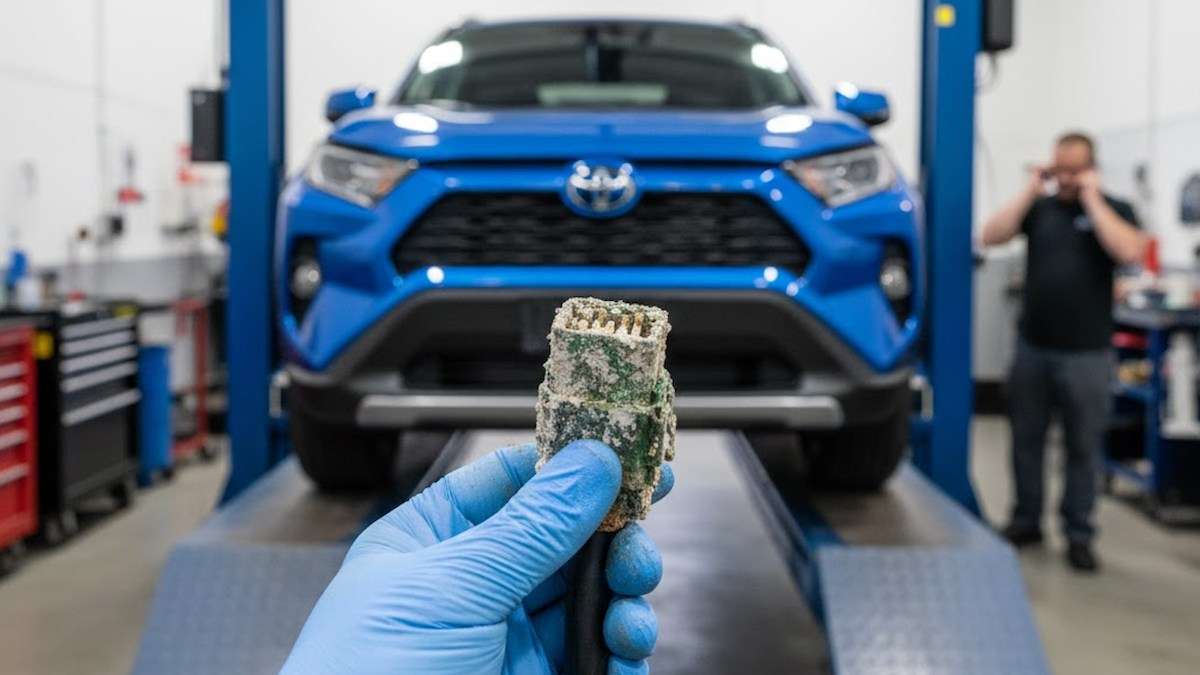

Toyota RAV4 owners are sounding the alarm at 30,000 miles, as hidden $300+ repairs and "Cable-gate" corrosion threats are turning the 2026 ownership dream into a high-stakes audit.
In my research on Toyota reliability, I found recent posts in a Facebook community of RAV4 enthusiasts in which owners like Melinda Englebretson Baird from Oklahoma and Daniel Chase highlighted growing concerns about the long-term durability of modern hybrids and the $300 threshold where "affordable" maintenance becomes a major financial headache.
Melinda says, “I love my 2023 RAV4 Prime. We have a little over 30,000 miles on her, and I’m wondering if anyone this year had any issues that I need to be aware of?”
Daniel says, “Does anyone have major breakdowns or repairs on their RAV4 from 30k to 80k miles? I consider repairs over $300 to be major. I would be interested even if your car were under warranty. I currently have a 2019 with 31k miles. My mechanic said it currently has no mechanical issues.”
From My View: The 30,000-Mile Reality Check
I’ve spent 30 years in the automotive industry, and if there is one thing I’ve learned, it’s that the "honeymoon phase" of a new car ends exactly when the free maintenance stops. For most Toyota owners, that magic number is 30,000 miles. I’ve written extensively about how Toyota is quietly acknowledging that the "fixed" RAV4 Hybrid may still have a major $5,000 defect, specifically referencing the ongoing "Cablegate" issue that haunts the 2019-2025 models.
Who is at risk? How do you spot the signs? Why is this happening now? These are the questions I’m going to answer for you today. When Melinda Baird asked whether there were issues she "needs to be aware of" at 30k miles, she struck a chord that resonated with thousands of owners. Daniel Chase took it a step further, defining any repair over $300 as "major." In today’s economy, I think he’s spot on.
My Take
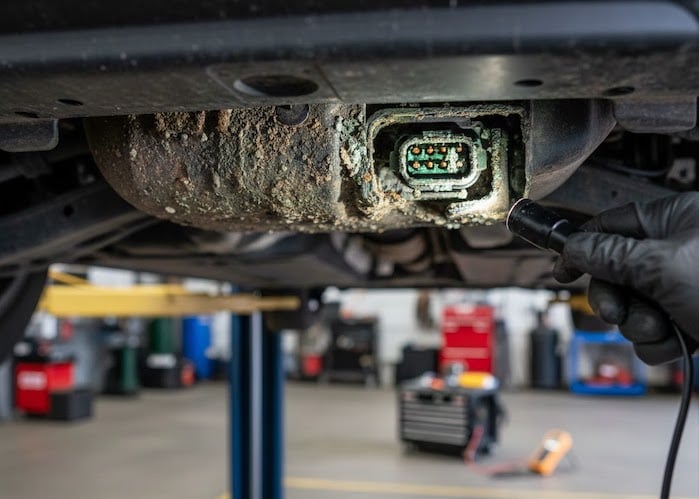
If you drive a Hybrid or Prime model, the high-voltage cable connector under the rear of the vehicle is your primary concern. Although Toyota redesigned the part in late 2022 to an "open" design, reports indicate that road salt and grime are still accumulating in the terminal. In fact, The Autopian recently reported that "excessive corrosion can cause AM radio static," which is often the first warning sign before the entire hybrid system shuts down and leaves you with a mid-four-figure bill.
I recall discussing this in a previous report, where I noted that the 2019 RAV4 was the first year of the current design and tends to receive the most criticism. The 2019 models were the guinea pigs for this generation, and we are now seeing those transmission and brake issues trickling down to the newer 2023 and 2024 models as they exit their basic warranties.
What You Need to Know
- The $300 Rule: If a repair costs more than $300, it’s rarely just "wear and tear." It’s often a failed sensor, a computer glitch, or a mounting hardware issue that could lead to bigger failures.
- The "Audit Point": Use the 30,000-mile service as a full vehicle audit. Don't just let the dealer change the oil. Demand a visual inspection of the rear motor cable and the radiator seals.
- Warranty Watch: Most "defects" show up between 30k and 36k miles. If you notice a small leak now, document it before the 36-month bumper-to-bumper warranty expires.
Community Technical Feedback
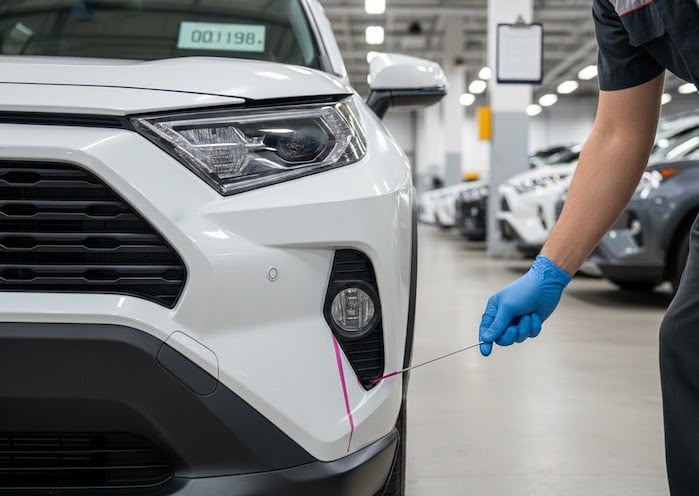
The community is increasingly vocal about how these "minor" issues can escalate into disasters. One user on Reddit noted the severity of the situation: "Replace radiator or end up replacing tranny like me... had a small leak. Unnoticed. Then boom tranny went out on highway," as noted in the full discussion here.
Another owner highlighted the vulnerability of the new design, noting, "The radiator on these models has an isolated portion for cooling automatic transmission fluid... if it's not cooling it, bad things happen," as reported in this Reddit thread.
I've seen this exact scenario play out. In my reporting, I've noted that some 2025 RAV4 owners are already reporting radiator defects with fewer than 200 miles on the odometer. It raises questions about whether the factory's quality control is keeping up with the massive demand for these crossovers.

Why 30k is the Crucial "How-To" Milestone
How do you protect your investment? You have to be proactive. According to Kelley Blue Book data, the 30,000-mile service is the most extensive yet, including inspections of the transmission, drive shaft boots, and steering linkage. Many dealers will try to charge you $800 to $900 for this "required" service, but you need to ensure they are actually checking the high-failure items I've mentioned.
I previously warned readers that Toyota’s reputation for reliability can lead to deferred maintenance, which is the quickest way to turn a reliable Toyota into a money pit. If you live in the "Salt Belt," you need to be twice as vigilant. Corrosion doesn't care about your brand loyalty.
Key Takeaways
- The 30k Audit: This is the most important service interval for preventing long-term transmission and hybrid-system failures.
- Radio Static Test: If you hear static on the AM dial while driving your hybrid, take it to the dealer immediately for a cable inspection.
- Radiator Leaks: Monitor your garage floor for pink or red fluid. A small radiator leak can kill a Toyota transmission in miles, not years.
- Independent Inspection: Once your 36k warranty is up, find a trusted independent mechanic who knows Toyotas to provide an unbiased assessment of the vehicle.
Watch Those Early Warning Signs
The Toyota RAV4 remains a top-tier choice for families and commuters, but owner reports prove that even the best-selling SUV in America isn't immune to the "audit point" at 30,000 miles. By staying informed, watching for the early warning signs Daniel and Melinda mentioned, and following the specific maintenance steps I've outlined, you can ensure your RAV4 actually lives up to that legendary 200,000-mile promise.
It's Your Turn
I’ve laid out the data on why that 30,000-mile mark is such a critical crossroads for the modern RAV4, but the most important evidence comes from you, the people actually behind the wheel every day. Have you experienced any of these "major" $300+ repairs early in your ownership, or has your Toyota been the model of perfection my readers have come to expect?
Whether it’s a concern about the high-voltage cable or a surprising win for hybrid longevity, your story helps the entire community stay ahead of the curve. Leave a comment in the red "Add new comment" link below, and let’s get the conversation started!
Denis Flierl is a 14-year Senior Reporter at Torque News and a member of the Rocky Mountain Automotive Press (RMAP) with 30+ years of industry experience. Based in Parker, Colorado, Denis leverages the Rockies' high-altitude terrain as a rigorous testing ground to provide "boots-on-the-ground" analysis for readers across the Rocky Mountain region, California EV corridors, the Northeast, Texas truck markets, and Midwest agricultural zones.
A former professional test driver and consultant for Ford, GM, Ram, Toyota, and Tesla, he delivers data-backed insights on reliability and market shifts. Denis cuts through the noise to provide national audiences with the real-world reporting today’s landscape demands.
Connect with Denis: Find him on LinkedIn, X @DenisFlierl, @WorldsCoolestRides, Facebook, and Instagram.
Photo credit: Denis Flierl via Melinda Englebretson Baird
Set Torque News as Preferred Source on Google
Follow us today...