

Key Points
- A Kia product planning chief reveals the hard data behind the Telluride's most debated powertrain decision.
- The 2027 Telluride Hybrid's new engine outperforms the V6 by a metric that surprises even seasoned journalists.
- Federal emissions standards have permanently closed the door on a V6 return.
Sitting across from a senior Kia product planner during a press event is always interesting. But sometimes the conversation reveals something bigger than a simple product update.
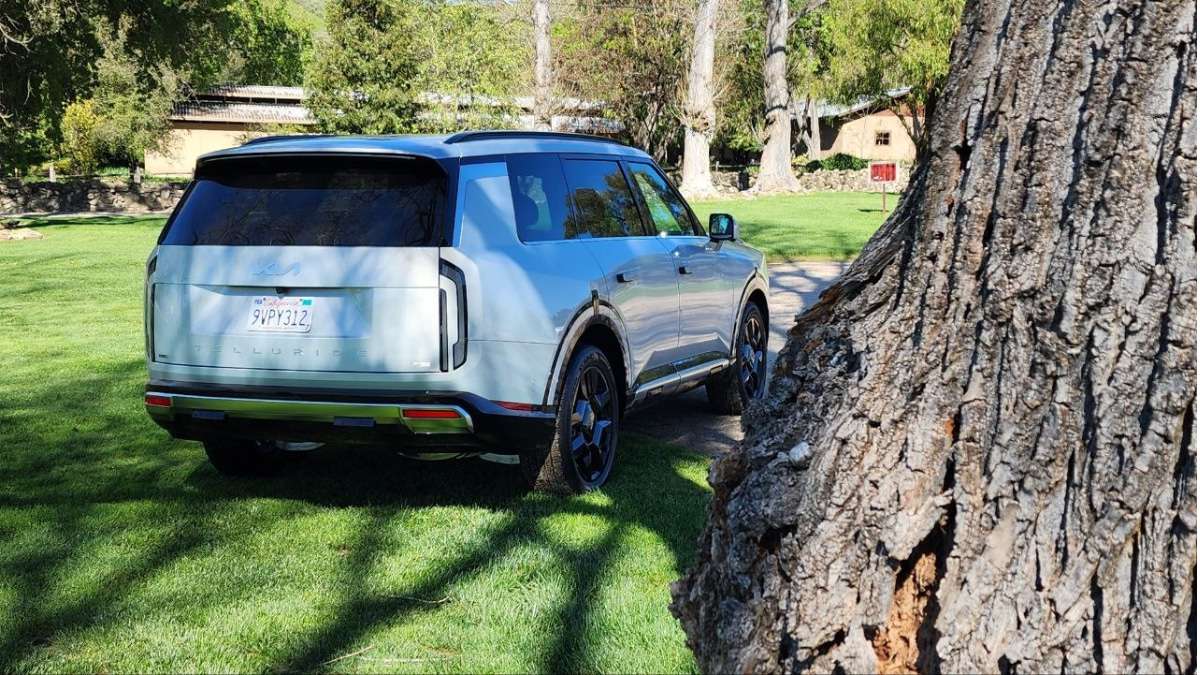
That’s exactly what happened when I attended the media drive for the 2027 Kia Telluride Hybrid and the 2027 Telluride X-Pro off-road model in Santa Barbara, California. Kia gathered journalists from across the automotive industry to test the next generation of one of America’s most popular three-row SUVs.
At one point during the event, I sat down with Sang Lee, Product Planning National Manager at Kia America, and asked him a question that many Telluride owners have been asking since the first rumors of the redesign appeared. And speaking of the redesign, KIA America's chief engineer told me which SUV its designers benchmarked most heavily when creating the 2nd-gen 2027 Telluride's exterior.
Because the original Telluride built a strong following around its 3.8-liter naturally aspirated V6 engine.
And now it’s gone.
The Question Many Telluride Owners Are Asking
So I asked Lee directly:
“The original Telluride built a loyal following around its naturally aspirated V6. Why did Kia decide this generation was the moment to eliminate it entirely, and were you concerned about backlash from existing owners?”
It’s the kind of question that matters because many SUV buyers still prefer simple, naturally aspirated engines. They trust them. They understand them.
Lee didn’t dodge the question.
Instead, he gave a surprisingly direct answer. It was data-driven, calm, and - I have to say - pretty convincing.
Here's what Lee told Torque News, in full:
"The naturally aspirated V6 is technically, at this point, inferior to the 4-cylinder Turbo (used in the 2027 KIA Telluride)."Objective data such as the 2.5 GTDI in Turbo GDI in the new '27 Telluride, the output in torque - 311 foot-pounds of torque at 1700 RPMs (here he gave a node to Torque News) versus 262 foot-pounds of torque in the V6 at 5200 RPMs."It is a completely superior torque delivery with the new turbo. And in the segment - and this is not just the segment, but just a snapshot of what's going on in the segment - there are only a few remaining naturally aspirated V6 vehicles that are available: Pilot, Pathfinder, and for whatever reason, the new Palisade, which decided to apply 3.5 liter V6. Not the 3.8, but a 3.5."Now, the other benefit of the 2.5 Turbo GDI (used in the 2027 KIA Telluride) is it's able to meet higher emissions standards. It's ACC2 SULEV 30 compliant. No way we could have met that with the V6, naturally aspirated V6."So it's higher torque output, and better lower emissions."And the other thing is the torque output. This vehicle, the new 2027 Telluride, is about - depending on the trim - 265 pounds heavier. In order to move that extra weight, we needed the additional torque. And this was the answer."
Read that again. The V6 couldn't even legally survive under the new emissions standards. That's not nostalgia, but rather physics and regulatory reality colliding.
Let's Break Down the Technical Terms Because They Matter
If you're not an engineer, a few terms in Lee's statement might have gone right over your head. Let me translate.
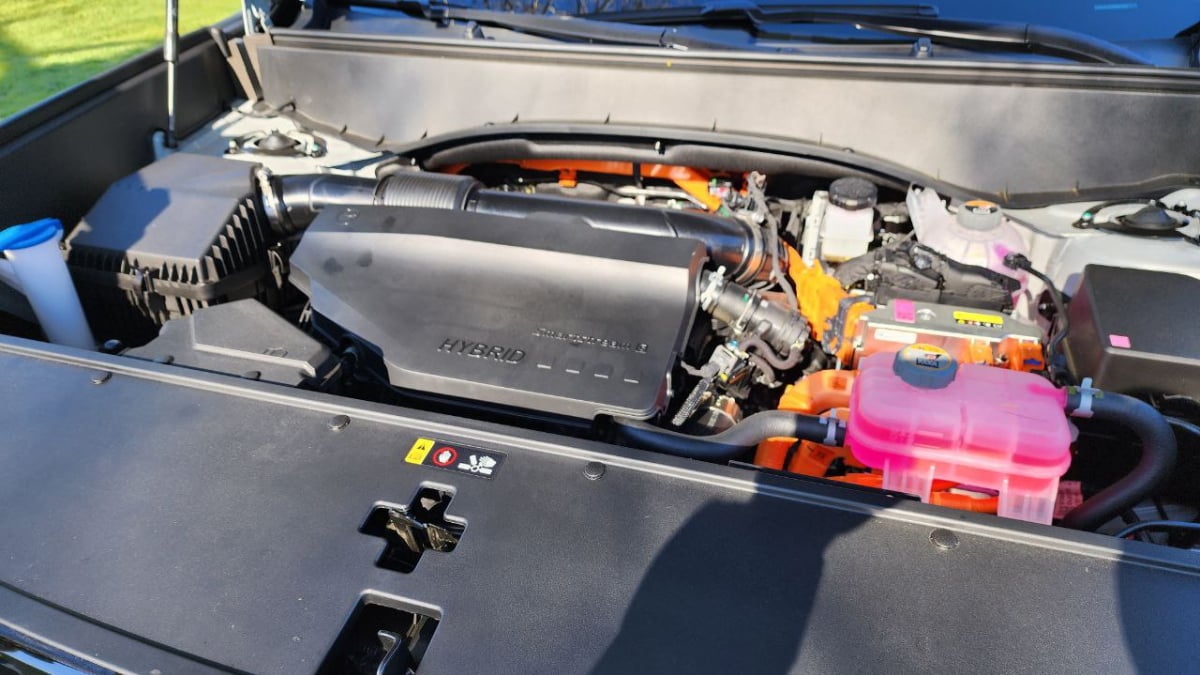
GTDI stands for Gasoline Turbocharged Direct Injection. It means the engine injects fuel directly into the combustion chamber - not into the intake port - while also using a turbocharger to force more air in. The result is a smaller engine that produces more power and torque than its size would suggest, while also using fuel more efficiently under many conditions.
GDI stands for Gasoline Direct Injection, which is the same direct-injection concept without a turbocharger. The 2027 Telluride uses the turbo version - the GTDI - which is why it can squeeze 311 lb-ft of torque from a 2.5-liter engine.
ACC2 SULEV 30 is where it gets really important. ACC2 is the California Air Resources Board's Advanced Clean Cars II regulation, which sets strict limits on vehicle emissions for model years 2026 and beyond. SULEV stands for Super Ultra Low Emission Vehicle, and the "30" refers to the allowed non-methane organic gas and NOx emissions threshold of 30 milligrams per mile. This is among the most stringent tailpipe emission standards in the world. Lee was clear: the old V6 simply couldn't meet it. Period. No amount of engineering refinement could have saved it.
The Torque Numbers Are Genuinely Unexpected
Here's what's interesting, and what I think a lot of V6 loyalists are going to have to wrestle with. The old 3.8-liter V6, the engine people loved, made its 262 lb-ft of torque at 5,200 RPM. That means you had to rev the engine fairly high before you felt its full pull. The new 2.5-liter turbo four-cylinder produces 311 lb-ft at just 1,700 RPM. You feel that torque the moment you push the throttle, almost from idle. That's the kind of low-end grunt that makes a heavy SUV feel alive in traffic, on the highway on-ramp, or on a dirt trail. It's the kind of thing that could make even a V6 loyalist feel, quietly, like they might have been wrong about this.
We've been covering the Telluride's evolution at Torque News for years. Back in 2021, when the Telluride was still riding high on its V6 reputation, our writers noted that as turbocharged four-cylinders continued to gain traction, the Telluride remained one of the last V6-powered models in its class - a distinction that seemed like a selling point then, but now reads like a countdown clock.
The Weight Problem Nobody Was Talking About
Lee also dropped a detail that I think most people haven't focused on enough. The 2027 Telluride is roughly 265 pounds heavier than its predecessor, depending on the trim. Think about that. You're asking an engine to move a vehicle that's 12% heavier. If Kia had kept the V6 and tried to pass emissions standards while also moving all that extra weight, the performance would have felt sluggish, even unlikeable, to buyers who test drive it back-to-back with a turbo-powered competitor.
The turbo four-cylinder solves both problems simultaneously, giving it more torque for the heavier body, fewer emissions from a more efficient combustion system. It's an elegant engineering solution, even if it stings emotionally.
It's also worth noting that Kia's own platform sibling, the Hyundai Palisade, chose a different path - going with a downsized 3.5-liter V6 rather than the 3.8. Lee's reference to that decision had just a hint of competitive commentary in it. He was not volunteering that the Palisade made the smarter call.
Our 2024 Telluride SX-Prestige X-Line review, one that looked at how the last-generation V6 SUV rivaled the best in its segment, made clear how much affection there was for that outgoing engine. Kia knew what they were giving up in terms of emotional resonance. They made the call anyway.
What About Long-Term Reliability of the Turbo Four-Cylinder Engine Used in The 2027 Telluride?
Some of you are going to ask this, so let's address it. Turbocharged engines, historically, can be more complex and potentially more expensive to maintain than naturally aspirated ones, especially at higher mileages. It's a fair concern. Yet, the V6 was not without its own flaws.
The turbo four-cylinder in the 2027 Telluride, as explained by Lee, is a modern, well-developed unit that Kia and Hyundai have been refining across multiple platforms. Time and owner reports will ultimately tell the real story, but the engineering pedigree is solid.
The Telluride’s Role in Kia’s Evolution
The Telluride has become one of Kia’s most important vehicles.
When it launched, it changed the brand’s reputation in the United States.
It quickly became one of the most awarded SUVs in the segment, even winning multiple Best Buy awards for three-row midsize SUVs according to industry evaluations highlighted in reporting from Torque News about Kia’s repeated recognition in Kelley Blue Book Best Buy rankings for the Telluride.
And the model helped push Kia’s sales growth in the U.S., where the brand has seen record-breaking annual sales driven in part by strong SUV demand.
Over the years we’ve also seen how the Telluride evolved with new technology, safety systems, and design updates. For example, Torque News previously examined how family-focused safety technology like Safe Exit Assist helped make the Telluride popular with parents and road-trip families, showing how Kia targeted practicality as much as style.
The Bigger Trend in the SUV Segment
Lee also mentioned something that’s easy to overlook.
The number of naturally aspirated V6 engines in this segment is shrinking.
Look around the midsize SUV market today.
Many competitors are switching to:
- turbocharged four-cylinder engines
- hybrid powertrains
- plug-in hybrid systems
Even buyers who once insisted on large engines are beginning to prioritize:
- fuel efficiency
- torque delivery
- emissions compliance
And this transition isn’t happening in isolation.
For example, in another Torque News discussion we looked at how Kia’s shift toward electrified SUVs like the EV9 reflects a broader strategy to move the brand toward lower-emissions powertrains across its lineup.
What This Means for You as a Buyer
If you're shopping for the 2027 Telluride or trying to decide whether to hold onto your current V6 model, here's the honest picture: the new powertrain is technically superior by the numbers. More torque, available earlier, with better emissions compliance and a hybrid option that the V6 could never support. Back in 2021, Torque News writers were already speculating about when Kia would finally electrify the Telluride and offer an HEV version. That prediction has now fully come true with the 2027 model.
If you're an off-road buyer eyeing the X-Pro trim, the low-end torque delivery is arguably even more important than it is on the pavement. More twist from lower RPMs means better crawling capability, better towing control, and more confident performance in the situations where the X-Pro is designed to shine. And for winter driving fans, the six ways Kia engineered the Telluride X-Pro to excel in challenging conditions carry right over into the new generation, now backed by superior low-RPM torque.
The Moral of the Story, and It Applies Beyond Cars
Here's what I want you to take away from this, and it goes beyond the Telluride. Sang Lee didn't tell me what most people probably wanted to hear. He told me what the data showed. And there's a real lesson in that for all of us as car buyers, as decision-makers, as people.
We all have things we love because of how they feel, how they sound, how they connect to a memory. That V6 rumble? That was real. But when the objective evidence clearly points in a different direction like better performance, better emissions, better capability under load, the wisest thing we can do is follow the data and not the emotion. That applies to buying a car. It applies to careers, relationships, and investments too. Loyalty to what was best is admirable. But loyalty to what is best is wisdom.
The 2027 Kia Telluride didn't kill the V6 out of carelessness. It outgrew it. And that's worth respecting, even if it's hard to let go.
Now it's your turn. I want to hear from you directly in the comments section below:
If you currently own a V6-powered Kia Telluride, has Lee's explanation changed your perspective on the new turbo four-cylinder, or does the idea of a smaller engine still feel like a downgrade to you, regardless of the numbers?
And for those of you considering the 2027 Telluride, does the ACC2 SULEV 30 compliance and the hybrid option make this the most compelling Telluride yet, or are you holding out to see how the turbo engine performs over 100,000 miles before committing?
Drop your experience and thoughts in the comments below. Your real-world perspective is the most valuable thing we can offer each other in this community.
Images by Armen Hareyan.
Armen Hareyan is the founder and Editor-in-Chief of Torque News and an automotive journalist with over 15 years of experience writing car reviews and industry news. Now based in the Charlotte region (Indian Land, SC, he founded Torque News in 2010, which since then has been publishing expert news and analysis about the automotive industry. He can be reached at Torque News on X, Linkedin, and Youtube. Armen holds three Masters Degrees, including an MBA, and has become one of the known voices in the industry, specializing in the landscape of electric vehicles and real-world stories of actual car owners. Armen focuses on providing readers with transparent, data-backed analysis bridging the gap of complex engineering and car buyer practicality. Armen frequently participates in automotive events throughout the United States, national and local car reveals and personally test-drives new vehicles every week. Armen has also been published as an automotive expert in publications like the Transit Tomorrow, discussing how will autonomous vehicles reshape the supply chain, and emerging technologies in vehicle maintenance.
Set Torque News as Preferred Source on Google
Follow us today...



Comments
It amazes me how the…
Permalink
It amazes me how the California Air Resources Board controls all of this. But just get the Hybrid. Regarding the sound intrusion go drive a gas Lexus RX 350 it is even worse and louder in that luxury vehicle so meh it doesn't matter.
I have a 27' Pro. Look, to…
Permalink
I have a 27' Pro. Look, to me I could care less about speed. I drive slow.. My 4 year old tells me to speed up, but I am not going to to that. Saying that, I've had 3 Tellurides. The 27' feels peppier and I can't tell a difference in the speed, but the extra torque is great. Now the noise has drastically increased inside the cabin whether your on a city road or on cruise control on the highway. Previous years with the V6, you couldn't hear a thing. I'm not liking the extra noise at all. Now the interior is 100x better, without a doubt.
I recommend driving the '27…
Permalink
In reply to I have a 27' Pro. Look, to… by Benjamin Halle (not verified)
I recommend driving the '27 Hybrid Telluride and you will completely change your view on the cabin noise. I can't say much about it as my driving impressions from yesterday are under the embargo until March 17. But on that day at the Torque News youtube channel I will have my video in which I specifically talk about the cabin quietness' of the 2027 Telluride Hybrid.
Most manufacturer's are…
Permalink
Most manufacturer's are doing this.
We own a 22 Hyundai Santa Fe…
Permalink
We own a 22 Hyundai Santa Fe that has the turbo 2.5 with all wheel drive and we love it. Purchased in late 2021. Car is about to hit 96,000 miles with zero problems. We love it and plan on keeping driving it for the next 2 years. Lots of power and pretty fuel efficient. This is one of our favorite vehicles we’ve owned Super plush and comfy.
Our hybrid 2027 Telluride is…
Permalink
Our hybrid 2027 Telluride is in transit! Solves for much of the complaints regarding the gas only turbo 4.
I am holding out. I have a…
Permalink
I am holding out. I have a 2022 EX which has been a great vehicle but I'm skeptical of the new 4 cylinder engine due to the engine, complexity, load and oil temperature with the turbo.
The article didn't mention…
Permalink
The article didn't mention that all engines in Telluride and Palisade have dual to injection systems. That's the only thing I wish my 2021 would have had.
Taking more out of less…
Permalink
Taking more out of less nearly always has negative impacts on longevity. This is why we didn't replace our VW ATLAS w/ a new one. Way too much car for an over-wound 2L 4-banger. Now have a '25 Telluride w/ V6, hoping for long life.