
China made old-school door handles interesting again. Its 2027 rule targets hidden, electronic, and pop-out handle designs because regulators don’t want crash rescue or passenger escape to depend on a low-voltage battery. My first thought was simple: if I were buying an EV for my family, which ones would I trust without a secret release procedure?
The answer isn’t “all the cheap ones” or “avoid every flush handle.” It’s messier than that.

A real manual-handle EV should pass two basic tests. Outside, you should grab a physical handle and pull. Inside, the normal way out should feel like a normal door release, not a touchscreen, capacitive pad, or unlabeled emergency backup buried near the floor.
I don’t hate flush handles as design. Some look great. But I do hate the idea of explaining an emergency release diagram to a kid, an elderly passenger, or a first responder through smoke and adrenaline.
The 5 EVs I’d Put On The Short List
Hyundai Kona Electric
The Hyundai Kona Electric is the easiest recommendation if you want a compact EV that still feels like a car instead of a rolling phone. In the U.S., the 2025 Kona Electric carries up to 261 miles of EPA-estimated range on SEL and Limited trims, with the SE rated lower. It’s not the fastest EV. It’s not the flashiest EV. Good. That’s the point here.
I’d put the Kona near the top because Hyundai didn’t bury the ownership basics under theater. You get a conventional exterior pull handle, a normal cabin layout, and enough range for a daily driver. The Kona’s weak spot is charging speed compared with the newest 800-volt Hyundai and Kia EVs, but for this specific buyer, I’d take door simplicity over bragging rights at a DC fast charger.
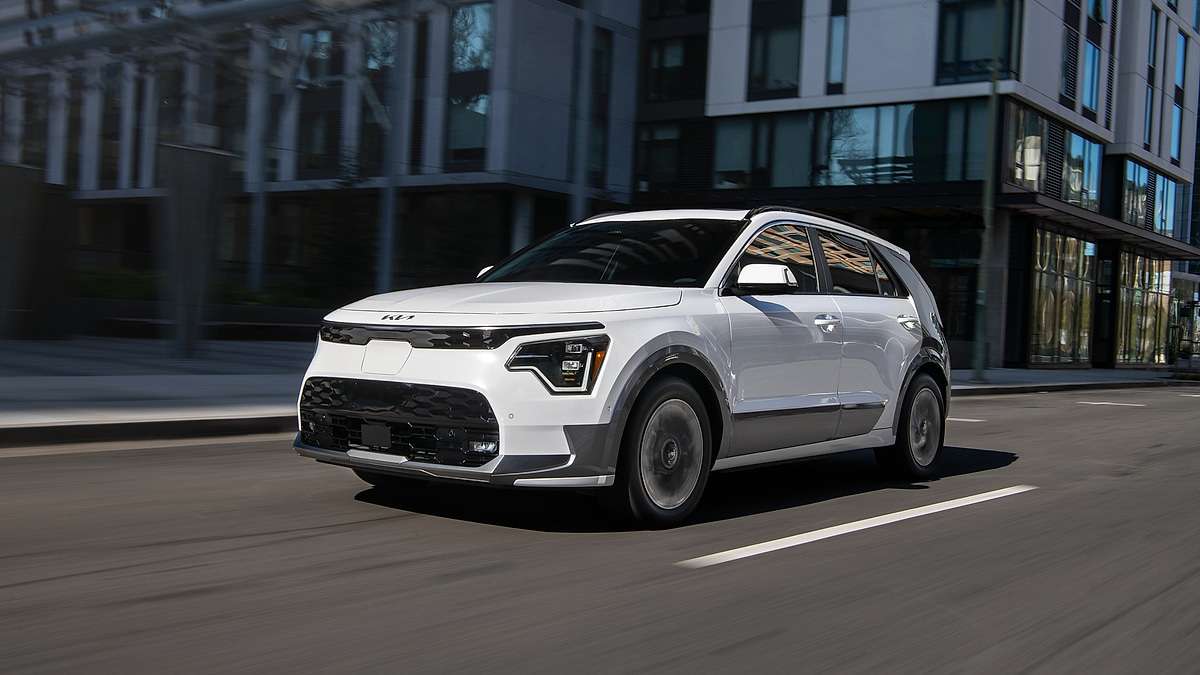
2026 Kia Niro EV
The Kia Niro EV is the other obvious practical pick. Kia lists it at $39,700 before destination and notes a 253-mile EPA-estimated range. That’s not cheap-cheap, but it lands in the same “normal crossover” lane as the Kona. I’ve always liked the Niro because it doesn’t ask you to relearn the whole car just to run errands. Door handles fit that personality.
2026 Toyota bZ
The Toyota bZ deserves another look for 2026. Toyota renamed the bZ4X to simply bZ, raised the range ceiling to 314 miles on the XLE FWD Plus, added a NACS port, and starts the lineup at $34,900 before fees. That’s a much more serious package than the early bZ4X, which always felt like Toyota had one foot in the EV pool and one foot on dry concrete.
The bZ and Subaru Solterra share the same broad family, and both keep the door-handle experience blessedly conventional. I’d pick the Toyota if range-per-dollar matters most. I’d pick the Subaru if standard AWD, snow-belt confidence, and Subaru’s outdoorsy dealer base matter more.
2026 Subaru Solterra
The 2026 Subaru Solterra gets the upgrade it badly needed: up to 288 miles of range, standard Symmetrical AWD, and a 10-to-80% fast-charge estimate of about 28 minutes.
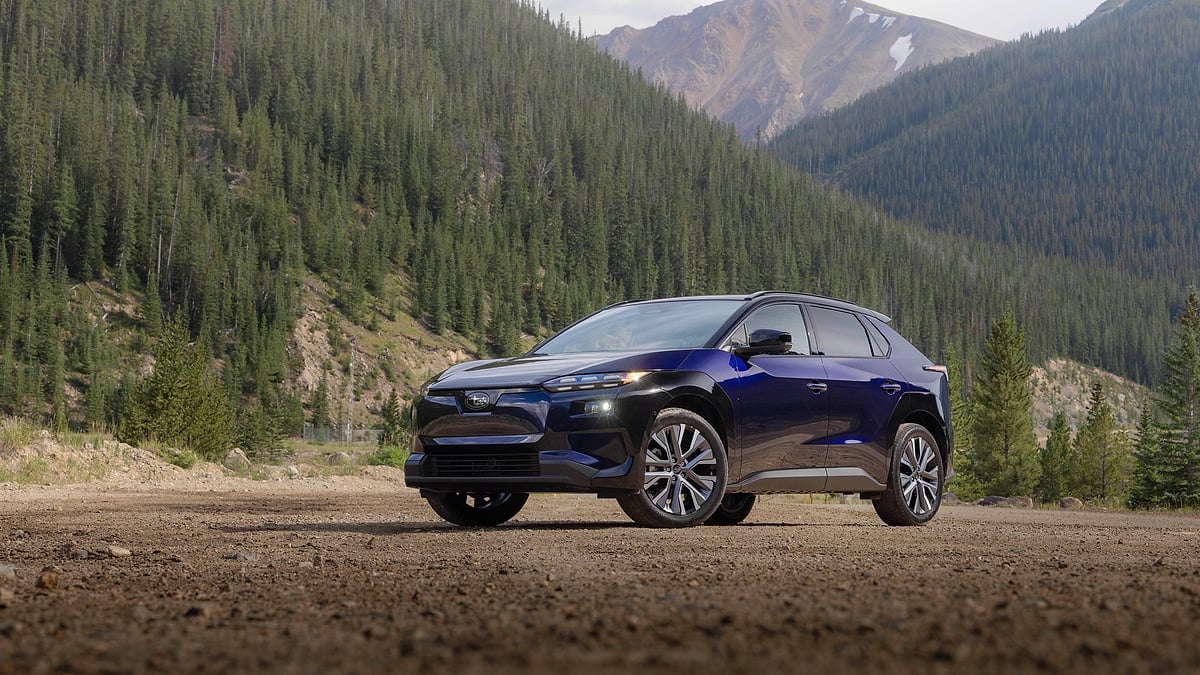
It starts at $38,495. That makes it one of the cleaner answers for buyers who want EV torque, winter traction, and doors their passengers can understand without a tutorial.
2026 Mercedes-Benz EQB
Then there’s the Mercedes-Benz EQB. This one surprised me, because Mercedes also sells EVs with flush, retractable handles. The EQB is different. It’s basically the electric cousin of the GLB, and that boxier, more conventional platform helps it here. Mercedes lists the 2025 EQB 250+ at $53,050, with a 70.5-kWh battery and 250 miles of EPA-estimated range. It can also be configured with up to seven seats.
Would I buy an EQB over a Model Y on charging-network logic alone? Probably not. But if the assignment is “EV with real handles inside and outside,” the EQB is one of the few premium answers that doesn’t make the door hardware feel like a magic trick.
What I’d Avoid If Handles Are The Priority
Tesla Model 3 and Model Y are not my picks for this question. Yes, they have manual releases. No, that is not the same thing as a normal manual handle for every passenger in every seating position. The same logic applies to the Ford Mustang Mach-E, which uses Ford’s E-Latch system, and to EVs with powered pop-out handles such as the Hyundai Ioniq 5 and Kia EV6.
That doesn’t make those vehicles bad. I like the Ioniq 5. I like the EV6 even more from a driving and charging standpoint. But if someone asks for “actual manual handles,” I’m not going to squint and pretend a powered presentation handle meets the spirit of the question.
The Nissan Leaf is the trap answer. Older Leafs were wonderfully normal. The redesigned 2026 Leaf leans harder into aero, tech, and new packaging. If you’re shopping Leaf specifically because you remember the old hatchback, inspect the exact model year and market version in person. Don’t assume the badge tells the whole story.
Rescue Access
A handle is an interface between a panicked person and the outside world.
The scary scenario isn’t “I can’t open the door at the mall.” The scary scenario is a 12-volt battery failure, collision damage, a rear-seat passenger, child locks, smoke, water, or a first responder trying to get in fast. In that moment, the best design is boring. Pull handle. Door opens. No app. No wake-up sequence. No tiny tab under trim.
I know that sounds anti-tech, and I’m not anti-tech. I’m anti-unnecessary dependency. EVs already ask buyers to learn charging curves, route planning, battery preconditioning, adapter compatibility, and home-charger math. Door handles should not join that list.
Why USA Automakers Will Follow Everyone Else
China is too big for automakers to ignore. If a global EV needs mechanical release functions for China, designers may decide it’s cheaper to simplify the handle architecture everywhere. That would be a win.
Flush handles can save a little drag, but I don’t think the gain justifies confusing access points on family cars. Give me the range loss. I’ll survive the extra charging stop before I accept worse emergency usability.
What Torque News Checked
- Primary source: China’s 2027 hidden-door-handle requirement and 2029 compliance window for already-approved models.
- Cross-reference: Official manufacturer pages and owner-material language for Kia Niro EV, Toyota bZ, Subaru Solterra, Hyundai Kona Electric, Mercedes-Benz EQB, Hyundai Ioniq 5, Kia EV6, Ford Mustang Mach-E, and Nissan Leaf.
- Original checking: I separated normal-use physical handles from emergency-only manual releases. That changed the list. A car didn’t make the cut just because it has a hidden backup cable somewhere.
The Checklist You Should Use
Here’s the buyer checklist I’d use before signing anything: open all four doors from outside, open all four from inside, ask the salesperson to show the manual release path, and check whether the rear doors work the same way as the front doors. If the answer requires a laminated diagram, that’s not the EV for this specific buyer.
My pick? Kona Electric or Niro EV for value, Toyota bZ for range-per-dollar, Solterra for bad-weather buyers, and EQB if you want a small luxury EV with available third-row packaging.
What's your experience?
If you've been in a situation where your EV's door handles didn't work as expected, electronic failure, power loss, crash, anything, I want to hear it. Drop your vehicle year and what happened in the comments. I'm actively collecting real-world data on this, not just regulatory filings.
About The Author
Noah Washington is an automotive journalist based in Atlanta, Georgia, covering sports cars, luxury vehicles, and performance culture. His reporting focuses on explaining the engineering, design philosophy, and real-world ownership experience behind modern vehicles.
Noah has been immersed in the automotive world since his early teens, attending industry events and following the enthusiast communities that shape how cars are built and driven today. His work blends industry insight with enthusiastic storytelling, helping readers understand not just what a car is, but why it matters.
Noah is also a member of the Southeast Automotive Media Association (SAMA), a professional organization for automotive journalists and industry media in the Southeast.
His coverage regularly explores sports cars, luxury vehicles, and performance-driven segments of the automotive industry, including the evolving culture surrounding Formula Drift and enthusiast builds.
Read more of Noah's work on his author profile page.
You can also follow Noah here:
Set Torque News as Preferred Source on Google
Follow us today...