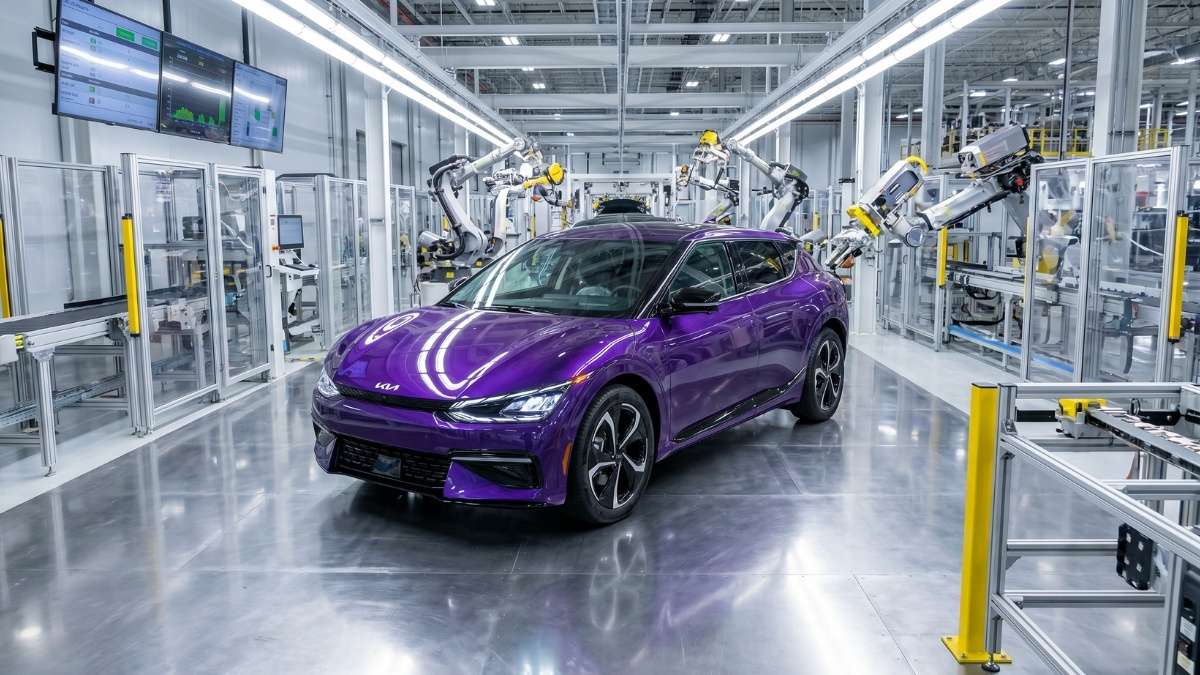

Automotive events rarely manage to successfully balance corporate strategy with genuine product excitement, but Hyundai Motor Group has been putting on a masterclass lately. During the sprawling Atlanta-based media event, I had the opportunity to tour multiple facilities that represent the future of American car manufacturing. While my time in Savannah was focused on their mixed-model production lines—which I covered extensively in my earlier column on the new Kia manufacturing plant—the West Point, Georgia portion of the tour held a different kind of personal significance for me.
West Point is where Kia has aggressively pivoted to localize its electric vehicle production. And the star of the West Point showcase was undeniably my favorite vehicle in their current lineup: the refreshed 2026 Kia EV6. Prominently featured on the factory floor, the updated crossover sat as a gleaming testament to how far the South Korean automaker has evolved. Seeing it roll through a facility that has historically been the backbone of Kia's American combustion engine manufacturing signaled a definitive shift in the company's trajectory. Moving assembly to Georgia not only secures crucial supply chain logistics but also directly benefits buyers by helping the vehicle bypass import tariffs and qualify for localized incentives.
The History of Kia's Electric Pioneer
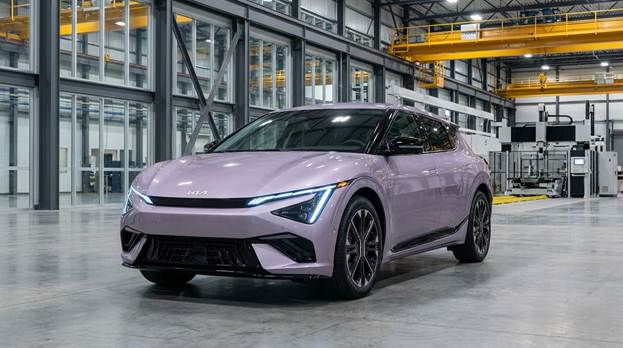
To understand why the EV6 commands such respect, you have to look at the historical context of its launch. When the original EV6 debuted for the 2022 model year, it was a watershed moment for the industry. Built on the dedicated Electric-Global Modular Platform (E-GMP), it wasn't just a compliance car or an electric powertrain shoehorned into a gas-car chassis. It was a ground-up reimagining of what a mainstream electric crossover could be.
The EV6 immediately distinguished itself by incorporating an 800-volt electrical architecture—technology that, at the time, was largely reserved for six-figure luxury vehicles like the Porsche Taycan and my own Audi E-Tron GT. This allowed the EV6 to charge from 10 to 80 percent in roughly 18 minutes on a 350-kW DC fast charger, effectively neutralizing the range anxiety that plagued early EV adopters. It went on to win prestigious accolades, including the European Car of the Year, single-handedly changing the public perception of the Kia brand from a budget-friendly alternative to a genuine technology leader. Now, with the 2026 facelift, Kia hasn't reinvented the wheel, but rather refined an already award-winning formula.
The EV6 GT I Almost Bought: Suspension and Color Constraints
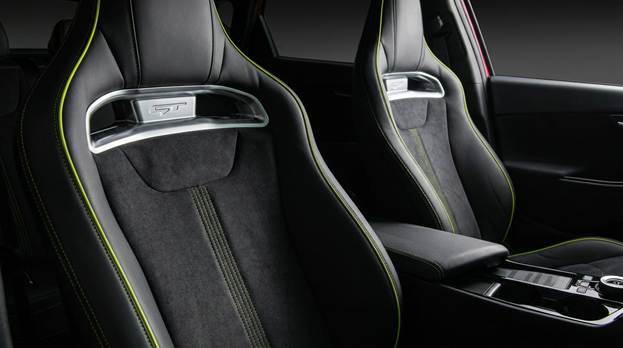
I have a deep personal affinity for the EV6, to the point where I very nearly purchased the high-performance EV6 GT variant a while back. On paper, it was exactly what I was looking for: a dual-motor monster pushing massive horsepower (now rated up to 641 horsepower in the newest iteration), capable of blistering 0-60 times that embarrassed traditional European sports cars. However, when it came time to actually pull the trigger, two glaring design constraints forced me to walk away.
First, the EV6 GT completely lacked an air-lift suspension option. When you are building a vehicle with that much mass and that much power, suspension dynamics are critical. The GT’s electronically controlled dampers are good, but without an air suspension, you cannot dynamically adjust the ride height for steep driveways, nor can you achieve the dual-personality ride quality—floating like a luxury sedan on the highway while hunkering down for cornering- that systems like the one in my Audi provide. For a flagship performance model pushing well past $60,000, the omission of an air suspension felt like a serious oversight. (In snow, air suspension can be a life saver – or a front-splitter saver).
Second - and perhaps more frustratingly - was the inescapable use of neon green accents. Kia decided that the signature color for their GT performance line would be a bright, highlighter green. This color was plastered on the massive brake calipers and stitched into the interior piping of the sport bucket seats. You could not opt out of it. As someone who is red-green colorblind, I have never been a fan of green; it either muddies my visual field or just looks completely unappealing depending on the shade. Forcing a highly specific, polarizing accent color onto buyers of your most expensive trim level is a classic design mistake. I ended up passing on the GT purely because I didn't want to live with a neon green interior (and my wife was even more turned off by the color than I was), an issue that could have been easily solved by offering a simple black-out or red accent package.
Powertrains: Price, Performance, and the Competition
For 2026, Kia has revamped the powertrain options, making an already competitive vehicle even more formidable. The most significant upgrade is the introduction of a larger 84.0-kWh battery pack for the long-range models, replacing the older 77.4-kWh unit.
This increase in energy density allows the rear-wheel-drive Wind and GT-Line trims to push their EPA-estimated range up to an impressive 319 miles. In an era where 300 miles is the psychological threshold for EV acceptance, this is a vital improvement. The powertrain hierarchy remains brilliantly structured to cover every segment of the market:
- The Light Trim: Starting just below the $40,000 mark after recent price adjustments, the base model uses a smaller 63.0-kWh battery and a single 167-horsepower rear motor. It’s an accessible entry point for city commuters.
- The Wind and GT-Line (RWD & AWD): This is the sweet spot. The single-motor version delivers 225 horsepower, while the dual-motor all-wheel-drive setup pumps out a robust 320 horsepower and 446 lb-ft of torque.
- The GT: The halo model returns with an astonishing 641 horsepower in its overboost mode, solidifying its place in supercar-acceleration territory (this car is not yet available in the US).
Crucially, starting with the 2025/2026 models assembled in Georgia, Kia has natively adopted the North American Charging Standard (NACS) port. This means EV6 owners can now pull up to any Tesla Supercharger and plug in directly without fumbling with bulky CCS adapters.
When comparing the EV6 to its primary competitors, it holds a distinct advantage. The Tesla Model Y, while undeniably ubiquitous and efficient, suffers from a notoriously harsh ride and a minimalist interior that borders on sterile. The EV6 offers vastly superior ride compliance and actual physical buttons for crucial functions. Against its corporate cousin, the Hyundai Ioniq 5 (one of my personal favorite 2026 cars), the choice comes down to styling and tuning. While the Ioniq 5 leans heavily into retro-futuristic hatchback design and softer suspension tuning, the EV6 is unequivocally a driver’s car, offering a sleeker, more aerodynamic profile and sharper steering feedback.
Internal and External Design Evolutions
Kia’s "Opposites United" design language has always been polarizing, but the 2026 facelift refines the EV6’s aesthetics into something universally striking. The front fascia has been significantly reworked. Gone are the somewhat bulbous original headlights, replaced by sharper, C-shaped LED enclosures that utilize Kia's new "Star Map" lighting signature. This gives the car a wider, more aggressive stance that better matches its performance capabilities. The rear maintains the iconic sweeping light bar, but it has been updated with a more intricate, three-dimensional LED pattern.
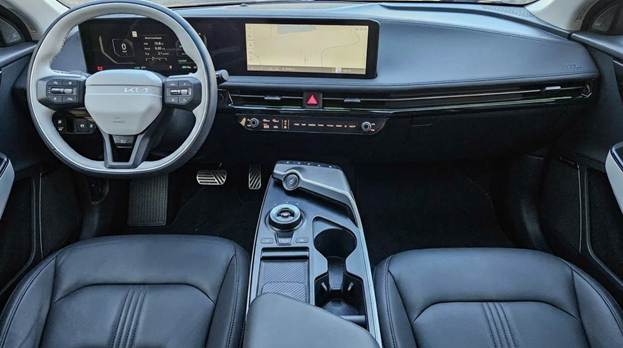
Inside, Kia addressed several minor gripes from the first generation. The somewhat awkward two-spoke steering wheel has been replaced by a much sportier, three-spoke D-shaped wheel that feels excellent in the hands. It also now features capacitive hands-on detection, which vastly improves the highway driving assist systems by preventing the car from nagging you to move the wheel when your hands are already resting on it.
The technology stack has also taken a massive leap forward. The EV6 now runs Kia’s Connected Car Navigation Cockpit (ccNC), which brings significantly faster processing speeds, a cleaner user interface, and robust over-the-air (OTA) update capabilities. They've also added a biometric fingerprint reader to instantly load driver profiles, and, in a massive win for aesthetics, they swapped out the smudge-prone piano black plastic on the center console for a premium, coarser texture that hides dust and fingerprints.
Prominently Featured at West Point
The decision to feature the 2026 EV6 so prominently during the West Point portion of the Atlanta event was a highly calculated move. West Point has long been the home of the Telluride, Sorento, and Sportage ICE models. By bringing the EV6 production into this historic facility, Kia is sending a loud message about the integration of their electric future with their established American workforce.
During the tour, watching the localized assembly of these complex 800-volt architectures alongside traditional combustion vehicles underscored the massive capital investments Kia is making in the United States. Unlike the Metaplant in Savannah, which was built from the ground up for AI-driven flexibility, West Point represents the successful retrofitting and evolution of a legacy plant. The EV6 on display wasn't just a car; it was undeniable proof that American workers in traditional automotive hubs can seamlessly transition to building world-class, high-performance electric vehicles.
Wrapping Up
The 2026 Kia EV6 remains one of the most compelling electric vehicles on the market today. By migrating production to the West Point assembly plant, Kia has secured the model's financial competitiveness in the U.S. market while proving their unwavering commitment to domestic manufacturing.
The newest iteration of the EV6 takes a formula that was already class-leading and meticulously files down the rough edges. The addition of the NACS charging port, the larger 84-kWh battery pack, and the upgraded ccNC infotainment system resolve the few technological gaps the previous generation had. While I still maintain that the high-performance GT model desperately needs an air suspension option and a color-agnostic design package to fully appeal to buyers like myself, the broader EV6 lineup is practically faultless.
Whether you are comparing it against the sterile efficiency of a Tesla Model Y or the retro charm of an Ioniq 5, the Kia EV6 consistently stands out as the driver's choice. It manages to balance striking exterior design with everyday practicality and cutting-edge charging architecture. Seeing it roll out of the line in Georgia only cements my belief that Kia isn't just participating in the EV revolution - they are actively leading it.
Disclosure: Images rendered by Artlist.io
Rob Enderle is a technology analyst at Torque News who covers automotive technology and battery developments. You can learn more about Rob on Wikipedia and follow his articles on TechNewsWord, TGDaily, and TechSpective.
Set Torque News as Preferred Source on Google
Follow us today...