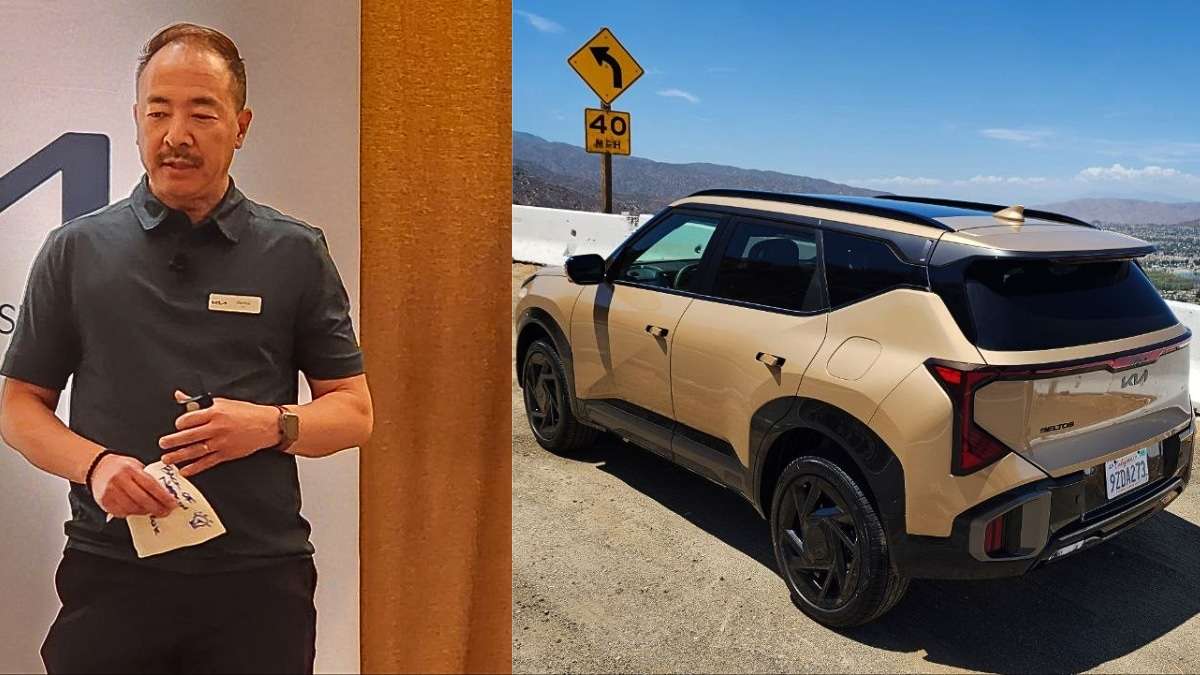

A white SUV sat quietly in a parking area at Kia's Namyang Research and Development Center in South Korea. Engineers were preparing it for testing. Most people walked past it. One product planner stopped. Ten years later, that moment became the 2027 Kia Seltos sitting in front of me today in Newport Beach.
I came to this Kia drive event expecting to write about horsepower and cargo volume. Instead I found something better. I found the moment before the moment. The part of a car's story that almost never gets told, because nobody thinks to ask about it.
The Most Important Moment Happened Before Anyone Started Designing The Seltos
People assume vehicles begin when designers start sketching.
No.
The Seltos began when somebody asked a much simpler question. Why don't we have one like this in the USA?
That somebody was Derrick Ty, now Senior Manager of Product Planning at Kia North America. Ten years ago he was working a very different job, developing the Forte GT sedan, and his trip to Namyang that day had nothing to do with SUVs at all.
A Parking Lot, Not A Design Studio
Ty told me the vehicle he noticed was not even test driven that day. It was simply sitting there, being prepped, waiting its turn on the track. It had not yet been named Seltos. It had not even been approved for the US market. It was built for buyers in China.
But Ty looked at it and recognized a shape: the market shape.
"But when I saw the vehicle, I thought it was something that could fit the Kia's US lineup because we had a gap."
Kia's American lineup had the boxy, front wheel drive Soul at the bottom, and it had the larger, more capable Sportage above it. Between those two vehicles sat a canyon. Buyers wanted something Soul sized with all wheel drive, and Kia simply did not build it.
"The need was for something like an all-wheel drive Soul, but we didn't develop an all-wheel drive version of the Soul. However, I saw this SUV that had all-wheel drive and was a similar size," Ty told Torque News.
The Chinese market SUV parked in front of Ty happened to fill that exact gap. All wheel drive. Similar footprint. Already engineered, just not for American roads.
Why A Chance Meeting Actually Matters In A Global Car Company
Here is the part that most car shoppers never think about. Global automakers build dozens of region specific vehicles that Americans never see. A car engineered for the Chinese, Indian, or European market can sit fully developed and completely invisible to US planners, simply because nobody connected the dots.
Ty connected them. He wrote the idea down, the way you jot a phone number on whatever paper happens to be nearby. In his case, it became his back-of-the-napkin idea.
"So the concept of the back of the napkin idea is when you get a spark of an idea, you write it down on any available piece of paper," Ty explained to me. It sounds almost too simple to matter. But that scrap of paper is the reason the current generation Seltos exists at all.
From Napkin To Namyang To North America, The Five Year Reality
If you assume a great idea rockets straight into production, the Seltos story will correct that assumption fast.
Ty entertained the idea informally for months before it moved anywhere. Kia already knew it had a gap in its lineup. What Kia did not know yet was exactly how to fill it, or that the answer had been sitting in a parking lot the whole time.
Eventually Ty formalized the concept into an actual plan. That plan then had to travel through Kia's US region team and back to headquarters in Korea, where research and development weighed in on what it would actually take to bring a Chinese market SUV over to American shores. Crash testing. Emissions compliance. A design pass suited to US tastes. None of that happens quickly, and none of it happens for free.
Ty put the total timeline at roughly five years from spark to showroom for the first generation US Seltos, which eventually earned praise in our own 2021 Seltos SX Turbo AWD review for handling logging trails in New Hampshire that a subcompact crossover had no business tackling so well.
"Well, yeah, that led to the US first-generation Seltos. But that was five years later, right? Because it takes about five years from when you start to concept a vehicle, which is pretty much what I did," Ty told me.
What This Story Reveals About How Product Gaps Actually Get Filled
Car shoppers tend to imagine automakers running spreadsheets full of market research, then commanding designers to build whatever the data demands. Sometimes that happens. But the Seltos proves something more human.
A gap in Kia's US lineup existed for a while before anyone had a concrete answer for it. Ty told me plainly that Kia knew it needed something, but did not yet know what that something was. The Seltos answer arrived almost by accident, because one person happened to be standing in the right parking lot on the right afternoon.
That is not how corporate strategy documents usually get written. It is, however, exactly how a lot of good ideas actually happen inside large organizations, whether you are building cars or running a newsroom.
How The 2027 Seltos Grew Up From That Original Spark
The Seltos I am standing next to today in Newport Beach looks nothing like a compliance gap filler anymore. This second generation model borrows heavily from Kia's Telluride design language, with a wider grille, vertical LED lighting, and flush door handles that push the Seltos toward looking like a scaled down version of Kia's flagship SUV rather than a budget hatchback wearing a taller body.
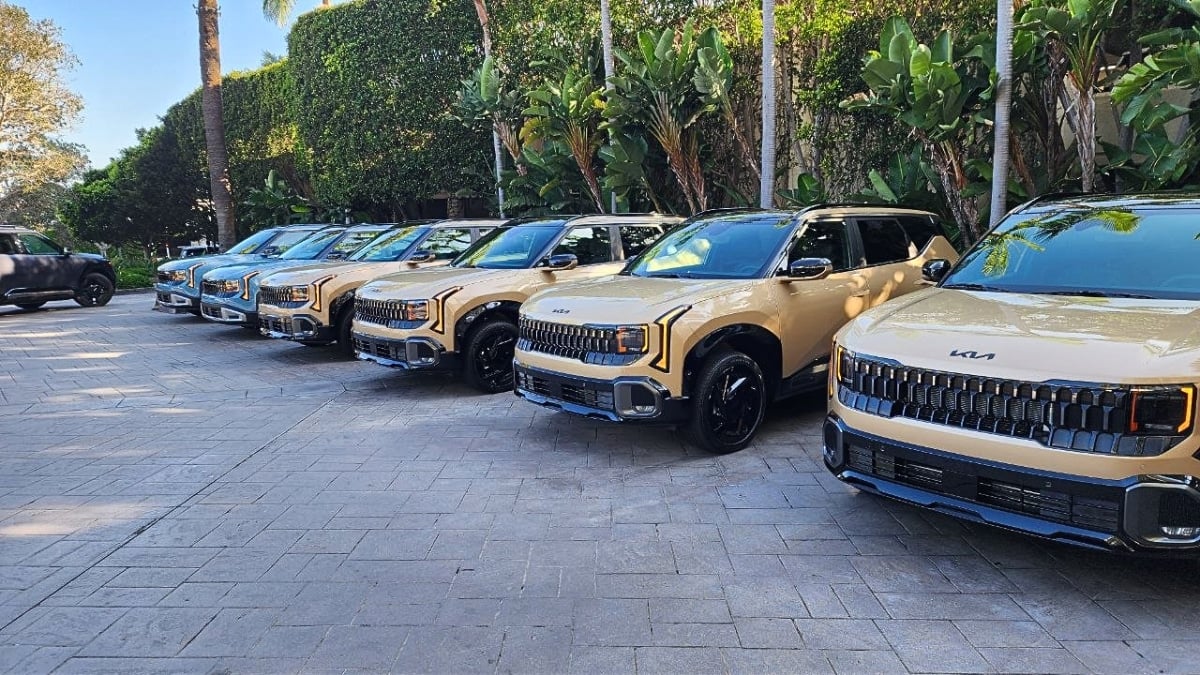
The competing outlet Edmunds drove an early version in Korea and came away impressed, noting the redesigned Seltos is "handsome, well proportioned and succeeds in looking more expensive than it actually is." That is a significant leap for a nameplate that started as an afterthought filling a hole in the lineup.
The new Seltos also finally answers a question we raised years ago in our piece on the Seltos possibly getting a hybrid model. For 2027, a hybrid powertrain joins the lineup for the first time, alongside the familiar turbocharged and naturally aspirated gas options.
Why This Story Matters Even If You Have Never Heard Of The Seltos
I understand not everyone reading this cares deeply about compact SUV trim levels. But stay with me for a second, because the lesson underneath this story is bigger than one car.
Ideas rarely arrive fully formed with a business plan attached. Most good ideas start as fragments. A shape that catches someone's eye. A gap somebody notices but cannot yet name. The napkin is not really about the napkin. It is about paying attention when almost everyone else would have walked past that parked SUV without a second glance.
There is a quiet moral lesson buried in Ty's story, one that applies well beyond car manufacturing. Pay attention to the ordinary moments. Write the idea down before you lose it. Then have the patience to walk that idea slowly through five years of bureaucracy, testing, and doubt, because good ideas rarely survive on inspiration alone.
Kia's own warranty coverage and value pricing on the Seltos, still among the most generous in the segment, exist today because someone was willing to see that process through to the end.
The Seltos also arrived just as Kia was preparing to retire the Soul from its US lineup, effectively becoming the brand's new entry point and inheriting the role the Soul once played for budget minded, style conscious buyers, a torch that our earlier feature on the 2021 Seltos as an entry level fancy SUV first flagged as the vehicle's real long term purpose within Kia's family.
A Small Confession From Newport Beach
I will admit something. When Derrick Ty first mentioned the napkin idea during his morning presentation, I almost let it slide past as a throwaway line. Executives say colorful things at press events all the time, and most of it evaporates by lunch.
But something about the way he said it stuck with me. And as you can see from the image accompanying this story, he had a napking in his hand.
So afterward I asked if he would walk me through it again, slower this time, just for my notes. What he gave me instead was the real origin story of a vehicle that now sits at the center of Kia's US strategy.
As someone who has spent fifteen years covering the automotive industry, I find myself drawn again and again to these quiet, unscripted moments rather than the polished press releases. The truth about how cars get built rarely lives in the official talking points. It lives in stories like this one, told almost as an afterthought by someone who was simply there.
Aren't stories like this interesting?
Now I want to hear from you. Have you ever driven a Kia Seltos, and did knowing its origin story change how you see it sitting in your driveway? And more broadly, do you think automakers should lean harder into telling these behind the scenes stories, or do you prefer sticking to horsepower figures and price sheets? Tell us in the comments below.
Return tomorrow, or check our Torque News Home Page for more interesting automotive news articles.
Images by Armen Hareyan.
About The Author
Armen Hareyan is the founder and Editor-in-Chief of Torque News and an automotive journalist with over 15 years of experience writing car reviews and industry news. Now based in the Charlotte region (Indian Land, SC, he founded Torque News in 2010, which since then has been publishing expert news and analysis about the automotive industry. He can be reached at Torque News on X, Linkedin, Facebook, and Youtube. Armen holds three Masters Degrees, including an MBA, and has become one of the known voices in the industry, specializing in the landscape of electric vehicles and real-world stories of actual car owners. Armen focuses on providing readers with transparent, data-backed analysis bridging the gap of complex engineering and car buyer practicality. Armen frequently participates in automotive events throughout the United States, national and local car reveals and personally test-drives new vehicles every week. Armen has also been published as an automotive expert in publications like the Transit Tomorrow, discussing how will autonomous vehicles reshape the supply chain, and emerging technologies in vehicle maintenance.
Set Torque News as Preferred Source on Google
Follow us today...