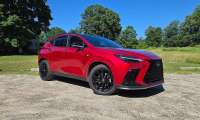

Hybrids are becoming the default choice among American-market green vehicle shoppers, and the battery-only models still on sale are seeing steep declines in deliveries. The latest data from Cox Automotive shows hybrids pulling rapidly away from battery-electric vehicles (BEVs). Not only are hybrids selling in greater numbers, but BEVs are selling in fewer numbers, widening the gap with every passing business day.
Hybrids Approaching 20% Market Share
The latest data from Cox Automotive trails some we’d already seen a month ago from NADA. The best estimates are that hybrids now command 18% of the U.S. market. According to Kelley Blue Book (a Cox publication), hybrid sales are forecast to increase by approximately 9% in 2026. That is a pretty easy call to make, given that Cox already reported that hybrids are up 3.5 points year over year, and Toyota, Hyundai, and Kia are reporting booming sales of the many hybrids they offer.
Battery-Electric Vehicle Market Share Drops Back to 2022 Levels
As hybrids continue to be the go-to option for Americans who want a green vehicle with a low cost per mile, EVs are falling back to market share levels from many years ago. EVs earned just 5.8% market share in Q2, according to Cox. Said another way, more than 94% of shoppers chose not to buy an EV during a period of high energy costs.
In Q1, EV “sales fell 27.3%.” In Q2, EV “sales 20.5%.” This is the third quarter in a row in which EVs have had horrible results, and the only thing Cox thinks is saving EVs from utter catastrophe is that some automakers are still “adding new entries to help slow sales declines.” EVs continue to be canceled; most recently, Kia ended its affordable Niro EV’s run.
Affordable EVs Are Not Selling
If all the EVs offered were very expensive and poor offerings, we’d understand the terrible EV delivery results, but the affordable end of the EV market has two newly updated models, and they are sitting there being ignored by shoppers. Yes, we checked, and there is plenty of inventory.
Media EV Bias Is Starting To Look a Bit Obvious
Read any automotive outlet, and the general vibe seems to be EV-centric. Some publications are straight-up EV advocacy groups, and that’s fine. But the weirdest part is the way the most respected analysts, like Cox, for example, continue to focus so heavily on a powertrain option that American consumers never really warmed to, and are presently avoiding like cyclospora cayetanensis. The easiest illustration of this is that Cox has a regular “EV Market Monitor” story it publishes. That’s fine, and we lean on it for much of our EV reporting, but where is the “Hybrid Market Monitor” report? Why focus on a green powertrain that over 94% of Americans don't buy when there is one that about 20% do? Tell us your thoughts in the comments below.
About the Author:
John Goreham is a 14-year veteran of Torque News. An accomplished writer and a long-time expert in vehicle testing, Goreham also serves as the Vice President of the New England Motor Press Association and has a growing social media presence. He’s also a 10-year staff writer and community moderator for Car Talk. Goreham holds a B.S. in Mechanical Engineering and an undergraduate Certificate in Marketing. In addition to vehicle and tire content, he offers deep dives into market trends and opinion pieces. You can follow John Goreham on X and TikTok, and connect with him on LinkedIn.
Set Torque News as Preferred Source on Google
Follow us today...