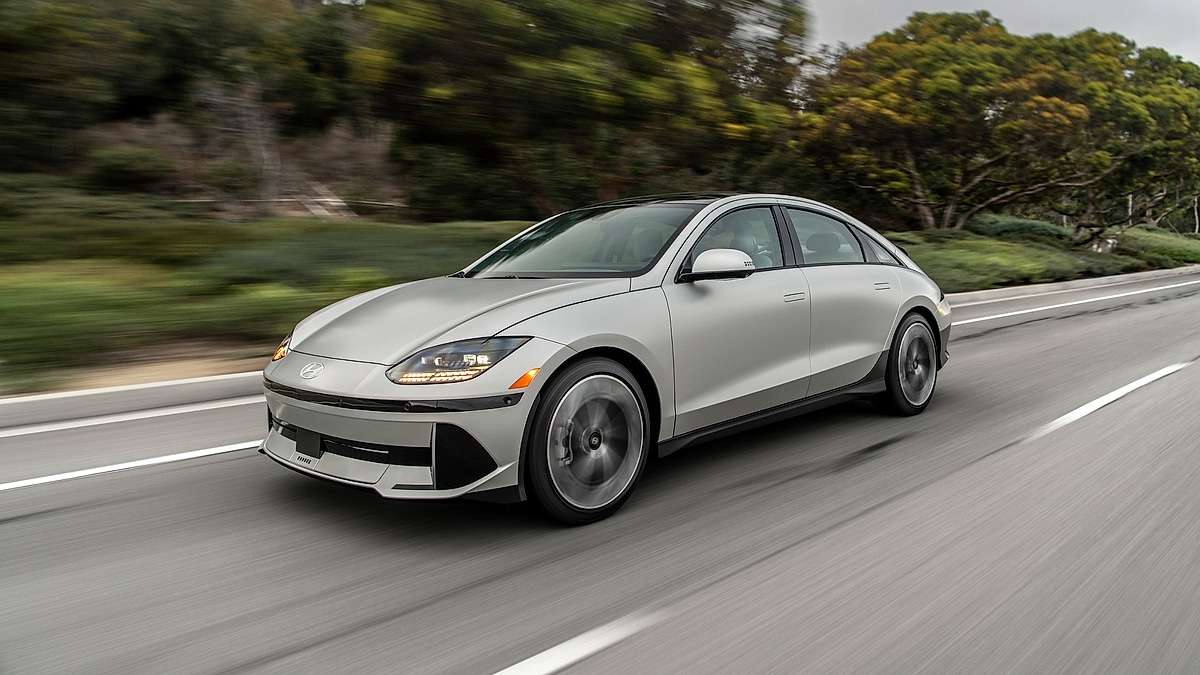

Seventy thousand miles in 22 months will sand the brochure gloss off any car.
That is why this 2025 Hyundai Ioniq 6 SEL RWD post from r/Ioniq6 lands harder than another first-drive review. The owner lives in Tennessee near the edge of the Cumberland Plateau, where daily life means hills, winter months, and a 30-mile run just to reach the nearest Walmart. His car has covered 70,000 miles in less than two years. The second trip meter has never been reset. The lifetime average reads 3.4 miles per kWh, rising to about 3.5 miles per kWh in summer.
That one number does most of the work.
He wrote on Reddit 3.4 kW/mi, but the math shows he means 3.4 miles per kWh. Divide 70,000 miles by 3.4, and you land at 20,588 kWh. He rounded that to 20,500 kWh. Close enough for an owner ledger, and far more useful than a dealer window sticker.
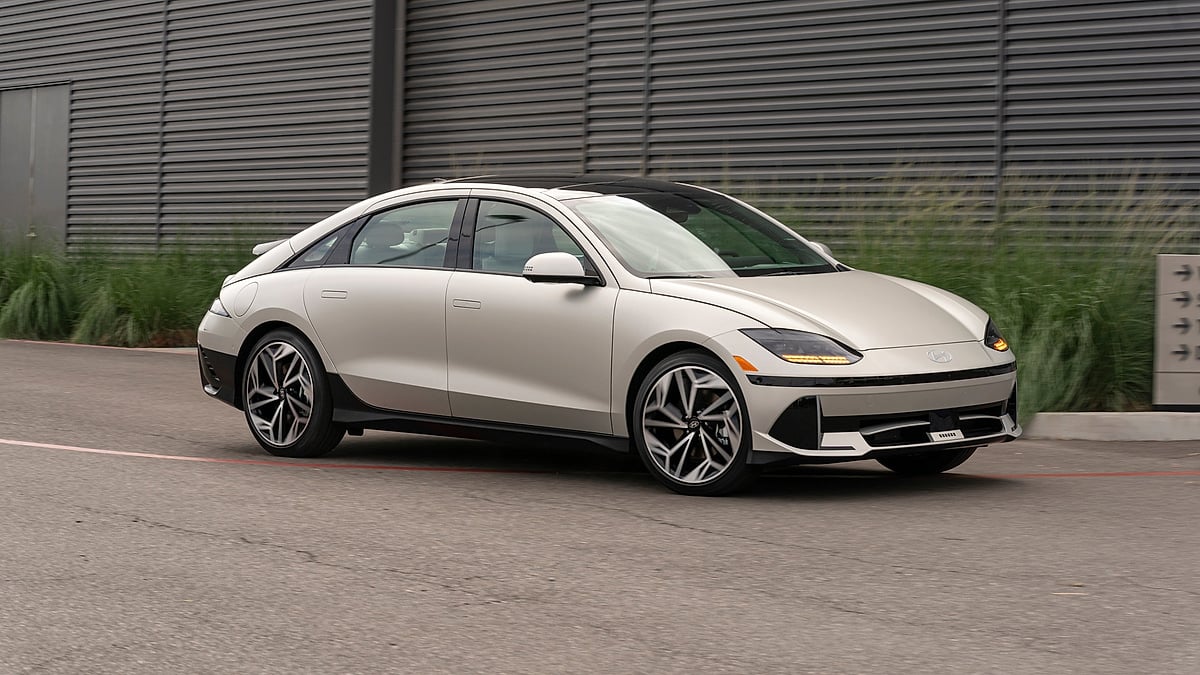
Most EV ownership stories arrive before the interesting part. A few thousand miles in, everyone is still repeating expectations. This owner skipped straight past that phase. He compressed five or six ordinary years of driving into 22 months and left behind something far more useful than enthusiasm or skepticism: a detailed financial trail showing what happens when an EV becomes a workhorse rather than a novelty.
The running cost is almost absurd
The owner says his home electricity costs 11.5 cents per kWh. If he had paid that rate for every kWh the car used, the 70,000 miles would have cost about $2,360 in electricity. The gas comparison is uglier.
He replaced a 30-mpg car. Over 70,000 miles, that car would have burned about 2,333 gallons of gas. At his estimated local average of $3.40 per gallon over the last two years, fuel would have cost just under $8,000.
That puts the home-charging savings at about $5,575.
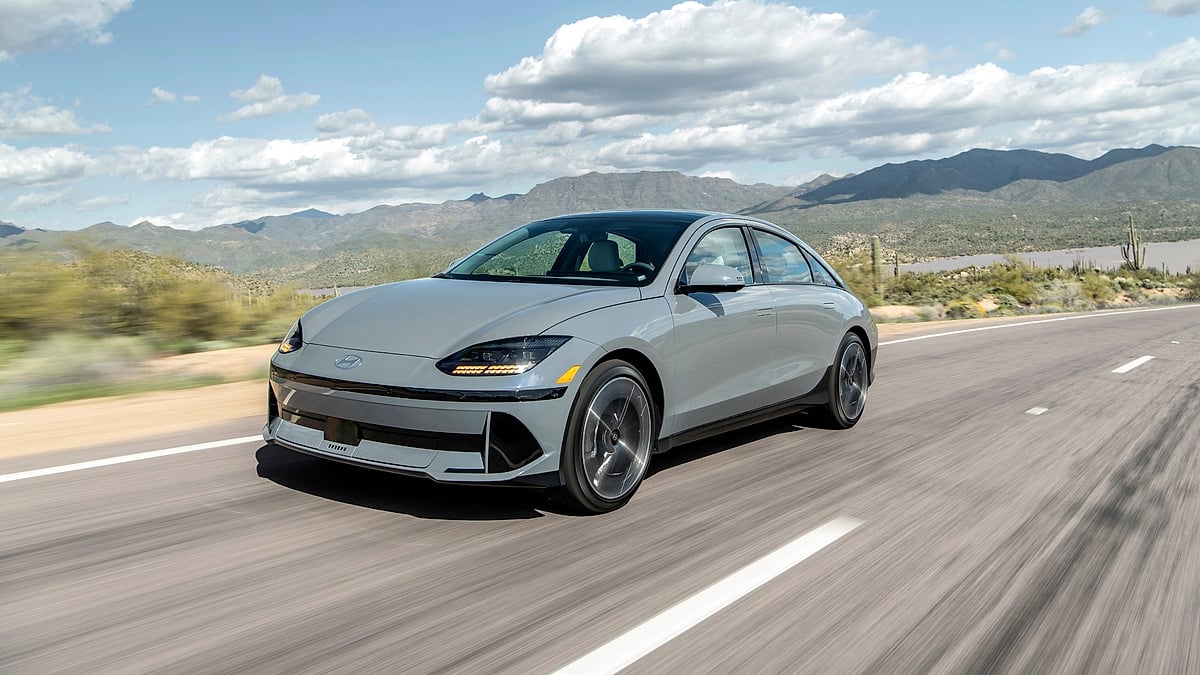
Then the Electrify America plan changes the story. He says he received 13,500 kWh of free charging from EA and paid for only about 7,000 kWh at home, plus $106 at paid public chargers. His out-of-pocket energy cost lands around $906.
That is 1.3 cents per mile.
A 30-mpg gas car at $3.40 per gallon costs 11.3 cents per mile before oil changes, brakes, plugs, belts, filters, and the small expensive nonsense that shows up when an internal-combustion car starts living a 38,000-mile-per-year life. I would be careful hard-counting his claimed $500 brake savings without knowing the old car, but the oil-change math is easy to believe. At this mileage pace, he would have been seeing a service writer often.
His claimed $7,100 fuel savings works out to about $322 per month. He says that is more than half the payment.
I believe the shape of that number.
The part that changes after month 24
He is at 22 months.
That means the free Electrify America era is almost over if his plan started with the car. This is where a lot of EV ownership stories get sloppy. Free charging makes the headline. Home charging decides whether the car keeps making sense after the promotional sugar wears off.
At his current pace, the Ioniq 6 is covering about 3,182 miles per month. At 3.4 miles per kWh, that requires roughly 932 kWh per month. At 11.5 cents per kWh, home energy would cost about $107 per month.
The gas car would burn about 106 gallons over the same mileage. At $3.40 per gallon, that is about $361 per month.
So the post-EA world still works. The savings shrink from roughly $322 per month to about $253 per month if he pays his home rate for all energy. That is the number I would use for future planning, because free DC charging has an expiration date and grocery-store charging habits can change.
The cheap-EV argument survives without free charging in this case.
That is the strongest part of the story.
The plateau makes the efficiency more impressive
The Ioniq 6 is an aerodynamic sedan, so nobody should act shocked when it posts good efficiency. Hyundai rated the 2025 SEL RWD at 291 miles of EPA range. This owner’s 3.4-mile-per-kWh lifetime number points to roughly 294 Wh per mile.
For a hilly Tennessee driver with winter weather, 70,000 miles, and enough daily distance to turn the car into a tool instead of a toy, that is strong.
The comments add useful terrain context. One owner asked whether living at altitude changes charging habits because downhill driving can bring back battery percentage through regenerative braking. The original poster answered that his downhill runs usually add only 1 to 2 percent, while the trip to get there costs 3 to 4 percent.
That sounds exactly right.
Regeneration can soften a mountain route, but it cannot repeal the climb. Owners sometimes talk about downhill regen as though the car found free energy hiding in the woods. In real driving, regen returns part of what gravity borrowed on the way up. The Plateau owner’s numbers show that plainly. His car still averages well because the Ioniq 6 starts with a slippery body, efficient rear-drive layout, and enough regenerative braking to preserve pads over tens of thousands of miles.
The brake comment matters in the mechanical sense, so I’ll say it plainly without dressing it up: if the pads still look new at 70,000 miles, that is a real ownership win. The car has spent nearly two years using the motor as the primary slowing device, and Tennessee hills did not eat the brakes alive.
The warranty clock is now the real clock
High-mileage EV owners do not experience the warranty by years. They experience it by odometer.
Hyundai’s EV battery warranty runs 10 years or 100,000 miles. This owner has used 70 percent of the mileage coverage in 22 months. At his current pace, he will reach 100,000 miles in about 9.4 more months. That means the battery warranty could be finished in roughly 31 months total.
Most shoppers hear “10 years” and relax.
A driver doing 38,000 miles a year should read “100,000 miles” in bold red ink.
That does not make the car a bad buy. It changes the used-car conversation. A 2025 Ioniq 6 with 70,000 miles after 22 months can look frightening to a casual shopper, but the car’s lifetime efficiency and maintenance profile tell a richer story. If the battery health checks out, the car has proven it can handle hard use. The catch is that the next owner may inherit a vehicle with limited warranty runway left.
That is where inspection discipline comes in. A used Ioniq 6 buyer should ask for DC fast-charging history, lifetime efficiency, battery-health data if available, open recall status, tire history, and service records. Mileage alone is too blunt an instrument.
The charging-time fight needs better accounting
The thread wandered into the usual argument about charging time. One commenter drives about 130 miles a day, lacks home charging for now, uses office charging when available, and still fast-charges 2 to 3 times per month. He enjoys the car but does not pretend the infrastructure is perfect.
The original poster pushes back on the gas-station comparison. He says he usually charges while grocery shopping or working on his phone, and that filling a gas car takes closer to 10 minutes once you pull off, find a pump, pay, fill, and get back on the road. He also says he avoided about 150 gas-station stops.
That estimate tracks. A 30-mpg car traveling 70,000 miles uses about 2,333 gallons. With a roughly 15-gallon fill, that is around 155 stops.
I do not buy the idea that charging time always disappears into errands. That works when the charger sits near something useful and when your life bends around that stop. It falls apart when the charger is broken, full, expensive, poorly located, or needed at the end of a long workday.
This owner’s setup works because three pieces line up: low home electricity, useful free EA access, and a driving pattern that lets charging overlap with real life. Remove two of those pieces and the ownership math gets less friendly.
The strangest part is Hyundai walking away
Hyundai has confirmed the standard Ioniq 6 will disappear from the U.S. lineup for 2026, leaving the Ioniq 6 N to carry the name. That makes this 70,000-mile post feel oddly timed.
The regular Ioniq 6 is doing exactly what an efficient EV sedan should do. It is eating miles cheaply. It is keeping brake wear low. It is giving a rural, high-mileage driver a monthly fuel savings figure large enough to bend the ownership equation. It is also doing this in a market that keeps telling automakers Americans only want crossovers and trucks.
I understand the business reasons. Sedans are a hard sell. Imported EVs have tariff and incentive problems. The Ioniq 5 is easier for Americans to understand.
Still, this owner’s ledger makes the sedan’s exit feel wasteful. The Ioniq 6 may never have been a volume star, but it is a ruthless commuter when the use case fits. Quiet, efficient, low-drag, rear-drive, fast-charging, and cheap to run when electricity access is decent.
That combination deserves more credit than it got.
What owners and shoppers should take from this
A 2025 Hyundai Ioniq 6 SEL RWD can pile on serious mileage without turning into a maintenance sink, at least in this owner’s experience. The fuel savings are real, even after the free-charging plan expires, because his home electricity rate is low and the car is efficient.
Owners should plan for the post-EA cost before the plan ends. High-mileage drivers should also watch the 100,000-mile battery-warranty cap more closely than the 10-year calendar term.
Used buyers should resist the lazy reaction to a 70,000-mile odometer. Ask for the data. A high-mile Ioniq 6 with clean service history, strong efficiency, completed recalls, and healthy battery readings may be a better car than a low-mile garage queen that spent its life baking at 100 percent charge.
What do Ioniq 6 owners think?
If you own an Ioniq 6 past 50,000 miles, what are your lifetime miles per kWh, tire replacements, battery-health reading, and out-of-pocket charging cost? Those four numbers would tell shoppers more than another generic range review.
About The Author
Noah Washington is an automotive journalist based in Atlanta, Georgia, covering sports cars, luxury vehicles, and performance culture. His reporting focuses on explaining the engineering, design philosophy, and real-world ownership experience behind modern vehicles.
Noah has been immersed in the automotive world since his early teens, attending industry events and following the enthusiast communities that shape how cars are built and driven today. His work blends industry insight with enthusiastic storytelling, helping readers understand not just what a car is, but why it matters.
Noah is also a member of the Southeast Automotive Media Association (SAMA), a professional organization for automotive journalists and industry media in the Southeast.
His coverage regularly explores sports cars, luxury vehicles, and performance-driven segments of the automotive industry, including the evolving culture surrounding Formula Drift and enthusiast builds.
Read more of Noah's work on his author profile page.
You can also follow Noah here:
Set Torque News as Preferred Source on Google
Follow us today...