
Ford's next electric pickup is beginning to come into focus, and if the latest information is any indication, the company is treating this truck as much more than just a new model.
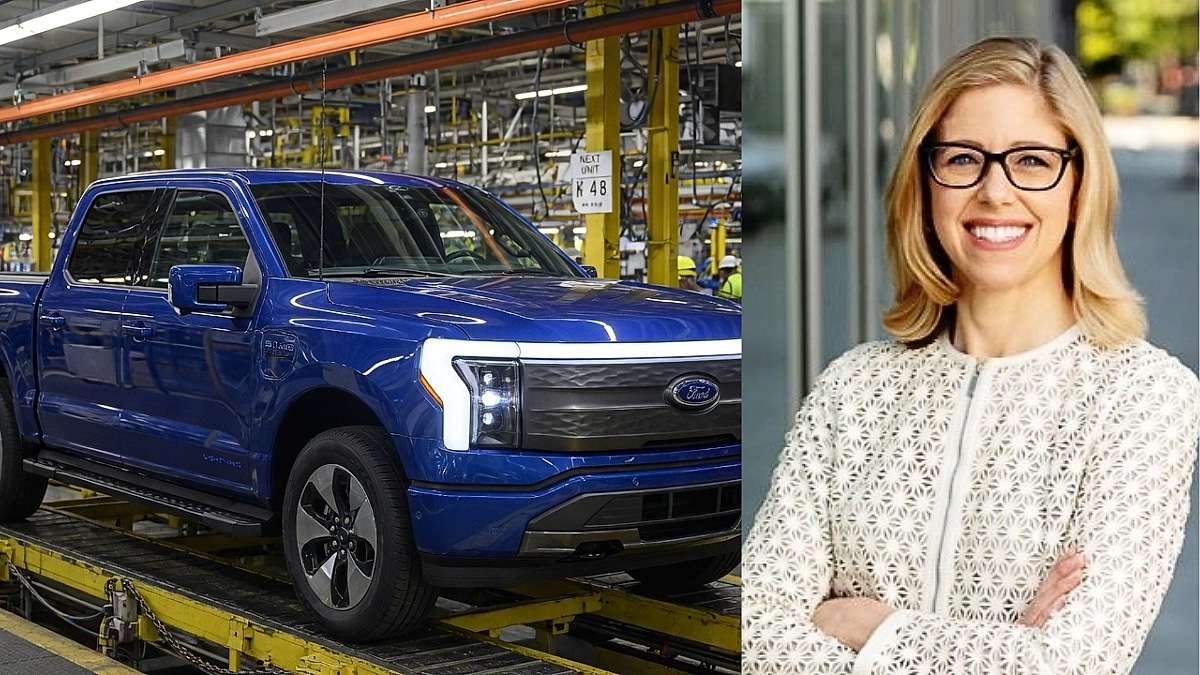
According to a recent report from the Detroit Free Press, Ford executives have now revealed several key details about the automaker's upcoming affordable electric pickup, a vehicle expected to launch in 2027 and serve as the first product from Ford's new low-cost EV platform. Ford's Chief Financial Officer Sherry House discussed these points during the UBS Auto and Auto Tech Conference via webcast on June 3.
Real-world owners who experienced the original F-150 Lightning firsthand already know the stakes are high, and one Lightning Lariat owner who logged 9,000 miles in seven months said range anxiety was non-existent while calling it the best vehicle he had ever owned, a glowing testimonial that puts enormous pressure on Ford to replicate that owner satisfaction in a truck half the price. At the same time, the broader question of whether a $30,000 electric truck built on an all-new architecture can truly deliver on its promises is something Torque News examined in depth when Ford's CEO first shared prototype photos on social media and declared the midsize EV truck one of the most audacious projects in Ford's history.
At first glance, this may sound like a routine product update. But when you look closer, something more interesting emerges. Ford appears to be applying lessons learned from the F-150 Lightning and using them to rethink how it develops, builds, prices, and scales its next generation of electric vehicles.
Before we get into the eight details that Ford revealed about its next EV truck, consider this question: If Ford could start over and build an electric truck from scratch after everything it learned from the Lightning, what would it do differently? Keep that question in mind as you read, and share your answer in the comments section below.
1. Ford Says Its 2027 Electric Pickup Program Is On Track
One of the most important updates came from Ford executive Lisa Drake House, who told investors that the project remains on schedule.
"We're on plan for our 2027 launch."
That may sound simple, but in today's automotive industry, staying on schedule is increasingly difficult. Supply chain disruptions, battery sourcing challenges, and software delays have affected numerous EV programs across the industry. The fact that Ford is publicly emphasizing that the truck remains on track suggests confidence in the program's progress. Ford itself has described this entire effort as a genuine turning point, and Rob Enderle has covered in detail why this moment could be Ford's "Model T moment," a radical and massive bet on affordable EVs that represents the company's best shot at a profitable and scalable electric future.
2. Ford Is Already Building Prototype Trucks In Michigan
Ford also revealed that prototype vehicles are already being built in Michigan.
For prospective buyers, this answers a common question: Is this truck still just an idea, or is it becoming reality?
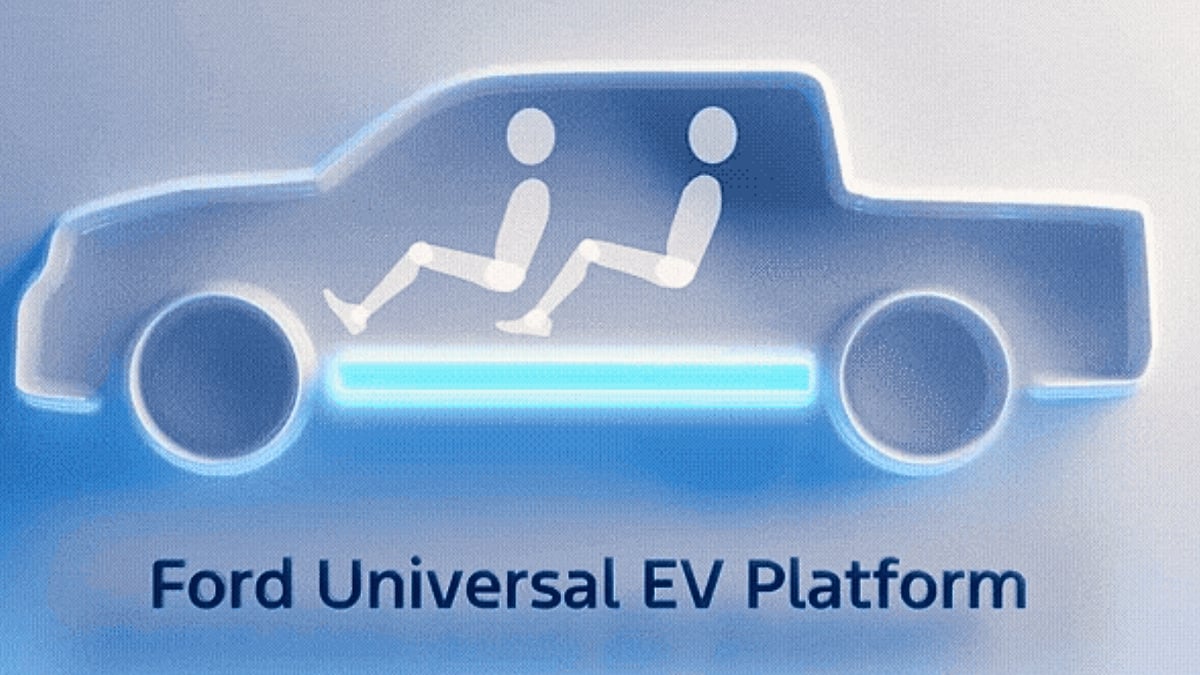
The existence of prototypes indicates the program has moved beyond design studies and computer models. Ford is now putting physical vehicles together and gathering real-world data. The financial architecture behind this program is equally ambitious, and Torque News broke down Ford's $30,000 gamble inside the Universal EV Platform, explaining how unicasting technology replaces 146 individual structural parts with just two massive aluminum castings, cutting assembly time by 15 percent.
3. The Trucks Are Already Being Tested On Public Roads
The company confirmed that testing is underway. This is another significant milestone because it means Ford engineers are already evaluating how the vehicle performs in actual driving conditions. The prototype was even spotted in the wild in Long Beach, California, by The Autopian, giving the public its first glimpse of how compact and aerodynamically considered the new truck actually looks in person.
Every mile driven helps engineers refine ride quality, battery performance, software calibration, durability, and energy efficiency. Testing is where theories meet reality, and Ford appears to be well into that process. For those wondering how this new truck stacks up on paper against existing rivals already on the road, Torque News produced a side-by-side table comparison of Ford's Universal EV Platform versus GM's Silverado EV and the Tesla Cybertruck, covering the three major U.S. electric pickup approaches side by side.
4. Ford Is Testing Megacasting Technology
Perhaps the most intriguing detail is Ford's confirmation that it is testing megacastings.
For readers unfamiliar with the term, megacasting involves producing large sections of a vehicle as single cast components rather than assembling dozens or even hundreds of smaller pieces. The approach has been popularized by Tesla and offers several potential advantages including fewer parts, simpler manufacturing, lower production costs, reduced vehicle weight, and faster assembly. This is not a new concept in the EV world, and we have documented how many automakers began following Tesla's example by incorporating megacasting technology after Tesla's Giga press approach reduced the weight of the Model Y by 10 percent.
The fact that Ford is testing this technology suggests the company is not merely designing a new truck but experimenting with a new way to build vehicles entirely.
5. Supplier Readiness Is Receiving Special Attention
Ford also revealed it is conducting supplier readiness assessments.
That may sound like corporate jargon, but it addresses a major issue that has affected automakers in recent years. Many vehicle launches have been disrupted not because the automaker was not ready, but because suppliers were not ready. Ford appears determined to avoid that problem by ensuring suppliers can meet production demands before the truck reaches customers. Car and Driver has also covered Ford's technical briefings on the new platform in detail, basically noting that the truck's clean-sheet design avoids the compromises that come from adapting a shared combustion platform, with the Universal EV architecture designed specifically to underpin a full family of electric vehicles from subcompact size up to small commercial vans.
6. Lessons From Previous Production Challenges
Another noteworthy point involved Ford's efforts to recover from approximately 100,000 units of lost production related to previous supplier issues.
That experience appears to be influencing how Ford approaches future vehicle launches. Rather than simply increasing production volume, the company seems focused on building a more resilient manufacturing system. It is worth remembering where this journey started, because when Ford launched the F-150 Lightning on the original assembly line in 2022 and simultaneously announced a second EV truck was in the offing, few could have predicted how much the company would have to learn before getting affordable electrification right.
7. The New Platform May Be More Important Than The Truck
Ford CEO Jim Farley has previously stated that the upcoming pickup will be a midsize four-door electric truck expected to start around $30,000.
But there is another detail that deserves attention. According to Ford, this truck will be the first vehicle built on a new platform that will support additional products in the future. That means the pickup itself may be only the beginning. The platform could eventually underpin multiple vehicles, allowing Ford to spread development costs across a larger lineup and improve profitability through economies of scale. Ford's new Universal EV Platform promises 4.5-second zero to 60 acceleration and 15 percent better efficiency than any current pickup, with structural LFP batteries and Formula 1-inspired aerodynamics that make this architecture far more than a single vehicle program.
8. Ford Wants To Deliver More Technology At A Lower Price
Ford also emphasized that the truck will be "very feature-rich" and "very tech-forward."
This raises another question many shoppers are likely asking: Can Ford really build an affordable electric truck without stripping away the technology buyers expect? Ford clearly believes the answer is yes. The combination of a lower-cost platform, new manufacturing techniques, and shared architecture appears designed to achieve exactly that balance. It is a very different strategic posture from what happened with the Mustang Mach-E, where the Ford Mustang Mach-E is now facing serious sales pressure as 800-volt rivals with faster charging have galloped past the aging platform, serving as a cautionary tale about what happens when an affordable EV falls behind on core technology.
Why This Truck Matters More Than Most People Realize
Many headlines will focus on the truck itself.
But the bigger story may be what the truck represents. The F-150 Lightning proved there is demand for electric pickups. At the same time, it exposed some of the challenges associated with pricing, scaling production, and maintaining profitability. This new truck appears to be Ford's opportunity to apply everything it has learned. The broader EV truck segment has been struggling, and we reported extensively on how electric truck dreams were hitting reality as the Tesla Cybertruck, Rivian R1T, and Ford F-150 Lightning all struggled to find mainstream traction heading into 2026, which makes Ford's second attempt at cracking this market all the more consequential.
Instead of simply building another electric pickup, Ford seems to be creating the foundation for its next phase of EV growth. If successful, the vehicle could become one of the most important products Ford launches this decade, not because it is a truck, but because it may reveal whether Ford has found a sustainable formula for affordable electric vehicles.
Now please tell us your opinion.
Do you think Ford's next electric pickup will succeed where many affordable EV projects have struggled?
And if Ford really can deliver a feature-rich electric truck for around $30,000, would you consider buying one over a traditional gasoline pickup or an EV from another brand?
Let us know your thoughts in the comments section below.
Return tomorrow, or check our Torque News Home Page for more interesting automotive news articles.
Sherry House's image is from her Linkedin page.
About The Author
Armen Hareyan is the founder and Editor-in-Chief of Torque News and an automotive journalist with over 15 years of experience writing car reviews and industry news. Now based in the Charlotte region (Indian Land, SC, he founded Torque News in 2010, which since then has been publishing expert news and analysis about the automotive industry. He can be reached at Torque News on X, Linkedin, Facebook, and Youtube. Armen holds three Masters Degrees, including an MBA, and has become one of the known voices in the industry, specializing in the landscape of electric vehicles and real-world stories of actual car owners. Armen focuses on providing readers with transparent, data-backed analysis bridging the gap of complex engineering and car buyer practicality. Armen frequently participates in automotive events throughout the United States, national and local car reveals and personally test-drives new vehicles every week. Armen has also been published as an automotive expert in publications like the Transit Tomorrow, discussing how will autonomous vehicles reshape the supply chain, and emerging technologies in vehicle maintenance.
Set Torque News as Preferred Source on Google
Follow us today...