
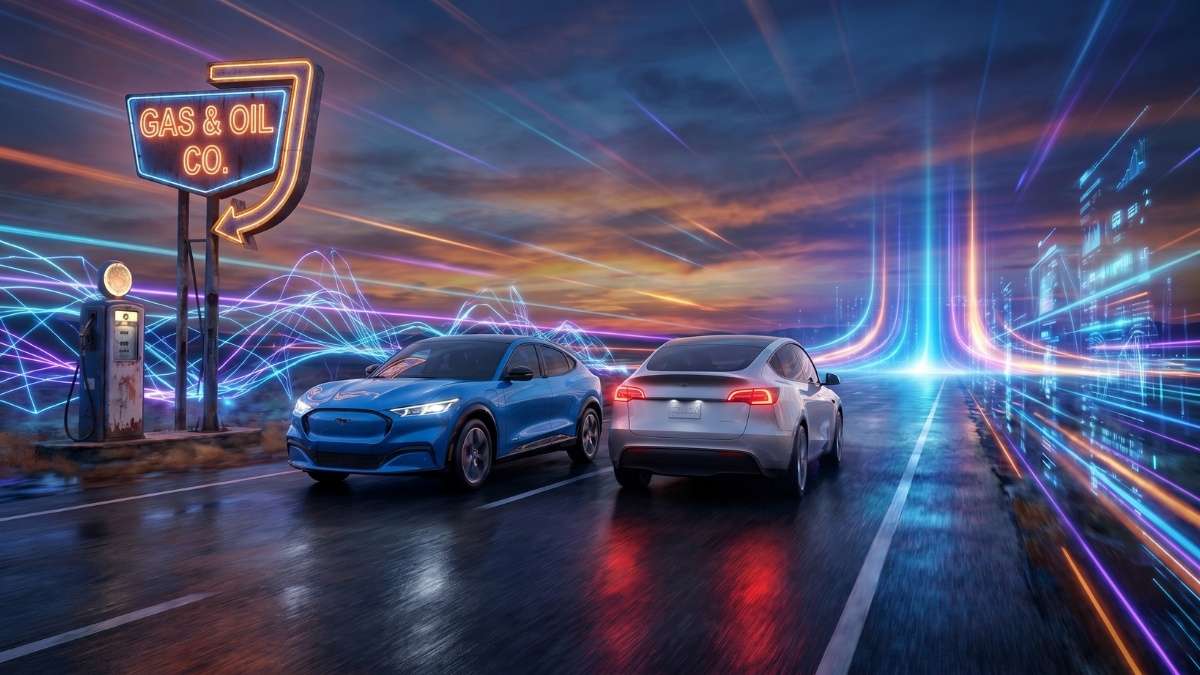

The automotive world is rarely kind to pioneers who refuse to evolve. We are currently witnessing a "brutal" reality check for Ford as the Mustang Mach-E, once the darling of the EV transition, sees its sales volume plummet by a staggering 60% year-over-year. In the tech world, we call this hitting the "legacy wall." When you launch a product based on yesterday’s specs and the competition moves to the next generation, your brand equity evaporates faster than a drop of water on a hot battery pack.
The Mach-E isn't just failing because of a cooling market; it is failing because the goalposts have moved, and Ford is still playing on a field from 2020. This decline is highlighted by increasing inventory levels across the dealer network, signaling a massive disconnect between Ford's production and consumer demand.
The 800V Architecture Gap is a Chasm
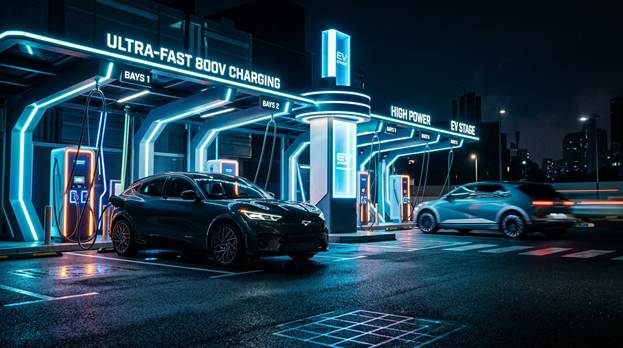
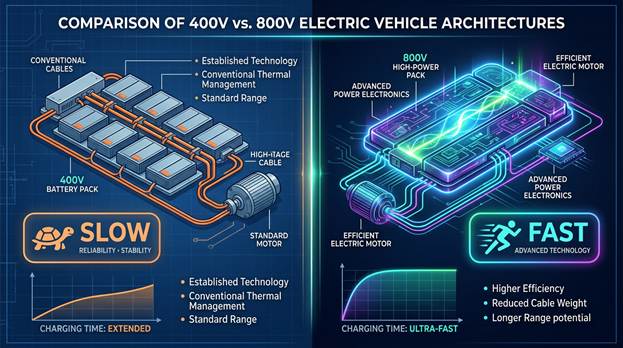
The primary driver behind this decline is technical obsolescence. The Mach-E was built on a 400-volt architecture. At the time of its launch, that was the standard. However, the market has shifted toward 800-volt systems, popularized by the Hyundai Motor Group (E-GMP platform) and Porsche.
When you look at the best-selling EVs of 2026, the winners are almost universally those that offer superior "time-to-refill." Buyers are no longer just looking at range; they are looking at charging curves. The Mach-E struggles to maintain peak charging speeds, often throttling down significantly after reaching 80% charge. Meanwhile, rivals like the Hyundai IONIQ 5 and Kia EV6 are offering charging speeds that can add significant range in under 20 minutes, making the Mach-E’s 45-minute wait feel like a step backward into the stone age.
The Rivals Pulling the Pony Down
It isn't just one car killing the Mach-E; it’s a pincer movement. On one side, you have the value-performance leaders from Korea. The Hyundai IONIQ 5 and Kia EV6 offer more interior room and better tech interfaces. On the other side, the Chevrolet Blazer EV and Equinox EV are cannibalizing the domestic "loyalist" market by offering GM's Ultium-based tech that feels more contemporary.
Furthermore, we are seeing a surprising resurgence in Internal Combustion Engine (ICE) and Hybrid sales. According to recent market share reports from J.D. Power, buyers who were "EV-curious" but grew frustrated with charging limitations are retreating to the safety of the Toyota RAV4 Hybrid or even Ford’s own Maverick. In the tech industry, if your "Version 2.0" doesn't solve the "Version 1.0" friction points, users go back to the old reliable platform.
Where the Mach-E Still Finds a Pulse
It isn't all doom and gloom, though it’s close. The Mach-E continues to sell with some regularity in California and the Northeast corridor, where charging infrastructure is most dense. Specifically, the GT Performance Edition remains the most resilient configuration. This suggests that the "Mustang" branding still carries weight with performance enthusiasts. However, the base Select and Premium trims are the ones sitting on dealer lots with escalating incentives.
Ford has attempted to move metal with aggressive price cuts, but as noted by Kelley Blue Book, price cuts can be a double-edged sword. They destroy residual value, which infuriates early adopters and makes leasing more expensive in the long run.
Historical Precedents of the "Sharp Drop"
We have seen this "cliff-edge" decline before. In the ICE world, the late-90s Ford Taurus comes to mind—a car that was allowed to wither without meaningful updates while the Japanese competition innovated. In the tech world, think of Blackberry. They had the market share, but they ignored the shift to full-touch interfaces until it was too late.
When a product falls off this sharply, the historical remedy is a "clean sheet" mid-cycle refresh. When Tesla saw the Model 3 aging, they launched the Highland refresh, overhauling the suspension and aerodynamics. Ford needs more than a software update; they need a hardware revolution.
What Mach-E Owners Are Trading For
Data suggests a worrying trend for Ford: brand defection. When Mach-E owners decide to move on, they aren't necessarily staying within the Ford family. A significant portion of "switchers" are heading toward Rivian and Tesla. The Rivian R1S offers a "cool factor" and vertical integration that Ford hasn't quite mastered.
Even more damaging is the move back to ICE. We are seeing "rebound" buyers—people who tried the Mach-E, found the public charging infrastructure too cumbersome, and traded it in for a Lexus RX Hybrid. This is the ultimate failure of an EV: proving to the customer that they weren't ready for the future.
Can Ford Reverse the Slide?
To stop the bleeding, Ford needs to execute three critical moves:
- Immediate NACS Integration with 800V Hardware: While Ford has gained access to Tesla’s Supercharger network, the Mach-E’s hardware still limits how much it can actually draw. The next iteration must be an 800V architecture.
- Software Sovereignty: Ford’s infotainment has improved, but it still feels like a car company trying to do software. It needs to feel like a software company built a car, similar to the experience offered by Android Automotive OS integrations.
- Lean into "Mustang" Branding: Ford needs to make the Mach-E a true performance beast that justifies its quirks or pivot the branding toward more utilitarian EV monikers.
What is Coming and Should You Wait?
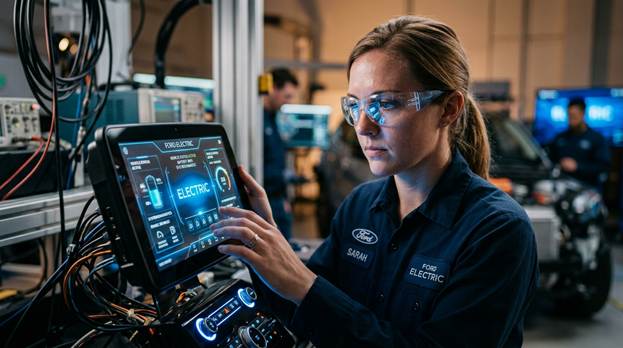
Ford has teased updates for the 2026 model years, including new thermal management systems. They are also working on a "Skunkworks" low-cost EV platform to combat Chinese entries. However, rumors of a true 800V Mustang Mach-E "Version 2.0" are still a couple of years out.
If you are a buyer today, the question is simple: Do you value the aesthetic and the Ford dealer network enough to overlook the charging speed? If you do a lot of road tripping, the answer is currently "No." Unless Ford introduces a massive hardware retrofit, the Mach-E will remain a cautionary tale.
Wrapping Up
The Ford Mustang Mach-E’s 60% sales decline is a loud, elective siren for the entire domestic auto industry. It serves as a reminder that in the EV era, the "car" part matters less than the "platform" part. Ford’s struggle is not that they built a bad car—it is actually quite fun to drive—but that they built a stagnant one.
To survive, Ford must stop treating the Mach-E like a traditional vehicle with a 7-year life cycle and start treating it like a smartphone on wheels. This means rapid hardware iterations and 800V charging as standard. Until then, the competition will continue to gallop past the pony, leaving Ford to wonder where the "Mustang" magic went.
Disclosure: Images rendered by Artlist.io
Rob Enderle is a technology analyst at Torque News who covers automotive technology and battery developments. You can learn more about Rob on Wikipedia and follow his articles on TechNewsWord, TGDaily, and TechSpective.
Set Torque News as Preferred Source on Google
Follow us today...






Comments
I owned a GT Performance now…
Permalink
I owned a GT Performance now for 5 years and 99% of charging is at home. With a Tesla charger adapter it's great in adding from 30% to 80% in 35 to 40 minutes. Time to eat restroom and back on the road. Retired now since 05, a hot rodder of the 60s it's been a awesome road best even to thos day. 480hp 634 torque, massive 17 rotors brembo brakes magnaride suspension sport seats twin defusers front and rear full glass uv protected roof button controls and voice commands and EPA 260 miles getting 284 in summer running a respectable 3.1kwh with ac running. Spirited driving gets more of fun and excitement less effiency. Even to 3.5 seconds to 60 is super car territory. Red light to red light is a absolute beast. No range loss and costs so far tires cabin air filter rear wiper blade. 12v battery test positive voltage. Great trim to buy, to race, to drive as a year round daily grand kid hauler. Life is good.