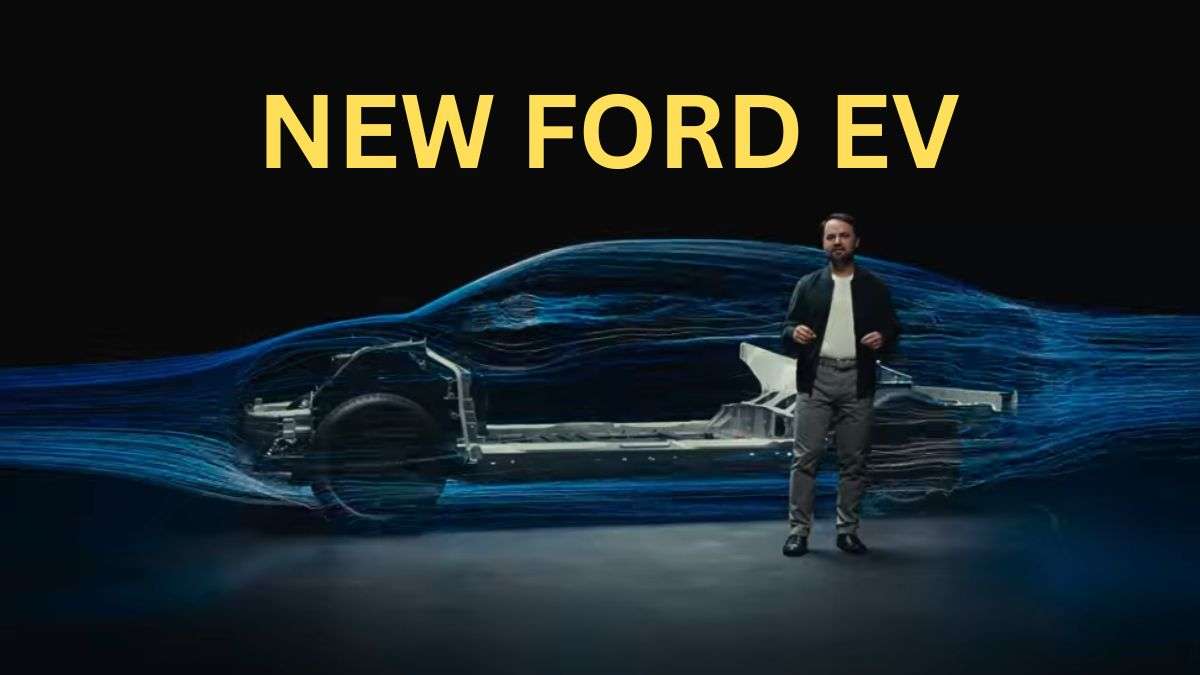

Ford revealed its Universal Electric Vehicle platform via livestream, starting with a mid-size pickup truck priced around $30,000 for U.S. deliveries in 2027. Built from scratch at the Louisville, Kentucky plant, it features a structural LFP battery from Michigan, gigacastings that slash parts by 20%, and Formula 1-inspired aerodynamics for 15% better efficiency than any current pickup. CEO Jim Farley called it the company's most audacious project, with a 'no part' mantra, zonal electronics, and targets like 4.5-second 0-60 acceleration and more passenger space than a Toyota RAV4. The platform scales to subcompacts and vans, aiming to deliver affordable EVs through smarter design.
Ford's $30,000 electric truck promises 4.5-second acceleration and RAV4-like space with a structural LFP battery. That's a direct aim at Tesla Cybertruck and we will have to see if it may undercut Cybertruck by 2027.
That’s a big swing from Ford Motor Company, and honestly, it feels like the kind of swing the company needed to take.
Let’s break this down, because what Ford just revealed with its Universal Electric Vehicle platform isn’t just another EV announcement. It’s a structural reset.
A $30,000 Electric Pickup - If They Pull It Off, That’s Huge
A mid-size electric pickup around $30,000 for U.S. deliveries in 2027? In today’s EV pricing landscape, that number almost sounds suspiciously optimistic. Most electric trucks right now, including Ford’s own Ford F-150 Lightning, sit significantly higher once you factor in real-world transaction prices.
If Ford can genuinely hit that $30K starting price without gutting range, durability, or capability, this becomes one of the most important EV launches of the decade.
Why it matters:
- The average new vehicle transaction price in the U.S. is still hovering near $48,000–$50,000.
- Affordable EVs remain the industry’s biggest unsolved problem.
- Mid-size trucks are one of America’s strongest segments.
Ford is clearly targeting buyers who want something electric but not oversized or overpriced - think practical truck owners, fleet buyers, and even younger buyers priced out of full-size pickups.
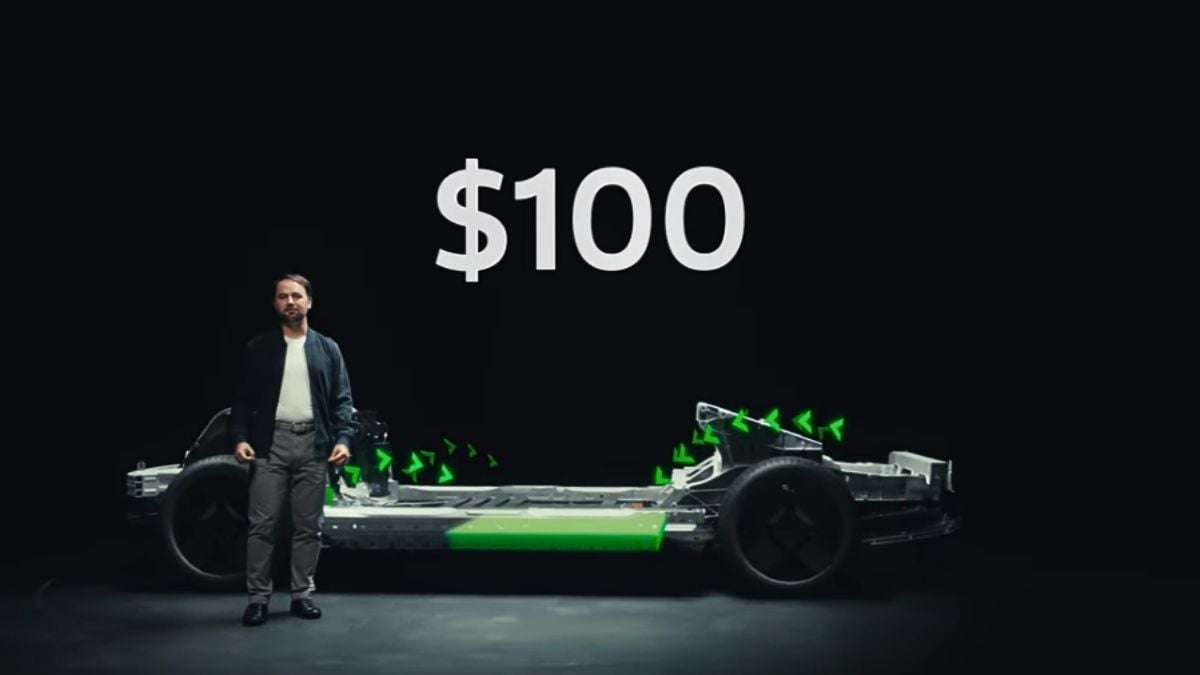
Structural LFP Battery: Cost Control Meets Durability
The use of a structural LFP (Lithium Iron Phosphate) battery built in Michigan is telling.
LFP chemistry has become the go-to for cost-sensitive EVs. Tesla uses LFP in several of its standard-range models because it:
- Costs less than nickel-based chemistries
- Is more thermally stable
- Tolerates frequent 100% charging better
By making it structural, meaning the battery pack contributes to the vehicle’s rigidity, Ford reduces redundant framing. That lowers weight and cost while increasing strength.
That’s not just smart engineering. That’s survival engineering in a brutally competitive EV market.
Gigacastings and the “No Part” Mantra
Ford adopting gigacasting is another headline move. Tesla popularized this with its large aluminum castings in the Model Y and other vehicles, dramatically cutting part counts.
Ford says this new platform cuts parts by 20%.
That’s not a minor tweak.
Fewer parts means:
- Fewer failure points
- Faster assembly
- Lower labor costs
- More consistent quality
Jim Farley calling it a “no part” mantra suggests Ford is trying to think more like a tech company than a century-old automaker weighed down by legacy architecture.
And frankly, they have to. The EV race isn’t about horsepower anymore, it’s about cost per kilowatt-hour and manufacturing simplicity.
Formula 1 Aerodynamics on a Pickup?
When Ford says 15% better efficiency than any current pickup, that’s a bold claim.
Aerodynamics on trucks have historically been an afterthought because traditional buyers prioritized size and towing over drag coefficient. But in EVs, efficiency is range, and range is everything.
Ford’s Ford Formula 1 Team expertise influencing aero development suggests active airflow management, underbody smoothing, and possibly adaptive grille systems.
If they truly deliver 15% better efficiency, that could translate into:
- Smaller battery for same range
- Lower cost
- Lighter curb weight
- Better real-world range in highway driving
That’s a multiplier effect, not just a marketing line.
0–60 in 4.5 Seconds, But That's Not the Real Story
The 4.5-second 0–60 mph target is impressive. That’s sports sedan territory.
But here’s what’s more interesting: more passenger space than a Toyota RAV4 in a mid-size pickup footprint.
That’s clever packaging.
Zonal electronics architecture - where multiple systems are consolidated into smart zones instead of miles of wiring - enables:
- Reduced wiring weight
- Faster over-the-air updates
- Easier software integration
- Future feature scalability
That architecture is what separates modern EV-first designs from retrofitted gas platforms.
Built From Scratch in Louisville
Building it at the Louisville, Kentucky plant matters politically and strategically.
Domestic production:
- Helps qualify for federal incentives
- Reduces supply chain exposure
- Signals long-term commitment to U.S. manufacturing
But it also increases pressure. Labor costs in the U.S. aren’t low. If Ford can produce a $30K EV truck domestically while maintaining margin, that would be a genuine manufacturing breakthrough.
The Real Question: Can They Execute?
Ambitious platforms don’t guarantee success.
We’ve seen big promises before across the industry. EV programs live or die on:
- Battery cost trajectory
- Software reliability
- Supply chain stability
- Charging infrastructure growth
By 2027, the competitive landscape will be crowded. Expect intense competition not just from legacy brands, but also global EV players.
The difference here is Ford isn’t just releasing another model, Ford is launching a scalable architecture meant to underpin subcompacts and vans as well.
That’s the key.
If this platform works, it becomes Ford’s EV backbone the way modular platforms transformed internal combustion vehicles decades ago.
If it doesn’t? It becomes an expensive lesson.
Torque News Take
This feels like the most strategically coherent EV move Ford has made yet.
Instead of chasing luxury margins or trying to electrify everything at once, they’re focusing on:
- Cost reduction
- Manufacturing simplification
- Platform scalability
- Real-world efficiency
Ford's $30K electric truck promise is the headline. The real story is the architecture beneath it.
If Ford delivers on even 80% of what they’re projecting - structural LFP, gigacasting efficiencies, zonal electronics, meaningful aero gains - this platform could reset expectations for affordable electric vehicles in America.
But execution is everything. Between now and 2027, battery pricing, federal incentives, and consumer demand will shift.
For now, this is one of the boldest manufacturing plays we’ve seen from Detroit in years.
And in a market that desperately needs affordable EVs - not just halo trucks and six-figure electric SUVs - that’s a risk worth watching very closely.
Would you consider a $30,000 mid-size electric pickup if Ford hits those targets? Or does range, towing, or charging infrastructure still hold you back from making the switch?
Armen Hareyan is the founder and Editor-in-Chief of Torque News. He founded TorqueNews.com in 2010, which since then has been publishing expert news and analysis about the automotive industry. He can be reached at Torque News Twitter, Linkedin, and Youtube. He has more than a decade of expertise in the automotive industry with a special interest in Tesla and electric vehicles.
Set Torque News as Preferred Source on Google
Follow us today...