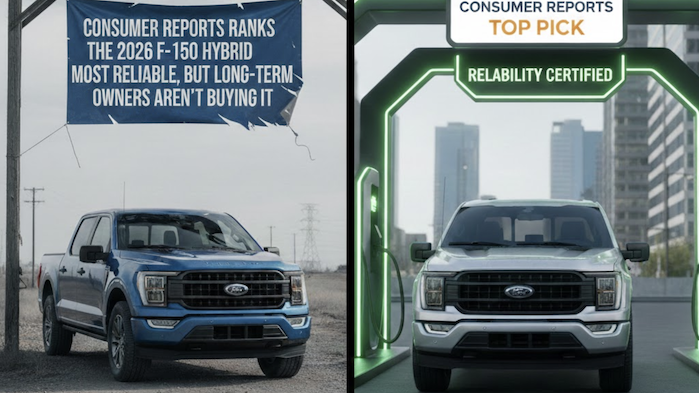
While Consumer Reports has crowned the 2026 Ford F-150 PowerBoost the king of reliability, a growing number of owners hitting 80,000 miles are reporting $9,000 bills for 10-speed transmission replacements. Here is why the 10R80 gearbox remains the 'Achilles heel' of Ford’s otherwise top-rated hybrid truck.
Imagine that you’ve just driven off the lot in a 2026 Ford F-150 pickup hailed as the industry's most reliable, only to face a catastrophic transmission failure the moment your odometer clicks past the warranty. In my research on Ford issues, I found a recent post on a Reddit community for Ford truck enthusiasts in which owners highlighted growing concerns about the reliability of modern F-150 trucks and the steep costs of staying on the road.
From My View: The 2026 Reliability Paradox
I have spent over 30 years in the automotive industry, and if there is one thing I’ve learned, it’s that "predicted reliability" and "actual longevity" are two very different animals. Right now, the 2026 Ford F-150 PowerBoost Hybrid is having a massive "celebrity moment." Consumer Reports recently shocked the truck world by ranking it as the most reliable full-size pickup for 2026. This is a huge win for Ford, especially since the F-150 hasn't seen this kind of love from CR since 2019.
But here is the catch: when I talk to my friends in the service bays or read the frantic emails from readers who actually work these trucks, a different story emerges. While the 2026 model has improved significantly due to Ford simplifying the hybrid system, removing that pesky belt-driven starter, the "bones" of the truck still carry some baggage.
Who is this article for? It's for the buyer looking at a $75,000 sticker price, wondering if the data is real. How did Ford get here? They refined the software and ditched complex mechanical parts. Why should you care? Because once that 80,000-mile mark hits, your wallet might be the one paying for that "top rank" trophy.
My Take: The Data vs. The Drip
Consumer Reports bases their data on surveys from the first few years of ownership. I’ve seen this play out dozens of times. A truck looks like a saint for the first 36,000 miles, but as I’ve discussed in previous reports regarding F-150 owners facing expensive out-of-warranty repairs, the real test begins when the "new truck smell" is long gone.
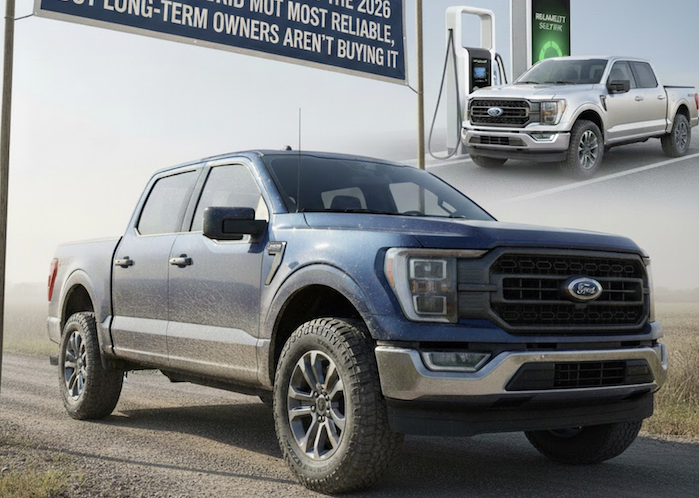
The 10-Speed Transmission "Time Bomb."
The biggest elephant in the room is the 10R80 10-speed automatic transmission. Ford claims the 2026 version has been "refined" with updated valve bodies and smarter software. However, industry experts remain cautious. According to a technical analysis by Pickup Truck Plus SUV Talk, while Ford has made hardware tweaks, "the 10-speed automatic transmission has been dogged with issues" that often don't manifest until heavy towing or high mileage takes its toll.
I’ve personally seen cases where owners are quoted $9,000 for a total transmission swap. In another of my deep dives, where I examined why the Ford 10-speed transmission remains a major talking point, I noted that software updates can only mask mechanical wear for so long.
The EcoBoost Factor and the 80k-Mile Wall
The 3.5L PowerBoost Hybrid relies on the twin-turbo EcoBoost engine. It’s a marvel of torque, but it comes with complexity. As I detailed in my coverage of common engine issues in the F-150 PowerBoost, cam phaser rattles and turbo coolant leaks are the "ghosts" that haunt high-mileage Fords.
Even though CR has boosted the truck's score, verified experts like those at Edmunds have pointed out that while the PowerBoost is fast and efficient, "the hybrid model vibrates and sounds like a portable gas generator when charging," which can be a precursor to long-term NVH (Noise, Vibration, Harshness) wear.
Community Technical Feedback
The gap between the lab and the road is best described by the people who live in these cabs. One user on Reddit noted the severity of the situation, stating, "Replace radiator or end up replacing tranny like me... had a small leak. Unnoticed. Then boom tranny went out on the highway."
Another owner highlighted the vulnerability of the new design, saying, "The radiator on these models has an isolated portion for cooling automatic transmission fluid... if it's not cooling it, bad things happen," as noted in this Reddit thread.
This is exactly why I tell my readers to be wary of the hype. I recently wrote about how owners can prevent catastrophic F-150 failures by doing "old school" maintenance that the factory manual might skip.
Key Takeaways for Truck Buyers
- Simplification is Good: Ford removed the belt-driven starter for 2026, which is why CR scores are up.
- The 10-Speed Question: The 10R80 transmission has received hardware updates, but its long-term durability is still unproven.
- Maintenance is Non-Negotiable: If you plan to keep this truck past 80,000 miles, you must change fluids more frequently than Ford recommends.
- The PowerBoost Edge: is the most powerful and efficient truck in its class, but its complexity also increases potential cost.
Is It Worth the Risk?
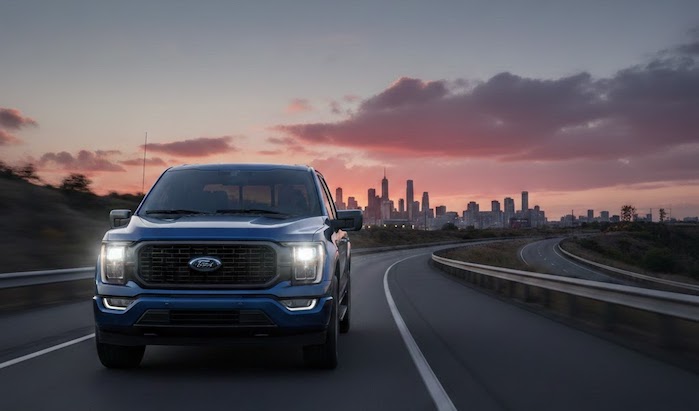
I get it, the 2026 F-150 is a seductive piece of machinery. The BlueCruise hands-free driving is brilliant, and the Pro Power Onboard is a game-changer for camping or job sites. My advice to truck shoppers is this: buy the truck for the tech, but buy the extended warranty for the peace of mind.
We are in a transition period in which manufacturers are trying to balance stringent fuel-economy standards with the ruggedness we expect from a truck. Ford is closer than anyone else right now, but they aren't at the finish line yet.
The Verdict Is Written By You
While Consumer Reports has given the 2026 Ford F-150 Hybrid its "blessing" based on early-life data, my 30 years in this industry tell me that the real verdict is still being written on the asphalt by the owners who push these trucks to the limit every single day.
This video provides a first-hand look at the common mechanical issues and ownership experiences of the F-150 PowerBoost, directly supporting the "80k-mile warning" discussed in the article.
It’s Your Turn:
Does a top-tier reliability ranking from Consumer Reports change your mind about the F-150, or are you waiting to see if that 10-speed transmission can actually survive the 100,000-mile mark without a major rebuild? Whether you are a loyal Ford fan or an owner who has been burned by recent repair bills, your experience is the data that really matters. Please leave a comment in the red “Add new comment” link below and share your story with our community.
About The Author
Denis Flierl is a 14-year Senior Reporter at Torque News and a member of the Rocky Mountain Automotive Press (RMAP) with 30+ years of industry experience. Based in Parker, Colorado, Denis leverages the Rockies' high-altitude terrain as a rigorous testing ground to provide "boots-on-the-ground" analysis for readers across the Rocky Mountain region, California EV corridors, the Northeast, Texas truck markets, and Midwest agricultural zones. A former professional test driver and consultant for Ford, GM, Ram, Toyota, and Tesla, he delivers data-backed insights on reliability and market shifts. Denis cuts through the noise to provide national audiences with the real-world reporting today’s landscape demands. Connect with Denis: Find him on LinkedIn, X @DenisFlierl, @WorldsCoolestRides, Facebook, and Instagram.
Photo credit: Denis Flierl via Ford
Set Torque News as Preferred Source on Google
Follow us today...