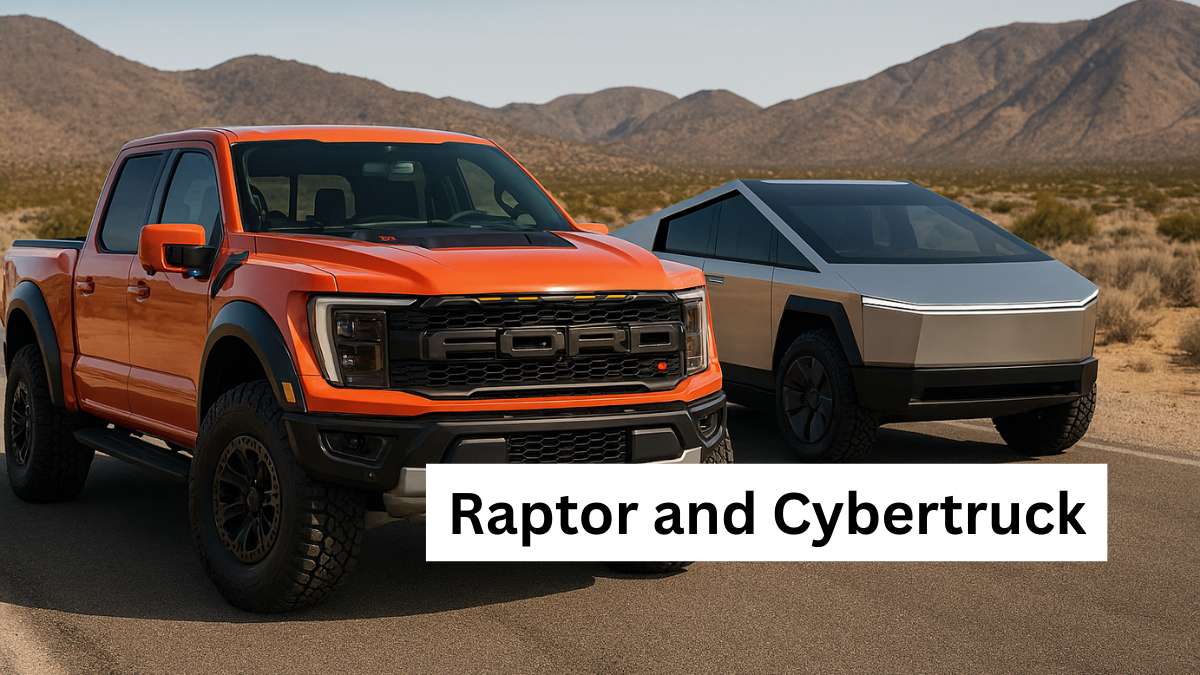

Even with a supercharged V8 under the hood, this Texas Ford truck enthusiast admits the future has officially made his favorite truck feel like a relic.
In my ongoing coverage of the shifting truck landscape, I came across a fascinating perspective from Corey Scott in a Cybertruck owner community, who lives in Dallas, Texas, where he recounts the moment he realized his “peak" Raptor R simply couldn't keep pace with the future's effortless technology.
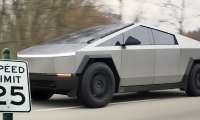
Corey says, “I have a 2025 Raptor R, and it’s an amazing truck. I think peak ICE truck. I’ve jumped it too. My wife has a 2025 dual motor Tesla Cybertruck, and I am amazed by how smooth, comfortable, and easy it is to own and drive. We’ve put over 8k miles on it since September 2025, and it’s our go-to ride when hauling our family. Kids love the screen in the back. The CT makes my Raptor feel slow with the steering and like it’s working too hard to make speed with the blown V8 (great engine). It just feels like old technology compared to the CT. You are driving the future when you are in a Cybertruck, and you feel it. All that said, I’m keeping the Raptor as I like it, but I do drive my wife’s CT every chance I get, and having two Cybertrucks would be a bit excessive.”
From My View
As a Senior Reporter for Torque News with over 30 years in the automotive trenches, I have seen every iteration of the F-150. I’ve lived through the transition from carburetors to fuel injection, and now, to the high-voltage revolution. When I see an owner who has "jumped" his 2025 Raptor R, a 720-horsepower beast, and admits that a dual-motor Tesla makes his truck feel like it's "working too hard," it sends up immediate red flags about the current state of "Peak ICE."
I’ve spent decades tracking these powertrain evolutions, and I previously noted that the Ford Clunk seems to have survived the update despite Ford's claims that it had fixed the internal CDF drum issues. It is a heartbreaking reality for many new owners who find their sophisticated trucks lack the rock-solid refinement of the electric competition.
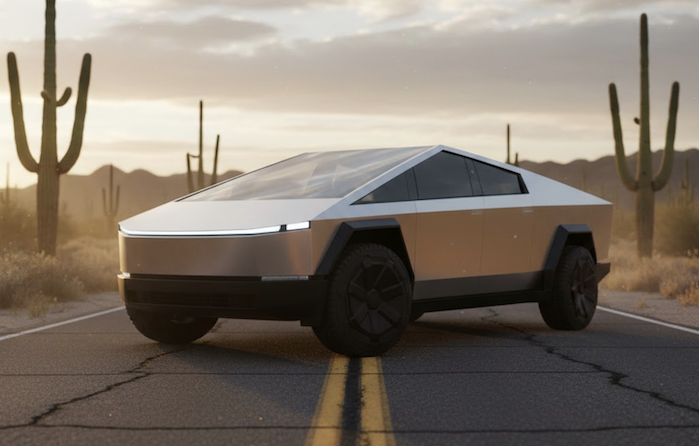
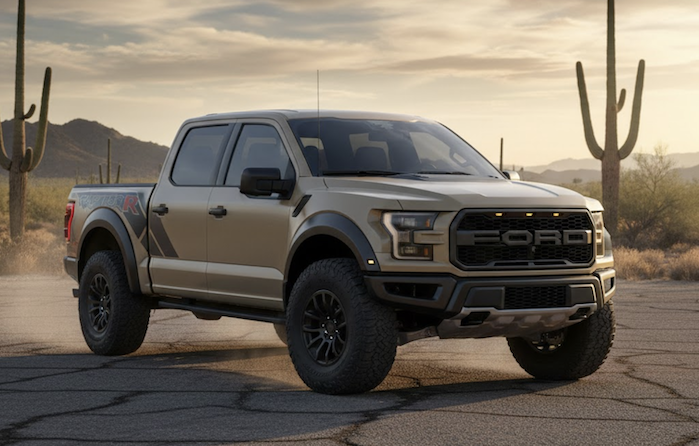
How does a "blown" V8, the heart of the Raptor R, start to feel like old technology? Corey Scott says it perfectly: "The CT makes my Raptor feel slow with the steering and like it’s working too hard to make speed with the blown V8 (great engine). It just feels like old technology compared to the CT."
The Power of Steer-by-Wire: One of the most overlooked "industry secrets" in this comparison is Tesla’s steer-by-wire system. While the Raptor R relies on a traditional mechanical rack that requires multiple turns to navigate tight spots, the Cybertruck uses digital inputs to adjust the steering ratio in real-time. This is why Corey feels his Raptor is "slow" in the corners; he’s literally working harder at the wheel to achieve the same result.
My Take
My take on this is simple: we are at a crossroads. The Raptor R is an amazing machine, but it represents the end of an era. When you floor the pedal in a supercharged Raptor, you hear the whine, you feel the 10-speed automatic hunting for gears, and you feel the weight of the mechanical components fighting physics. In contrast, the Cybertruck offers instantaneous torque and whisper-quiet operation, redefining the boundaries of performance.
I recently looked into a similar frustration where an F-150 owner faced serious buyer's remorse just one year in, struggling with a transmission that slips and an underpowered experience that left him questioning his loyalty to the brand. This sentiment is growing. Even the experts at Car and Driver have noted the stark contrast, calling the Raptor R a "capable colossus," but they also point out that its price tag is nearly as large as the truck itself, often exceeding $110,000 for the R trim.
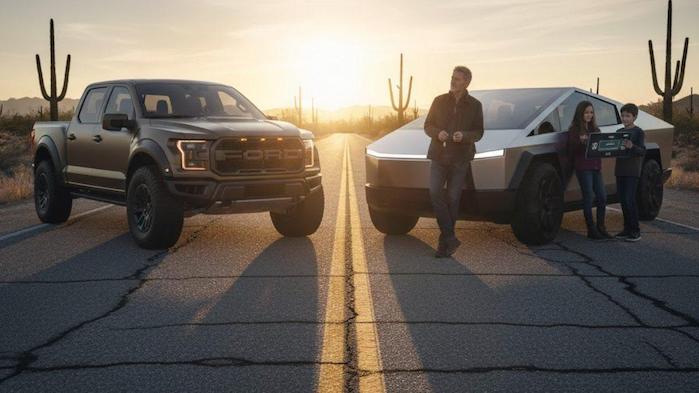
Who is the typical buyer caught in this dilemma? It is the enthusiast who loves the "soul" of a V8 but needs the "utility" of a modern family hauler. Scott’s wife uses the Cybertruck as the family's "go-to ride" because it is smooth and comfortable, and the kids love the rear screen.
The Maintenance Gap.
After 30 years in this business, I’ve seen the long-term cost of "blown" engines. A supercharged V8 like the Raptor’s is a mechanical masterpiece, but it requires specialized lubricants, spark plug intervals that would make a commuter car blush, and expensive cooling system maintenance. The Cybertruck owner is effectively trading mechanical complexity for software updates, which is why it feels "easier to own."
The Reliability Reality Check
We have to talk about the elephant in the room: reliability. While the Raptor R is a toy for the dunes, many F-150 owners are dealing with real-world headaches. For instance, according to recent Consumer Reports surveys, while Ford has improved in some areas, its vehicles still face initial quality challenges that place them slightly behind some competitors in long-term durability metrics.
I recently investigated a disturbing trend of high-mileage failures in my report: “I Never Had Issues Before, But Wow, I Made a Huge Mistake, My 2019 Ford F-150 Transmission Failed Instantly”. Don't let a "known issue" turn your trusted truck into a $10,000 driveway ornament.
Why is Corey keeping the Raptor R if the Cybertruck is better to drive? Because of the fun factor. There is a visceral exhaust note and a "spirit" in an internal combustion engine that software and batteries haven't fully replicated yet. Having two Cybertrucks would be "excessive," and for a V8 enthusiast like myself, sometimes you just want to hear the roar of a V8 on the trail.
Community Technical Feedback
To understand the other side of the coin, I looked at the community chatter. One user on Reddit noted that after putting thousands of miles on the platform, the transition is hard to reverse, stating, "I got so used to mine so even my Model Y feels dated, especially because of steer-by-wire. Driving non-CT makes me feel like doing an arm workout," which perfectly mirrors Corey's "slow steering" complaint. Another owner highlighted the ease of use on the road, noting, "I normally get stiff and sore from sitting too long during road trips, but the CT is SO comfortable," as reported in this owner report.
Key Takeaways
- Performance Gap: The Cybertruck’s instantaneous torque and steer-by-wire make high-performance ICE trucks feel heavy and unrefined.
- Family Utility: For daily family hauling, the EV's smooth ride and interior tech are winning over traditional truck enthusiasts.
- Reliability Concerns: While the Raptor R is a "peak" machine, ongoing transmission issues and high maintenance costs are prompting owners to consider electric alternatives.
- The Soul Factor: The primary reason owners keep their Raptors is the emotional connection to the engine noise and off-road heritage.
Enjoy It While It Lasts
Whether you are drawn to the Raptor's raw, rugged charm or the Cybertruck's futuristic innovation, the gap between the two is widening every day. As a reporter who has spent decades advising drivers, my advice is to enjoy the "Peak ICE" era while you can, but don't be surprised when the "future" makes your favorite toy feel like a museum piece.
What Would You Do? Would you keep the Raptor R for the thrills, or is it time to move on? Share your thoughts by clicking the red "Add new comment" link below. I want to hear your take on this ICE vs. EV dilemma.
About The Author
Denis Flierl is a 14-year Senior Reporter at Torque News and a member of the Rocky Mountain Automotive Press (RMAP) with 30+ years of industry experience. Based in Parker, Colorado, Denis leverages the Rockies' high-altitude terrain as a rigorous testing ground to provide "boots-on-the-ground" analysis for readers across the Rocky Mountain region, California EV corridors, the Northeast, Texas truck markets, and Midwest agricultural zones. A former professional test driver and consultant for Ford, GM, Ram, Toyota, and Tesla, he delivers data-backed insights on reliability and market shifts. Denis cuts through the noise to provide national audiences with the real-world reporting today’s landscape demands. Connect with Denis: Find him on LinkedIn, X @DenisFlierl, @WorldsCoolestRides, Facebook, and Instagram.
Photo credit: Denis Flierl via Corey Scott
Set Torque News as Preferred Source on Google
Follow us today...