
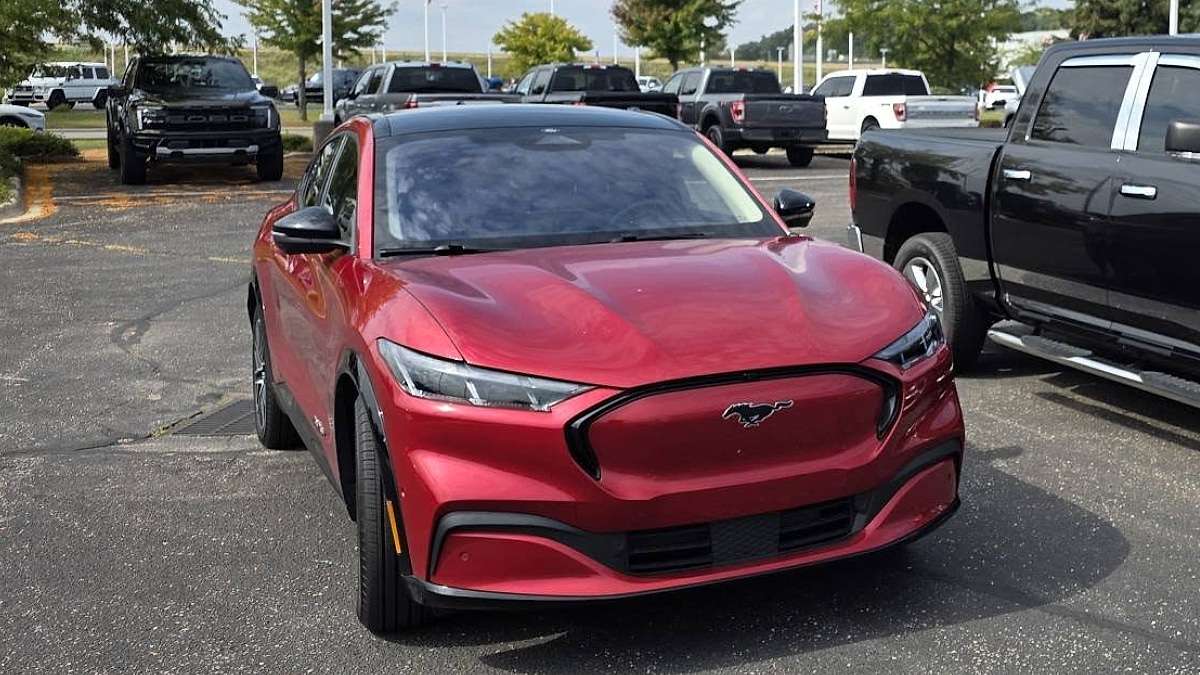

The high cost of gas is causing many people to consider what vehicles they should be driving. What began for Shawn Prebil as frustration with spending $100 each week on filling up his Chevrolet Suburban has evolved over a period of ten years into testing hybrid and electric vehicles, finally ending with a Ford Mustang Mach-E that he says completely changed his expectations.
“First off, let me say that this isn't a political statement or an attack on gas-powered vehicles. In fact, I absolutely love gas-powered cars and trucks! I just thought it would be helpful to share my honest experience with going fully electric.
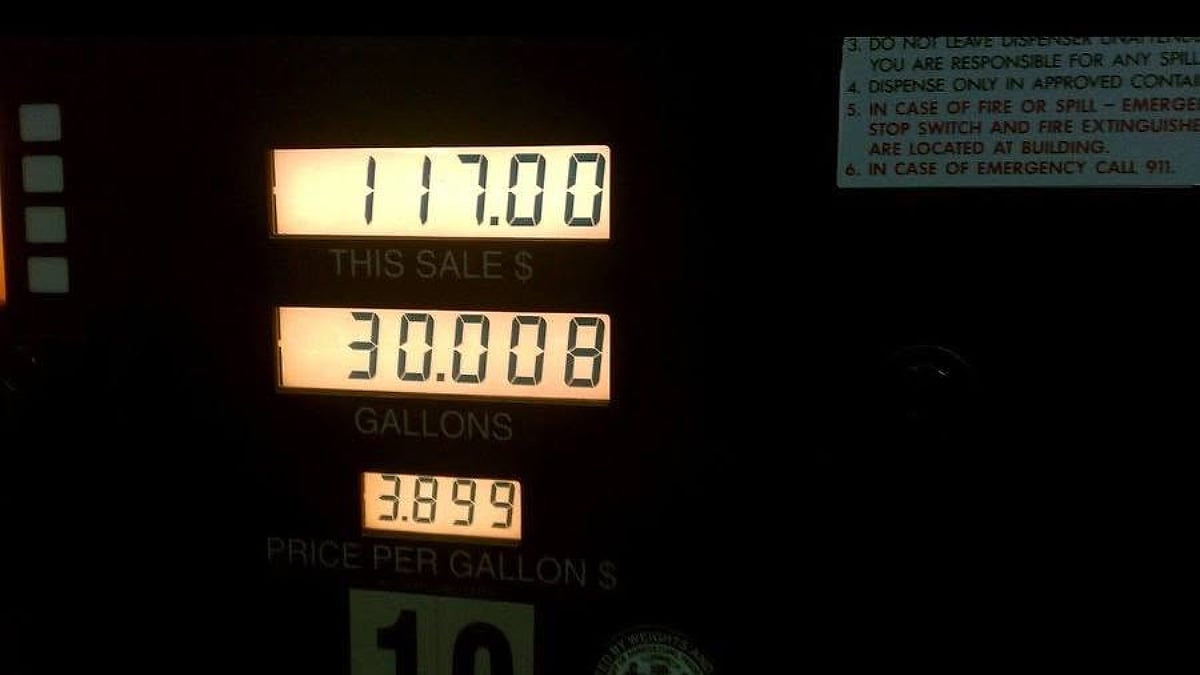
Just over a decade ago when gas hit $5 a gallon, I was living in Rock County and commuting to Dane County every day. It cost over $100 to fill up my Suburban, and doing that nearly every week just wasn't sustainable. So, I decided to ease into the EV world. I started out with a Prius hybrid, moved on to a plug-in hybrid Chevy Volt, and today, I drive a fully electric Mustang Mach-E.
When I first started, my biggest fears were reliability, untested technology, and the potential cost of repairs like the horror stories you hear about batteries costing tens of thousands of dollars. But looking back, my hybrids and EVs have been the most reliable, low-to-no-maintenance vehicles I have ever owned, and the reliability reports show that my experience is pretty common. My Prius had nearly 300,000 miles on it when I sold it, and it still drove like new. I honestly just got bored with the tech and wanted something different!
The Volt was amazing, too. I had only one issue with it, which was completely covered by the warranty, and GM repaired it quickly. That car was awesome because it gave me 40 miles of pure electric range for daily driving but still had a gas motor for a 400-mile total range. Sadly, I got rear-ended and the car was totaled.
That brings me to my current ride: a cherry red Mustang Mach-E. It is so much fun to drive. You hit the accelerator and it literally pins you back in your seat! The BlueCruise hands-free driving is incredible, and I get just over 300 miles of range per charge. There is nothing like walking out the door every morning to a "full tank." In fact, I haven't touched a gas pump since last September!
It costs me an average of about $18 a week to drive. For reference, when gas is around $5.00 a gallon, a conventional car costs about $0.14 to $0.20 per mile to operate. In contrast, an EV typically costs just $0.03 to $0.06 per mile when you charge at home.
What about range anxiety and the fear of getting stranded? Honestly, the car does the thinking for me. It not only alerts me when the battery is getting low, but it also routes me directly to the nearest charging station. A typical DC fast charge takes about 30 minutes to go from 10% to 80%. I usually don't charge past 80% on road trips because that last 20% tops off much slower.
Now an EV can’t do absolutely everything. Like any vehicle, they have their limits. I’ve always believed in using the right tool for the job, and for my daily life, the Mach-E is the perfect tool.
I also wanted to touch on the cost of EVs. You often see headlines about them costing $50,000 to $100,000, and that’s true if you're buying brand-new, high-end models. But Chevy makes the Bolt, which starts at around $28,000 brand new with some really nice features. Plus, because a lot of people are still skeptical, you can find some fantastic deals on the used EV market right now.
Finally, it always amuses me when people see a car fire and joke that it must be an EV, when the reality is that electric vehicles are statistically much less likely to catch fire than gas-powered ones. If you ever have any questions about EVs or want to know what it’s really like to live with one, never hesitate to drop me a message. I’m always happy to help share what I've learned!”
From Suburban Fuel Bills to Everyday Charging Simplicity
What's notable about Shawn's story, however, is that it's not simply the fact that he switched to an EV. Rather, it's the way in which his conversion to an EV has been gradual and practical. Instead of switching directly to a completely electric vehicle, Shawn began with a gasoline powered SUV and converted gradually through each step. He first went to a hybrid, then to a plug-in hybrid, and ultimately to a completely electric vehicle.
This represents exactly what many drivers continue to consider as they weigh their options. The Toyota Prius demonstrates the ability to last for hundreds of thousands of miles, the Chevy Volt provides a level of flexibility by allowing you to drive using either electricity or gasoline, and the Mustang Mach-E allows you to drive with all electric power without having to make those daily trade-offs that so many others do.
Breaking Down the Real Cost Difference
When you really take a closer look at how much money he spent in actuality, that amount shows us that there's a lot of money being spent to run a car off gas. If Shawn spends $100 or more each week for running his car, then it's easy to estimate he'll be spending around five grand a year. On the other hand, if we take Shawn's reported $18 per week charging cost for his electric vehicle, it comes out to approximately less than $1,000 each year.
This huge difference alone gives us reason to believe that there could be a difference of thousands of dollars in terms of total annual costs. Many EV owners have reported the same results as Shawn, but the main benefits are not limited to saving money for gas. Other ways lower operating costs can save drivers money include fewer maintenance issues, fewer moving parts, and lower servicing costs too.
Reliability Isn’t Always What People Expect
One of the most interesting parts of Shawn’s experience is how it challenges a common concern. He went into EV ownership expecting potential reliability issues and expensive battery failures.
Instead, he describes the opposite. His Prius lasted nearly 300,000 miles, his Volt required minimal repairs, and his Mach-E continues that trend. That aligns with what I've been writing about regarding other ownership discussions, including a high-mileage Ford Mustang Mach-E owner reaching 250,000 miles without major issues. This reinforces how durability perceptions are starting to shift.
It’s also worth noting that EV reliability conversations have evolved rapidly as well. While early skepticism was understandable, real-world ownership data is slowly replacing assumptions.
Performance, Technology, and Daily Convenience
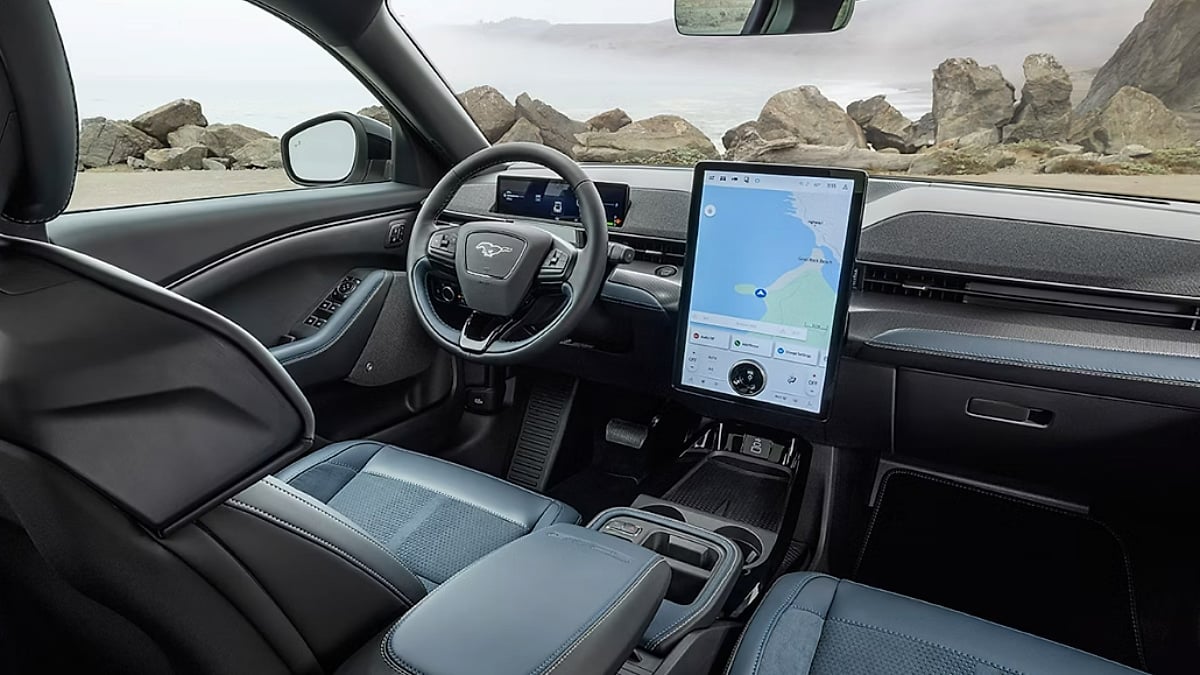
In addition to cost and dependability, another area where we see a difference is the actual driving experience. The instant torque, the smooth and rapid acceleration (as well as other features such as hands-free operation) provide an entirely different feeling than what you would experience from traditional vehicles.
Plus, while I've written about other owners not being content with their BlueCruise, Ford's BlueCruise is also an example of the type of technology which continues to stand out in everyday use for many drivers like Shawn. And when combined with the ease of waking up to a fully charged vehicle each morning, it completely changes the way a driver views the process of fueling.
What Other Drivers Are Saying
Shawn’s experience sparked discussion among other drivers, many of whom shared their own perspectives on EV ownership.
Sean Frank noted, “I think I'd like the Mach-E personally. Like you said… it can't do it all but I've seen them in action and they absolutely fly.”
That sentiment highlights something important because even among those who haven’t made the switch yet, there’s growing recognition of how EV performance has changed expectations.
Gary Meier added, “Just got back from a 440-mile trip in my Tesla Model Y. Hands free and supercharger total was $27.89.”
That kind of real-world cost comparison reinforces Shawn’s point. Long-distance driving was once considered a major weakness for EVs, but it's becoming more manageable as charging networks expand and efficiency improves.
Geoff Wilbourn raised a different but equally important question: “How much does your range drop in the winter? My Ford C-Max Energi is a plug-in hybrid. I get 25 miles of EV range in the summer but it gets cut in half in winter.”
Cold weather performance remains one of the most discussed limitations of EVs. Range loss in winter is real, and it’s something many drivers have to factor into their daily use. In fact, I've reported on cases like a Honda Prologue owner expressing frustration with winter charging and range behavior, showing that while EV technology has improved, it still comes with trade-offs depending on climate.
Safety and Structural Confidence
Another area where the Mustang Mach-E has quietly built a strong reputation is safety. Real-world incidents, including cases where owners have walked away from collisions, have helped reinforce confidence in the platform’s structural integrity.
Combined with strong safety ratings and advanced driver assistance systems, vehicles like the Mach-E are increasingly being viewed as not just efficient alternatives, but well-rounded daily drivers.
The main thing I find interesting in this story is that it's grounded. Shawn isn't someone chasing trends or trying to make a statement, but he's a person who found the right use case for an EV through high gas prices.
As far as the bigger picture, I think that's exactly where the EV debate will start to go. It's more about practicality and fitting into one's day-to-day routine rather than all hype and extreme cases which still exist.
Key Takeaways for Drivers Considering the Switch
• Transitioning to an EV doesn’t have to happen all at once. Hybrid and plug-in hybrid options can serve as practical stepping stones.
• Real-world operating costs can be significantly lower. Though not for all owners, drivers who can charge at home regularly will see the difference.
• Reliability concerns, while still part of the conversation, may not match the reality many long-term owners experience.
• EVs still have limitations particularly in colder climates, making it important to evaluate your specific driving needs.
• The overall ownership experience often comes down to how well the vehicle fits your daily routine, not just its specifications.
What Do You Think?
Have you ever considered switching from a gas-powered vehicle to a hybrid or EV, what’s been holding you back?
And if you already own one, how has your real-world experience compared to what you expected?
I'd love to hear from you in the comments section below.
About The Author
Aram Krajekian is a young automotive journalist bringing a fresh and analytical perspective to the evolving automotive landscape by reporting on real-world ownership experiences and providing industry analysis. Based in North Carolina, he covers electric vehicles, trucks, and broader automotive trends with a focus on contributing a balanced evaluation. His reporting cuts through brand bias to provide readers with grounded insight into how vehicles perform for everyday drivers beyond marketing narratives.
Aram can be reached on X and LinkedIn for ongoing automotive coverage.
Image Credits
Shawn Prebil’s Facebook post and Ford’s gallery.
Set Torque News as Preferred Source on Google
Follow us today...






Comments
The electric cars cost more…
Permalink
The electric cars cost more to insure and to repair in the event of a collision.
Tire wear is also excessive.