
When a Toyota Tacoma owner moved into a 2025 Ram 1500 Tungsten, he expected more truck. What surprised him was how much easier the least glamorous part of towing became.
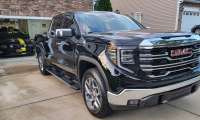
Danny Lynch shared a photo of his black Tungsten hitched to a tall enclosed trailer in the Hurricane 3.0 TT Rams group. His Facebook review was brief, enthusiastic, and more revealing than a list of luxury features.
“2025 Tungsten. This thing pulls like an animal, and the trailer back-up assist saved my marriage! Highly recommend. Coming from a Toyota Tacoma, this is a HUGE upgrade.”
Malcolm Boyd asked the question every towing reader should ask first: What does the trailer weigh?
Lynch said it is about 3,000 pounds dry and roughly 4,000 to 4,500 pounds loaded. “The Twin Turbo had no issues at all,” he added.
That weight answer makes the owner report useful. It also sets a clear boundary around what the report proves. Lynch’s truck handled his trailer without feeling strained. His post does not give us the Ram’s door-jamb payload rating, loaded tongue weight, passenger and bed load, hitch setup, scale weights, route, grade, speed, or wind conditions.
Those details matter because the photograph shows a high-profile enclosed trailer. At highway speed, a tall box can make aerodynamic drag and crosswinds more noticeable than the scale number alone suggests.
The Hurricane Has Ample Reserve at 4,500 Pounds
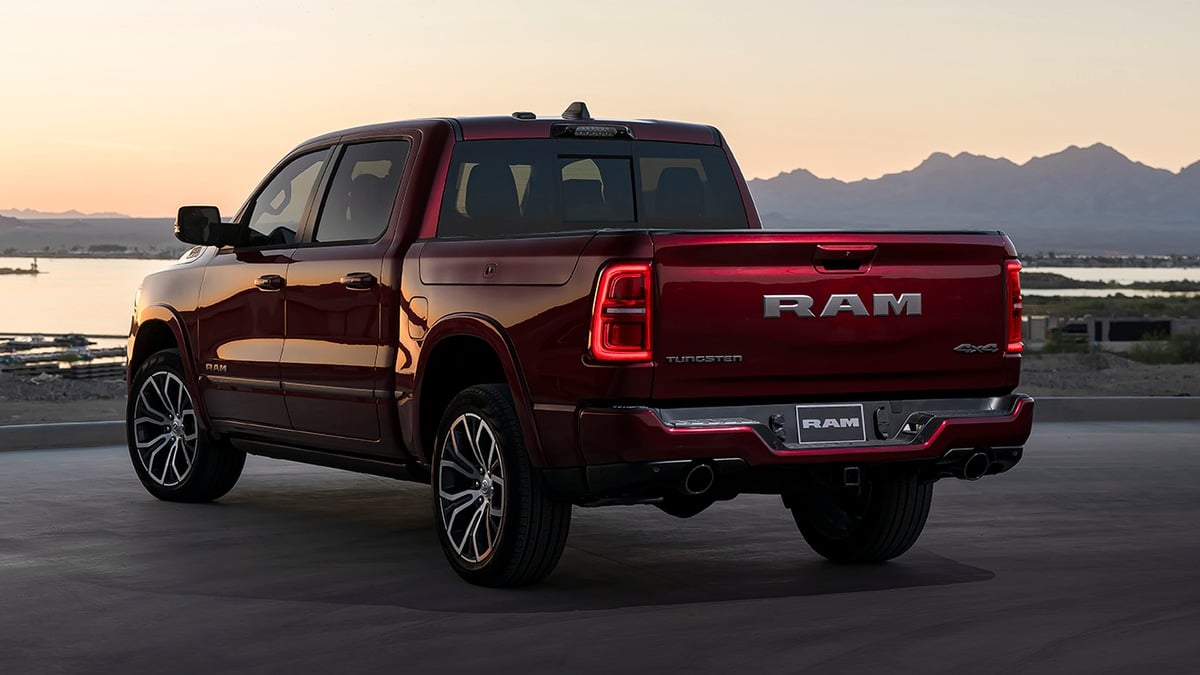
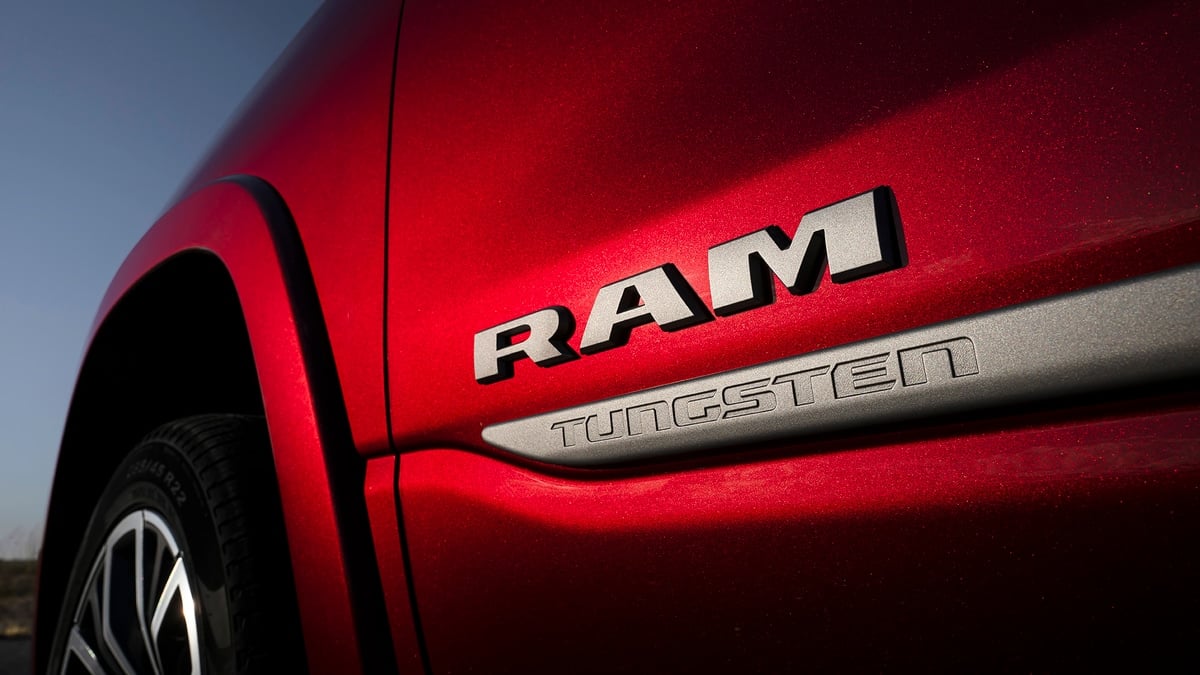
The 2025 Tungsten uses Ram’s high-output 3.0-liter twin-turbo Hurricane inline-six, rated at 540 horsepower and 521 pound-feet of torque, paired with an eight-speed automatic.
Ram’s official 2025 chart gives the high-output powertrain a maximum trailer rating of 9,920 pounds in a qualifying configuration. That figure belongs to a particular Limited configuration in Ram’s detailed table. It should not be assigned automatically to every Tungsten carrying the same engine.
The same chart warns that maximum trailer and payload ratings are mutually exclusive. Buyers cannot assume one truck delivers both headline numbers at the same time. Lynch’s door label and configuration-specific data determine the limits of Lynch’s truck.
His estimated 4,500-pound loaded trailer sits well below the high-output powertrain’s lineup ceiling. That does not reveal the exact rating of his heavily equipped Tungsten, but it helps explain why the engine could feel relaxed.
A separate test of the same trim supports Lynch’s impression. Motor Authority connected a 5,000-pound boat and trailer to a 2025 Tungsten and found abundant acceleration at highway speeds. The reviewer also praised the four-corner air suspension for leveling the truck as soon as the trailer was placed on the hitch.
The tradeoffs were equally useful. The Ram returned 9.3 mpg over 144 towing miles, and the reviewer found its safety-chain attachment points frustrating to use. Strong acceleration can make a trailer feel easy while fuel consumption and hitch hardware still remind the owner that real work is happening.
A 4,500-pound trailer is a representative workload rather than a maximum-capacity demonstration. That makes Lynch’s experience relevant to owners who tow equipment, recreational vehicles, race cars, or household cargo without regularly approaching five-figure trailer weights.
The Tacoma Comparison Needs a Fair Baseline
Lynch’s Tacoma comparison is also worth examining because “huge upgrade” can mean several things.
Toyota rates a properly equipped 2025 Tacoma to tow up to 6,500 pounds and carry up to 1,705 pounds of payload. Toyota also offers Trailer Back Up Guide with Straight Path Assist on certain configurations. Lynch did not identify the year, engine, wheelbase, axle ratio, payload label, or towing equipment on his former Tacoma, so its exact capability remains unknown.
His comment is best read as an ownership comparison.
He moved from a midsize pickup into a full-size luxury half-ton with considerably more power, more mass, a larger cabin, and a broader trailering toolbox. A correctly equipped Tacoma may have enough published capacity for a 4,500-pound trailer, while the Ram can deliver a calmer experience through greater power reserve and a larger platform.
The difference can become especially apparent with an enclosed trailer. Pulling away from a stop is only part of the job. The truck also has to hold speed into a headwind, resist being pushed around by crosswinds, manage repeated transmission shifts, and remain composed when the trailer begins influencing the combination.
Lynch’s post does not establish that a Tacoma cannot handle his trailer. It tells us the Tungsten asks less of him while doing it.
Ram’s “Trailer Back Up Assist” Is Really Two Different Systems
The marriage-saving feature deserves a closer look because Ram gives owners two systems that solve different problems, and casual conversation often blends their names together.
Trailer Hitch Assist is used before the trailer is connected. The 2025 Ram 1500 owner’s manual says the rear camera and sensors locate the trailer coupler, the truck steers itself toward the target, and the driver controls braking. This is the system that helps place the hitch ball directly under the coupler.
Trailer Reverse Steering Control works after the trailer is connected. The driver turns a knob in the direction the trailer should travel, controls the accelerator and brake, and lets the truck manage steering-wheel input. Leaving the knob centered commands the truck and trailer to reverse in a straight line.
Brian G V Eyre described the first task in his reply to Lynch:
“I love my automatic trailer back up assist! Perfect when getting the ball under the hitch receiver!”
In practical terms, Brian is describing the truck aligning the hitch ball under the trailer coupler. Lynch’s broader phrase could refer to Hitch Assist, Reverse Steering Control, or the combined experience of using both.
That distinction sounds technical until a driver is trying to connect a trailer alone or interpret a spotter’s hand signals through two mirrors.
Hitch Assist reduces repeated pull-forwards. Reverse Steering Control removes the mental reversal that makes a trailer turn opposite the truck’s initial steering input. Both systems reduce low-speed frustration, which makes the marriage joke land because many towing couples understand the argument hiding inside it.
The driver still owns the maneuver. Ram’s manual requires the driver to watch the camera, mirrors, trailer, and surroundings, control the vehicle’s speed, and complete every physical connection after alignment. The technology converts a difficult geometry problem into a more intuitive task. It does not turn the person behind the wheel into a passenger.
That may be the most persuasive part of Lynch’s review. Horsepower helps once the trailer is moving. Hitch alignment technology earns its keep before the trip has covered a single mile.
Ten Thousand Pounds Changes the Conversation
Brian added another owner report that deserves separate treatment.
“I pull a 10,000 lbs trailer with no issues at all with that Hurricane SO and the 3.92 rear axle.”
That engine and axle combination is the 2025 Ram 1500 lineup’s strongest conventional-towing recipe. Ram’s detailed chart shows up to 11,550 pounds for a properly configured standard-output Hurricane with the 3.92 axle ratio.
Brian’s 10,000-pound claim is therefore plausible for the right truck. It is also heavy enough that “no issues” needs supporting numbers.
Ram’s chart calculates conventional tongue weight at 10 percent. Applied to a 10,000-pound trailer, that is roughly 1,000 pounds pressing on the truck before adding the driver, passengers, hitch hardware, tools, luggage, or cargo in the bed.
The same chart limits maximum tongue weight on the Class IV receiver to 1,100 pounds and recommends a weight-distributing system for trailers above 5,000 pounds.
This is where a powerful half-ton can create false confidence. The engine may accelerate a heavy trailer with ease while the truck approaches its payload or rear-axle limit. Throttle response cannot reveal whether the combination is within its gross vehicle weight, gross combined weight, axle, tire, receiver, and payload ratings.
Brian’s comment is useful evidence of how his setup feels. A complete 10,000-pound towing picture would also include the truck’s yellow payload sticker, the trailer’s loaded scale weight, measured tongue weight, axle weights, tire ratings, brake equipment, hitch specification, and the passengers or cargo carried in the truck.
Lynch’s 4,000 to 4,500-pound case presents a much more forgiving equation. Using Ram’s 10-percent planning figure, his trailer could place roughly 400 to 450 pounds on the hitch before other truck loads are counted, although actual tongue weight depends on how the trailer is loaded.
That difference is why Lynch’s experience and Brian’s experience should not be combined into one sweeping verdict about the Hurricane. Lynch has documented a moderate load behind the most powerful Ram 1500 engine. Brian is describing a load close enough to five figures that the truck’s labels and scale weights become as important as its engine.
What Lynch’s Post Tells a Tacoma Owner
Lynch’s report does not test the outer limit of a Tungsten. It captures a common use case that matters more to many buyers: a loaded enclosed trailer, a trip that did not feel like a struggle, and technology that made the awkward part easier.
The Hurricane supplies the dramatic part of the story. Five hundred forty horsepower makes a 4,500-pound trailer feel small when the driver asks for speed.
Trailer Hitch Assist and Trailer Reverse Steering Control supply the part an owner may appreciate every weekend. They reduce the time spent creeping forward, correcting angles, and trying to translate “your left” into “my left.”
For a Tacoma owner pulling a similar trailer, Lynch’s experience suggests that a 2025 Ram 1500 Tungsten can provide a substantial step up in power reserve, cabin space, and towing convenience. The buying process still needs to begin with the yellow payload label and the truck’s configuration-specific tow rating, especially on a luxury trim carrying substantial equipment of its own.
The funniest sentence in Lynch’s review may also be the most persuasive.
The Hurricane made the trailer easy to pull. The trailer technology made the truck easier to live with before the trip even began.
Hurricane Ram owners towing 8,000 pounds or more: what does your door-jamb payload sticker show, and what did the truck and trailer weigh on a scale?
One image by Danny Lynch
About The Author
Noah Washington is an automotive journalist based in Atlanta, Georgia, covering sports cars, luxury vehicles, and performance culture. His reporting focuses on explaining the engineering, design philosophy, and real-world ownership experience behind modern vehicles.
Noah has been immersed in the automotive world since his early teens, attending industry events and following the enthusiast communities that shape how cars are built and driven today. His work blends industry insight with enthusiastic storytelling, helping readers understand not just what a car is, but why it matters.
Noah is also a member of the Southeast Automotive Media Association (SAMA), a professional organization for automotive journalists and industry media in the Southeast.
His coverage regularly explores sports cars, luxury vehicles, and performance-driven segments of the automotive industry, including the evolving culture surrounding Formula Drift and enthusiast builds.
Read more of Noah's work on his author profile page.
You can also follow Noah here:
Set Torque News as Preferred Source on Google
Follow us today...