
You send your truck in for a simple fan clutch problem. You expect a clean fix. What you get instead can leave you staring at your dash in disbelief. That is exactly what happened to one Ram 2500 owner this week, and his story is already lighting up the Ram 2500 4x4 Group on Facebook. If you have ever wondered whether your extended warranty actually protects you, or whether dealer service departments really finish the job before handing back your keys, this story fits right alongside other Ram 1500 and 2500 owners who found out the hard way about dealer service quality. Stick with me, because this story does not end the way you think, and I want to hear what you would have done in the comments below.
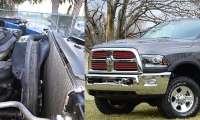
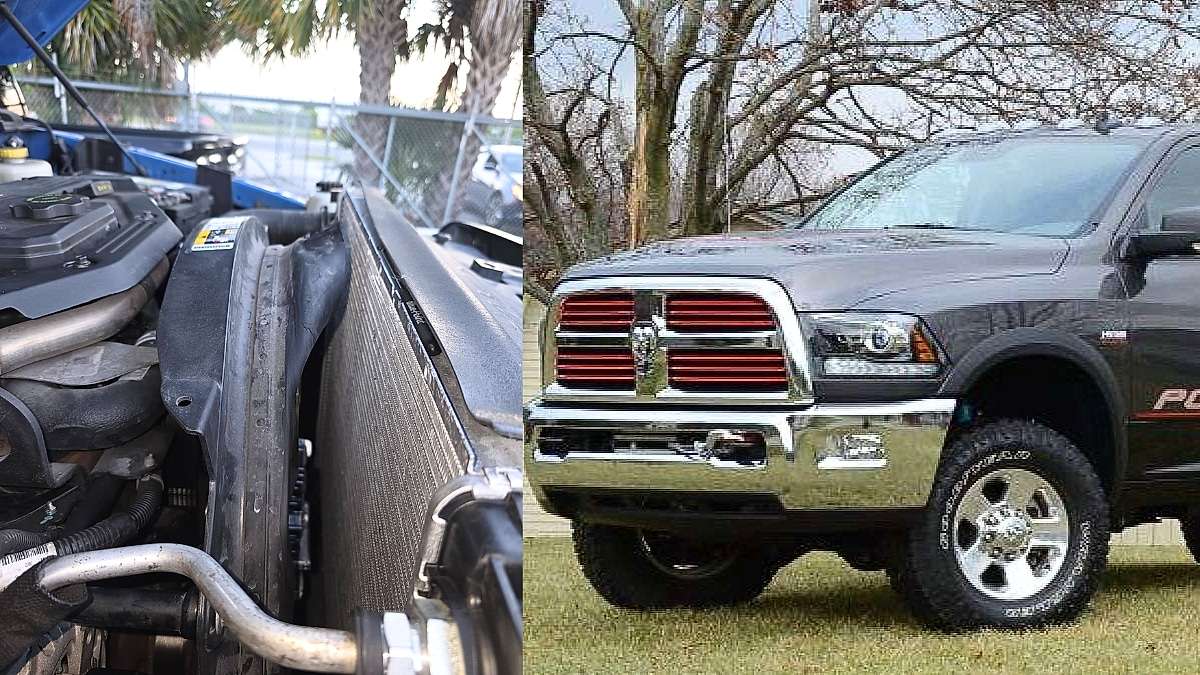
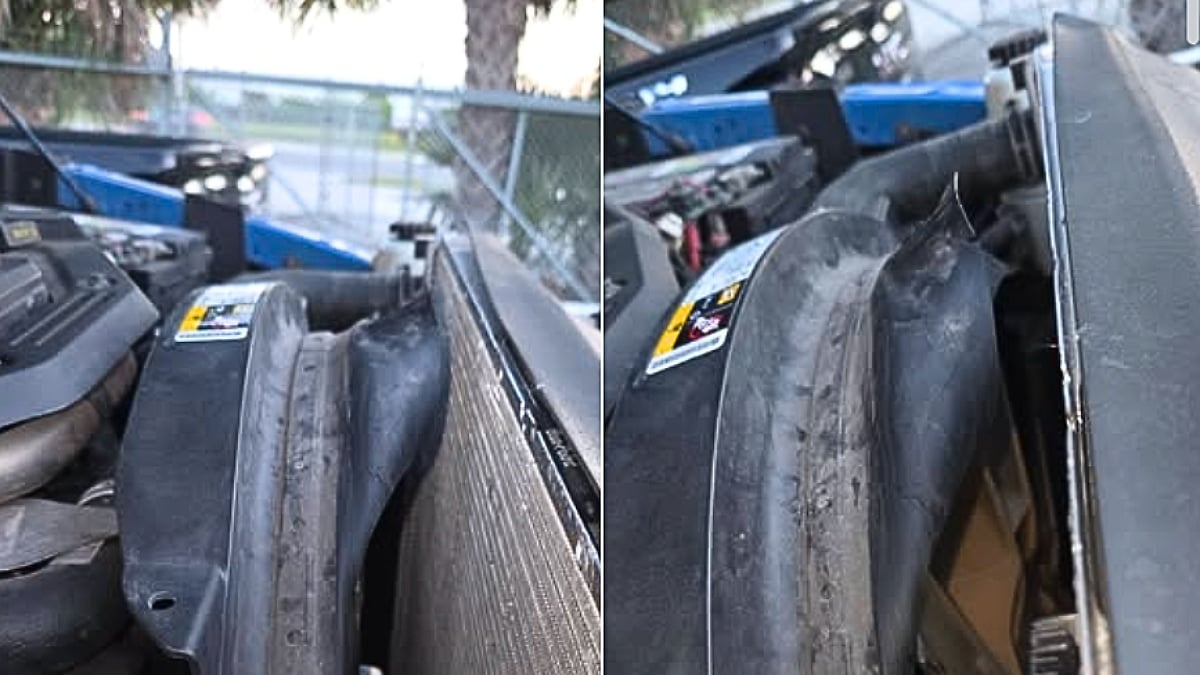
"I had my truck (Ram 2500, 2014 with under 130k and extended warranty that's still current) towed in at the local dealer after the bearing in the fan clutch bracket decided to go. Should've been covered under warranty but apparently not. They claimed it destroyed a brand new fan clutch, radiator and shredded the belt. $6,400 later, and this is how they return it. Missing half of the upper shroud and the other half is being chewed up by the fan and has a low coolant light on the dash."
That is Austin Reimer, writing on Ram 2500 4x4 Group Facebook public group. Read it again. A bearing failure inside a fan clutch bracket turned into a $6,400 bill. Then the truck came home with a low coolant light glowing and a shroud half chewed to pieces. As I cover in my ongoing work on dealer warranty denials that leave owners holding the bag, this pattern is not rare. It is becoming a habit at too many service counters.
Why Did the Dealer Deny Austin's Warranty Claim in the First Place?
Extended warranties sound simple until you actually need one. Austin had coverage that he believed was current. The truck sits under 130,000 miles. On paper, a failed bearing inside a fan clutch bracket should be a textbook covered repair. Instead, the dealer pointed at consequential damage. They said the failed bearing destroyed a brand new fan clutch, cracked the radiator, and shredded the belt, and none of that got covered. I have documented this exact playbook before, including a Ford F150 owner who got stuck paying for snapped turbo bolts during work that should have been fully covered. Consequential damage claims are one of the most common ways dealers shift cost back onto the customer, and owners rarely know how to push back in the moment.
Have you ever had a warranty claim denied for a part that failed because of something else that broke first? That question alone deserves its own thread, because Austin is far from the only one.
How Does a Radiator Repair Turn Into a $6,400 Bill?
You might be asking how one bearing failure ballooned into thousands of dollars. Matt Hawk asked almost the same thing in the group, writing, "You paid $6,400 to replace a radiator and a fan clutch? Where can I find customers like you?" Austin responded directly, explaining that "the bracket behind the fan clutch is what caused it all, it's pretty pricey too. The radiator was like $1,600 alone." Radiator pricing on heavy duty trucks has climbed fast in the last few years, something I have tracked closely while covering transmission heat and cooling system stress on modern trucks. A cracked radiator alone on a Ram 2500 can eat a huge chunk of any repair estimate, and once a shop starts adding labor, a new fan clutch, and a belt, the number climbs fast.
Ronald Grady had a blunt take in the comments. He wrote that "that's a case where you should have done the work yourself it's not that hard to change out a radiator or fan clutch and belt you could have saved 5,400." Austin explained why that was not realistic for him right now. He replied, "I can but don't have the time with work right now, currently working 7,12s over an hour away from the house." That single line tells you everything about why so many owners end up at the dealer instead of the driveway, a tradeoff I explored while reporting on why a Hyundai Master Tech says most warranty claims never had to be denied at all. Time is not free, and neither is a missed shift.
What Should You Do When Your Truck Comes Back Damaged?
This is where Austin's story takes its sharpest turn. After paying $6,400, the truck came home missing half of the upper shroud. The remaining half was actively being chewed up by the spinning fan blade. A low coolant light was lit on the dash the moment he got it back. That is not a minor oversight. That is a truck returned in worse mechanical shape than a customer should ever accept after a major paid repair.
Bobby Turner offered practical advice in the thread. He said, "I would get references to a good local shop to use in the future. Some still take honor in their work. Sadly, most dealer mechanics are only there for their check." I have heard versions of that sentiment repeatedly while covering Toyota, Honda, and GM owners fighting denied and botched dealer repairs. Trust between owners and service departments keeps eroding, and stories like this one explain exactly why.
Jammie Wright had the most immediately useful response of the entire thread. She wrote, "You have already gone and spent the money at the dealership. If it's close, take it back. Don't lose your cool. Tell them if you wanted shade tree work done, you have a neighbor that could do better. Have them fix what you already paid for. Take pictures of everything before you do this." That last line matters more than any other sentence in this whole story. It echoes the same approach I outlined when a Toyota Prius LE owner faced a flat warranty denial over a shift system malfunction. Photograph everything before you drive back onto that lot.
Why Do Photos Matter So Much Before a Dealer Return Visit?
Documentation is the single biggest advantage any owner has in a dispute like this. Once your truck sits back on a dealer lift, the story of what happened before and after can quietly shift. I have walked through this exact defensive strategy in my breakdown of how to overturn a warranty denial using photo evidence and paper trails. Photograph the missing shroud panel. Photograph the low coolant light on the dash. Photograph the fan blade grinding into the remaining plastic. Timestamp everything with your phone before you hand the keys back over.
A dash mounted camera or even a simple phone photo habit solves a real underlying problem here, which is proof. Owners lose these disputes constantly, not because they are wrong, but because they cannot prove what the truck looked like the moment it left the shop. I saw this play out in reverse when a local Toyota dealership actually went to bat for a Tacoma owner facing a $3,000 repair well outside warranty. A five second photo routine before and after every service visit is the cheapest insurance you will ever carry, and it costs nothing but a habit.
A Quick Checklist Before You Ever Leave the Dealer Lot
Here is a simple five point checklist I hand to readers after stories like Austin's. Walk around the vehicle before you drive off. Check every panel that was touched during the repair. Confirm all warning lights are off, not just the one you came in for. Ask the service writer to note the final mileage and time on your paperwork. Photograph the engine bay, the undercarriage if accessible, and the dash cluster before you pull away. Keep that photo set in a dedicated folder on your phone, labeled with the date and repair order number. Bookmark this checklist, print it, or save it to your notes app, because the next time you pick up a vehicle after a major repair, thirty seconds of documentation could save you thousands of dollars in disputes later.
Is This Becoming a Pattern at Dealer Service Departments?
You might wonder if Austin's experience is an isolated bad day or something bigger. Based on what I track across owner groups every week, this is a pattern, not an outlier. Autoblog recently reported that the overall dealer service experience has improved industry wide, yet certain brands are still lagging well behind competitors like Ford and Toyota in customer satisfaction studies. That gap between marketing promises and lot level reality is exactly where stories like Austin's live.
I have also covered how a Chevy Silverado owner was quoted $1,400 for a transmission service that many independent shops refused to even touch, and how Honda denied a CR-V owner's emissions claim by blaming a routine car wash. None of these owners went looking for a fight. Every one of them just wanted their truck fixed correctly the first time.
What Is the Real Lesson Here for Every Truck Owner?
The moral of Austin's story is simple. Paying a big bill does not guarantee a job finished right, and staying quiet after a bad return visit only helps the shop, never the owner. Speak up while your composure is still intact. Bring your documentation. Ask specific questions before you ever agree to a repair total, the same lesson I keep repeating in my coverage of owners who lost claims over fine print buried in extended warranty language. And when something looks wrong the moment you get your keys back, do not drive away and hope it resolves itself. Turn around.
I have spent 15 years covering this industry, and the owners who come out ahead in these disputes are almost always the calm and prepared ones, not the loudest ones. Austin already did the hardest part by documenting his experience publicly and sharing it with a community that has his back.
Have you ever had a shop return your vehicle in worse condition than when you dropped it off? What did you do next, and did it work? Drop your story in the comments below, because the next owner reading this might need exactly what you learned the hard way.
Return tomorrow, or check our Torque News Home Page for more interesting automotive news articles.
Images by Patrick Rall of Torque News and Austin Reimer.
About The Author
Armen Hareyan is the founder and Editor-in-Chief of Torque News and an automotive journalist with over 15 years of experience writing car reviews and industry news. Now based in the Charlotte region (Indian Land, SC, he founded Torque News in 2010, which since then has been publishing expert news and analysis about the automotive industry. He can be reached at Torque News on X, Linkedin, Facebook, and Youtube. Armen holds three Masters Degrees, including an MBA, and has become one of the known voices in the industry, specializing in the landscape of electric vehicles and real-world stories of actual car owners. Armen focuses on providing readers with transparent, data-backed analysis bridging the gap of complex engineering and car buyer practicality. Armen frequently participates in automotive events throughout the United States, national and local car reveals and personally test-drives new vehicles every week. Armen has also been published as an automotive expert in publications like the Transit Tomorrow, discussing how will autonomous vehicles reshape the supply chain, and emerging technologies in vehicle maintenance.
Set Torque News as Preferred Source on Google
Follow us today...