
It is the ultimate automotive paradox.
You shell out over $40,000 for a flagship 2026 Honda CR-V Sport Touring specifically to secure that legendary, bulletproof reliability.
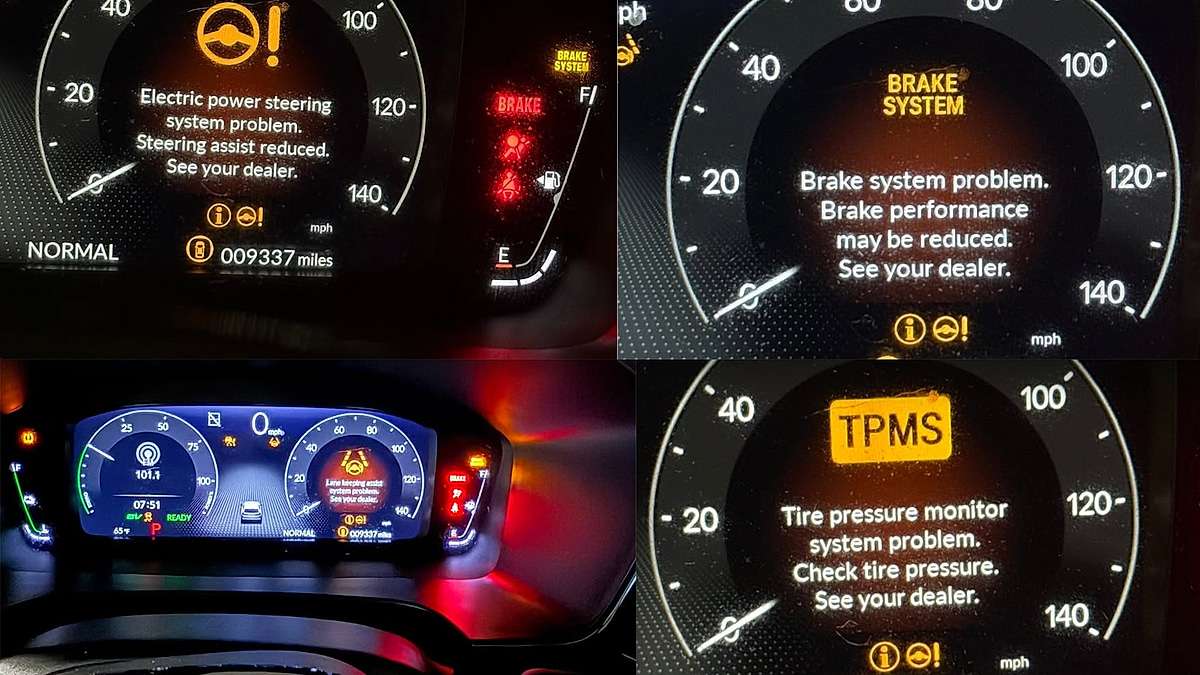
Then, before the factory oil life monitor even drops past its initial break-in threshold, your brand-new dashboard lights up like a chaotic holiday window display.
The Breakdown Before The Service Hoist
This exact nightmare hit owner Ashley Dela Torre-Lim, who shared her frustration on the Honda CR-V 6th Generation Discussion Club Facebook page. She noted that her brand-new 2026 Honda CR-V Sport Touring suddenly displayed multiple emergency safety indicators before its first oil change, with the oil life still sitting at 30%.
The systemic digital shutdown began immediately after backing up and braking, triggering a strange mechanical sound that vanished on a second attempt, though the dashboard warnings remained stuck on.
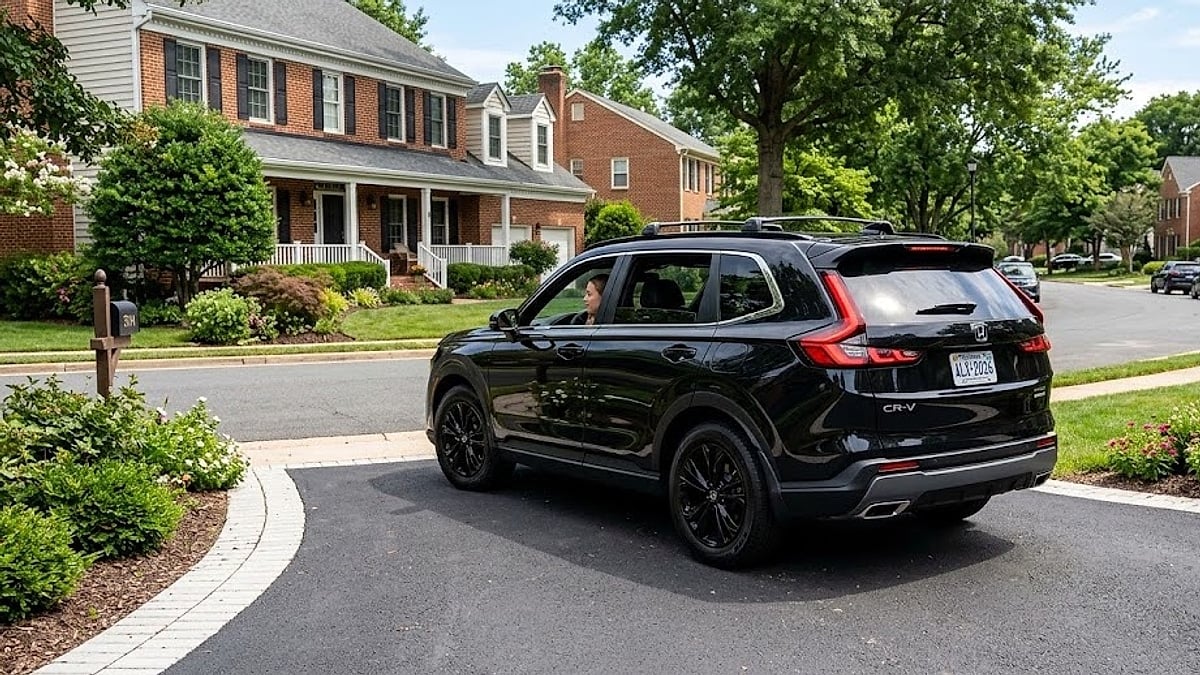
When she sought answers at her local dealership, service advisors gave her the most frustrating response in the automotive industry: they could not replicate the problem.
For consumers tracking automated defect patterns, this issue points to an underlying technical conflict within the vehicle's safety networks.
To track these systemic anomalies early, the official National Highway Traffic Safety Administration Defect Portal provides a public platform for owners to report unexpected driver-assist failures, helping identify manufacturing trends.
These electrical anomalies often catch buyers completely off guard because they manifest on pristine, low-mileage crossovers that haven't even seen their first service bay.
When The Dealership Scan Tool Goes Blind
The primary reason technicians cannot replicate this issue is the transient nature of faults in modern Controller Area Network (CAN bus) communication.
According to my ongoing tracking of manufacturing defects, structural software bugs within the Honda Sensing logic loop frequently interpret momentary electronic power steering voltage drops or sensor timing delays as systemic threats, thereby forcing an aggressive, multi-system dashboard lockdown.
When the driver cycles the ignition or the vehicle is driven under a different load configuration, the active fault clears, leaving only a generic history code that dealership diagnostic tools often treat as a fluke.
This specific electronic behavior is detailed in my primary technical investigation, 2026 Honda CR-V Hybrid EPS Glitch Triggers 'Critical Failure' Warning, which maps out the mechanical failure points where low-voltage circuit drops below 10.8 volts instantly trigger an uncleared dashboard lockdown.
When these voltage thresholds dip, even for a microsecond, during a high-load event such as low-speed reverse braking, the safety software panics and disables everything from adaptive cruise control to collision mitigation.
The Hidden Story Behind The Reverse Braking Cascade
What the broader automotive media completely misses is the direct correlation between the mechanics of backing up and the safety system's digital logic.
When a driver shifts a sixth-generation CR-V into reverse and applies the brakes, the electronic brake booster and the rear wheel speed sensors undergo a rapid directional transition. If a wheel speed sensor encounters a minute discrepancy or a microscopic piece of manufacturing debris on the tone ring, it throws a localized data error.
To help drivers recognize these system indicators, the official breakdown of Honda Automated Dashboard Warning Indicators clarifies what each warning light means and illustrates how driver assistance and vehicle stability controls use a shared network to communicate system status.
Because these safety features are inextricably linked, a single sensor hiccup doesn't just disable one system; it causes a domino effect that knocks out the entire digital framework.
The $40,000 "Glitch-Mobile" Reality Check
Modern vehicle buyers are increasingly finding that the traditional 10,000-mile or 7,500-mile factory oil change intervals don't always align with the operational life of highly sensitive digital electronics. While the physical engine oil might easily last 7,500 miles, the complex electronic architecture is working at maximum capacity from the moment the car rolls off the transport truck.
This creates a distinct gap between the vehicle's physical mechanical readiness and its digital stability.
In similar electronic disputes, my companion investigative report on Honda Charcoal Canister EVAP Emissions System Failures highlights how dealerships frequently cite external environmental factors or temporary data anomalies to deny warranty coverage for sensitive components, leaving owners with unexpected diagnostic bills.
When a brand-new vehicle experiences a total safety system failure, owners must thoroughly document the incident to protect their consumer rights. Always demand a physical copy of the repair order that shows the exact complaints, even if the technician writes "could not replicate" at the bottom of the page.
This creates an unassailable paper trail that ensures you remain protected under regional lemon laws if the transient digital glitch turns out to be a permanent component defect.
Tell Us What You Think: Have you ever experienced a total dashboard warning light failure on a brand-new vehicle, only to have the dealership tell you they couldn't find a problem? Let's talk about it; leave your comments and diagnostic stories in the red "Add new comment" link below.
Come back tomorrow… or check my Torque News Home Page for more of my informative Honda CR-V news articles.
About The Author
Denis Flierl is a 14-year Senior Reporter at Torque News and a member of the Rocky Mountain Automotive Press (RMAP) with 30+ years of industry experience. Explore his full investigative reporting archives and technical guides at DenisFlierl.com.
Based in Parker, Colorado, Denis leverages the Rockies' high-altitude terrain as a rigorous testing ground to provide "boots-on-the-ground" analysis for readers across the Rocky Mountain region, California EV corridors, the Northeast, Texas truck markets, and Midwest agricultural zones.
A former professional test driver and consultant for Ford, GM, Ram, Toyota, and Tesla, he delivers data-backed insights on reliability and market shifts. Denis cuts through the noise to provide national audiences with the real-world reporting today’s landscape demands.
Connect with Denis: Find him on LinkedIn, X @DenisFlierl, @WorldsCoolestRides, Facebook, and Instagram.
Photo credit: Denis Flierl via Ashley Dela Torre-Lim
Set Torque News as Preferred Source on Google
Follow us today...