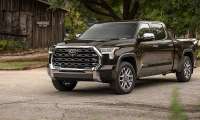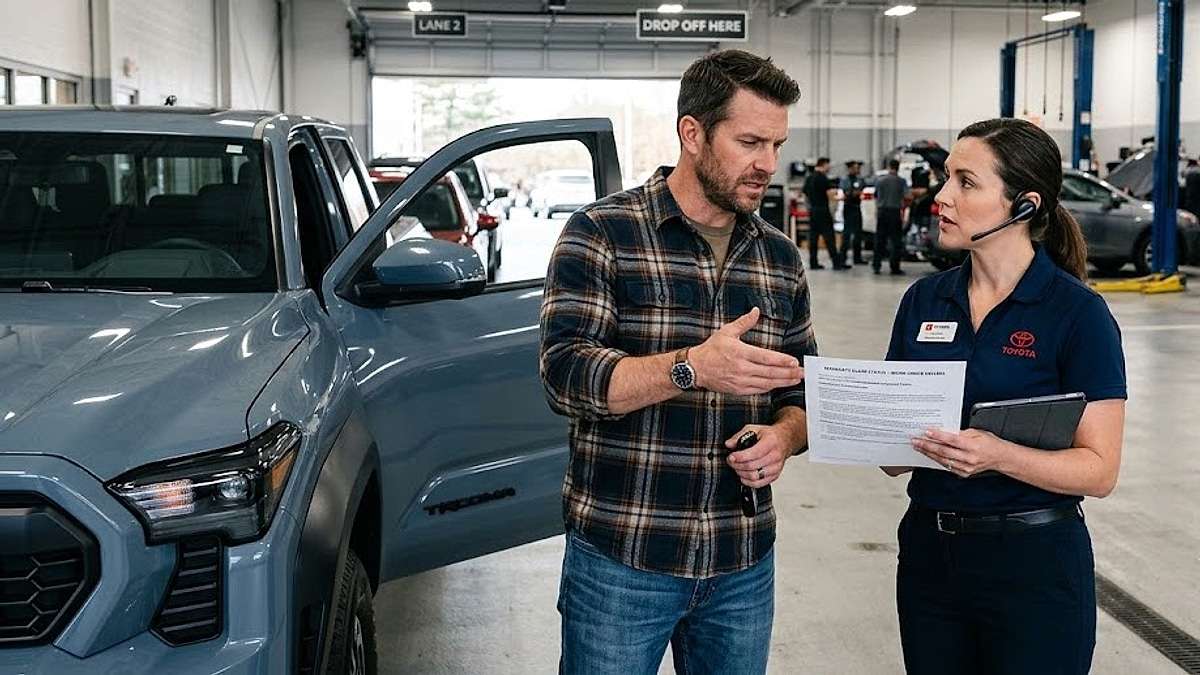

A service advisor telling you that your broken 2025 Toyota Tacoma component is due to your negligence is absurd.
I have spent 30 years tracking how car brands handle manufacturing defects, and I can tell you that the service lane has become a legal battlefield for your wallet.
If you walk into a dealership unprepared, a smooth-talking advisor will look at a cracked piece of interior trim or a snapped exterior handle and hand you an out-of-pocket invoice.
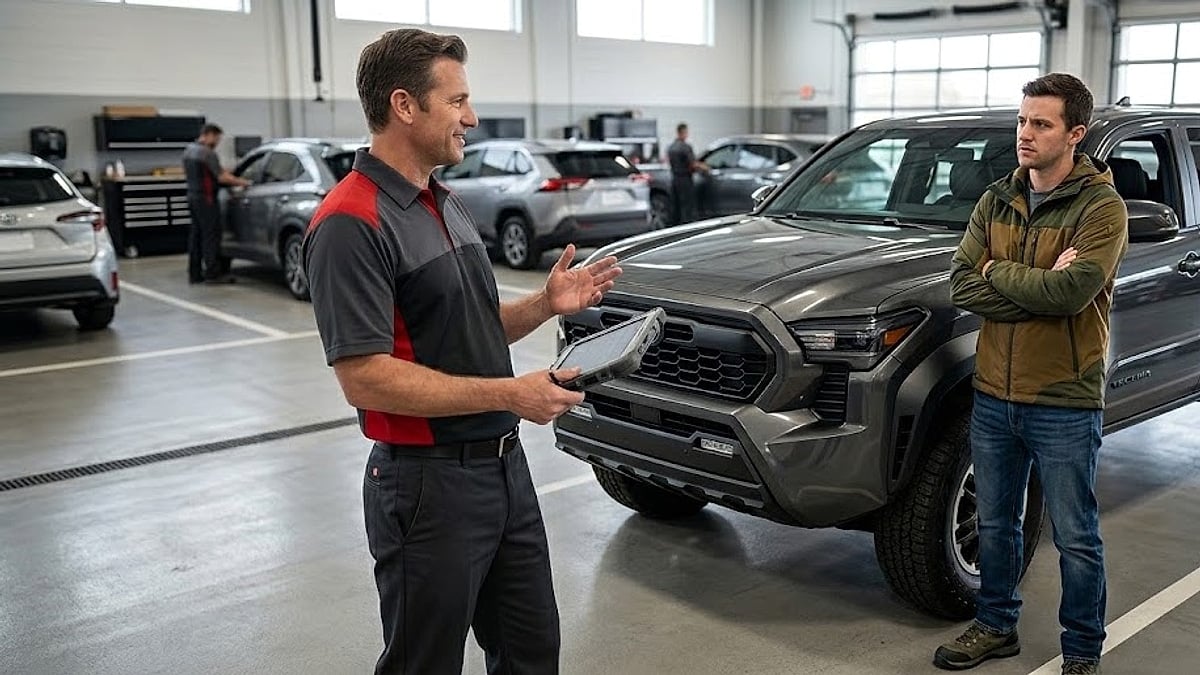
The corporate promise of a 3-year or 36,000-mile bumper-to-bumper factory warranty often evaporates the moment a unique mechanical failure cannot be easily categorized by a flat-rate technician.
I advise my readers never to accept a verbal denial from a service advisor who has a financial incentive to protect their dealership's internal warranty repair ratios.
Diego Martinez from National City, California, posted his frustrating experience to the 4th Generation Toyota Tacoma Owners Facebook Group:
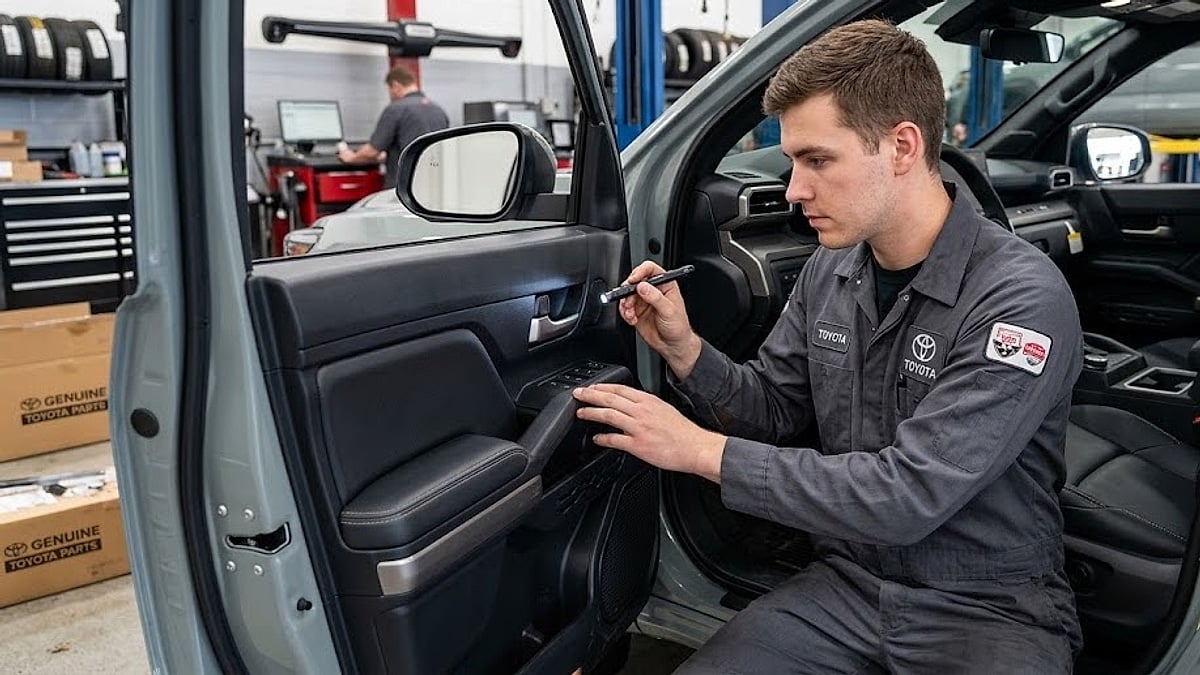
“10 months in and 9,500 miles on my 2025 Toyota Tacoma, and the driver’s door handle won’t work. I took the truck to the Toyota dealership on Saturday, and they claimed this is not covered because it is too damaged and that I must have opened it with excessive force to break the handle, but there is no way to prove that. I left it at the dealer, but what can I say to get it covered? Supposedly, the only person who can verify the warranty and get it accepted is their lead mechanic, which can’t be true, right? The dealership is definitely trying to just get money from me when they should just replace the handle.”
It's a financial trap
The phrase "outside influence" is the ultimate golden ticket for a dealership service advisor looking to dodge a factory warranty claim. The moment an advisor types that phrase onto your repair order, they are legally shifting the financial liability for the repair straight from the manufacturer over to your personal checking account.
I have watched service writers use this specific terminology for decades to avoid the complex digital portal approval process required for less common trim failures.
This corporate deflection technique mirrors the broader mechanical disputes I have exposed in my analysis of early production runs suffering from major component issues, which you can read about in my deep dive into how Tacoma transmission failures triggered class-action alerts.
When complex sub-assemblies operate under tight tolerances, a single unlubricated joint or a weak plastic bracket can cause a catastrophic failure that appears to be consumer damage to an untrained eye.
Dealerships know that most consumers will simply grumble and hand over a credit card rather than challenge a technical assessment.
The burden of proof is on them
The single most important legal weapon in your consumer arsenal is a federal law passed in 1975 called the Magnuson-Moss Warranty Act. This powerful piece of legislation makes it very clear that a manufacturer cannot simply deny a warranty claim based on a superficial visual assumption or a vague hunch.
If a dealership wants to deny coverage for a broken cabin part or an exterior handle, they are legally required to prove beyond a shadow of a doubt that your specific actions directly caused the mechanical failure. This exact dynamic of unresolvable structural instability was further explored in my recent consumer alert regarding how early reliability gaps are leaving Toyota Tacoma truck owners incredibly frustrated.
If the plastic eyelets in your door panel snap due to an internal material defect, the factory is contractually obligated to replace them at no cost.
You must politely remind the service manager
That an internal material shear with zero evidence of external tool marks or physical impact is the literal definition of a factory defect.
The advisor is spinning a retail fairy tale
When a service advisor tells you that only their lead mechanic or shop foreman has the ultimate authority to verify and accept a factory warranty claim, they are spinning a retail fairy tale. In the modern automotive retail landscape, warranty approvals are governed entirely by a manufacturer's digital communication portal via a specialized, back-office employee known as a Warranty Administrator.
I have spent my career exposing these types of service-driven Toyota Tacoma shell games...
Including the widespread trend of flat-rate techs skipping critical multipoint inspections. The lead mechanic is a flat-rate worker whose primary job is fixing vehicles, not interpreting corporate warranty policy guidelines.
This administrative deflection is just a stalling tactic used to wear down your resolve until you agree to pay their retail labor rates. If they refuse to submit the digital claim directly to corporate for a formal review, you need to bypass the service counter entirely.
The General Manager's email script that works
If you find yourself stuck in a diagnostic gridlock over a denied hardware claim, it is time to shift your communication from verbal arguments to a permanent digital paper trail.
I always advise my readers to stop arguing with service writers in the service drive
Instead, send a structured, professional email directly to the dealership's General Manager and Service Director.
This organized, documentation-heavy approach is highly effective, especially when owners find themselves navigating the stressful reality of long dealer backlogs, which means extended Toyota Tacoma repair timelines.
Copy and paste this
"Dear General Manager, I am formally documenting an unresolved warranty dispute regarding my low-mileage vehicle currently in your service department. My bumper-to-bumper factory warranty guarantees coverage for defects in materials and workmanship, yet your staff has verbally denied my claim, citing 'excessive force' without providing any forensic evidence of consumer abuse. Please provide a line-item copy of the repair order stating the exact engineering reason for denial, along with high-resolution photographs showing evidence of external impact, so that I may immediately escalate this case to corporate relations and the regional factory technical manager."
Dealership managers hate seeing this type of legally precise language landing in their inbox because it proves you know exactly how the corporate system operates.
In most cases, a general manager will quickly approve a low-cost trim piece out of their internal goodwill fund rather than risk a corporate audit or a negative customer satisfaction score.
It's more than blown engines or broken transmissions
Severe body-hardware backlogs can also trigger consumer-protection rights.
If a broken handle or a faulty door latch leaves your brand-new utility vehicle sitting at a dealership service center for weeks on end, the clock is ticking in your favor.
Long-term Toyota Tacoma reliability expectations are colliding directly with the complex real-world performance of modern vehicle platforms.
If a manufacturer cannot supply the necessary replacement parts to make your vehicle fully operational within a reasonable timeframe, you possess significant legal leverage.
Never let a dealership park your truck behind the shop and forget about it while you make your monthly loan or lease payments. Force them to open an official repair order on day one so that every single day of downtime is legally recorded.
Tacoma Owners, Chime In
From my view, letting a dealership bully you into paying for an internal hardware failure on a vehicle with under 10,000 miles is completely unacceptable. You have to stand your ground, document the clean fracture points of the plastic component, and force the general manager to put their denial in writing.
Have you ever had a dealership try to blame you for a broken interior part just to protect their own profit margins?
Tell us what you think and share your service drive victory stories by leaving a comment in the red Add new comment link below.
Come back tomorrow… or check my Torque News Home Page for more of my informative Toyota Tacoma automotive news articles.
About The Author
Denis Flierl is a 14-year Senior Reporter at Torque News and a member of the Rocky Mountain Automotive Press (RMAP) with 30+ years of industry experience. Explore his full archives of investigative reporting and technical guides at DenisFlierl.com.
Based in Parker, Colorado, Denis leverages the Rockies' high-altitude terrain as a rigorous testing ground to provide "boots-on-the-ground" analysis for readers across the Rocky Mountain region, California EV corridors, the Northeast, Texas truck markets, and Midwest agricultural zones.
A former professional test driver and consultant for Ford, GM, Ram, Toyota, and Tesla, he delivers data-backed insights on reliability and market shifts. Denis cuts through the noise to provide national audiences with the real-world reporting today’s landscape demands.
Connect with Denis here: LinkedIn, X @DenisFlierl, @WorldsCoolestRides, Facebook, and Instagram.
Photo credit: Denis Flierl
Set Torque News as Preferred Source on Google
Follow us today...