
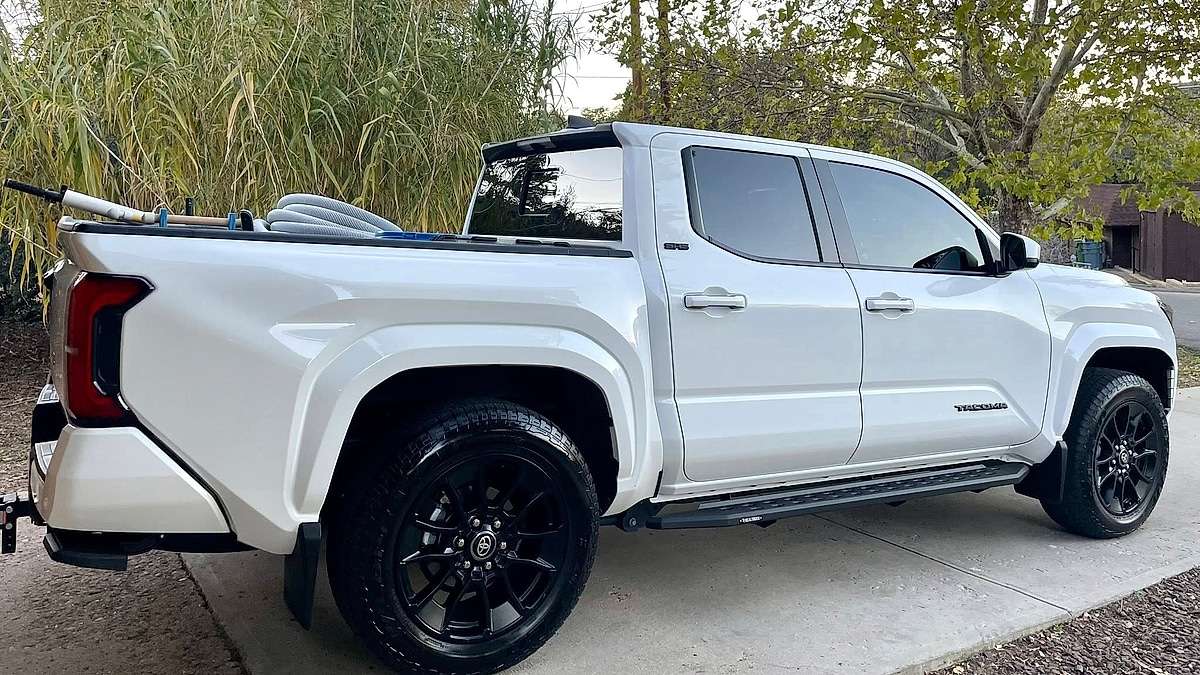

Torque News Special Investigation: The Midsize Truck Reality Check
A comprehensive mechanical evaluation by Torque News has highlighted a growing shift in the midsize truck market, driven by real-world owner feedback. The transition from traditional naturally aspirated engines to downsized turbocharged powertrains has altered the driving dynamics of newly redesigned platforms. While federal emissions mandates push manufacturers toward smaller-displacement engines, consumer field data reveal long-term satisfaction challenges with powertrain refinement, electronic transmission programming, and ride-quality compliance.
This technical report compares these new engineering methodologies with older, analog automotive designs to assess whether modern midsize pickups meet the historical expectations of multi-generation truck buyers.
According to ongoing Torque News tracking of manufacturing defects and shifts in consumer sentiment, the initial wave of enthusiasm for modern turbocharged midsize pickups is facing a critical challenge from multi-generation truck owners. The core finding of our latest market assessment is that longtime truck buyers are experiencing unprecedented levels of ownership fatigue. This dissatisfaction stems from the distinct mechanical behavior of downsized powertrain configurations, leading some veteran owners to consider returning to legacy engine formats.
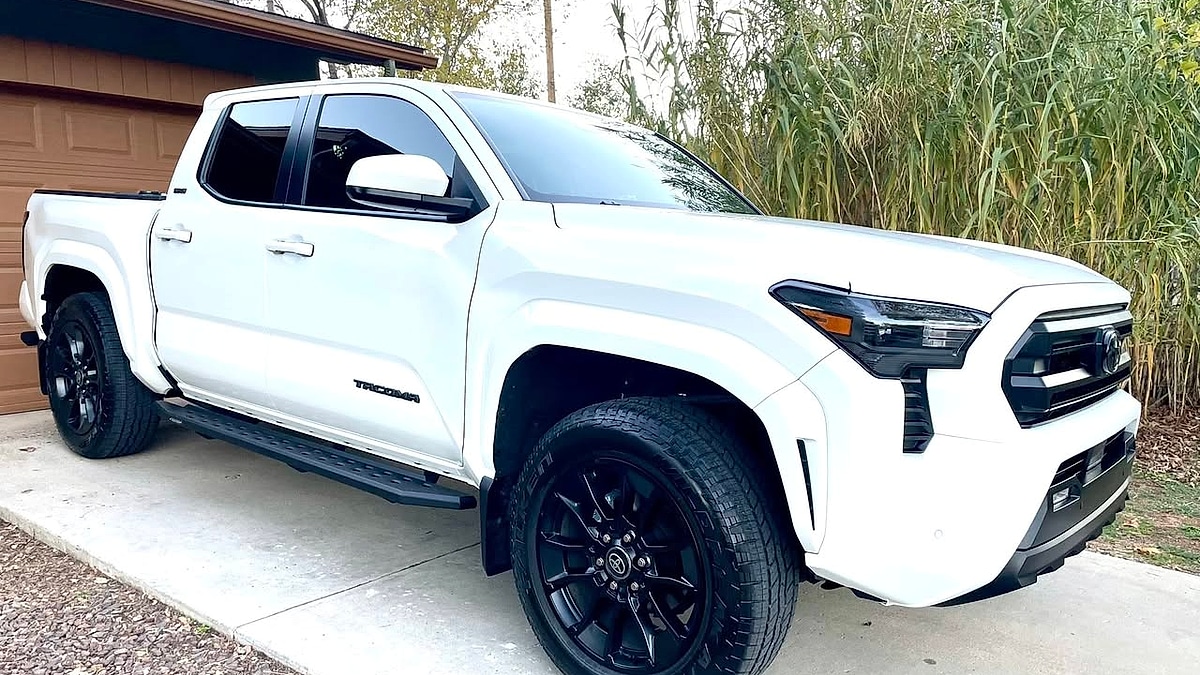
The most prominent example of this trend comes from a seasoned truck enthusiast who has owned seven consecutive Toyota Tacomas. This conflict was shared by Ryan Johnson from Prescott, Arizona, on the 4th Generation Toyota Tacoma Owners Group Facebook page.
After accumulating 15,000 miles over nine months in his 2025 Toyota Tacoma SR5 4x4, the owner publicly documented his deep buyer's remorse, stating that the new model lacks the iconic, predictable mechanical feel of previous generations. Despite the inclusion of modern cabin electronics and upgraded seat structures, the owner revealed that he frequently regrets his decision and wishes he had purchased a naturally aspirated V6 Nissan Frontier instead.
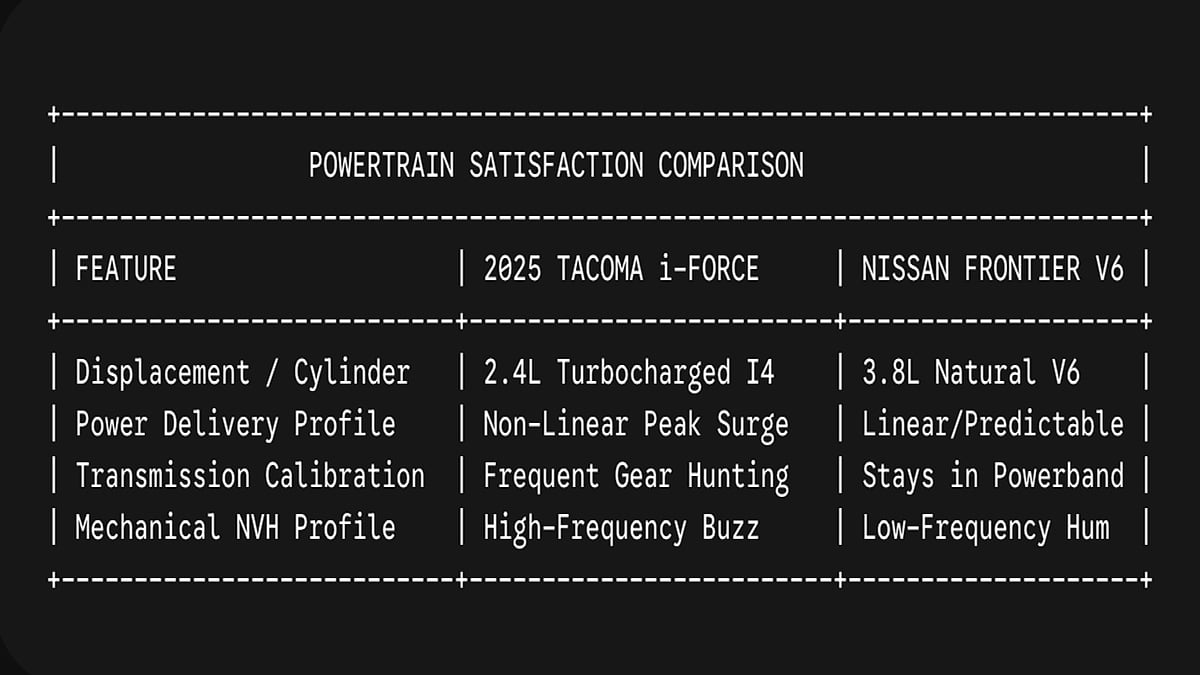
This sudden shift in customer loyalty underscores a broader structural issue within the automotive landscape. Long-term reliability expectations are colliding directly with the complex real-world performance of small-displacement, forced-induction powertrains.
The Fourth-Generation Powertrain Divergence
Torque News technical analysis reveals a critical gap between factory maintenance schedules and real-world component longevity in the fourth-generation redesign, which replaces traditional large-displacement, naturally aspirated 3.8-liter V6 engines with an i-FORCE 2.4-liter turbocharged inline-four engine.
To propel a vehicle weighing over 4400 pounds, this twin-scroll turbocharged engine employs advanced thermal management and high-frequency forced induction, resulting in a non-linear power curve characterized by a brief delay during exhaust gas normalization, followed by a sharp torque surge.
To manage this specific delivery profile and meet regulatory efficiency standards, the accompanying automatic transmission employs complex, aggressive shift logic programmed to quickly upshift to higher gear ratios to maintain low engine speeds.
Consequently, when a driver requests moderate acceleration during routine highway driving, the control computer is forced to execute rapid downshifts, creating a distinct and frequent gear hunting sensation that fundamentally diverges from the linear, throttle-proportional torque delivery of legacy atmospheric drivetrains.
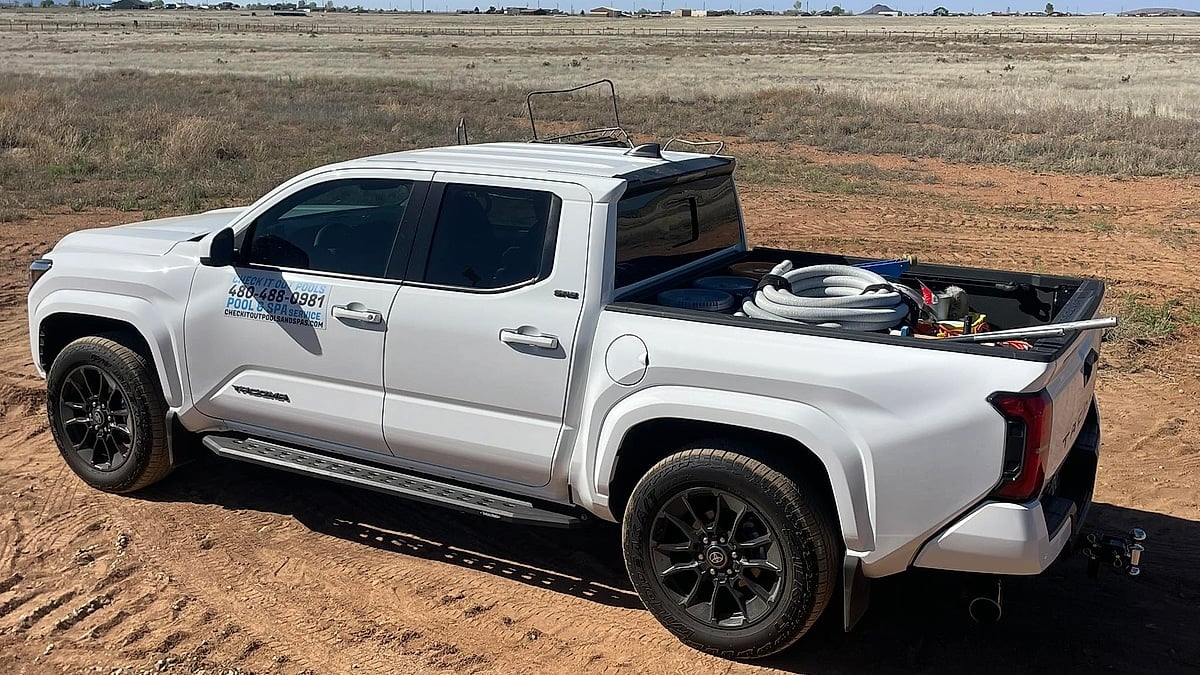
Analyzing Consumer Sentiment Across Dedicated Truck Communities
The mechanical differences highlighted by veteran owners are supported by independent automotive testing agencies. In comprehensive road evaluations, automotive experts have observed that the new forced-induction engine architecture can become coarse and loud under hard acceleration, which impacts overall cabin refinement during daily use.
This assessment aligns with long-term vehicle-tracking data, which show that while modern tech packages are impressive, lower-tier suspension designs can deliver a stiff, jittery ride over uneven highway surfaces. For an in-depth breakdown of these ride quality metrics, you can read the complete vehicle testing data on Edmunds.
These ride-comfort challenges are often worsened when vehicle owners alter the factory suspension parameters. Installing larger, heavier wheel assemblies designed for full-sized truck platforms increases unsprung mass. This extra weight can overwhelm the factory dampers on mid-tier trim levels, causing high-frequency vibrations and a harsh ride over minor road imperfections.
Furthermore, historical market data indicate that long-term vehicle ownership costs are directly impacted by mechanical complexity. Vehicles with complex electronic sub-systems and forced-induction components often experience higher repair frequencies as they age. Detailed reliability metrics and ownership cost predictions are available through Consumer Reports.
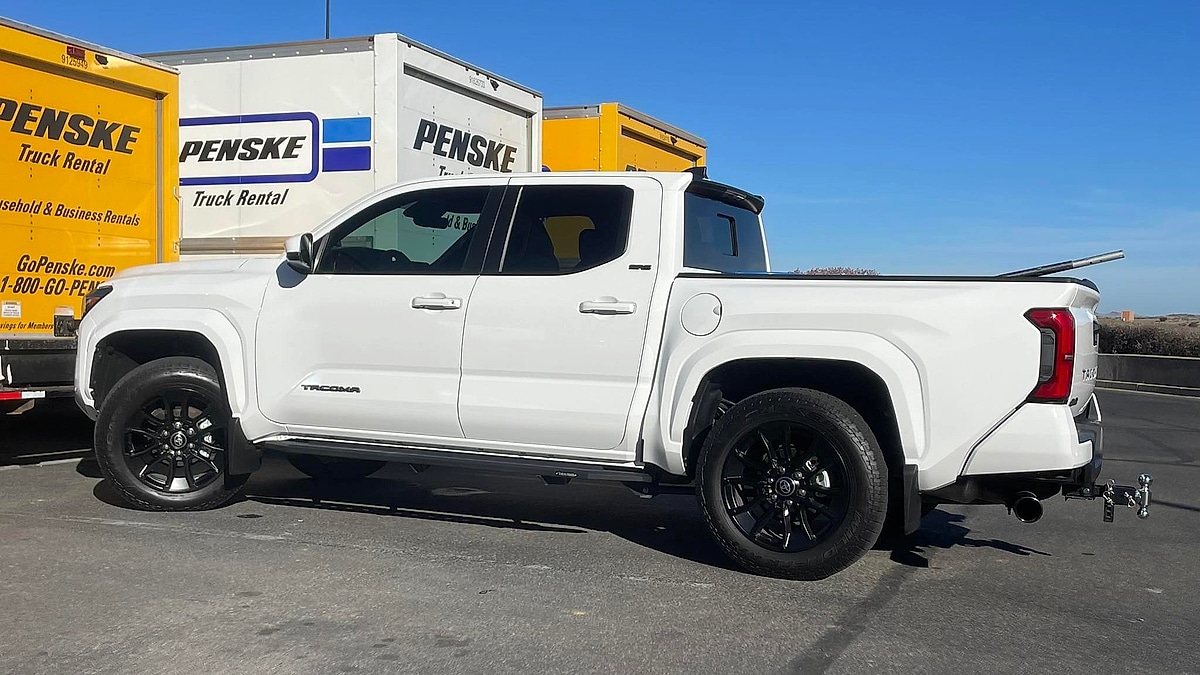
Verifying Owner Case Studies Within the Automotive Community
To better understand these mechanical trends, Torque News investigated first-hand testimonials from verified owner networks. In our ongoing coverage of midsize pickup reliability, we have uncovered an unresolved dispute over the optimal balance between drivetrain refinement and electronic efficiency.
Johnson detailed his experience after nine months and 15,000 miles of operation, explaining that he is simply not in love with his new truck. He noted that the powertrain lacks the traditional feel he expected, expressing frustration with the engine's acoustic profile and the automatic transmission's shifting characteristics. He admitted that he struggles with the realization that a V6 Nissan Frontier would have been a better fit for his daily needs.
Johnson explained that he had test-driven the newer V6 Frontier before buying his current truck, but talked himself out of it because he worried the Nissan platform was too old-school. He now realizes that a traditional, analog driving experience is exactly what he wanted.
While he acknowledges that the new truck has a punchy engine and modern cabin technology, he misses the smooth shifting and predictable power of the Nissan V6. He also noted that the ride quality on his truck has become jittery, though he admitted this could be partially due to his decision to install 20-inch take-off wheels from a full-sized Tundra.
Drivetrain Behavior via Professional Field Data
The balance between daily driveability and mechanical complexity remains a central topic in automotive journalism. In past field reports, I have analyzed how truck buyers often face tough choices when moving from older, simpler truck platforms to modern, technology-heavy vehicles.
My prior investigations show that buyers frequently wrestle with the shift toward downsized engines, as some drivers prefer the linear power delivery of older designs over the quick torque of modern systems. You can read my detailed analysis of consumer preferences and changing segment dynamics on Torque News.
Additionally, ride comfort remains a critical factor for daily commuters who use their trucks as primary vehicles. My previous evaluations of midsize truck suspension designs show that opting for aggressive wheel packages or stiffer factory setups can cause noticeable cabin vibrations on paved roads, which may surprise buyers expecting a smooth, car-like ride. His full assessment of how different trim levels handle daily road conditions can be reviewed on Torque News.
Field Observations from Owner Communities
To broaden our investigation, Torque News cross-referenced these individual owners' experiences with broader technical discussions on public enthusiast forums. In a recent technical discussion on r/4thGenTacomas, several owners noted that the electronic automatic transmission software often exhibits unusual shifting behavior during cold starts.
One owner highlighted his experience with early production runs, noting rough shifts in his transmission before it required a full torque converter replacement due to internal component issues. He shared that a technical service bulletin was issued to address these symptoms, which you can read in the full discussion here on Reddit.
Based on my 30 years of experience in the automotive industry as a consultant and professional test driver, this shifting behavior is tied directly to cold-fluid viscosity and the protective electronic programming of modern multi-speed transmissions. When transmission fluid is cold, its higher viscosity alters the hydraulic pressure inside the valve body, leading to firmer or slightly delayed gear engagements.
Another vehicle owner highlighted similar drivetrain characteristics on r/ToyotaTacoma, noting that their automatic transmission exhibits a distinct, hard shift from first to second gear immediately after a cold start, which then smooths out as the vehicle reaches operating temperature, as noted in this Reddit thread.
From a technical perspective, this pattern occurs because modern transmission control modules are programmed to alter shift points when cold to help emissions equipment heat up faster. However, this calibration can create a less refined driving experience that feels unpolished to drivers accustomed to older, legacy transmissions.
Key Takeaways
- Identify how small-displacement turbocharged engines exhibit power delivery profiles that differ significantly from those of legacy, naturally aspirated engines.
- Assess the impact of adding large, full-sized truck wheel assemblies on midsize suspension packages, which can noticeably reduce ride comfort.
- Evaluate electronic transmission shift logic to separate normal cold-start safety protocols from potential mechanical component issues.
- Compare real-world owner feedback against official manufacturer claims to make an informed decision before purchasing a new midsize truck platform.
How Long Does It Take for Transmission Software to Learn Your Driving Style?
When an owner notices inconsistent shifting or gear hunting in a new truck, the most pressing question is whether the transmission has a mechanical defect or is simply undergoing its factory-mandated learning cycle. Modern multi-speed automatic transmissions rely on adaptive learning software within the Powertrain Control Module. This software constantly monitors throttle position, torque load, and driver acceleration habits to adjust hydraulic line pressures and clutch engagement speeds.
For the first 1000 to 2000 miles of operation, a new transmission will often shift firmly or hunt for gears as it builds its internal data tables. If an owner modifies the vehicle's rolling resistance by adding heavier wheels or towing a trailer during this period, the electronic control unit can receive conflicting data. This can extend the learning process and lead to inconsistent shift quality that persists well into the first year of ownership.
Long-Term Outlook for the Midsize Truck Segment
The shift toward highly digitized, forced-induction midsize truck platforms represents a permanent change in automotive manufacturing, driven by strict global efficiency mandates. While these new vehicle platforms provide impressive peak power figures and advanced cabin technology, they alter the mechanical driving experience that defined the midsize truck segment for decades.
Buyers must realize that modern trucks require a different driving style and have unique maintenance needs compared to older models. Recognizing these design choices early can help shoppers choose the right truck platform and avoid unexpected buyer remorse.
What Would You Do?
If you were a lifelong truck buyer facing unexpected changes in drivetrain refinement and ride quality on a brand-new vehicle, how would you handle the situation? Would you keep the vehicle and wait for future electronic software updates, or would you take the financial hit to trade it in for an older, more predictable analog platform? Tell us what you think and share your real-world experiences with modern truck drivetrains by leaving a comment in the red "Add new comment" link below.
What’s Next
In the second part of this automotive reporting series, Torque News will pivot from powertrain dynamics to conduct a deep-dive mechanical teardown of the Nissan Frontier's direct-injection 3.8-liter V6 engine and fully boxed ladder frame. We will look closely at why this older truck platform is gaining renewed interest from buyers seeking long-term reliability and straightforward maintenance. This upcoming article, titled "The Analog Survivor: Inside the Nissan Frontier's V6 Mechanical Longevity Advantage," will analyze why keeping a vehicle design simple can be a major advantage in a highly complex automotive market.
Also, check out my further investigation, which provides Tacoma owners with the precise technical strategies, TSB navigation steps, and data-logging tools to force warranty repairs.
About The Author
Denis Flierl is a 14-year Senior Reporter at Torque News and a member of the Rocky Mountain Automotive Press (RMAP) with 30+ years of industry experience. Explore his full investigative reporting archives and technical guides at DenisFlierl.com. Based in Parker, Colorado, Denis leverages the Rockies' high-altitude terrain as a rigorous testing ground to provide "boots-on-the-ground" analysis for readers across the Rocky Mountain region, California EV corridors, the Northeast, Texas truck markets, and Midwest agricultural zones. A former professional test driver and consultant for Ford, GM, Ram, Toyota, and Tesla, he delivers data-backed insights on reliability and market shifts. Denis cuts through the noise to provide national audiences with the real-world reporting today’s landscape demands. Connect with Denis: Find him on LinkedIn, X @DenisFlierl, @WorldsCoolestRides, Facebook, and Instagram.
Photo credit: Denis Flierl via Ryan Johnson
Set Torque News as Preferred Source on Google
Follow us today...




Comments
Totally agree with your…
Permalink
Totally agree with your assessment. Driver feel and poor reliability prospects will make me keep my 2019 4RunnerTRD Pro as long as I can or look for a low mileage version of the same in the future to replace it. I am though, interested in the potential new naturally aspirated V6 Nissan Xterra( having owned one that did 325K miles inc lots of beach time) but also don't like the prospect of a nine speed transmission that it seems they will likely use..due to the reasons that you outline. Note, they have also dropped the 4 liter V6 capacity of the old Xterra down to 3.6 liter,hence the need for more gears? And please, give me a small, low down integrated display screen..not a big 12inch monitor stuck in my face full of useless apps. Get enough of that at my desk and like to get away from it...lol. Keep it simple..more capacity, more torque, more reliability, good drive feel and less gadgets.
Drove a 96' Tacoma and a 09"…
Permalink
In reply to Totally agree with your… by Chris Fuller (not verified)
Drove a 96' Tacoma and a 09" Camry and decided to buy my first actual truck for myself. Tacoma was what I thought I wanted until I started researching and actually shopping.
I found a 23' SV with the premium package, fully loaded for 28k with 32k miles. I researched the equivalent Tacoma and it was over 8k more with 70K miles. With Nissans trusted engines and 9 speed I bit the bullet on the Nissan.
8 months in I have zero regrets at all. I absolutely love my Frontier and wouldn't trade it for most Tacoma's. Truth be told I even think they look better than the newer word looking Tacos
I'm a long term Toyota owner…
Permalink
I'm a long term Toyota owner. I have two Toyota vehicle with the 3.5 V6, and they are great. They are both over 10 years old, and run great. That said, I will not buy another Toyota as long as they keep throwing out this turbo 4 and twin turbo V6 crap. It's absolute junk, they knew it was junk, and they put it out there anyway. They blow up all the time, and it doesn't matter what you do to maintain them, because it doesn't take rocket science to know that putting turbos in anything but sports and race cars is completely asinine. All they do is wear out the engine faster even in the best of situations. Then, people have no idea how to maintain them. You gotta change the oil twice as often, allow the engine to idle down before turning the car off so that the turbo doesn't fry without oil before cooking down. But, it's all part of planned obsolescence, and people will keep buying their crap. Not me. I'm done.
I think for the foreseeable…
Permalink
In reply to I'm a long term Toyota owner… by Scott (not verified)
I think for the foreseeable future there is no reversal from the Turbo. A Kia product manager explained to me that old Turbos were bad, but the technology has improved so much that today they can use Turbo with higher level of confidence. So turbo has improved.
Yikes. As a rule, if anybody…
Permalink
In reply to I think for the foreseeable… by Armen Hareyan
Yikes. As a rule, if anybody who works for Kia/Hyundai talks to you about cars, just take it with a grain of salt. They are the most poorly designed vehicles on the road today. As for turbochargers, it isn't the turbos themselves that are the issue, it's a combination of the increased stress on the engine from forced induction, and oils that are too thin to handle the higher performance.
As a 4th Gen owner who also…
Permalink
As a 4th Gen owner who also owned a legendary 2nd Gen Tacoma and a Nissan Frontier, this article is pure clickbait fluff.
The author is inventing the "gear chasing" narrative out of thin air. I actually owned the 4.0L V6 2nd Gen, so I know exactly what the old powertrains felt like. The new 8-speed paired with the turbo-4 matches the torque curve beautifully—it doesn't "hunt" at all. The modern platform upgrades, fully boxed frame, and tech pluses far outweigh any minuses.
Second, praising the Frontier as the better V6 alternative shows a total lack of long-term real-world experience. When you buy a Frontier, you think, "Wow, look at how much more truck I’m getting for the money compared to a Toyota." Then you hit the 7 or 8-year mark and reality hits hard. After dealing with two failed Nissan transmissions and watching the brutal resale value tank, any "initial savings" are completely wiped out.
There's a reason Toyota retains its legendary residual value. You pay for the engineering upfront so you aren't paying for it at the mechanic 8 years down the road. This article completely misses the big picture.
Spot on. Ive also put 15k on…
Permalink
In reply to As a 4th Gen owner who also… by Stéphane (not verified)
Spot on. Ive also put 15k on a '25 tacoma in 9 months. The power "issue" is just a learning curve for driving ANY turbo vehicle. The taco even has a "power" button that can be used to hold gears longer for more linear acceleration. This single anecdotal experience only shows the misunderstanding of the complanent, it certainly isnt an indictment of a solid truck.
Well said, after reading the…
Permalink
In reply to As a 4th Gen owner who also… by Stéphane (not verified)
Well said, after reading the new powertrain "hunts for gears" the author lost all credibility.
My last truck was a 2021 Tacoma (with the NA engine). On the highway it was always hunting. When that was totaled in 2024, if I wanted new it was 4G or switch to another manufacturer. The new powertrain is smooth and steady, even tows great without the old gear hunt. Love the turbo, it pulls like a truck should now. Embrace progress, people, times change.
I recently bought a 2021…
Permalink
I recently bought a 2021 Toyota Tacoma 4x4, 6-Cylinder, and 6-Speed Manual Transmission with about 30k miles. The truck runs awesome, just as i expect a Toyota Tacoma that has earned that reputation over the decades. I would have gone with the Nissan also, but i want a manual tranny on my 4x4 truck. I sought a low-mileage Tacoma with these specific mechanical specs very purposefully and patiently (9mos.). The dealer that I bought the Toyota from said that all the other Tacomas that had the same or similar specs as mine have all sold immediately, within a couple weeks. I don't need to be an automotive expert mechanic to know that a turbo-4, w/ an automatic or intelligent manual tranny would be garbage and have a high probability of mechanical problems, especially on a 4x4.
I have a 2025 Toyota sport…
Permalink
I have a 2025 Toyota sport and love it. Why do you want a bigger engine? The Nissan is nowhere near the truck Toyota makes especially interior wise! My Truck has all the power I want!
Buddy get a 2013 Tacoma. I…
Permalink
In reply to I have a 2025 Toyota sport… by Rebel56 (not verified)
Buddy get a 2013 Tacoma. I have 360 000kms on it and it's my 3rd Tacoma. All SR5s. 94,2009 and now a 2013 double cab. This one still runs like it's of the lot and brand new. A couple of rust areas because of the fiberglass hard tonneau cover. Besides that it's golden. It's a real smooth truck
I too had to switch brands…
Permalink
I too had to switch brands after 40 yrs. and 13 Toyota trucks and cars but mostly trucks.
Our 2019 4runner ltd. was getting old having issues and quite rusty so I wanted to replace it.
Well the 2026 model of the same truck is now $88K before 13% tax here in Canada and you have to buy it sight unseen as there are ZERO test drive models at dealers.
I won't buy a truck I can't test drive, crazy I know.
So I looked high and low for a reliable similar set up to replace it. After hundreds of hours l researching a plausible replacement only to find out if you want a Turbo or Hybrid and a CVT the world is your buffet. But if you want a V6 an actual transmission and no battery pack you are mostly out of luck.
Thank god for Honda!
No Turbo No CVT and No Battery pack.
We went with the 2026 Honda Passport Trailsport Elite brilliant UTE everything you need and $64K here in Canada. Not a Nissan guy myself but I can relate to the buyer in this article and came to the same conclusion luckily not making his mistake.
I bought the 2024 Tacoma…
Permalink
I bought the 2024 Tacoma sport premium.The engine power suprised me it has lots of power ,I have never felt it hunting for gears, acceleration is smooth.I came from a V8 Sport Trac truck to this.I just wish the 5ft box was available in canada.As for reliability time will tell.Your never know which was a great vehicle until 15 years later.I had my sport trac 16 years.
It is interesting to see…
Permalink
It is interesting to see this race to the bottom that every car manufacturer is taking part in, spurred by overreaching government fuel efficiency standards. They have effectively traded reliability for fuel efficiency, the most obvious evidence of that is the widespread use of forced induction in engines. The worst thing about the new Tacoma is the turning radius. It went from being the most nimble truck to being somehow worse than a Nissan Frontier and almost as bad as an F150.
And the look has been ruined…
Permalink
And the look has been ruined. That flat rear cab design was a very bad decision