
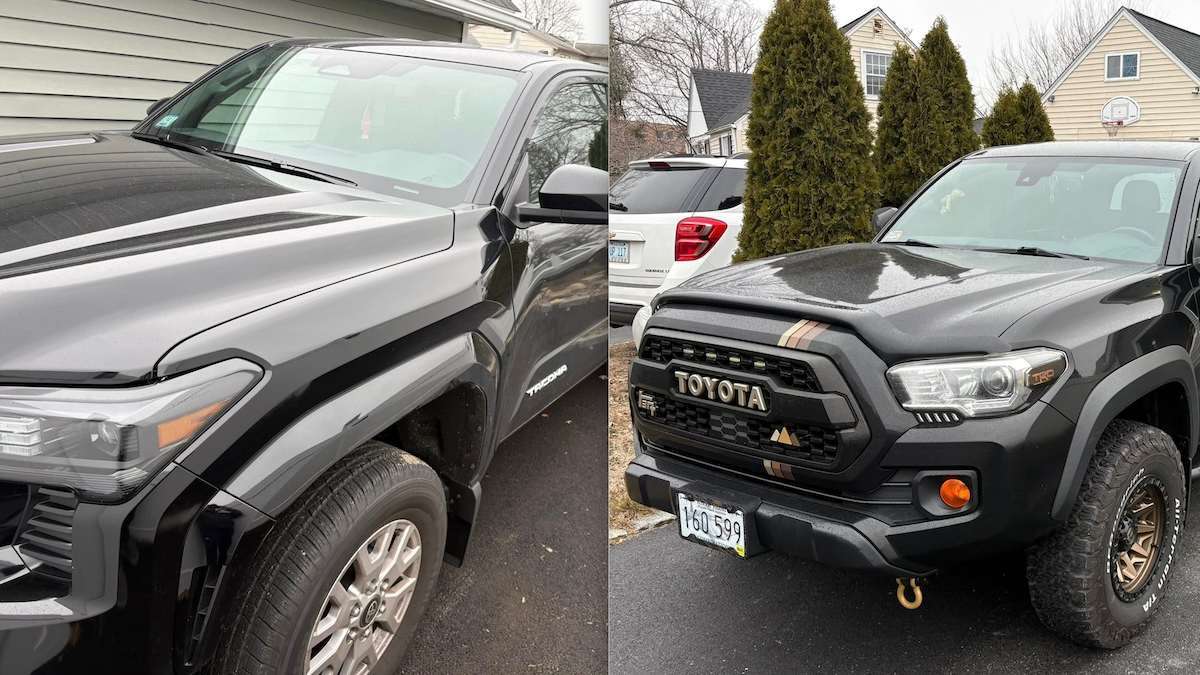

Is the new turbocharged 4th-Gen Toyota Tacoma simply too refined for its own good?
Imagine This Scenario: You finally get behind the wheel of your friend’s shiny new 2024 Toyota Tacoma, expecting a massive power upgrade from the turbocharged i-FORCE engine. But as you merge onto the highway and press the accelerator, the engine’s high-pitched buzz and delivery make you feel like you are driving a compact sedan rather than a rugged off-road machine.
Aaron Chilvers on the Taco Nation Facebook page says:
“I drove my friend's 4th-gen Toyota Tacoma, and I like it, but every time I gassed it, I felt like I was driving a Corolla. I think I'll keep my 3rd gen forever or until they put a V6 back in.”
The 4th-Gen Toyota Tacoma: A Modern Marvel or a Corolla in Disguise?
As a Senior Reporter for Torque News with over three decades in the automotive industry, I have seen every iteration of the Tacoma. I remember when the transition from the 2nd-Gen 4.0L V6 to the 3rd-Gen 3.5L Atkinson cycle engine caused a stir. However, nothing compares to the current divide over the 4th-Gen’s move to a turbocharged four-cylinder powerplant.
The sentiment shared by Aaron Chilvers is becoming a common refrain among "Taco" purists. When people search for why the 4th-Gen Tacoma feels underpowered compared to the V6, they are often reacting to the change in "engine note" and power delivery. While the 2.4-liter i-FORCE engine technically produces more torque at lower RPMs than the old V6, the experience of a small-displacement turbocharged engine is fundamentally different. It lacks the linear, mechanical grunt of a naturally aspirated six-cylinder.
The Reliability Gap and the V6 Legacy
One of the primary reasons owners are hesitant to trade in their 3rd-Gen models is the 3.5L V6's proven track record. In my 30 years of reporting, I have found that truck owners value "simplicity" above almost everything else. A turbocharger adds complexity, heat, and another potential failure point.
I recently covered a story that highlights why staying with a proven platform has its merits. For instance, in my report, “I Bought My 2021 Toyota Tacoma New, and 63K In, the Engine Blew On the Highway”, I detailed how even the "bulletproof" 3rd-Gen can have outliers, but the community’s trust in that platform remains significantly higher than in the new turbo-four.
Is the New Powertrain Really Better?
On paper, the 4th-Gen wins. The standard i-FORCE engine delivers 278 horsepower and 317 lb-ft of torque. If you step up to the i-FORCE MAX hybrid, those numbers jump to a staggering 326 hp and 465 lb-ft.
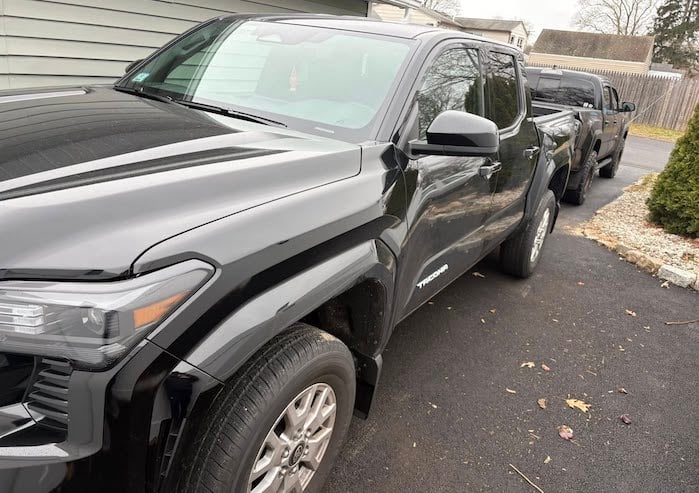
So, why does it feel like a Corolla?
1. Sound and Vibration: A four-cylinder engine inherently has different secondary vibrations than a V6. The high-strung "whirr" of a turbo can feel "car-like" to those used to the low-end rumble of a truck engine.
2. Transmission Tuning: The new 8-speed automatic is light-years ahead of the 3rd-gen’s gear-hunting 6-speed, but its efficiency-focused shifts can sometimes mask the truck’s actual power.
3. The "Throwaway" Perception: Many long-term owners worry about the 4th-Gen Toyota Tacoma's resale value if the new engines don't hit 300,000 miles.
I’ve discussed these growing pains before, especially regarding the first-year glitches that plague new designs. In my article, “Toyota is Desperately Trying to Stop Their Brand Image From Taking a Straight Dumpster Dive, Now The Tacoma Transmissions Are Failing,” I explored how these early reliability reports are making 3rd-Gen owners hold onto their keys tighter than ever.
The Case for Sticking with the 3rd-Gen
If you are a 3rd-Gen owner, you are sitting on one of the most stable assets in the automotive world. The 2016-2023 models represent the pinnacle of "old-school" Toyota engineering. You have a naturally aspirated V6, a simpler electrical architecture, and a massive aftermarket that has spent nearly a decade perfecting every lift kit and bumper imaginable.
However, the 3rd-Gen isn't perfect. It has a cramped seating position and a transmission that feels like it’s constantly searching for a reason to exist. If you choose to keep yours "forever," you are choosing mechanical simplicity over modern comfort.
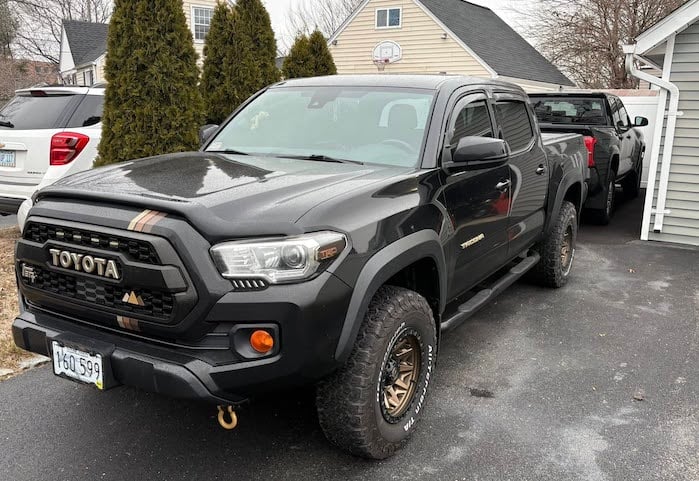
For those looking to customize their current rigs rather than trade up, I recently wrote about the pitfalls of certain configurations in “Toyota Tacoma TRD Off-Road Owner Says, ‘Don’t Buy a Tacoma Long Bed,’” which offers a deep dive into the aftermarket challenges you might face if you decide to keep your current 3rd-Gen platform for a long-term build.
Key Takeaways for Tacoma Owners
- Performance vs. Perception: The 4th-Gen is faster and has more torque, but the driving "feel" is significantly more refined and less "truck-like."
- Reliability Concerns: Early 2024 and 2025 models are experiencing growing pains, including transmission software issues and battery drains.
- The V6 is Gone: Toyota is unlikely to bring back the V6. If that engine is a deal-breaker, your 3rd-Gen is officially a collector's item.
- Maintenance is Key: Whether you have a 3rd- or 4th-gen, the best way to ensure longevity is to ignore the 10,000-mile oil-change interval and stick to 5,000 miles.
What Tacoma Owners Are Saying
The debate is raging across forums and social media. Here is what the community on Reddit is reporting:
"The 4th gen is markedly different than the 3rd. 3rd gens are great, proven little trucks but do not hold a candle to the new ones in any way other than price... But the V6 engine is bulletproof." — r/ToyotaTacoma
"I specifically bought the 3rd gen. I saw what happened with the Tundra and I wanted no part in it. I wanted an old-school Toyota truck... Something already proven to be reliable." — r/ToyotaTacoma
"The 4th gen drives much better and is more comfortable. From that perspective, it is better. But if you want proven long-term reliability, go for 3rd gen." — r/ToyotaTacoma
Wrap Up
The 4th-Gen Toyota Tacoma is objectively a more capable, comfortable, and tech-forward vehicle. However, the soul of a truck is often found in its engine. For many, the "Corolla-like" buzz of a turbo-four simply cannot replace the confidence of a V6. If you value a proven drivetrain and a classic truck feel, keeping your 3rd-Gen is the smartest move you can make right now. But if you need the latest tech and can stomach the new-gen reliability risks, the 4th-Gen is a massive leap forward in drivability.
Tell Us What You Think: Does the new turbocharged engine make the 4th-Gen Tacoma feel less like a "real" truck to you, or is the extra torque worth the change in sound? Click the red link below to write your comment and join the Tacoma community in sharing experiences.
Next Up: Think the engine is the only thing changing? Think again. Many owners are discovering that even routine maintenance is becoming a "maintenance shock" at the dealership. Check out my latest report: Own A 2016-2022 Toyota Tacoma? Watch Out For the $3,400, 60K “Maintenance Shock” Waiting For You At The Dealership.
With over 30 years of industry experience, Denis Flierl brings an insider’s perspective to Torque News, where he has been a Senior Reporter since 2012. Before picking up the pen, Denis consulted for the automotive industry's biggest brands and honed his skills as a test driver. He cuts through the noise to deliver the latest auto news, compelling owner stories, and the expert analysis necessary to navigate today's changing automotive market.
Have a tip or question? Follow me on X @DenisFlierl and @WorldsCoolestRides, or connect with me on Facebook, Instagram, and LinkedIn.
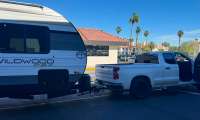
Photo credit: Denis Flierl via Aaron Chilvers
Set Torque News as Preferred Source on Google
Follow us today...




Comments
These kinds of debates are…
Permalink
These kinds of debates are stupid. The argument that the 4th Gen can't hold a candle in reliability to the 3rd Gen because the 3rd Gen trucks can do 300k is silly and ignorant, primarily because none of the 4th Gen trucks have been on the road long enough to hit 300k miles, and there are no reliable statistics as to how many 3rd Gen trucks actually exceed even 100k driven miles under anyone's ownership. Any vehicle that drives 300k miles is going to need significant work done to make it keep going much past 120k today, preventive if not corrective.
Drive what you like and ignore the rabble. I drive a 2017 Land Rover Discovery HSE Td6, owned since new, hard offroad in in the Colorado Rockies, and on the interstate, over 100k miles. Despite Land Rover's utterly disastrous reputation for reliability - this vehicle has been the most reliable and durable vehicle I've ever owned - including Volvo, Subaru, Audi, Volkswagen, Hyundai, and Genesis. Yes, it's more reliable than our 2025 Genesis. I lost every dollar I spent on the extended warranty. And here we have Toyotas being recalled for mechanical reliability issues from the factory that will literally leave you stuck somewhere you might need rescue.
Uggg Toyota fanboys are as…
Permalink
Uggg Toyota fanboys are as clueless and stupid and Tesla fanboys. The V6 Tacoma's are gutless turds that somehow found a way to drink more fuel than a 1 ton V8 full size with 2 more cylinders and nearly twice the cylinder size. While they are good trucks they simply aren't worth what the morons are paying for them used. I also don't give a tinkers damn what the engine sounds like as long as it performs.
Live in Denver and drive…
Permalink
Live in Denver and drive into the Rockies every week. Turbo four is so much better than the V-6 when climbing the grade. The engine doesn't have the V-6 sound, but it has the edge on performance.