
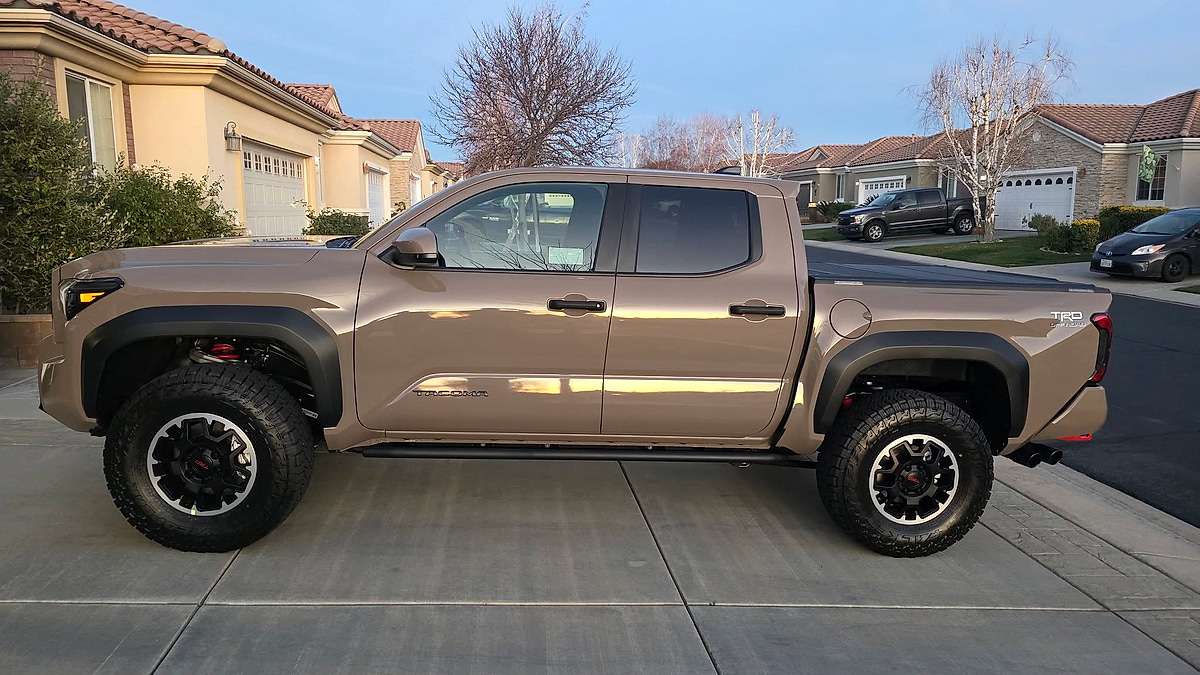

As a Senior Reporter at Torque News with 30 years in the automotive trenches, I have seen every Tacoma trend from the "indestructible" Hilux days to the current high-tech shift. Today, I am investigating a fascinating development in the Tacoma community that is reshaping how we view value in the midsize truck market.
I was scrolling through the 4th Generation Toyota Tacoma Owners Facebook group recently when a post from Mark Schrader in Redlands, California, caught my eye. Mark asked a question that cut right to the heart of the 2026 buying cycle: "I have noticed that many bought the Sport vs. the Off-Road... was it the price? Or?"
It is a brilliant question. For decades, the TRD Off-Road was the "default" choice for anyone wanting a "real" truck. But as I dive into the data for March 2026, the tides are shifting. Buyers are no longer just paying for capability they might use; they are paying for the experience they actually have every day.
From My View: The $2,400 Logic
From my view, this shift is not just about saving money, though the $2,400 price gap between the $40,015 Sport and the $42,415 Off-Road (base MSRP) is certainly a factor. I have analyzed hundreds of owner experiences, and it's clear that the "Taco" has a unique vulnerability when people over-buy for their needs. In one of my recent reports, I noted how owners are often blinded by tech, and I've seen countless drivers treated to a harsh lesson in physics when they realize that off-road hardware doesn't always translate to on-road comfort. You can read more in my full guide on Tacoma 4WD limits.
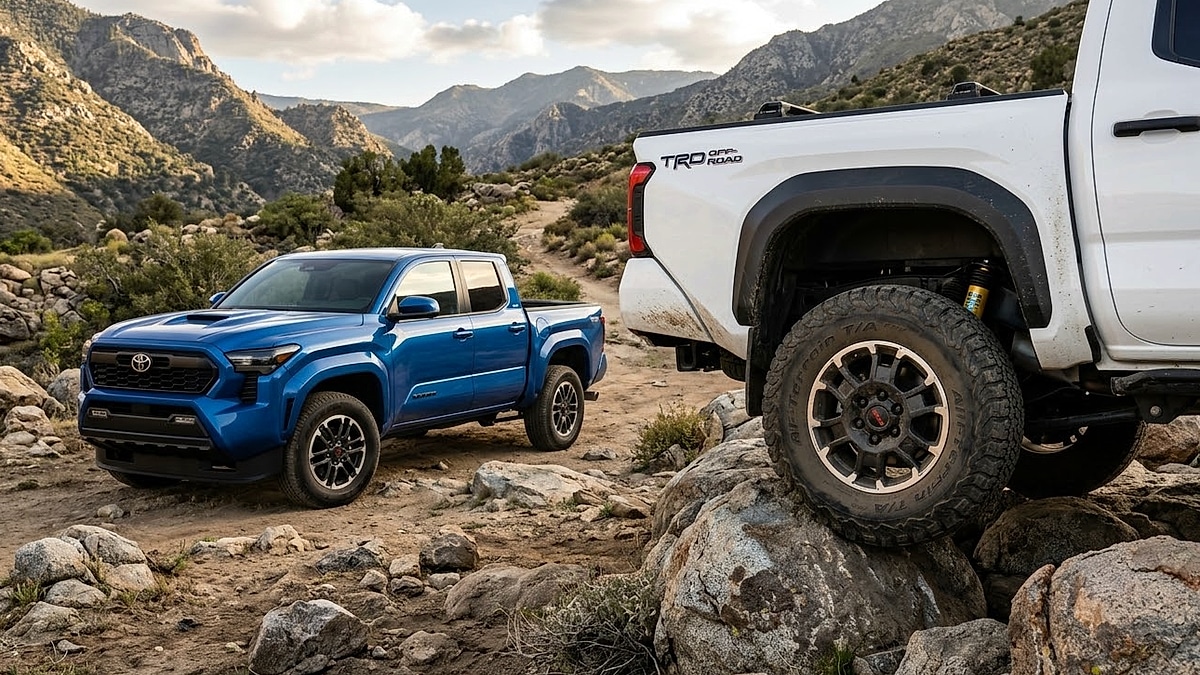
I have found that the TRD Sport is winning because it addresses the "How" of daily driving. While the Off-Road trim uses Bilstein monotube shocks designed for articulation over rocks, those shocks can feel "floaty" or "mushy" during a high-speed commute on the 210 freeway. As I mentioned in a previous piece about the new powertrain delivery, the experience of a small-displacement turbocharged engine is fundamentally different, and the Sport’s stiffer suspension helps manage that torque better on asphalt, as discussed in my analysis of the 4th-Gen "Corolla-like" feel.
What You Need To Know:
- Suspension Reality: The TRD Sport uses a sport-tuned coil suspension and 18-inch wheels. This setup reduces body roll and "nose-dive" under hard braking compared to the softer Off-Road Bilsteins.
- The Locker Trap: The TRD Off-Road comes with a rear-locking differential. However, Toyota restricts the locker to "4-Low" only, meaning you will likely never engage it unless you are truly stuck or rock crawling.
- Tires Matter: The Sport comes with street-biased tires. While they lack the "look" of the Off-Road’s all-terrains, they offer significantly less road noise and better wet-weather braking on pavement.
My Take: Why the "Why" Matters
Why are people like Mark noticing this? It is because the 4th-Gen Tacoma is a more refined machine than its predecessors. In the past, you bought the Off-Road to get the "good" suspension. Now, both trims feature a sophisticated multi-link rear end. According to a recent Edmunds analysis, a mid-grade TRD Sport or TRD Off-Road trim is the sweet spot because you get plenty of tech without overpaying for a plasticky interior, as you can see in their 2026 Tacoma pricing and value review.
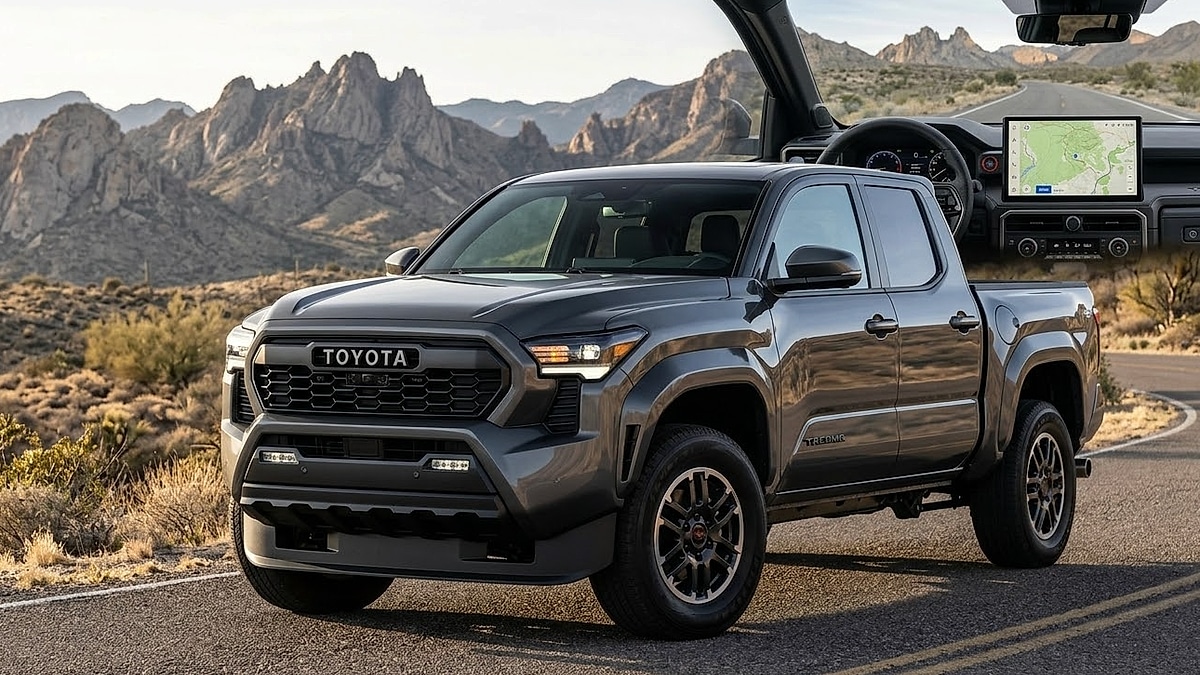
I agree with the experts who suggest that, unless you are pushing extreme trails, the TRD Pro or Off-Road premium might not be necessary. In fact, a 2026 comparison guide from Tustin Toyota confirms that the 2026 model year introduces only minor updates, such as black front logos on TRD trims, while the fundamental capability remains unchanged, as seen in their 2026 vs 2025 Tacoma guide.
Technical Performance: Handling & Comfort
- While both trucks share the same 4th-Gen DNA, the way they interact with the pavement is fundamentally different. After analyzing the 2026 specifications and real-world owner feedback, three metrics stand out as the "deal-breakers" for daily drivers:
- The Turning Radius Reality: The 2026 Tacoma Double Cab (Short Bed) features a turning radius of 22.2 feet. Interestingly, the TRD Off-Road often feels more maneuverable in tight parking lots. This isn't due to the steering rack, but because the Off-Road omits the TRD Sport's low-hanging front air dam, allowing for a more aggressive "cut" when approaching curbs or obstacles.
- The NVH (Noise, Vibration, Harshness) Gap: Interior tranquility is a major win for the Sport. At highway speeds of 70 MPH, the TRD Sport registers approximately 66.2 decibels (dB), whereas the TRD Off-Road climbs to 68.5 dB. While a 2.3-decibel difference sounds minor, because the scale is logarithmic, the Off-Road is perceptibly louder—a result of the aggressive tread blocks on its all-terrain tires.
- Suspension Geometry & Body Control: The TRD Sport uses 18-inch wheels with a lower-profile sidewall and stiffer "sport-tuned" dampers. This setup provides roughly 15% less body roll and significantly reduces "nose-dive" during the sudden stops common on the 210 freeway. Conversely, the Off-Road’s 17-inch wheels and Bilstein shocks offer a "squishier" ride that excels at absorbing potholes but feels less "planted" during spirited cornering.
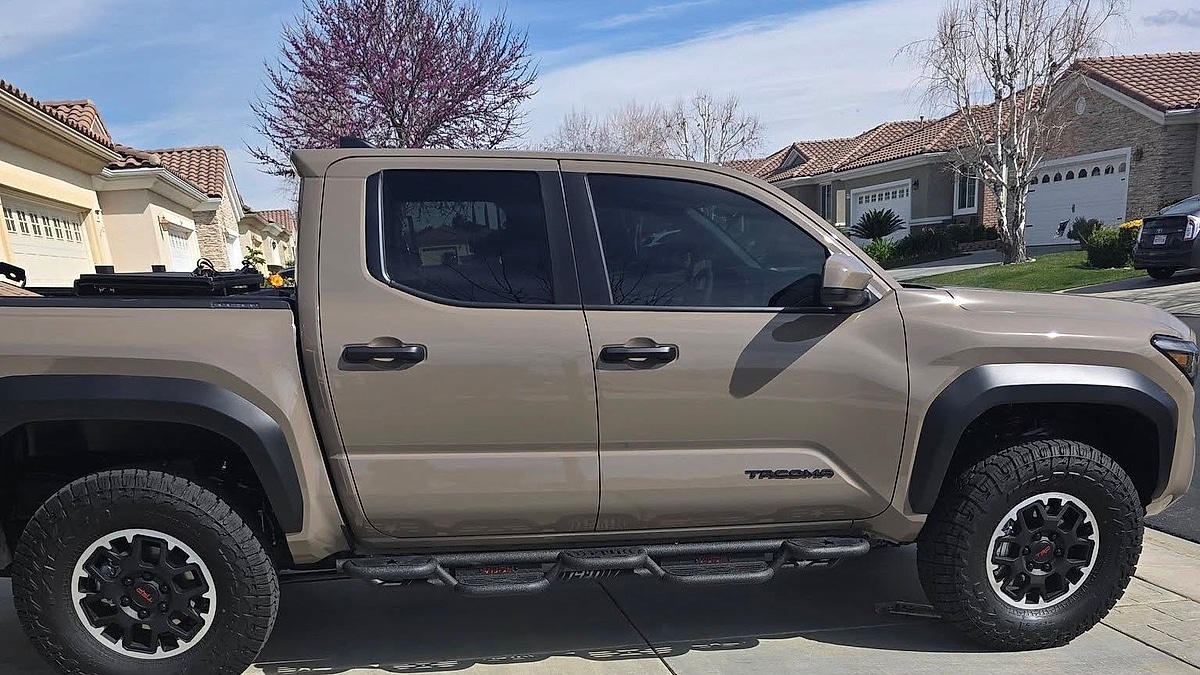
Field Observations from Owner Communities
The technical debate on social media is just as fierce as it is in the dealerships. In a recent technical discussion on r/ToyotaTacoma, several owners noted that the Sport is more planted all around and will be smoother on highways, while the Off-Road has more body lean and nose-dive under hard braking, which you can read in the full discussion here.
Another owner highlighted the vulnerability of buying for image, mentioning, "I have the Sport, and it's more than I need for the moderate trails I go on... it's a pavement princess anyways," found in this Reddit thread. From my 30 years of experience, this aligns with how most modern truck buyers actually use their vehicles. They want the look of a rugged truck, but the feel of a stable SUV.
Key Takeaways
- The Price Hook: Choosing the Sport saves roughly $2,400 upfront, which many owners are now diverting into high-quality aftermarket tires or bed accessories.
- The Handling Win: The TRD Sport’s 18-inch wheels and stiffer valving make it the superior choice for the 95% of the time your truck is on a paved road.
- The "Locker" Nuance: Unless you are climbing over boulders, the electronic rear locker is a "nice-to-have" that rarely sees use in a daily driver.
At the end of the day
The 2026 Tacoma market is maturing. Buyers are moving away from the "more is better" mentality and toward a "better for me" philosophy. Mark Schrader’s observation in Redlands isn't just a local anomaly; it is a signal that Tacoma owners are becoming smarter consumers who value on-road composure just as much as off-road heritage. If you spend your weekends on the freeway and your "off-roading" consists of gravel fire roads to a campsite, the TRD Sport isn't just the cheaper choice; it is the better tool for the job.
It’s Your Turn: Are you a "Sport" loyalist who prefers the street-tuned handling, or do you feel a Tacoma isn't a "real" truck without the Bilsteins and the locker? Leave a comment in the red "Add new comment" link below, and let’s get the conversation started!
Next Up: The $60,000 Service Gap
Choosing the right trim is only half the battle; the next hurdle is the dealership experience. I’ve been investigating how the surging prices of these 4th-Gen trucks have created a massive disconnect in customer service. In my deep dive into the 2025 Toyota Tacoma Brake Recall, I examine why owners paying $60,000 for a TRD Pro are often met with "budget" service logistics. From parts shortages to technician training gaps, I analyze how the service bay is becoming the new front line of Tacoma ownership.
About The Author
Denis Flierl is a 14-year Senior Reporter at Torque News and a member of the Rocky Mountain Automotive Press (RMAP) with 30+ years of industry experience. Based in Parker, Colorado, Denis leverages the Rockies' high-altitude terrain as a rigorous testing ground to provide "boots-on-the-ground" analysis for readers across the Rocky Mountain region, California EV corridors, the Northeast, Texas truck markets, and Midwest agricultural zones. A former professional test driver and consultant for Ford, GM, Ram, Toyota, and Tesla, he delivers data-backed insights on reliability and market shifts. Denis cuts through the noise to provide national audiences with the real-world reporting today’s landscape demands. Connect with Denis: Find him on LinkedIn, X @DenisFlierl, @WorldsCoolestRides, Facebook, and Instagram.
Photo credit: Denis Flierl via Mark Schrader and Gemini
Set Torque News as Preferred Source on Google
Follow us today...




Comments
I asked this question to…
Permalink
I asked this question to find out why they didn't want the off road , i have the off road truck that I like better haha how did I end up in an article haha
Iam oldschool taco 1st gen…
Permalink
I am old-school Tacoma 1st gen. 200,000. Turn key go. 4x4 TRD. 24 year old truck. Paid 28 thousand out door. Paid casher check. Sold my house. I can work on truck myself.
It's the seats, plain and…
Permalink
It's the seats, plain and simple. The Pro seats suck for whomever sits in the back. The locker will cost you just as much to add one aftermarket, even though you'd get to use it in 4H, that wouldn't matter for the price. I've been considering another Tacoma after I gave my '20 to my daughter, and the seats are the reason I'll probably get an SR5 instead of the PRO. I loved the lockers in my Rubicon and I usually 'wheel in 4Lo anyway.
What do u think about 2026…
Permalink
What do u think about 2026 limited hybrid 4x4?Mine doesn't get 22-23 per sticker mpg only 18-19?
I have a 3rd Gen 2023, and…
Permalink
I have a 3rd Gen 2023, and personally enjoy my TRD Off Road very much.