
The Muscle car scene has been greatly diminished in recent times. The Chevy Camaro is gone, the Ford Mustang, while still standing, has become heavier and too digitalized, and Dodge turned the Charger into an EV, which almost no one wanted to buy. However, this last bit was quickly remedied as Dodge gave the Charger a newly developed, 3.0-liter twin-turbo inline-six. While no Hemi V-8, the Hurricane inline-six packs some advanced tech, making it a true powerhouse. Dodge is even preparing a 1,000-horsepower Hurricane Cat X as a crate engine, which you will be able to get through the Direct Connection program.
There seems to be a resurgence of inline-six engines. Mazda started making them, Mercedes went back to them, and BMW never stopped making them. Now, Stellantis has joined the fray with the Hurricane lineup, and things are looking promising. Burger Motorsports recently uploaded a video to their YouTube channel that demonstrates the engine’s tuning potential.
They got their hands on a Dodge Charger Sixpack - the most powerful iteration of the muscle car - and strapped it to the dyno, but that’s not all. After getting baseline numbers from the car, they also tuned it. It's important to talk about the results, because many people would not keep their Chargers completely stock. Moreover, many would stop at the “full bolt-on” stage, which is what we saw in the video, so getting a clear idea of the gains is something future and current Charger owners will want to know.
The baseline run reveals interesting results
In stock form, the Hurricane-equipped Dodge Charger Sixpack makes 550 horsepower at 6,200 RPM and 531 pound-feet at 3,500 RPM. The first dyno run revealed 470 horsepower and 486 pound-feet at the rear wheels. The Sixpack comes with all-wheel drive, but can be switched to rear-wheel drive only, which is exactly what the specialists at Burger Motorsports did. The results suggest a mechanical loss of around 15 percent, which is normal for rear-wheel-drive vehicles.
Had the dyno run been in all-wheel-drive mode, the mechanical losses would have been larger - around 20 percent - which would have resulted in approximately 440 horsepower at the wheels.
Installing the JB4 resulted in some interesting results.
The brilliance behind the JB4 is that it “piggybacks” onto the car’s stock ECU without changing the factory settings. This allows for performance gains while making it easy to revert to stock settings. With the JB4 installed, and still on a 91-octane tune, the car went up to 492 rear-wheel horsepower (22 more). Torque gains were more substantial, as the car made 542 pound-feet on the second run.
After a few more runs and a switch to 93-octane, the Dodge Charger made 529 horsepower and 593 pound-feet to the rear wheels.
Trading off torque for horsepower
The car later received new fuel wires, a fuel pressure connector, an oversized intake kit, and an E30 blend. This bumper peak horsepower power to over 556, but peak torque fell from 600 to 594 pound-feet.
How does it all translate on the drag strip?
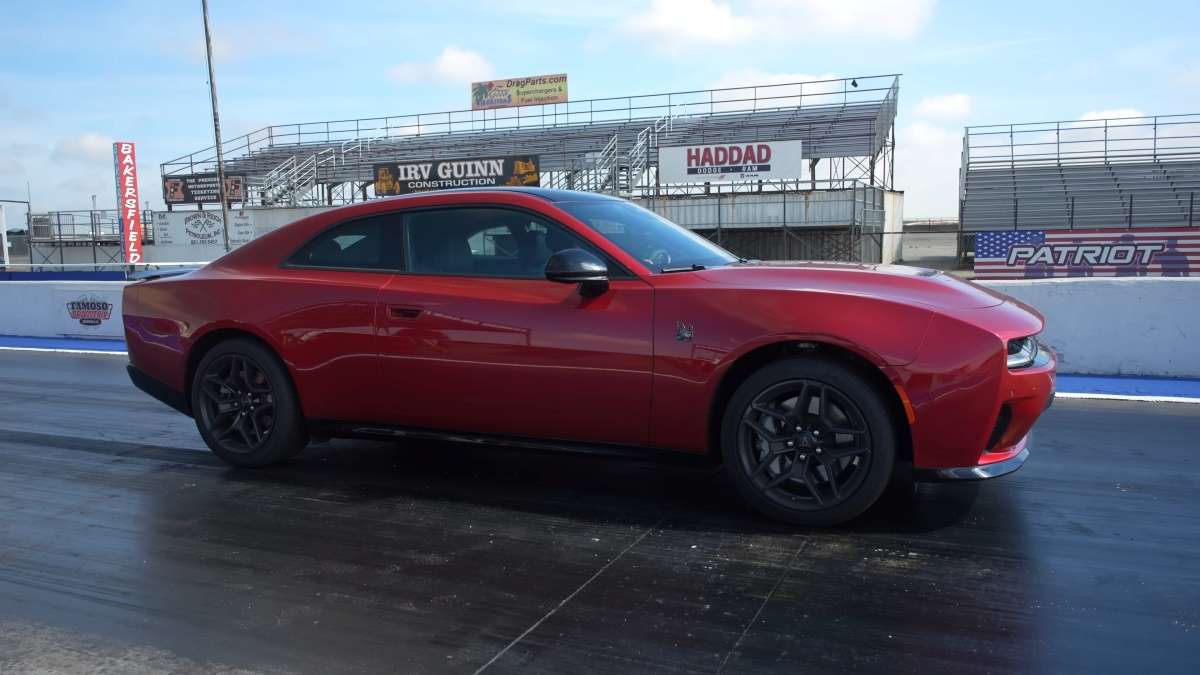
American muscle and drag racing are two things that go hand in hand. It was only fair that we see the Charger hit the quarter mile. The result - 11.85 seconds at 119.36 mph. The all-wheel-drive system resulted in a drama-free launch, and the crisp shifts allowed the large American coupe to stay in the sweet spot for much of the time. Consider this - the Dodge Charger Sixpack weighs 4,800 to 4,900 pounds, depending on the spec.
With just a few bolt-ons, it is capable of matching cars like the Porsche 997 Turbo and early versions of the Nissan GT-R R35. A stock BMW M3 G80 manages 11.1 to 11.7 seconds, depending on whether it has the xDrive AWD system or not. I only wish they had kept the weight under 4,500 pounds. 4,900 pounds is a lot for a non-SUV, but still south of the all-electric Charger Daytona’s near-5,700-pound curb weight.
What are your thoughts on the matter? Do you think the Dodge Charger can be a tuner car rivalling the likes of BMW’s M3? Does the Hurricane inline-six live up to expectations? Share your thoughts in the comments below.
Related: We Tested Every 2026 Dodge Charger. Gas or Electric—One Clearly Wins
Dimitar Angelov has been an automotive journalist since 2014. His passion for cars and motorcycles led him to take up classic car restoration at the Classic Car Museum in Malta. While living there, he also graduated with a Master's in Media and Communications. Aside from Torquenews, his work can also be seen on Topspeed.com, HotCars.com, Motorheads.com, Jalopnik.com, and his own website, Ridereverie.com, where he also includes motorcycle content.
Other relevant experience to the automotive scene include working at a Toyota dealership, professional driving, and automotive insurance. Dim is happy to get behind the wheel of any car and share his impressions. You can follow Dimitar on X, LinkedIn, Instagram, and Facebook.
Experience
- 2012-2017 and 2025-Present: Insurance Advisor - ANG Univers and Generali Insurance Group
- 2016-2016: Car salesman at Toyota dealership
- 2014-Present: Automotive journalist, blogger, vlogger, test driver
Education
- Bachelor's degree in International Economic Relations
- Master's degree in Marketing
- Master's degree in Media and Communications
Dimitar Angelov has been quoted in the following publications:
Set Torque News as Preferred Source on Google
Follow us today...