
- A real car buyer's comment about settling for a VW ID.4 exposes the one gap in Tesla's lineup that millions of SUV shoppers feel every single day.
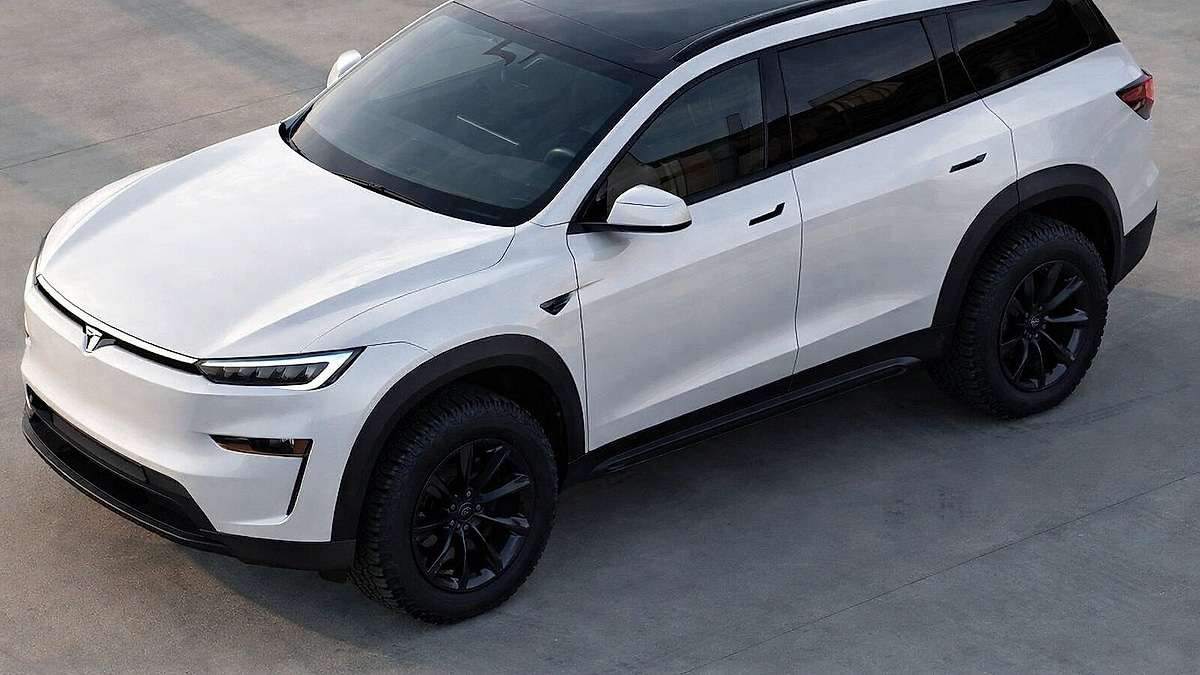
- The evidence at Giga Texas suggests Tesla may finally be moving to fill that gap, as this may be the time for a true Tesla SUV.
- If Tesla gets this right, the Toyota Highlander, Jeep Grand Cherokee, and BMW X5 crowds may never look at a gas-powered SUV the same way again.
Here at Torque News, some of the most valuable journalism does not come from press releases or manufacturer briefings. It comes from the comment section. After 15 years of covering the automotive industry, I have learned to take reader comments seriously, especially when a real buyer describes exactly how they navigated the EV market, made a compromise they did not want to make, and still ended up with something that wasn't quite right. That is precisely what happened when one of our loyal Torque News Facebook followers, Stan Smart, dropped a comment under our recent article about Tesla's glaring SUV problem and whether the Model Y L spotted at Giga Texas can fix it. Stan's comment was short, honest, and hit the nail on the head in a way that no industry analyst has managed to do in a 2,000-word report. And it connects directly to the mysterious elongated Model Y body wrapped in blue plastic that appeared at Giga Texas just days ago, which may signal that even Elon Musk is beginning to understand what Stan figured out four years ago.
Here is exactly what Stan Smart said:
"I shopped for an EV SUV 4 years ago. The Tesla Model Y was too low to the ground, not a true SUV. The same for the poorly badged Ford Mustang Mach-E. I settled on the VW ID4. Great car with poor electronics. A true Tesla SUV would be great!"
Let that sink in for a second. Stan wanted a Tesla. He went shopping for a Tesla. He walked away without a Tesla because the Model Y did not feel like a true SUV to him. He also looked at the Ford Mustang Mach-E and felt the same way about it. He ended up in a Volkswagen ID.4, which he calls a great car but with poor electronics. And then he said, four years later, that a true Tesla SUV would be great. That one sentence from a real car buyer tells you everything that is wrong with the current EV SUV market and exactly why the time for a genuine Tesla SUV is right now.
Why the Tesla Model Y and Ford Mustang Mach-E Feel Like Crossovers, Not True SUVs, to Real Buyers
Stan's observation about ground clearance is not a quirky personal preference. It is a very common complaint from buyers who come from a background of driving real SUVs. The Tesla Model Y sits at just 6.6 inches of ground clearance, while the Ford Mustang Mach-E comes in even lower at 5.7 inches, both figures that land noticeably below the clearance numbers that traditional SUV buyers consider a baseline for feeling elevated, capable, and genuinely SUV-like on the road.
Compare those numbers to what traditional SUV buyers are used to. A Toyota 4Runner has over 9 inches of ground clearance. A Jeep Grand Cherokee sits at around 8.3 inches in its base configuration and significantly more in 4x4 trims. Even the Volkswagen ID.4 that Stan settled on offers 6.7 inches, which is more than the Model Y, and feels more SUV-like as a result despite being a smaller vehicle overall. As we detailed in our coverage of why one Model Y owner returned his brand-new Tesla and went back to his Toyota 4Runner because the Model Y simply lacked the rugged utility he needed for real-world off-road and towing situations, the Model Y is a phenomenally engineered crossover. But it is not, and has never been, a true SUV in the way that word has meant something to American drivers for 30 years.
The Ford Mustang Mach-E is an interesting case study here. It is genuinely a capable, well-engineered EV that has earned real respect in the market. But as Stan observed, the badging has always been a problem. Many reviewers note that buyers still miss the visceral feel they get from the gas-powered Mustang and lament that this electric crossover wears the Mustang badge, a choice that was always more about marketing than about accurately describing what the vehicle is. Stan called it "poorly badged" and he is absolutely right. Calling a front-wheel-biased, 5.7-inch ground clearance electric crossover a Mustang doesn't make it a Mustang, and calling it an SUV doesn't make it feel like one to buyers who know the difference.
The Pressing Problem: Buyers Like Stan Are Settling for Second Choice Because Tesla Has No Answer
Here is the problem that Stan's comment reveals, and it is one that the EV industry has been quietly ignoring for years. There is a massive population of buyers who want the Tesla experience, the Supercharger network, the over-the-air updates, the FSD capability, and the seamless software integration, but who simply will not accept a vehicle that sits low to the ground and feels like a fancy hatchback rather than a proper SUV. These buyers exist in enormous numbers. They are driving Toyota 4Runners, Jeep Grand Cherokees, Ford Explorers, and Chevy Tahoes. They look at the Model Y, recognize it as a brilliant car, and still walk away because it doesn't feel like the vehicle their life is organized around.
What did Stan do? He went to Volkswagen. And he is not alone. Volkswagen positioned the ID.4 directly against the Model Y, noting advantages in interior space and turning radius, while acknowledging that Tesla led significantly in charging speed, acceleration, and software capability. VW built a better case for the space-and-ride-height buyer, and it worked for people like Stan even though the software and electronics left them wanting more. That is an extraordinary market failure by Tesla, and it has been ongoing for years. Stan essentially said: I settled for a car I liked less, from a brand I trusted less, because Tesla didn't build the vehicle I actually wanted.
The solution is not complicated to describe, even if it's demanding to execute. Tesla needs a true SUV, one with higher ride height, genuine ground clearance above 8 inches, a body-forward design that communicates SUV capability from the outside, and the full Tesla software and charging ecosystem under the hood. It needs to make buyers like Stan feel that they never have to compromise. That vehicle needs to arrive before more buyers make the same grudging trip to a VW or Kia dealership.
Why the Model Y L Is a Start but Not the Complete Answer to the True Tesla SUV Problem
Now, you might be thinking: isn't the Model Y L, the elongated version spotted at Giga Texas two days ago, the answer to this? And I want to be honest with you here, because I think this distinction matters enormously.
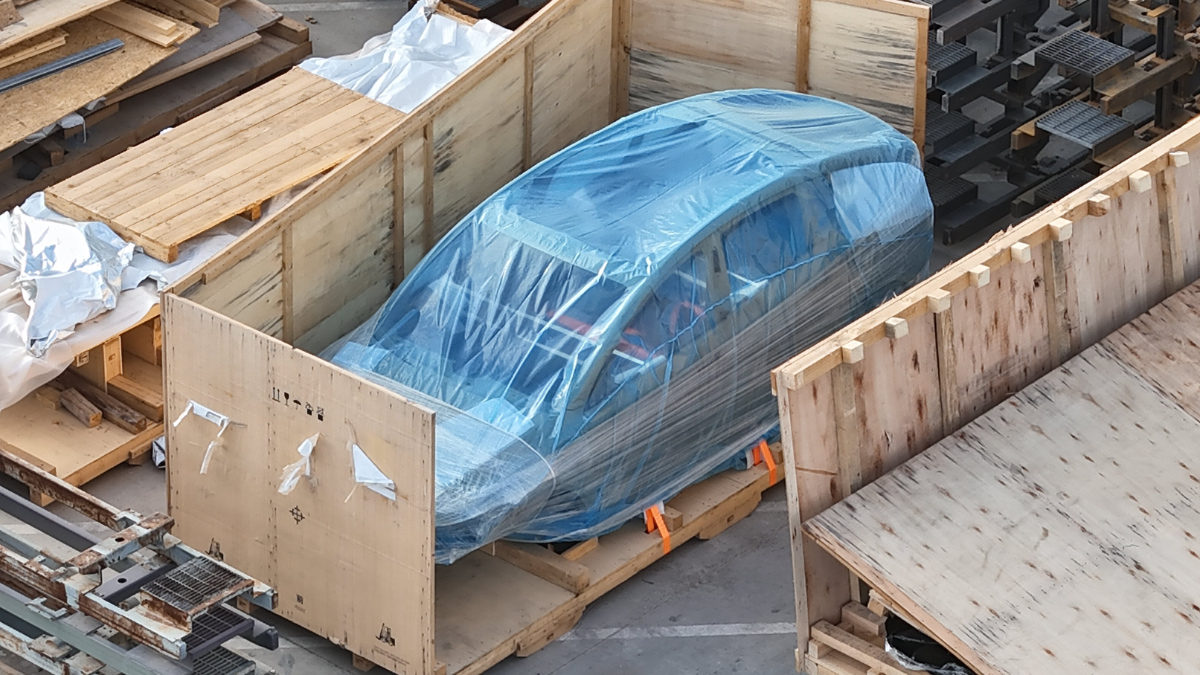
The Model Y L, with its seven extra inches of length, 2-2-2 seating layout, and 89.6 cubic feet of cargo space, is a genuinely significant vehicle. It addresses the three-row family SUV gap in a meaningful way, and our analysis of how the Model Y L's dimensions put it in direct competition with the Toyota Highlander and Jeep Grand Cherokee for American family buyers makes clear that this vehicle could be transformational for Tesla's family market share. But here is what the Model Y L does not fundamentally change. It is still built on the same Model Y platform. It still sits at essentially the same ride height. It is still a unibody crossover architecture, not a body-on-frame or high-clearance SUV platform.
Stan Smart would likely look at the Model Y L and still say: great car, wrong feeling. And there are millions of buyers just like Stan who would agree with him. Our story about how a real owner chose to keep his Toyota 4Runner over his brand-new Model Y because Tesla doesn't satisfy actual off-road and rugged utility requirements illustrates this perfectly. The Model Y is outstanding at what it does. What it does is not what a true SUV does.
Tesla's strategy has consistently favored efficiency, manufacturability, and real-world usability, and rather than chasing size for its own sake, Tesla has focused on extracting more range, better performance, and improved cost efficiency from the same platform, an approach that makes great engineering sense but leaves a specific category of buyer completely underserved. That unserved buyer is Stan Smart. And if Tesla is serious about dominating the American automotive market rather than just the American EV market, it has to address this gap.
What a True Tesla SUV Could Look Like, and Why Now Is Exactly the Right Moment
Let me tell you what I think a true Tesla SUV needs to be, and I'll be direct about it because I've been watching this market for a long time. It needs to start with at least 8 to 8.5 inches of ground clearance in its standard configuration. It needs to communicate SUV proportions from the outside, taller hood, more upright windshield, visible road presence that signals capability to any buyer looking at it in a parking lot. It needs to offer serious towing capacity, somewhere in the 5,000 to 7,500 pound range at a minimum. And it needs to come in under $65,000 in its base configuration to be accessible to the Highlander and Explorer crowd without pushing into luxury territory.
The timing argument for this vehicle is stronger right now than it has ever been. Tesla is discontinuing the Model X, which means the company is about to have exactly one SUV for the entire American market. The Cybertruck, while impressive in its own way, is a truck and appeals to a truck buyer, not the family SUV buyer that Stan Smart represents. Our comparison of the Tesla Model Y Long Range against the Toyota RAV4 Prime hybrid for the buyer who is genuinely evaluating both options side by side showed that the economics of EV ownership over five years make a compelling case. But the economics only matter if the buyer falls in love with the vehicle first. You can't logic someone into buying a car that doesn't feel right to them.
The Tesla Model Y leads the Mustang Mach-E in range, charging convenience, and technological integration, yet for buyers seeking an elevated seating position and that commanding road presence associated with traditional SUVs, neither vehicle fully delivers on the traditional SUV promise. That observation from a detailed head-to-head comparison perfectly captures the gap Stan identified. Both vehicles are excellent. Neither one is what he was looking for.
The VW ID.4 that Stan settled on deserves a fair assessment here too. As we covered in our look at how Volkswagen directly compared the ID.4 against the Model Y and where each vehicle held a genuine advantage, the ID.4 offered a slightly taller, more traditional crossover feel, a genuine hitch and tow rating, and a more upright driving position that felt closer to an SUV. But the electronics and software were always a weakness, and Stan was honest about that. He got more of what he wanted in terms of physical presence and ride height, and less of what he wanted in terms of technology. That tradeoff should not exist. A true Tesla SUV eliminates it entirely.
Looking at the electric SUV segment in early 2026, I think the single largest gap in the EV market remains a proper American-style large electric SUV from a mainstream brand at a family-friendly price, and that buyers who require genuine ride height and off-road presence continue to either wait or settle for compromises. That assessment lines up exactly with what Stan Smart experienced four years ago when he walked into a showroom looking for a Tesla and walked out with a Volkswagen.
Our coverage of whether Tesla, Rivian, and Lucid are rewriting the entire EV endgame faster than analysts predicted showed clearly that the competitive landscape is shifting fast. Rivian has proven there is enormous appetite for a true EV SUV with real capability and real ride presence. The Model Y L may close part of the gap for three-row family buyers. But the true Tesla SUV that Stan Smart and millions of buyers like him are waiting for still hasn't arrived.
Here is the moral of Stan's story, and I want you to sit with it for a moment because it applies well beyond car shopping. When you know what you need, do not settle for something that almost meets your needs just because it's what's available right now. Stan settled for the ID.4 and spent four years wishing for something better. The right product, the one that actually fits your life, is worth waiting for, worth researching, and worth advocating for. Speak up, as Stan did in our comments section, because your voice matters. The car companies read these comments. The automotive journalists read them. And sometimes, the right comment at the right moment helps shape what gets built next. Stan didn't just share an opinion. He described a market gap with more clarity than most industry analysts manage in a full report.
Now I want to hear your experience directly. Please share it in the comments section below, because your voice shapes the conversation:
If you shopped for a true EV SUV in the last few years and felt that neither the Tesla Model Y nor the Ford Mustang Mach-E truly felt like a proper SUV in terms of ride height, ground clearance, and presence, what vehicle did you end up choosing instead, and what specific features would a true Tesla SUV need to have to bring you back?
And for those of you currently driving a VW ID.4, a Kia EV9, a Rivian R1S, or any other EV that you chose specifically because the Tesla lineup didn't have what you needed in terms of genuine SUV size and capability, how has your experience been, and would you switch to a properly built Tesla SUV if one were available at a competitive price today?
Drop your story in the comments below. Every single one of them matters.
Images: Rendering of a Tesla SUV and Joe Tegtmeyer.
About The Author
Armen Hareyan is the founder and Editor-in-Chief of Torque News and an automotive journalist with over 15 years of experience writing car reviews and industry news. Now based in the Charlotte region (Indian Land, SC, he founded Torque News in 2010, which since then has been publishing expert news and analysis about the automotive industry. He can be reached at Torque News on X, Linkedin, Facebook, and Youtube. Armen holds three Masters Degrees, including an MBA, and has become one of the known voices in the industry, specializing in the landscape of electric vehicles and real-world stories of actual car owners. Armen focuses on providing readers with transparent, data-backed analysis bridging the gap of complex engineering and car buyer practicality. Armen frequently participates in automotive events throughout the United States, national and local car reveals and personally test-drives new vehicles every week. Armen has also been published as an automotive expert in publications like the Transit Tomorrow, discussing how will autonomous vehicles reshape the supply chain, and emerging technologies in vehicle maintenance.
Set Torque News as Preferred Source on Google
Follow us today...