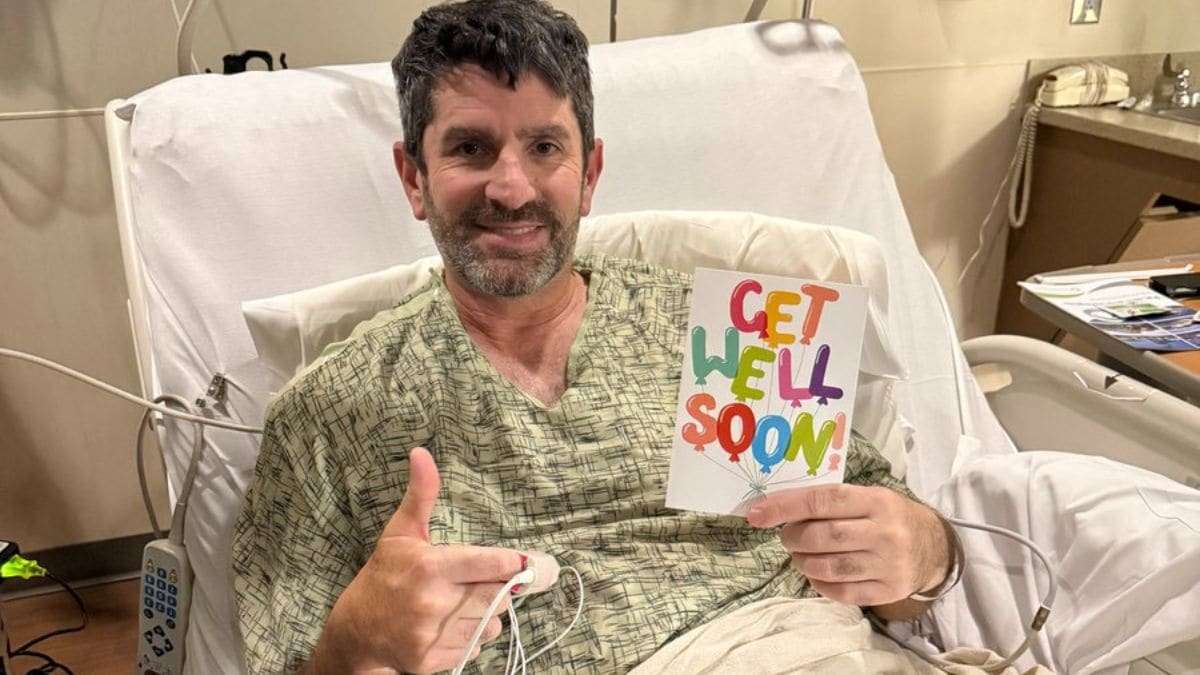

Most conversations surrounding Tesla's Full Self-Driving are often very conceptual. The way we discuss FSD is usually based on software version numbers, safety records, regulatory pressures, and if the tech is evolving quickly enough. Often, it seems like people are debating the merits of the technology on spreadsheet-based posts and tweets instead of on actual roadways. But every now and then, a story breaks through that takes the conversation out of projection mode and into reality. That was the story coming out of Georgia with a 2026 Tesla Model Y this previous month, as an early morning trip down I-20 and a life-threatening medical emergency unfolding in real time showed what FSD can be capable of.
Jack Brandt explained the situation in detail on his X account, writing: “On November 15, 2025, my father left Atlanta heading to Birmingham on I-20 West to help care for my grandmother. He had just received the FSD v14.1.3 update on his 2026 Model Y Launch Edition and it turns out this was the perfect version for this drive. Around 3:50 AM, my phone rang. It was my dad. He was experiencing severe chest pain, could barely stay conscious, and could no longer safely control the vehicle. but FSD was engaged and still driving. I immediately conferenced in my grandfather, and we had seconds to make a decision. My grandfather contacted my uncle in Douglasville, GA, who told us about Tanner Medical Center in Carrollton, not far from my dad's location on I-20. I immediately pulled it up on Google Maps and shared the destination to his Tesla through the app. As an authorized driver on his account, I was able to remotely change his Juniper's FSD navigation — all from my 2014 Model S. His Model Y had just passed the Carrollton exit. The car immediately took the next exit, turned around, re-entered I-20 East, and headed back. It navigated local roads and pulled directly in front of the Tanner Medical Center Emergency Room entrance. He was diagnosed with a massive STEMI heart attack. Three arteries required immediate intervention. The doctors later told us that if he had pulled over and waited for an ambulance, or tried to continue to Birmingham, he would not have made it.”
The ER team was ready when he arrived according to Jack. Tanner Medical Center in Carrollton houses the Adams Heart Center, specializing in cardiac interventions and having cardiologists on call 24/7. This is more important than most understand. My dad recently had a heart attack too, and repeatedly, the doctors told him that the first few minutes of treatment were the key. Minutes aren't abstract when it comes to heart attacks. The amount of muscle saved in the heart and if someone walks out of the hospital depend on those minutes specifically.
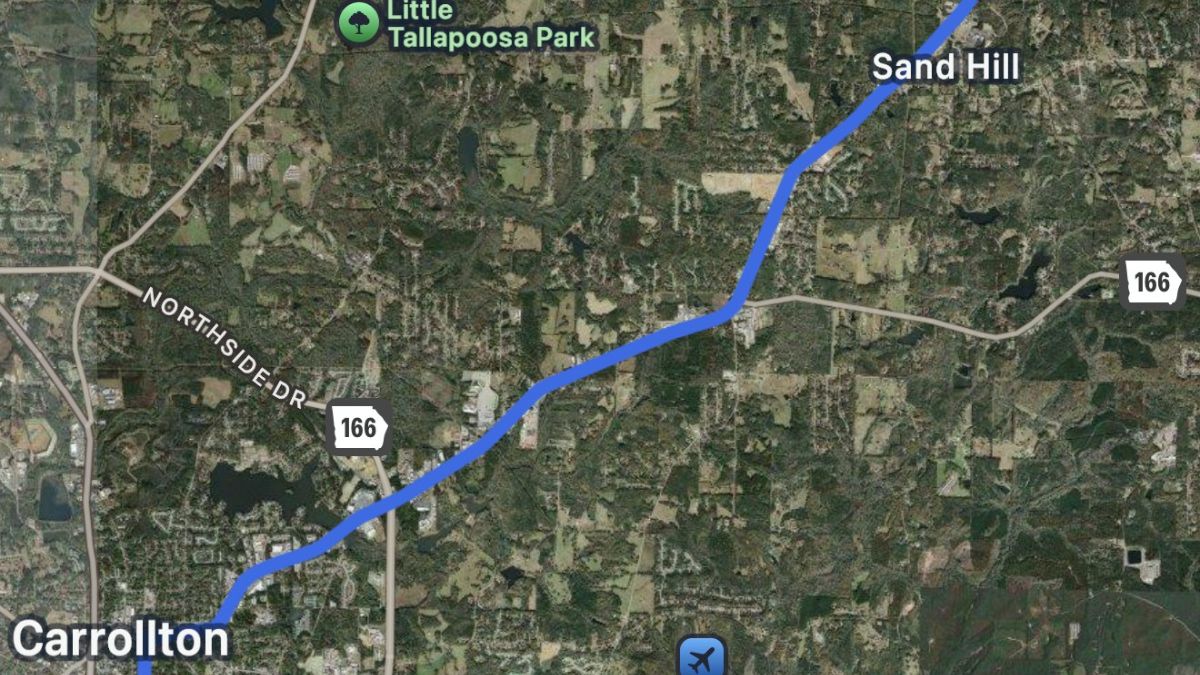
What Actually Happened on That Stretch of I-20
A STEMI (ST-elevation myocardial infarction) represents the most dangerous form of heart attack. A STEMI occurs when there is a total blockage of a coronary artery. As a result, blood supply is eliminated and heart tissue then begins to die. Therefore, immediate medical treatment is required.
At 4:00 AM on I-20, the options for assistance were limited. Pulling over to wait for an ambulance may result in additional time to receive assistance based on how far away he is from emergency services and how congested the roads are. Traveling further towards Birmingham would be traveling further away from the appropriate level of cardiac care. However, since Full Self-Driving had been activated and was operating appropriately, the vehicle was able to maintain its own path and situational awareness of its surroundings, allowing Jack to redirect the vehicle's route remotely.
The remote redirection is also somewhat overlooked in this situation. Many people consider Full Self-Driving (FSD) to be nothing more than a steering and accelerating system. However, FSD is actually a component of a much larger network. Authorized drivers can change their destination by using the Tesla app, and this ability became a key intervention method in this circumstance.
Tesla’s Full Self-Driving system remains supervised and requires driver’s attention, and it is still subject to regulatory scrutiny. I previously reported in detail when NHTSA opened a formal safety investigation into claims that Tesla’s FSD might be significantly safer than human drivers, highlighting how closely federal regulators are monitoring the system’s real-world performance. But what happened here was not unsupervised autonomy. It was a driver-assist system maintaining operational control long enough for a family member to intervene digitally.
Technology as a Bridge, Not a Replacement
What stands out most is that FSD did not replace a human. It bridged a gap when a human suddenly could not perform.
There have been other ownership accounts where drivers credit the system for preventing accidents. In fact, I recently covered a detailed owner report explaining how Tesla’s FSD stopped just in time to avoid a serious crash, offering another real-world case study of the software intervening during a critical moment. Those accounts often focus on collision avoidance. This one focuses on medical crisis management.
The Model Y did not diagnose the heart attack, nor did it decide where to go. It maintained stability and allowed time for coordinated action. That distinction matters when evaluating advanced driver assistance systems realistically.
The Role of Connectivity in Modern Mobility
One of the most underappreciated aspects of the narrative are not the features of steering or the centering of the lane, but the connectivity. The ability of an authorized driver to remotely control the vehicle, update the destination, and change the route in real time is transforming the vehicle into something greater than a means of transportation. It has become a critical component of a larger response system that includes family members, navigation data, and real-time decision-making.
Vehicles have been isolated systems since they first came on the market over five decades ago. Once a person was inside the vehicle and operating it, the control was only with the individual who was sitting behind the wheel. Vehicles today operate as part of a digital environment. Navigation information can be sent from outside the vehicle, and a vehicle's location can be tracked at all times. Route information can be changed by an operator outside of the vehicle and the cabin interface. In an everyday commute, this appears to be an advantage due to convenience. In a life-threatening medical situation, it can be a significant advantage in terms of reducing response time. The true take away is not that this is advanced technology. It is that connected mobility can significantly reduce response time when it matters most.
Community Reactions Raise Important Questions
The post quickly drew thoughtful reactions.
Michael Davis wrote, “This raises an important issue: FSD needs an emergency mode for situations like this—even before unsupervised—where it goes to the nearest hospital if the driver becomes unconscious. If laws don’t allow this, FSD or Grok should contact EMS with location information. Glad your father is recovering!”
Michael’s comment touches on something larger than this single event. Should advanced driver assistance systems include a medical emergency protocol? Could biometric monitoring or driver input detection trigger automated emergency routing? Those are regulatory, technical, and ethical conversations that are likely coming sooner rather than later.
Jesse Middleton added, “The best tech disappears into the background until it's suddenly everything. Glad your father is okay.”
That observation captures the paradox of ADAS systems. Most of the time, they feel invisible. They handle lane centering, adaptive cruise control, and navigation quietly. It's only when something unexpected happens that their value becomes obvious.
Danielle Shay commented, “What an amazing story! This technology will continue to surprise people and keep people safe. I'm glad you were so quick on your feet and your dad is okay.”
Danielle highlights another often overlooked element: human decision-making still drives outcomes. Jack had the presence of mind to reroute the vehicle immediately, the hospital staff was prepared, and the system functioned as intended. It was a chain of actions, not a single miracle moment.
Real-World FSD Performance Continues to Evolve
Over the past year, owners have increasingly documented long-distance, low-intervention drives. I have also analyzed a case where a Tesla Model Y on FSD drove across three states with zero interventions, even through rain, examining what that level of consistency suggests about the system’s highway performance. Those narratives often focus on comfort and capability. This one focuses on resilience under medical stress.
At the same time, some drivers simply enjoy the experience and refinement of Tesla’s ecosystem. I previously featured an owner account explaining why the Tesla Cybertruck became the most enjoyable vehicle they have owned, which highlighted how deeply software integration now shapes overall ownership satisfaction. That broader satisfaction with Tesla’s tech stack forms the backdrop against which moments like this are interpreted.
It is equally important to maintain perspective. Full Self-Driving is NOT a fully functional Autonomous Emergency Transport System (AETS). FSD still has a requirement for supervision, and it may disengage and also make an error. As regulatory oversight continues, we see that layered functionalities — such as Stability Control, Navigation Intelligence, and Remote Connectivity — can produce valuable intersections of function.
My Take on What This Means
The significance of this story is not that a vehicle drove a distance, it's what constitutes "driver-assistance" is evolving to encompass more than the person physically sitting behind the steering wheel. This particular example of capability distribution was realized when the autonomous system controlled the vehicle, a family member redirected navigation remotely, and a hospital team received notification of the expected arrival time. These three levels of coordination were the true innovation of the scenario.
With the exception of the recent emergence of partial networked mobility, most of automotive history has defined driving authority to be singular. Only one person provided input to control the vehicle, from one seat, at one moment in time. With the current transition to a networked model of mobility, vehicles can receive updates via over-the-air communication systems which change their behavior. External modification of destinations can occur. Real-time sharing of location data also occurs with these vehicles. As such, there is a paradigmatic shift occurring as to how responsibility, response time, and risk-mitigation practices operate in the real world.
As a person of a younger generation who has grown up alongside connected devices and software ecosystems, I do not see this as futuristic. I view this evolution of vehicle technology as a structural change in how vehicles are designed to interact with a larger digital environment. Increasingly, consumers in general are judging vehicles not solely on traditional characteristics (such as horsepower or aesthetics) but also on integration, update cycle frequency, and intelligence within the vehicle's overall ecosystem. As demonstrated by this example, the digital layers that have been developed are not merely cosmetic. In rare, yet important instances, they can significantly reduce the time between crisis and receiving care.
Key Takeaways From This I-20 Emergency
- Connectivity can buy time: Remote navigation control through the Tesla app allowed immediate rerouting to a specialized cardiac center without waiting for roadside assistance.
- Advanced driver assistance is situationally powerful: FSD maintained safe lane position and navigation stability when the driver was physically unable to do so.
- Human decision-making still matters: Quick thinking by family members and immediate coordination with hospital staff were essential.
- Medical specialization makes a difference: Arriving at a facility equipped for 24/7 cardiac intervention significantly improved survival odds.
- Autonomy discussions need nuance: This was not unsupervised self-driving, but a layered system functioning within its design parameters during a crisis.
What Do You Think?
Have you ever experienced a situation where advanced driver assistance stepped in during an unexpected emergency?
And as vehicles become more connected and remotely manageable, do you think emergency-specific modes should become a standard feature in future software updates?
I'd love to hear your thoughts in our comments below.
About The Author
Aram Krajekian is a young automotive journalist bringing a fresh and analytical perspective to the evolving automotive landscape by reporting on real-world ownership experiences and providing industry analysis. Based in North Carolina, he covers electric vehicles, trucks, and broader automotive trends with a focus on contributing a balanced evaluation. His reporting cuts through brand bias to provide readers with grounded insight into how vehicles perform for everyday drivers beyond marketing narratives.
Aram can be reached on X and LinkedIn for ongoing automotive coverage.
Image sources: Jack Brandt’s X account.
Set Torque News as Preferred Source on Google
Follow us today...