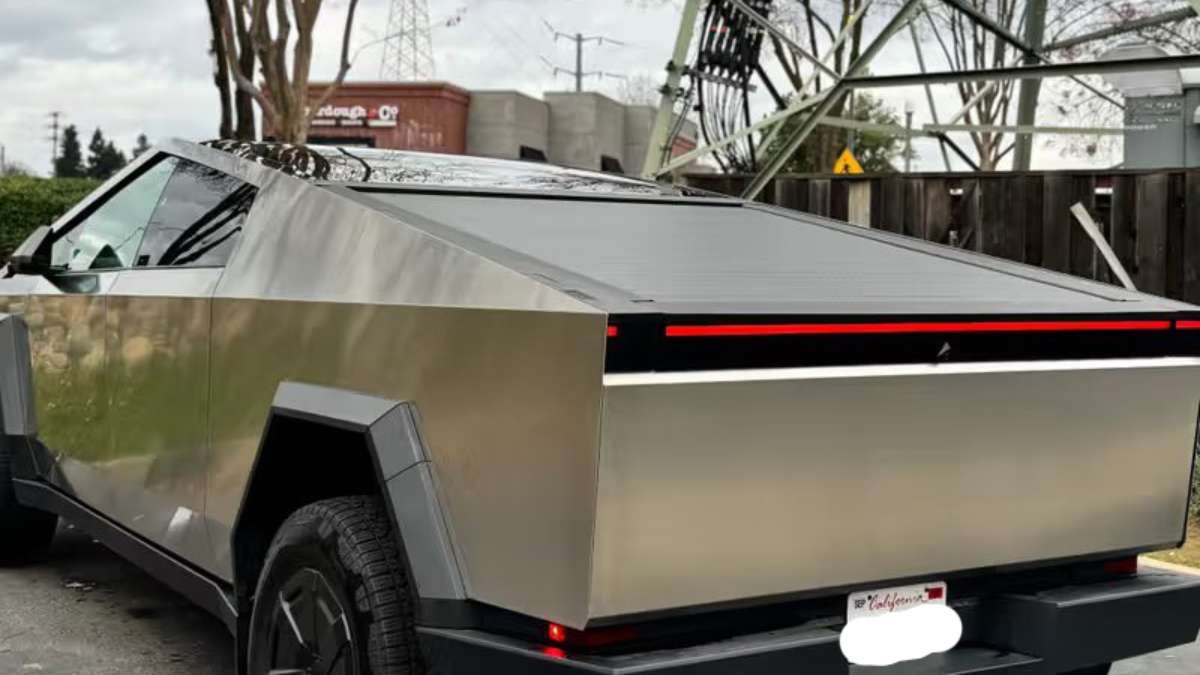

When a brand-new Cybertruck owner from California announced she was moving her stainless-steel pickup to snowy Utah and asked whether she should install paint protection film (PPF), the question instantly sparked a lively debate among Cybertruck owners. It’s the kind of discussion that goes beyond one owner’s decision and taps into a much bigger issue: How should owners protect Tesla’s unusual stainless-steel pickup in the real world?
That question matters not only to owners, but also to automotive journalists who follow the Cybertruck closely. The truck’s bare-metal design breaks with decades of automotive paint traditions, and every real-world ownership story is helping the industry understand how this experiment holds up.
The conversation began when Susan Daniero from Utah posted in a public Cybertruck group on Facebook. She wrote:
“Hi All, I'm a new owner of a 2025 Tesla Cybertruck. It has been in California its entire life and the steel finish looks great. It will now be located in Park City, Utah where in normal years we have considerable snow. Our roads are treated with salt. I really like the natural steel finish. I'm considering a matte clear PPF from XPEL, or not treating it. I would very much like to save the dollars. I also like to use an automatic car wash, ‘Mister Car Wash’ here in Utah and would use Car Wash Mode. I've read that it is important not to leave water on the hot surface of the vehicle and I can dry it off thoroughly. Any advice or recommendations would be appreciated. Thanks!”
Cybertruck's Natural Steel Finish Is Tougher Than You Think
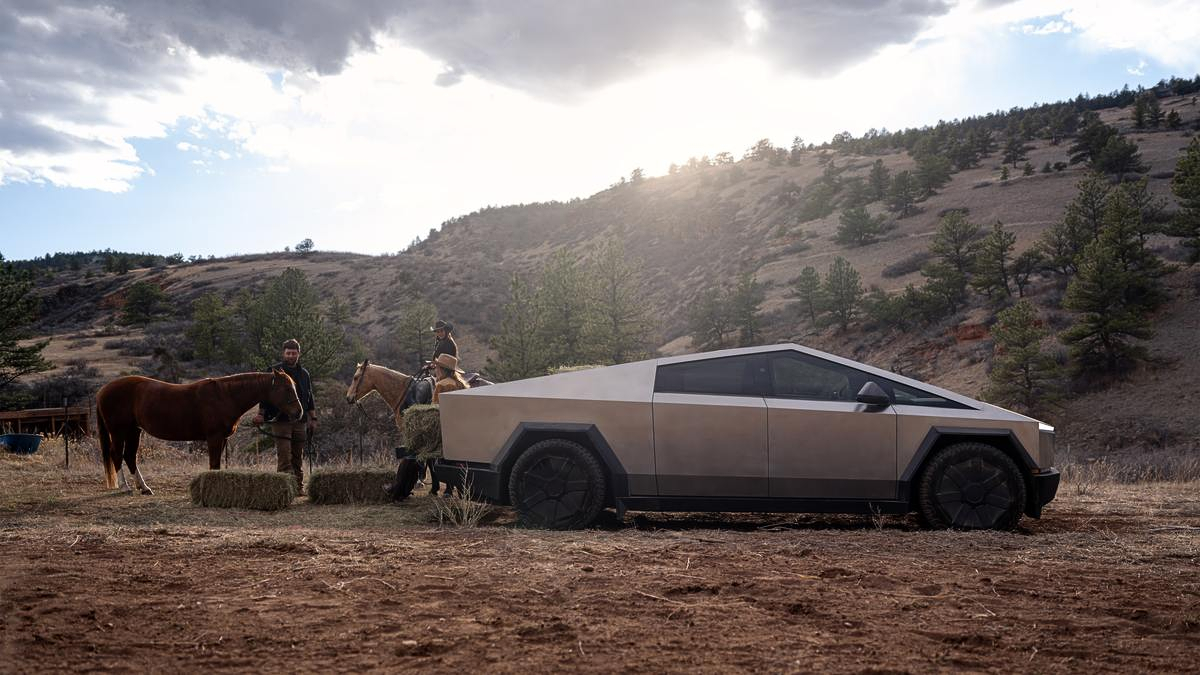
Let me start with what Tesla actually built here. The Cybertruck isn't wrapped in ordinary automotive steel. Tesla developed an entirely new steel alloy it calls HFS, "Hard Freaking Stainless," which is seven times stronger and more scratch-resistant than typical exterior steel materials, corrosion and rust resistant in line with 316L marine-grade stainless used for boats, medical devices, and watches, and impact resistant enough to withstand dents from rocks, shopping carts, and even some forms of small arms fire. That last part is unusual enough to say out loud - your Cybertruck's body is more closely related to a SpaceX rocket than a Ford F-150.
Tesla also says HFS removes the need for paints and other surface coatings for protection. During its development, Tesla exposed HFS samples to extreme environments, including salt spray and high humidity at elevated temperatures - tests mimicking twelve years of exposure in environments ranging from the humid Florida shoreline to icy Canadian roads in winter.
Twelve years. In simulated road salt and moisture. That's the benchmark Tesla engineered to.
Casey Lang, a fellow commenter on Susan's post, put it plainly: "You really don't need PPF. Enjoy the tough stainless steel exterior and wash it every 6 months or so whether it needs it or not."
And David Valusis made an insightful point that I think gets to the heart of this whole debate: "The natural look is the best as far as durability. I thought about wrapping, but they eventually need replaced. I also like running my CT through the automatic car wash a few times per week since I have the unlimited package. The stainless is obviously scratch and door ding resistant, while the PPF is not."
Read that last sentence again. The stainless steel is scratch and door ding resistant. The PPF is not. That's the kind of logic that cuts right through the marketing noise.
When Wraps Actually Damage the Cybertruck
Here's where the story takes an unexpected and very important turn, and it's one that automotive reporters across the country should be paying close attention to.
We've covered at Torque News how a Cybertruck owner had his vinyl wrap melt in Arizona's heat, permanently damaging the brushed stainless steel finish underneath: a critical lesson that adding a layer of protection can sometimes cause more irreversible harm than the environment itself ever would.
And the Arizona case isn't isolated. The evidence across owner communities is building into something worth watching. Cybertruck owners who have removed wraps from their trucks are reporting that they found the stainless steel permanently blemished, either due to non-symmetric corrosion or chemicals, the Cybertruck's stainless steel doesn't hold up well under a vinyl wrap. Torque News One owner's letters, vinyl-applied just eight months earlier, were literally etched into the steel after removal. You cannot buff that out. That finish is gone.
For anyone wondering whether PPF is any different from vinyl in this regard, the jury is still out, but the risk of trapping moisture, unevenly shielding the steel from environmental conditioning, and adhesive interaction with bare metal is real. The surface is not painted. There is no clear coat acting as a buffer. PPF goes straight onto raw steel.
While PPF itself doesn’t automatically cause damage, it introduces new variables:
- trapped moisture
- adhesive residue
- uneven exposure to oxygen and sunlight
Those factors can create discoloration or corrosion patterns over time.
Meanwhile, the bare stainless surface remains simple: wash it, clean it, and maintain it.
What About Park City's Salted Roads?
Now, Susan's concern is fair. Park City winters are not California winters. Road salt is a different animal entirely, and it deserves serious attention.
We've documented at Torque News how a Cybertruck owner drove his truck on salted Colorado roads and came back with brown spots that persistent washing couldn't fully remove: an important story for anyone planning to drive a stainless steel truck through a snowy state this winter.
Here's what you need to understand about those brown spots: stainless steel can develop surface corrosion, often referred to as "tea staining" or "rail rust," when exposed to iron particles and moisture, especially road salt. These particles embed in the surface and oxidize, creating visible rust spots. Proper maintenance for stainless steel often involves regular cleaning to remove contaminants and, in some cases, passivation treatments to restore the protective chromium oxide layer.
In other words, it's not the Cybertruck's steel rusting. It's iron-containing debris from the road that gets stuck on the steel and then rusts while sitting there. The truck itself is largely fine underneath. The fix? Wash it off promptly and consistently.
And that's exactly what Susan is planning to do. She's got the Mister Car Wash unlimited package. She plans to use Car Wash Mode. She intends to dry the truck thoroughly. That regimen, if followed consistently, is actually a solid plan.
We've covered the question of whether it's safe to take the Cybertruck through an automatic car wash and what the Car Wash Mode actually does to protect your truck's systems, and the consensus from experienced owners is clear: use Car Wash Mode, go touchless when possible, and rinse frequently in winter. Several Canadian Cybertruck owners say they run their trucks through the car wash two or three times a week during salty winter months, and they haven't experienced discoloration.
Frequent, consistent washing beats PPF here. Because salt contamination that gets rinsed off weekly cannot embed deeply. The problem happens when people let it sit.
The Ceramic Coating Middle Ground
Fellow commenter Tully Cobertt offered what might be the wisest advice in Susan's entire thread: "Just had my detail guy clean/polish mine with Bar Keeper Friend soft stainless steel polish and ceramic coated it. Looks awesome! Do not think PPF is needed on raw metal. The ceramic helps with fingerprints and makes it real easy to clean."
This is actually a compelling option that deserves more attention. Ceramic coatings offer a hard, protective layer against environmental contaminants, reducing the risk of scratches, dirt, and chemical stains, and because ceramic coating is hydrophobic, it helps repel water and other liquids, making the surface easier to clean.
The key advantage of ceramic over PPF for a Cybertruck specifically? Ceramic coating doesn't trap the steel underneath a film. The steel can breathe, age, and self-condition naturally. It's also far less expensive than a full XPEL PPF wrap and doesn't carry the risk of adhesive bonding to raw metal over time. Bar Keepers Friend soft stainless steel polish followed by a quality ceramic coat is the kind of smart, practical solution that costs a few hundred dollars instead of several thousand.
For a good broader understanding of what Cybertruck owners are learning about stainless steel blemishes and how to remove them, our coverage of a Cybertruck owner whose blemishes and brown spots were driving him insane until he found the right cleaning method explains the exact cleaning techniques in helpful detail, and it's essential reading before winter arrives in Park City.
The Real Durability Argument Against PPF
Let's get back to David Valusis's point, because it's the most honest durability argument in this whole conversation. PPF scratches. PPF chips. PPF eventually needs replacement. When it does, you're peeling a film off raw stainless steel, and we've already seen what that can look like.
A full XPEL matte clear PPF install on a Cybertruck can easily run $5,000 to $8,000 from a professional shop. It typically lasts 7 to 10 years before needing replacement. But here's the equation nobody talks about: if the film is replaced on a 10-year cycle, and the bare steel underneath has been isolated from natural oxidation and UV conditioning that helps develop its protective chromium oxide layer, what exactly are you uncovering when you peel it back?
The stainless steel's natural protective system is a self-forming chromium oxide barrier on its surface. That barrier needs environmental exposure to maintain and reform itself. Cybertruck HFS panels are resistant to rusting due to this thin protective oxide barrier on the steel surface. Tesla Sealing the steel under a film for a decade may actually interfere with that natural process in ways that aren't fully understood yet.
It's also worth looking at what happens when wraps go wrong in colder climates. We've written about what Cybertruck owners in Michigan and Canada discovered after trying to keep their trucks pristine through salted winters, and the most striking detail is that the owners who washed frequently and kept the raw steel clean had better outcomes than those who tried to seal their trucks under vinyl.
What Susan and Every Cold-Climate Cybertruck Owner Should Actually Do
Here's the practical playbook, straight from experienced owners and the engineering reality of the truck itself.
First, before winter hits Park City, give the truck a thorough cleaning with Bar Keepers Friend soft stainless steel polish to bring the steel to a clean, even base. Do not rush this step. Do the whole truck panel by panel so the finish stays consistent across all surfaces. Tully's detail guy clearly understood this, and the result speaks for itself.
Second, apply a quality ceramic coating designed for bare metal - not a paint ceramic, but one formulated for exposed stainless. This gives Susan's Cybertruck hydrophobic properties, makes fingerprints far easier to manage, and protects against the kind of environmental contaminants that cause tea staining. It costs a fraction of PPF.
Third, use that Mister Car Wash unlimited pass aggressively through winter. Touchless washes, Car Wash Mode engaged, truck raised to maximum height to flush wheel wells. Do it two or three times a week when the roads are heavily salted. Don't let salt sit on the steel overnight if you can avoid it.
Fourth, dry the truck thoroughly after washing, something Susan already knows matters. Water spots on hot steel are a real issue, and a quality microfiber drying routine keeps the finish looking clean and avoids mineral deposit buildup.
And if you're curious about how Cybertruck handles the broader demands of winter driving beyond just the finish, we have a detailed piece on polar-proofing your Cybertruck after a snowstorm, covering settings, tires, and winter preparation strategies that's worth bookmarking before the first Park City snowfall.
The Moral of This Story
Here's the thing that often gets lost in these debates: the most expensive option is not always the most protective one. And the most protective-sounding solution is not always the most durable one.
There's a broader lesson here that applies well beyond cars. When we layer complexity onto something that was already built to be resilient, we sometimes create new problems in the name of solving imaginary ones. Susan's Cybertruck, fresh out of California with a great-looking finish, was engineered by one of the most advanced materials teams in the world to handle exactly the kind of environments she's heading into. Sometimes the wisest decision is to trust the engineering, maintain the asset consistently, and resist the urge to add expense for its own sake. Good stewardship is simpler than the industry wants you to believe.
Save those dollars, Susan. Use Car Wash Mode. Dry the truck. Wash it twice a week in winter. Ceramic coat it if you want to make life easier. And enjoy that raw, honest, one-of-a-kind stainless steel finish every time you pull into Park City with snow on the mountains behind you.
Now I'd like to hear from you directly: If you're a Cybertruck owner in a snowy or salt-heavy climate, have you kept the natural steel finish or gone with PPF or a wrap, and what has your real-world experience been maintaining it through winter? Also, for those who've used an automatic car wash regularly through a salt season, did you find the frequent-wash strategy effective at preventing surface spotting and contamination?
Drop your experience in the comments below please as your firsthand knowledge could be exactly what another Cybertruck owner moving to a cold climate needs to hear.
Images by Susan Daniero (referred above), and Tesla Media
About The Author
Armen Hareyan is the founder and Editor-in-Chief of Torque News and an automotive journalist with over 15 years of experience writing car reviews and industry news. Now based in the Charlotte region (Indian Land, SC, he founded Torque News in 2010, which since then has been publishing expert news and analysis about the automotive industry. He can be reached at Torque News on X, Linkedin, and Youtube. Armen holds three Masters Degrees, including an MBA, and has become one of the known voices in the industry, specializing in the landscape of electric vehicles and real-world stories of actual car owners. Armen focuses on providing readers with transparent, data-backed analysis bridging the gap of complex engineering and car buyer practicality. Armen frequently participates in automotive events throughout the United States, national and local car reveals and personally test-drives new vehicles every week. Armen has also been published as an automotive expert in publications like the Transit Tomorrow, discussing how will autonomous vehicles reshape the supply chain, and emerging technologies in vehicle maintenance.
Set Torque News as Preferred Source on Google
Follow us today...