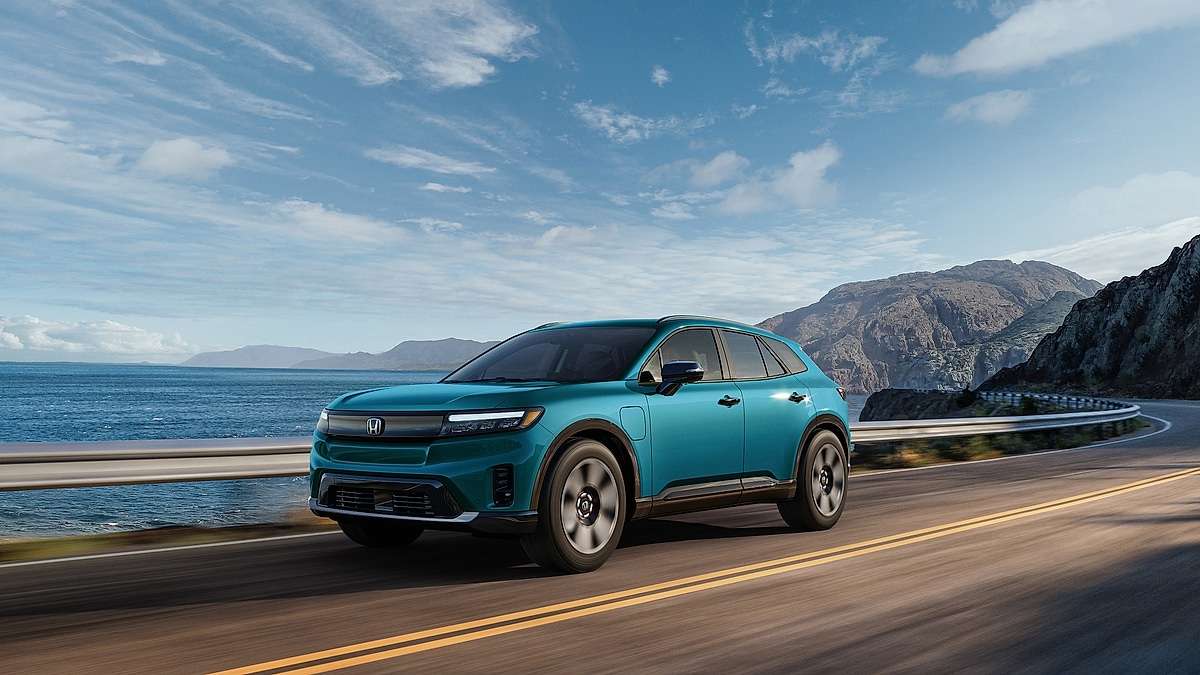

A 2023 Tesla Model Y owner, after six months and 5,000 miles with a Honda Prologue Touring AWD, reports the Prologue "drives even bigger" than its already substantial footprint, struggles with basic EV functionality like state-of-charge display, and delivers DC fast charging speeds topping out at a paltry 100 kW. A fundamental disconnect exists between Honda's EV offering and established market expectations.
This owner's detailed comparison is a stark illustration of legacy automakers struggling to meet the baseline user experience set by EV pioneers, even as they attempt to leverage their traditional strengths. The car's inputs feel filtered, with a lack of direct feedback through the steering wheel and seat, which mutes the communication of tire grip and chassis attitude. This is a significant departure from Honda's historical reputation for immediate, tactile driving experiences. The gap between what Honda delivers and what the market demands is becoming increasingly apparent.
This slow speed actively undermines the utility of an electric vehicle for anything beyond short-range commuting.
“I have a 2023 Model Y, and it's been a decent car, but after owning a Prologue Touring AWD for 6 months and 5k miles, the Model Y clearly provides the better overall experience. The Tesla is the car we drive on road trips for the supercharger network, autopilot, and cargo space. When my lease is up in 2 years, I won't be sad to let it go, but rather excited to see what other EVs are available then.
Where the Prologue wins:
More solidly put together than the Tesla, which feels cheap in comparison.
Traditional cluster behind the steering wheel. I love that I can have a zoomed-in map view displayed there.
Powered sunshade and sunroof that opens
It's pretty roomy
Google (maps) integration (not Android Auto specifically) since I'm a Google user. My maps search history is
More comfortable suspension than the Tesla, which is also a con (see below)
Smoother adaptive cruise control. The Tesla floors it during acceleration, even in bumper-to-bumper traffic
Better wipers, although it does seem pretty erratic. More intermittent settings as well. Tesla auto wipers are notoriously bad.
Has physical buttons, although I do think there are a bit too many buttons, and the layout is pretty ugly from a design perspective. Confusing steering wheel buttons as well, and although I also feel Tesla has too few, I think the wheels are better.
Where the Prologue fails:
It's big, and it drives even bigger. I've driven large SUVs and minivans before, but this car gives me the least confidence when driving in tight spaces. I absolutely cannot tell where the hood is, especially the right side.
Advertising
Handles like a boat
The steering is way overboosted and doesn't freely return to center after turning like every Honda I've driven.
It feels like I have to rotate the steering wheel 5x to go from lock to lock.
The turning stalks have zero feedback and sound for the 3 blink auto-cancel, so I never know if it is engaged.
No lane centering, let alone any assisted driving
Bose is pretty bad, but to be fair, the Tesla ain't that great either, but is better.
The trunk is tiny for such a large car, and no frunk.
Hondalink, enough said. I use my Tesla app quite frequently to pre-heat and change charging speeds and limits.
No SoC % anywhere, other than when the car is powering on/off
Infotainment feels 2 decades old compared to Tesla's
DC charge speeds. Getting 100kw max at 350kw stations, typical is 80kw
Phantom brakes just as much as the Tesla, if not more, and more violently
The heat is pretty weak. Have yet to try the AC yet.”
The core of the issue for u/nexus22nexus55 lies in the Prologue’s fundamental driving dynamics and its failure to integrate modern EV expectations. The complaint that the vehicle "drives even bigger" than its physical dimensions, coupled with vague steering that requires "5x to go from lock to lock," points to a chassis tuning problem Honda should have resolved long before production. Buyers expect a cohesive, intuitive, and high-performing electric vehicle ecosystem.
Honda Prologue: A Compromised Entry into the EV Market
- The Honda Prologue, developed in partnership with General Motors, shares its Ultium platform and battery technology with vehicles like the Chevrolet Blazer EV. This collaboration was intended to accelerate Honda's entry into the EV segment, but it has led to shared challenges.
- With a starting MSRP around $47,400 for the FWD model and climbing above $57,000 for the Touring AWD, the Prologue competes directly with established EVs that offer superior charging, range, and driver assistance features. Its 80-100 kW DC fast charging speeds are significantly lower than the 150-250 kW common among rivals.
- The vehicle's dimensions, at 192.2 inches long and 78.7 inches wide, place it firmly in the mid-size SUV category, yet owners report it feels larger and less maneuverable than expected. This perception is compounded by steering that lacks feedback and a large turning radius.
- The Prologue's infotainment system is based on Google Built-in, offering integrated Google Maps and Assistant, but its user experience and visual design have been criticized for feeling dated compared to segment leaders. The lack of a visible state-of-charge percentage on the main display is a notable oversight.
This lack of driver confidence is exacerbated by the absence of lane centering, a feature that has become standard on many vehicles, let alone those positioned as modern EVs. The fact that a 2023 Model Y owner finds the Prologue's adaptive cruise control smoother, yet still notes "phantom brakes just as much as the Tesla," indicates a broader industry challenge with these systems.
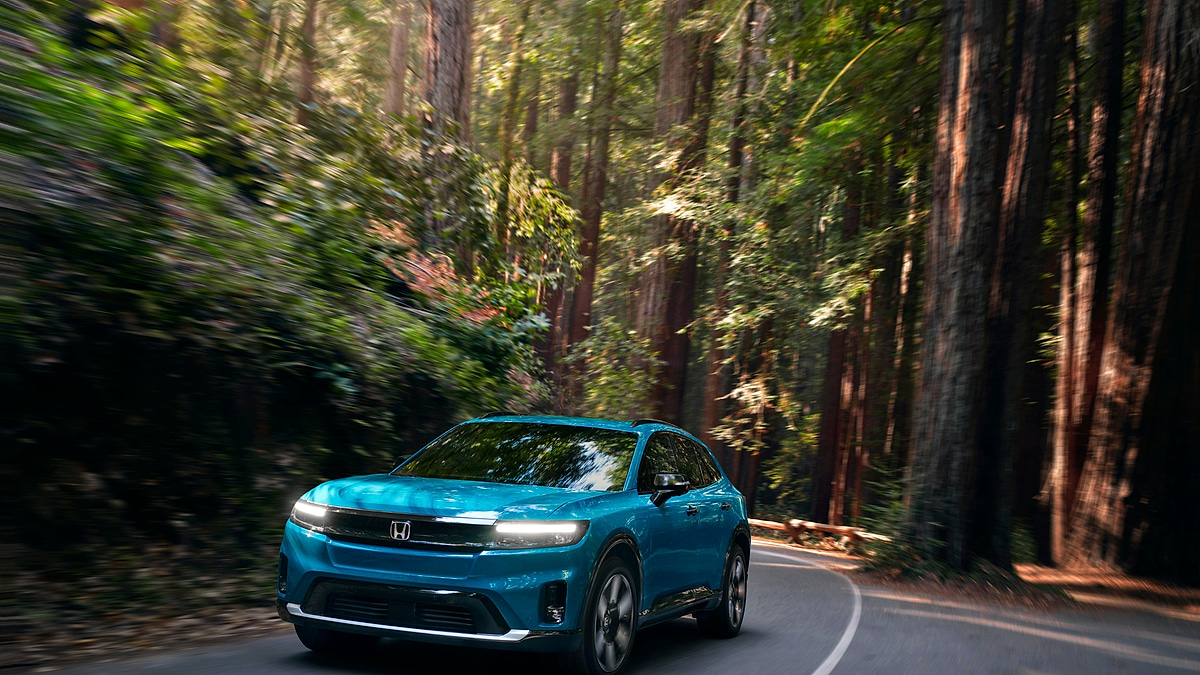
However, the Prologue's inability to provide basic lane-keeping assistance in a package costing upwards of $47,000 is a glaring omission that impacts safety and long-distance comfort.
Reddit user u/Embarrassed-Pride776, who leased a Prologue specifically to avoid a Tesla, shows a different angle of consumer choice: "Pros. It isn't made by Elon. That alone was what drove me to lease the prologue over the Tesla." This sentiment, while understandable given the polarizing nature of Tesla's CEO, overlooks the critical functional deficiencies that Honda has allowed to persist in the Prologue. Choosing a vehicle solely on the basis of its manufacturer's leadership, without a thorough evaluation of its core capabilities, is a gamble that often leaves owners with significant compromises.
The Prologue’s charging performance is perhaps its most damning flaw. Reporting "100kw max at 350kw stations, typical is 80kw" for DC fast charging is simply unacceptable in 2026. The Honda Prologue, despite its traditional interior comforts, fails to deliver a competitive electric vehicle experience where it matters most: charging, driver assistance, and usability. Honda's decision to launch an EV with such a significant charging deficit, especially when competitors routinely achieve 200 kW or more, suggests a profound misjudgment of the market and a willingness to compromise on a core EV metric.
The user's frustration with the lack of a visible state-of-charge percentage and an infotainment system that "feels 2 decades old compared to Tesla's" speaks to a broader issue of user interface design. While Honda correctly identified the need for physical buttons, the execution, described as "pretty ugly" and "confusing," misses the mark. These are not minor aesthetic quibbles; they are fundamental aspects of daily interaction that contribute to a vehicle's perceived quality and ease of use.
Reddit user u/Thin-Net-2326 points out the workaround for the state-of-charge issue: "SoC while driving IS technically available by asking Google 'what is my battery status' or similar. But it is quite annoying when EVERY other car gives the numerical percentage visibly." This observation perfectly encapsulates the Prologue's user experience problem: forcing owners to use voice commands for basic information that should be readily displayed is a design failure. It’s a solution that creates more friction than it solves, a hallmark of an underdeveloped system.
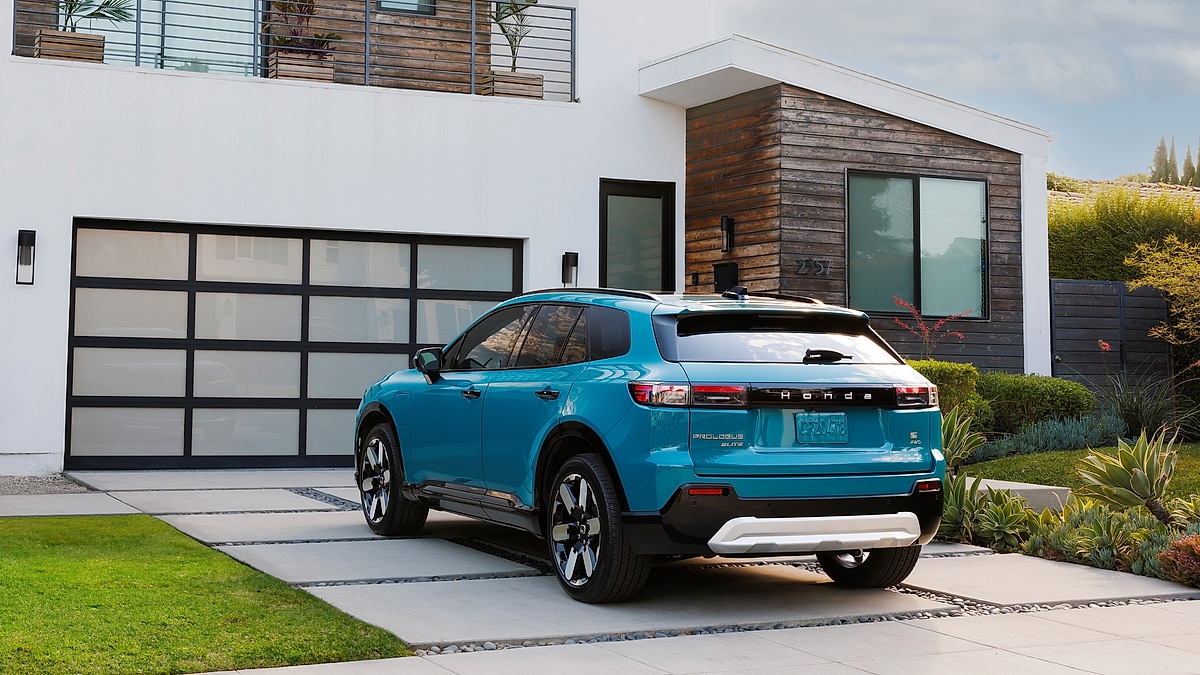
The Honda Prologue, as detailed by this owner's six-month experience, is a vehicle built on compromises that ultimately undermine its value proposition. While it attempts to offer traditional comforts and a more conventional interior, it falls short on critical EV metrics like charging speed, driver assistance, and intuitive user interface. Honda has built an electric SUV that drives like a larger, less refined version of its gasoline counterparts, rather than a forward-thinking EV. This is not a competitive offering; it is a placeholder.
Image Sources: Honda Media Center
About The Author
Noah Washington is an automotive journalist based in Atlanta, Georgia, covering sports cars, luxury vehicles, and performance culture. His reporting focuses on explaining the engineering, design philosophy, and real-world ownership experience behind modern vehicles.
Noah has been immersed in the automotive world since his early teens, attending industry events and following the enthusiast communities that shape how cars are built and driven today. His work blends industry insight with enthusiastic storytelling, helping readers understand not just what a car is, but why it matters.
Noah is also a member of the Southeast Automotive Media Association (SAMA), a professional organization for automotive journalists and industry media in the Southeast.
His coverage regularly explores sports cars, luxury vehicles, and performance-driven segments of the automotive industry, including the evolving culture surrounding Formula Drift and enthusiast builds.
Read more of Noah's work on his author profile page.
You can also follow Noah here:
Set Torque News as Preferred Source on Google
Follow us today...