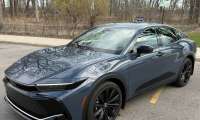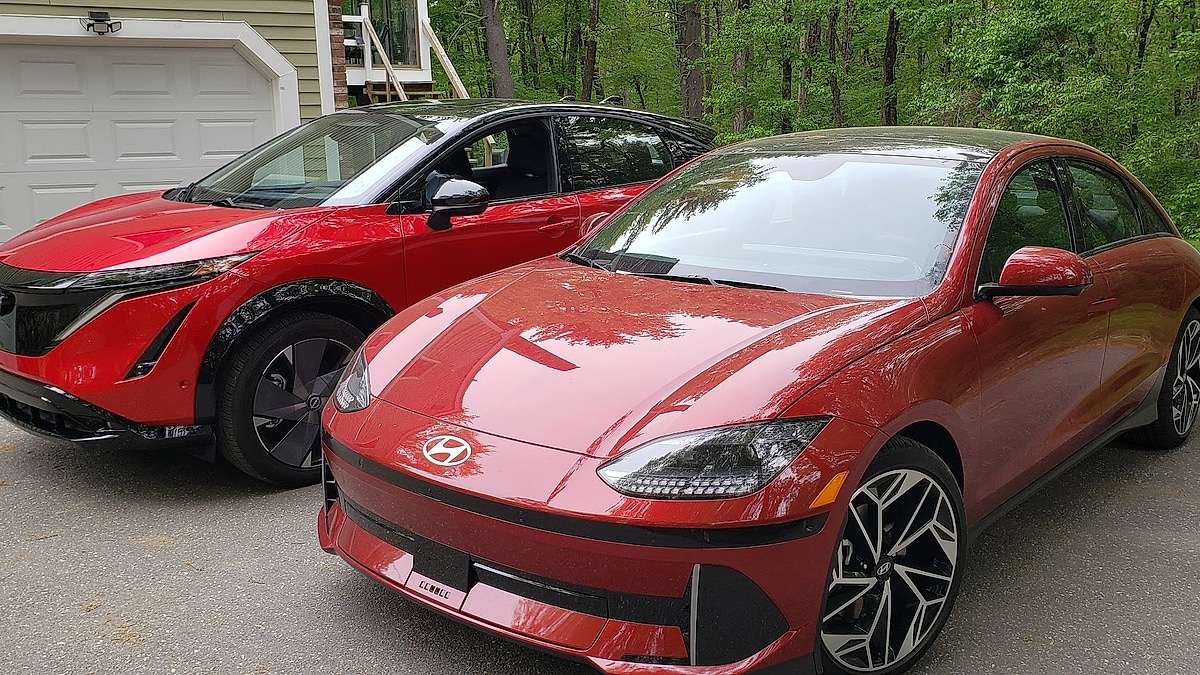

Battery-electric vehicle market share in the United States had dropped significantly, according to the most recent reports from the respected automotive analyst group Cox Automotive. As of the most recent report, EV share had dropped back to levels seen in 2022. Roughly 6% EV share, meaning that 94% of U.S. buyers didn't opt for a battery-electric vehicle (BEV). Manufacturers like Nissan, Ford, and others had already killed off some “popular” EV models. Now, it’s Honda, Kia, Hyundai, and Tesla’s turn.

Kia - EV6 and Niro EVs
The latest EV cancellations are from Kia. We love Kia’s EVs, and have positively reviewed every EV from the brand we have tested. In particular, I personally liked the Niro. It offered a great compromise of space and affordability, and it was sold in a very convenient package, a five-door hatchback design. We followed the positive ownership experience of one Niro EV owner who manages to live quite happily with a Niro EV in the Metro Boston area without a home EV charger.
We checked back in with satisfied Niro EV owner Andy Piltser-Cowan, who was kind enough to offer an update on the beloved Niro:
When I first test drove my 2019 Kia Niro EV, I felt like I was flying the Starship Enterprise. Six years later, I couldn’t be happier with it. I can only hope that as Kia sunsets the Niro EV, they continue their world-class investment in electric cars.
We hope the widespread reporting on the Niro EV is incorrect. Days after publication, our request for clarification came back from Kia, whose spokesperson said "Kia America has made no formal announcement on the Niro EV. It remains an important part of the lineup. "
Kia is also removing the EV6 from its lineup until further notice. Other than its sporty GT trim, which will live on. The EV6 has had very slow sales, but Car Talk named it to its list of Best EVs For 2026 just last month. Being a Best EV is no longer enough.
Hyundai - EV6
It’s no secret that Kia and Hyundai are sister companies and that the EV lines of the pair, along with Genesis, share a lot of their bits. Hyundai is also canceling its Ioniq 6, but leaving the sporty N to carry on.
Honda Acura - All New Models Canceled, Following the Cancellation of the Acura ZDX
Honda has announced that two of the "O" models it had planned to begin making in America are now canceled, and an Acura RSX EV is also off the table. These three were future models about to drop. Acura had previously canceled its ZDX EV, which it sourced primarily from GM under a private-label agreement.
Honda gave a surprisingly detailed and frank long-format explanation of why it is moving away from EVs, and may be moving away from vehicles altogether in China, which you can find at this source link. The part we feel is the best summary of the two-page explanation is “Honda determined that starting production and sales of these three models in the current business environment, where the demand for EVs is declining significantly, would likely result in further losses over the long term.” We have to applaud Honda’s candor. It is a striking contrast to the furious rearranging of deck chairs on the EV Titanic that many manufacturers seem to be engaged in.
Tesla Kills off Model S and X
Torque News was one of the first outlets to shout out to the ethers that the Model S and X stopped selling a long time ago. Elon Musk recently confirmed that the models are now officially dead and that after Q2 ends, no more will be produced. Many anti-Musk EV fans have pretended that this was a signal of Tesla “leaving the auto business.” That’s not our reading of a brand officially ending a pair of models that nobody had bought in years. Presently, Tesla has 62% U.S.-market EV market share, way up from one year ago. As the EV market dries up, the Model Y and Model 3 remain the only two successful EV models - ever - in the U.S. marketplace.
Nissan
The Ariya was killed off a while back, but the new Leaf is exciting to fans of affordable EVs. The word on the street now is that the lowest-cost trim, the S is now being withheld from the U.S. market. We are not sure why, other than it may be unprofitable to the extent it just hurts too much to sell it.
GM - Bolt Is Here For a Cup of Coffee, Brightdrop Is Dropped
In pro sports, when a player is on the roster for a short time, they say, “He was on the team for a cup of coffee.” In that vein, GM seems to be bringing back the beloved Bolt just to kill it off again. Reporting we’ve seen shows that it will be on lots for between 12 and 18 months before it is, once again, given one behind the ear. Get 'em while you can, folks. We've enjoyed driving Bolts all over New England, including to the top of Mt. Washington, and it's a fantastic vehicle at a great price in all its varieties.
GM also killed its Brightdrop vans recently. This one was a head scratcher. EV work vans seem to make a lot of sense, not just for contractors but also for municipalities and delivery fleets. GM’s imported Brightdrop EV line was culled this past fall.
VW ID.Buzz
Volkswagen pulled its Buzz minivan out of the U.S. lineup in late December. The Buzz won a lot of awards from journalists, none of whom went out and bought one after they voted.
That’s our updated roundup of the EVs that have been put to pasture in the U.S. market. This all comes as we celebrate the 30-year anniversary of GM’s EV1 and first-generation all-electric RAV4. Do these new model cancellations signal the end of the era? It’s too soon to call that one, but the old excuses as to why green vehicle shoppers are moving to hybrids in droves and bypassing EVs are starting to wear thin.
What’s your take? Do these cancellations portend the end of EVs in America? Tell your thoughts in the comments below.
Images by John Goreham.
John Goreham is a 14-year veteran of Torque News. An accomplished writer and a long-time expert in vehicle testing, Goreham also serves as the Vice President of the New England Motor Press Association and has a growing social media presence. He’s also a 10-year staff writer and community moderator for Car Talk. Goreham holds a B.S. in Mechanical Engineering and an undergraduate Certificate in Marketing. In addition to vehicle and tire content, he offers deep dives into market trends and opinion pieces. You can follow John Goreham on X and TikTok, and connect with him on LinkedIn.
Set Torque News as Preferred Source on Google
Follow us today...